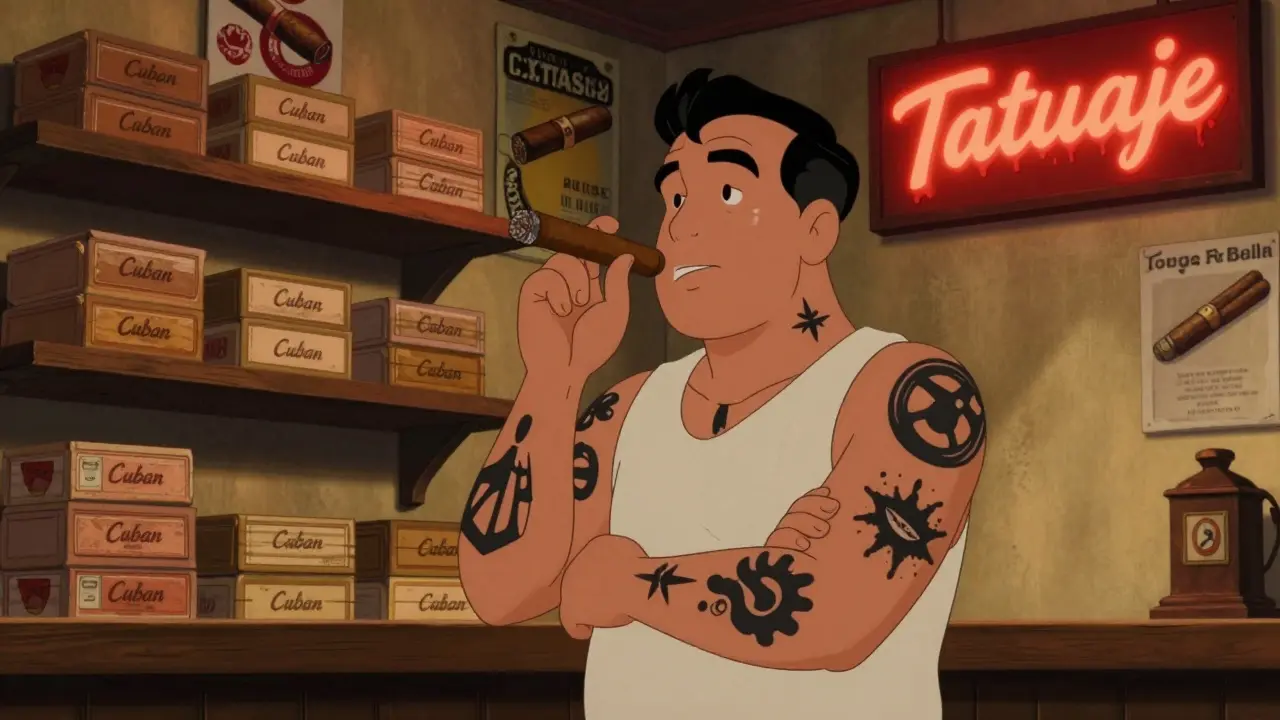
Tatuaje cigars aren’t just another premium smoke-they’re a story written in tobacco, tattoo ink, and relentless passion. Founded in 2003 by Pete Johnson, a former Los Angeles cigar shop worker with a deep love for Cuban cigars, Tatuaje was born out of frustration. After years of trying to replicate the flavor and complexity of the Cuban cigars he once smoked, Johnson knew he couldn’t find them anymore. So he made his own.
How a Tattoo Led to a Legendary Brand
The name Tatuaje means "tattoo" in Spanish. It’s not a marketing gimmick-it’s personal. Pete Johnson had tattoos covering his arms, and he saw them as symbols of identity, rebellion, and authenticity. He wanted his cigar brand to feel the same way: raw, real, and unapologetically individual. That’s why every box carries a hand-drawn label, often featuring skulls, demons, or occult symbols. There’s no corporate polish here. Just grit.The Man Behind the Smoke: Pepin Garcia
Johnson didn’t have a factory. He didn’t have tobacco fields. But he had one crucial connection: Jose "Pepin" Garcia, a Cuban-born master blender who had fled Havana in the 1990s and rebuilt his life in Miami. Pepin had spent decades perfecting the art of Cuban-style blending, and he was the only person Johnson trusted to recreate that elusive flavor. In 2003, they started producing Tatuaje in Pepin’s small Miami factory-making it the first brand Pepin ever created entirely on his own. The first release, the Tatuaje Cabinet Especiales, landed in Cigar Aficionado’s October 2004 issue and scored a 90-point rating. That single review turned a niche project into a cult phenomenon. Smokers noticed the depth: rich earth, dark chocolate, black pepper, and a long, lingering finish. It tasted like the Cuban cigars of the 1980s-except it was made in Florida with Nicaraguan tobacco.Nicaraguan Soil, Cuban Soul
Tatuaje doesn’t use Cuban tobacco. Instead, it uses first-generation Cuban-seed tobacco grown in Nicaragua’s Estelí region-where the soil is volcanic, the climate humid, and the growers know how to coax out bold, complex flavors. The wrappers vary: aged Habano from Ecuador, Connecticut shade, and even rare Nicaraguan sun-grown leaves. But the core blend? Always Nicaraguan. Always hand-rolled. Always made by the Garcia family. Unlike big brands that outsource production to multiple factories, Tatuaje has stayed loyal to just one: Tabacalera Cubana S.A. (TACUBA) in Estelí. Pepin and his sons still oversee every batch. That consistency is rare. Most boutique brands change blenders, factories, or leaf sources to cut costs. Tatuaje doesn’t. They’d rather make fewer cigars than compromise quality.
The Monster Series: Scarcity as an Art Form
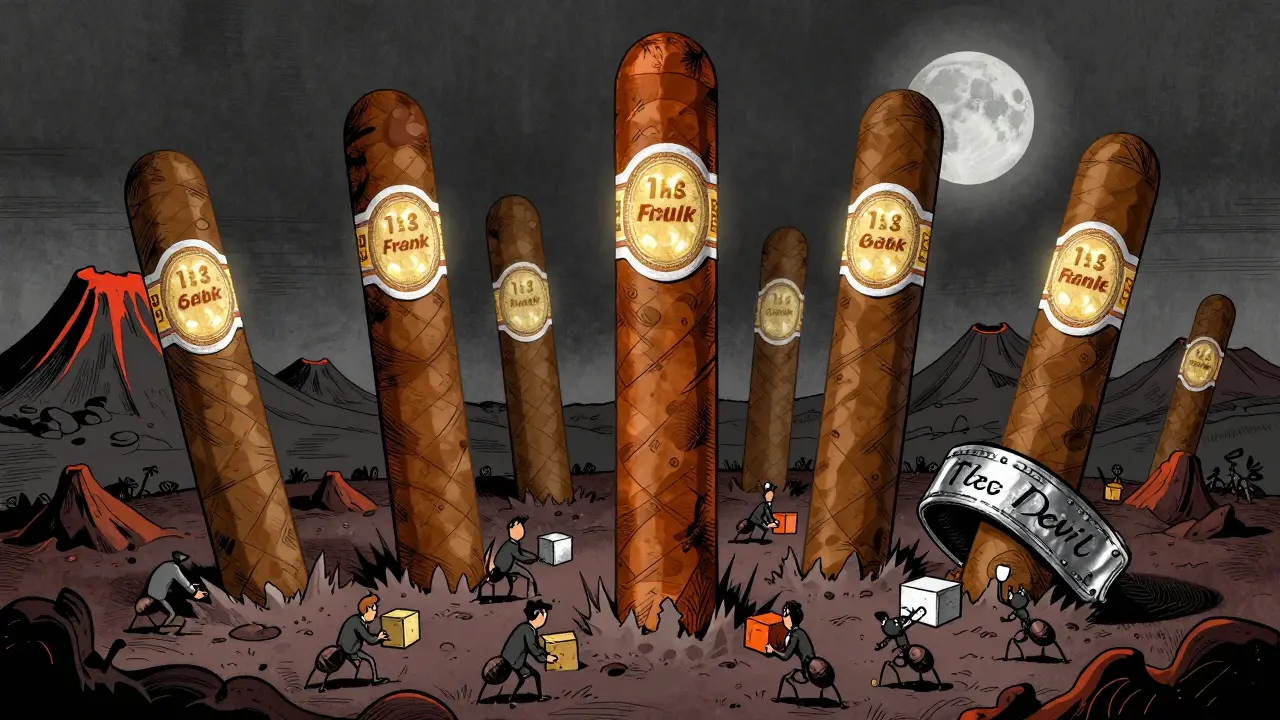
In 2008, Tatuaje dropped something no one expected: The Monster Series. The first release, "The Frank," was limited to exactly 666 boxes. Each box held 13 cigars. Each cigar cost $13. The number 13 was everywhere-because Johnson believed in luck, chaos, and the power of mystery. The 666 boxes weren’t sold in stores. They were given out by lottery to just 13 of the top 100 Tatuaje retailers in the U.S. No advertising. No press release. Just word-of-mouth among collectors. Within weeks, secondary market prices doubled. Then tripled. Today, a single cigar from "The Frank" can sell for over $50. Since then, the Monster Series has included "The Wolf," "The Devil," and "The Beast." Each release is smaller than the last. Each is more sought-after. It’s not just a cigar-it’s a collectible. A piece of tobacco history. And that’s exactly how Johnson wants it.The Lines: What’s Worth Your Money?
Tatuaje doesn’t make one cigar. It makes a family of cigars, each with its own personality:- Brown Label (Cabinet/Seleccion de Cazador): The original. Medium to full-bodied. Ecuadorian Habano wrapper. Earthy, spicy, with a sweet finish. Best for experienced smokers.
- Red Label: Made in Nicaragua with a different blend. Slightly lighter than Brown Label. Great introduction to the brand.
- Cojonu: Full-bodied, complex. The 2012 version earned 93 points from Cigar Aficionado. The 12-year aged version is legendary among collectors.
- Fausto: Habano wrapper, rich and bold. Designed to mimic the strength of vintage Cuban robustos.
- Avion: Same blend as Fausto, but box-pressed. Smoother draw, denser smoke.
- Nuevitas Jibaro No.1 (2023): The newest release. Uses Honduran tobacco from Jamastran. Johnson calls it his most Cuban-inspired blend yet.
Who Smokes Tatuaje?
Tatuaje isn’t for beginners. The smoke is strong. The flavors are intense. A 2022 survey found that 78% of Tatuaje smokers have at least five years of cigar experience. The typical smoker is a man between 35 and 54, with an income over $100,000. He’s not buying for status. He’s buying for truth. Reddit’s r/cigars community has over 1,200 monthly threads about Tatuaje. Facebook’s "Tatuaje Enthusiasts" group has 8,500 members. These aren’t casual fans. They’re archivists. They track batches. They compare vintages. They trade boxes like rare vinyl records.The Downsides: Why Some Walk Away
Tatuaje isn’t perfect. And it doesn’t pretend to be. Availability is brutal. If you walk into your local cigar shop and ask for a Cojonu or a Monster Series cigar, you’ll likely be told it’s sold out. And it will be-for months, sometimes years. Johnson intentionally limits production to keep the brand exclusive. That’s great for collectors. Terrible for everyday smokers. Some batches vary. In 2016, the Monster Series "The Wolf" had wild inconsistencies. One box tasted like dark coffee and leather. Another tasted flat and bitter. That’s the risk with handmade, small-batch cigars. No two are exactly alike. And yes-the prices on the secondary market are insane. You’ll pay $80 for a cigar that retailed for $15. Some call it a scam. Others call it a passion project.Is Tatuaje Worth It?
If you want a cigar that tastes like history, made by a master, with a story behind every puff-then yes. Tatuaje delivers. It’s not the smoothest smoke. It’s not the cheapest. But it’s one of the few brands that still feels like it’s made by hand, for people who care. If you’re looking for a cigar to impress your friends, go with a Cohiba. If you want a cigar that makes you think, that connects you to a tradition, a rebellion, and a man who refused to give up-then light up a Tatuaje.Who makes Tatuaje cigars?
Tatuaje cigars are made by Jose "Pepin" Garcia and his family at Tabacalera Cubana S.A. (TACUBA) in Estelí, Nicaragua. The brand was founded by Pete Johnson, who partnered with Pepin to recreate Cuban-style cigars using Nicaraguan tobacco. Pepin blends and oversees every batch.
What does "Tatuaje" mean?
"Tatuaje" is Spanish for "tattoo." The name comes from Pete Johnson’s personal tattoos, which symbolize his identity and passion for authenticity. The brand’s labels often feature tattoo-inspired artwork like skulls and demons.
Are Tatuaje cigars Cuban?
No, Tatuaje cigars are not Cuban. They’re made in Nicaragua using first-generation Cuban-seed tobacco. The goal was to replicate the flavor profile of pre-embargo Cuban cigars, not to use Cuban leaves. The result is a Nicaraguan cigar with unmistakable Cuban character.
Why are Tatuaje cigars so hard to find?
Pete Johnson deliberately limits production to maintain exclusivity and quality. Limited releases like the Monster Series are produced in tiny batches-sometimes only 666 boxes. Retailers get them by lottery, not bulk orders. This scarcity drives demand and keeps the brand elite.
What’s the best Tatuaje cigar for beginners?
The Red Label is the most approachable. It’s medium-bodied with a smoother profile than the Brown Label or Cojonu. It still has the signature Tatuaje complexity but without overwhelming spice or strength. For those new to full-bodied cigars, start here.
Do Tatuaje cigars age well?
Yes. Tatuaje cigars, especially the Cojonu and Brown Label lines, age exceptionally well. Many smokers report that 5-10 years in a humidor mellows the spice and deepens the flavors-adding notes of leather, dried fruit, and dark chocolate. The 12-year aged Cojonu is considered one of the best cigars ever made by the brand.
7 Comments
Man, I still remember the first time I smoked a Brown Label. It was like the cigar was talking to me-earthy, spicy, but with this sweet finish that just lingered like a memory you didn’t know you were holding onto. I didn’t even know what Tatuaje was at the time. Just saw it on a shelf in a shop in New Orleans, looked like it was drawn by someone who’d been through hell and came back with a lighter. Bought it on a whim. Best decision I ever made.
Now I’ve got a whole humidor full of different lines. The Cojonu 2012? Pure poetry. I keep one in my drawer for days when the world feels too loud.
And yeah, the Monster Series? Forget the price. It’s not about smoking. It’s about owning a piece of something that refused to be diluted. That’s rare these days.
Indian tobacco better than this anyday. Why pay 20 bucks for a cigar that tastes like someone burned a Cuban passport and called it art. You guys worship this like it’s holy water. We grow better leaves in Assam and no one makes a documentary about it. Tatuaje? More like Tatu-pretend.
I tried the Red Label last month after reading this and it was actually really good. Not too strong for me, and the wrapper had this nice sheen to it. I didn’t expect to like it since I’m used to milder smokes but it grew on me. Pepin’s stuff is legit. Even if the prices are wild, you can tell they’re not cutting corners.
My buddy got a box of Cojonu 12-year aged last year. Tasted like dark chocolate and old books. I’ll save up for one someday.
Okay but like… what if the whole thing is just performative rebellion? Like, what if Pete Johnson just wanted to be the cool guy who made cigars that looked like they came from a black metal album cover? And the whole Cuban thing? It’s nostalgia marketing wrapped in tattoo ink.
Don’t get me wrong I love the flavor but… is it really about the tobacco or is it about the myth? I think we’re all just chasing a ghost that was never real to begin with.
Also I typoed something I think. My phone autocorrects everything into nonsense. Sorry.
The thing that moves me most about Tatuaje isn’t the flavor or the scarcity-it’s the integrity. In a world where everything gets outsourced, rebranded, and mass-produced to appeal to the lowest common denominator, here’s a man who refused to sell out. He didn’t need to be on every shelf. He didn’t need to be in every magazine. He just needed to make something true.
Pepin didn’t just blend tobacco-he rebuilt a legacy. And the fact that he still rolls every cigar by hand with his sons? That’s not business. That’s devotion.
People talk about craftsmanship like it’s a buzzword. Tatuaje makes it a living thing.
While the narrative surrounding Tatuaje is compelling, it is not without its contradictions. The brand markets itself as authentic and artisanal, yet its pricing strategy-particularly in the secondary market-functions as a deliberate mechanism of exclusion, effectively commodifying scarcity. Furthermore, the romanticization of Pepin Garcia’s Cuban heritage, while emotionally resonant, obscures the geopolitical realities of tobacco production in post-revolutionary Cuba. One must question whether the ‘Cuban soul’ is a genuine flavor profile or a constructed cultural trope designed to justify premium pricing. The product may be excellent, but the mythology requires critical scrutiny.
Most amateurs confuse flavor with prestige. Tatuaje is not for the masses. It is for those who understand that true quality cannot be mass-produced. The Monster Series is not a cigar-it is a statement. The fact that you need a lottery ticket to buy it is the point. The price is not inflated. It is calibrated to the value of rarity, craftsmanship, and historical continuity. If you cannot afford it, you are not the audience. Do not pretend otherwise.