Sanctioned Crypto Transactions: What They Are and Why They Matter
When you send crypto, not every transaction is allowed. Sanctioned crypto transactions, crypto transfers that comply with government and international financial rules. Also known as compliant crypto transfers, these are the only ones that clear through banks and regulated exchanges without flags or freezes. Everything else? Risky, blocked, or outright illegal depending on where you are.
Why does this matter? Because crypto regulations, government rules that define what crypto activities are legal or banned are tightening fast. Countries like Cambodia now only allow two licensed platforms to handle crypto—everything else gets shut down by banks. Meanwhile, exchanges like Binance and Coinbase are removing privacy coins like Monero and Zcash because they can’t verify who’s sending or receiving funds. This isn’t about stopping innovation—it’s about stopping money laundering, terrorist financing, and evasion of sanctions. The FATF crypto rules, global standards set by the Financial Action Task Force to track crypto flows and enforce transparency are the backbone of these crackdowns. If a coin or transaction can’t be traced back to a real person, it gets flagged.
And it’s not just about coins. crypto bans, official prohibitions on crypto use by banks, exchanges, or citizens are popping up everywhere. Pakistan’s new PVARA regulator now requires licenses for any crypto business. Cambodia’s Bakong system replaces private crypto with a state-controlled digital currency. Even airdrops like SOS Foundation or KTN Adopt a Kitten get labeled as scams when they lack KYC or regulatory backing. You can’t ignore this. If your wallet holds a token that’s been delisted or a platform that’s unregulated, you’re already on the wrong side of sanctioned activity—even if you didn’t mean to be.
What you’ll find below isn’t a list of banned coins or a compliance manual. It’s real examples of how these rules play out in the wild. From Cambodia’s banking freeze to the delisting wave that killed privacy coins, from failed airdrops that broke rules to exchanges that vanished overnight—these posts show you exactly where the lines are drawn. You’ll learn what gets blocked, who gets punished, and how to stay clear of the traps. No fluff. Just what you need to know before you send, swap, or stake anything.
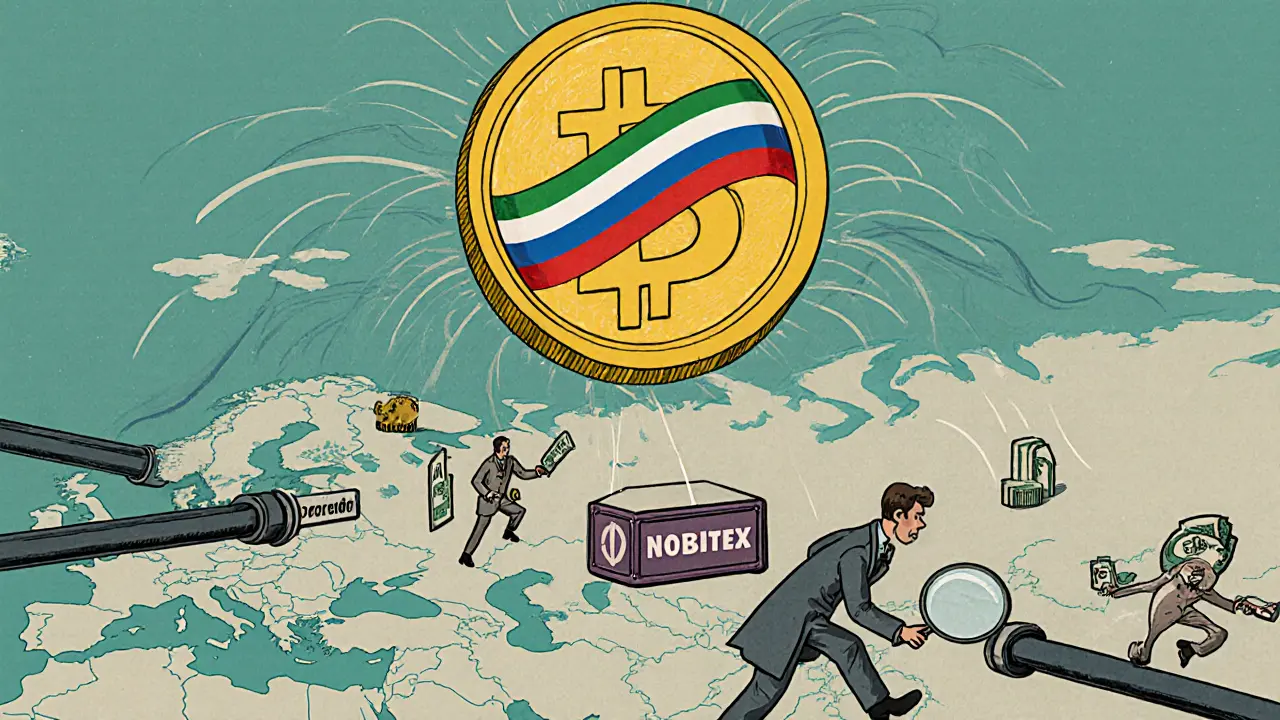
How $15.8 Billion in Sanctioned Crypto Transactions Exposed the Limits of Crypto Enforcement in 2024
In 2024, $15.8 billion in crypto transactions flowed to sanctioned entities, mostly from Iran and Russia. Bitcoin dominated the flow, while DeFi and cross-chain bridges made evasion easier than ever. Enforcement is struggling to keep up.