OFAC Crypto Enforcement: What It Means for Your Wallet and Crypto Projects
When the U.S. government targets crypto with OFAC crypto enforcement, a set of financial sanctions enforced by the Office of Foreign Assets Control to block transactions with sanctioned individuals and entities. It's not just about freezing bank accounts—it’s about cutting off access to entire blockchains. If a wallet, exchange, or token gets added to the OFAC list, it’s effectively blacklisted. No U.S. person or company can interact with it. And because most major exchanges follow U.S. rules, that means global de-listing, frozen funds, and lost access—even if you never did anything wrong.
This isn’t theoretical. crypto sanctions, targeted restrictions on blockchain addresses tied to illicit activity, terrorism, or state-sponsored actors. These include wallets linked to North Korea’s Lazarus Group, Russian oligarchs, and ransomware gangs. But the ripple effects hit everyone. Privacy coins like Monero got delisted. Projects with weak KYC got wiped off exchanges. Even legitimate users found their wallets flagged because they once traded with a tainted address. The rules don’t care about intent—only compliance.
OFAC crypto list, the official registry of blocked blockchain addresses and entities under U.S. sanctions. It’s updated weekly, and it’s growing. You can’t search it like a public directory—it’s buried in government databases and shared privately with exchanges. That’s why some platforms auto-freeze any transaction touching a flagged address. No warning. No appeal. Just silence. And if you’re holding a token that got swept up? Good luck selling it. Many exchanges now scan every incoming and outgoing transaction. Your wallet might be clean, but if it ever touched a bad address—even once—it could get locked.
And it’s not just about criminals. crypto compliance, the process of verifying users, monitoring transactions, and reporting suspicious activity to avoid legal penalties. This is now mandatory for any platform serving U.S. customers. That’s why you see more KYC checks, longer withdrawal delays, and fewer anonymous options. Even decentralized exchanges aren’t safe anymore. If they’re accessible in the U.S., they’re under pressure to comply—or risk fines, lawsuits, and shutdowns.
What does this mean for you? If you’re holding crypto, you’re not just watching price charts—you’re navigating a legal minefield. You might think blockchain is anonymous, but OFAC doesn’t need your name. It just needs your wallet address. And once it’s on the list, your coins are stuck. No one will touch them. No exchange will let you cash out. Even if you bought it legally, you’re now holding a digital ghost.
The posts below show exactly how this plays out in real life. You’ll see how projects got wiped off exchanges because of OFAC ties, how users lost access to their funds after a single bad transaction, and how some tokens vanished overnight after being flagged. You’ll also find guides on how to check if your wallet is clean, how to avoid sanctioned addresses, and which platforms still offer any breathing room. This isn’t about fear. It’s about awareness. The rules changed. Your strategy needs to change too.
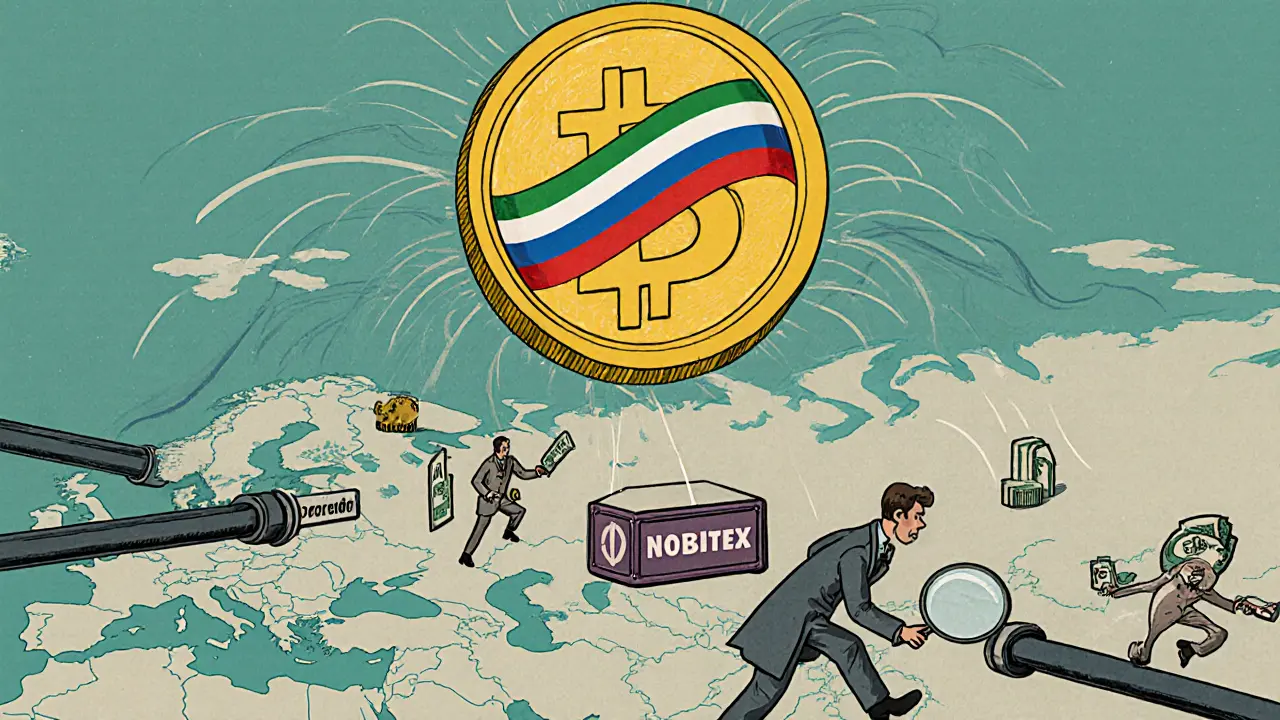
How $15.8 Billion in Sanctioned Crypto Transactions Exposed the Limits of Crypto Enforcement in 2024
In 2024, $15.8 billion in crypto transactions flowed to sanctioned entities, mostly from Iran and Russia. Bitcoin dominated the flow, while DeFi and cross-chain bridges made evasion easier than ever. Enforcement is struggling to keep up.