Illicit Crypto Activity: Scams, Bans, and Hidden Risks in Today’s Market
When you hear illicit crypto activity, illegal or deceptive uses of cryptocurrency that evade laws, exploit users, or bypass financial oversight. Also known as crypto fraud, it includes everything from fake airdrops to unregulated exchanges that vanish with your money. This isn’t just about hackers in hoodies—it’s about real people losing savings because they trusted a name that sounded official, or jumped on a token with zero code behind it.
Many of these scams thrive in the shadows of new tech. privacy coin delisting, the removal of coins like Monero and Zcash from major exchanges due to global anti-money laundering rules is one sign of tightening control. Regulators aren’t targeting privacy for privacy’s sake—they’re chasing criminal use. At the same time, unregulated crypto exchange, platforms with no licenses, no audits, and no accountability keep popping up, promising high returns but leaving users with empty wallets. You’ll find examples of both in the posts below: SOLIDINSTAPAY, GoodExchange, and YOTSUBA aren’t just bad bets—they’re red flags for how easily fraud spreads.
Then there’s the rise of fake airdrops and dead projects disguised as opportunities. The crypto regulatory crackdown, global efforts by agencies like FATF and national bodies to enforce compliance and shut down illegal platforms has made it harder for scammers to operate openly—but they’ve gotten smarter. They now mimic real projects, copy official branding, and use trending names like Dogelon Mars or SUIA to trick you into thinking it’s legit. The truth? Most of these tokens have no team, no code, and no future. And when the hype dies, your funds vanish with them.
What ties all these together? A pattern: if something sounds too good to be true, it is. If there’s no public team, no audit, no transaction history—it’s not a project, it’s a trap. You’ll see this in posts about BitOrbit’s collapse, the fake SOS Foundation airdrop, and MilkshakeSwap’s near-zero liquidity. These aren’t outliers. They’re case studies in how illicit crypto activity hides in plain sight.
Some of the most dangerous scams don’t even need a blockchain. They just need a name, a social media post, and a desperate crowd. That’s why understanding the difference between real innovation and fake promise matters more than ever. The posts here don’t just list bad projects—they explain why they failed, who got hurt, and how to spot the next one before you lose money. You won’t find fluff here. Just facts, patterns, and warnings you can use today to stay safe in a messy, fast-moving market.
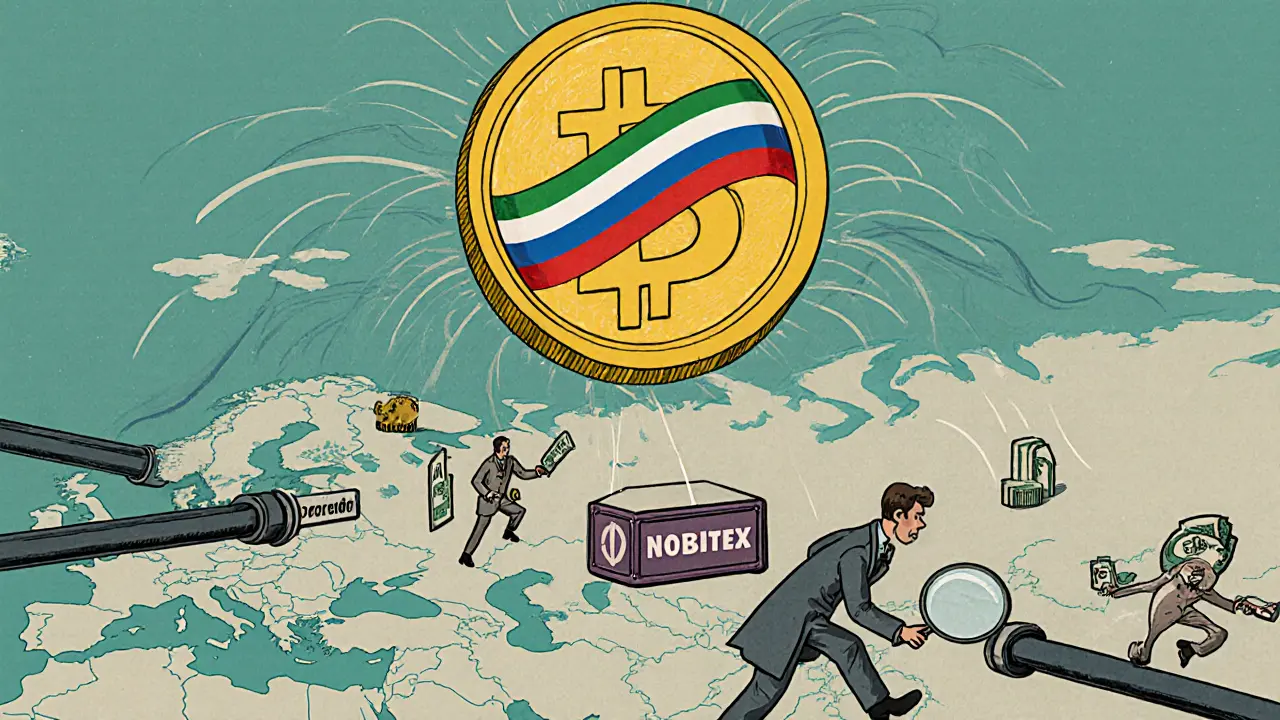
How $15.8 Billion in Sanctioned Crypto Transactions Exposed the Limits of Crypto Enforcement in 2024
In 2024, $15.8 billion in crypto transactions flowed to sanctioned entities, mostly from Iran and Russia. Bitcoin dominated the flow, while DeFi and cross-chain bridges made evasion easier than ever. Enforcement is struggling to keep up.