ERC-20 Token: What It Is, How It Works, and Why It Powers Most Crypto Projects
When you buy a crypto coin like Uniswap, Chainlink, or even a meme token, chances are it’s an ERC-20 token, a technical standard for issuing and managing tokens on the Ethereum blockchain. Also known as Ethereum Request for Comment 20, it’s the reason your wallet can hold hundreds of different coins without needing separate systems for each one. Think of it like a universal plug—no matter what device you have, if it uses the same outlet, it works. ERC-20 does the same for crypto: it lets apps, exchanges, and wallets talk to any token built on Ethereum using the same rules.
This standard defines how tokens behave: how they’re created, how users send them, how balances are tracked, and how apps can read those balances. Without ERC-20, every new token would need its own custom code, making trading, storing, or using them a nightmare. With it, you can swap tokens on a DEX, stake them in a lending platform, or use them in a game—all without the platform needing to rewrite its entire system. That’s why over 90% of tokens on Ethereum follow this standard. It’s not just popular—it’s the foundation.
But ERC-20 isn’t the only game in town. You’ll see other standards like ERC-721, a standard for unique, non-fungible tokens like digital art or collectibles, or ERC-1155, a hybrid that handles both unique and interchangeable tokens in one contract. These are great for NFTs or gaming items, but they’re not meant to replace ERC-20. They solve different problems. ERC-20 is for currency-like tokens—things you trade, send, or use as payment. That’s why you’ll find it in DeFi apps, airdrops, and tokens built on Arbitrum, Polygon, or other Ethereum-compatible chains.
And while newer blockchains like Solana or Sui have their own token formats, many still mirror ERC-20’s structure because it’s proven, predictable, and widely understood. Even when a project claims to be "Ethereum killer," it often still uses an ERC-20-style token to make it easy for users to adopt. That’s the power of a standard that just works.
What you’ll find in the posts below are real-world examples of how ERC-20 tokens are used—and misused. You’ll see tokens built on Arbitrum, BSC, and Polygon, all relying on this same core standard. Some are serious DeFi tools. Others are barely alive. Some are scams. Some are community experiments. But they all follow the same rules. Understanding ERC-20 means you can spot the difference between a token that’s built to last and one that’s just a temporary spark.
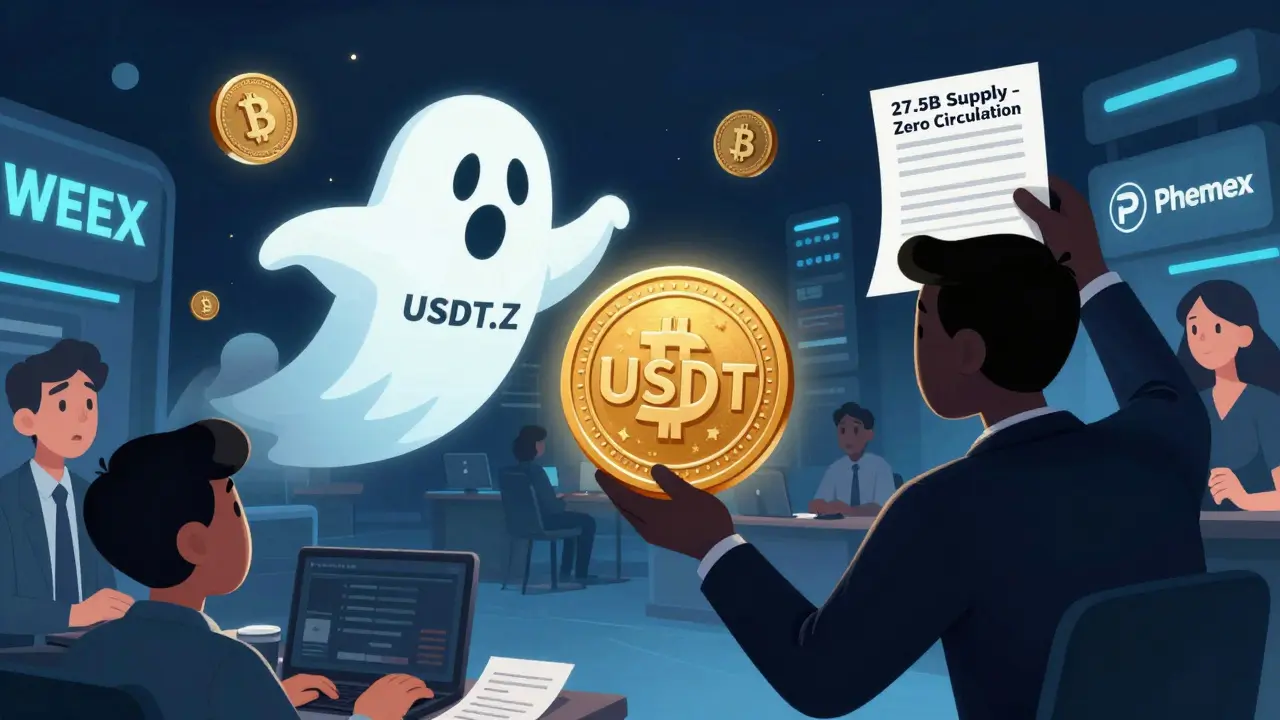
What Is Tether USD Bridged ZEB20 (USDT.Z)? A Clear Look at a Suspicious Crypto Token
Tether USD Bridged ZEB20 (USDT.Z) looks like a stablecoin but isn't official Tether. With zero circulating supply and no transparency, it's a high-risk imposter token. Avoid it.

What is Yotsuba Koiwai (YOTSUBA) crypto coin? The truth behind the meme coin myth
Yotsuba Koiwai (YOTSUBA) crypto is not a real cryptocurrency. Despite claims online, there is no active token, no exchange listing, and no blockchain presence. It's a fabricated meme coin scam using a popular manga character.