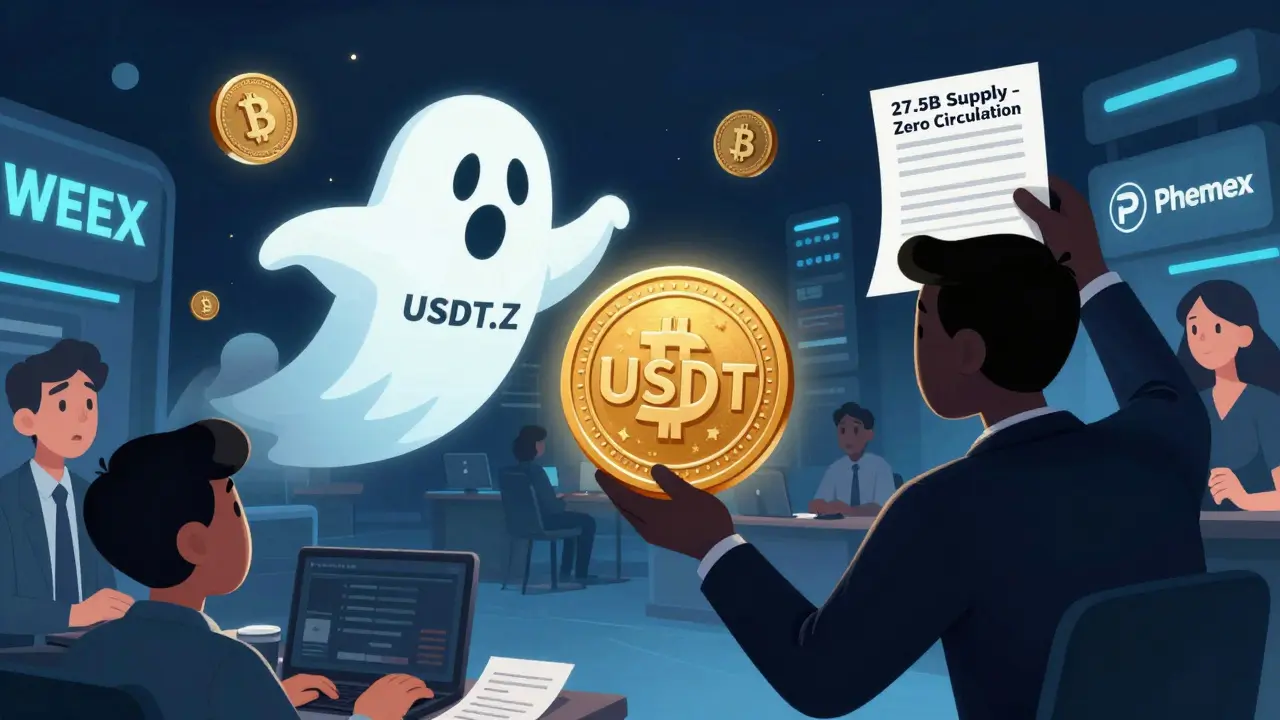
There’s a new crypto token floating around called Tether USD Bridged ZEB20 (USDT.Z). It’s being pushed on exchanges like WEEX, Binance, and Phemex as a "next-generation stablecoin" that’s pegged to the US dollar. Sounds familiar? That’s because it’s trying to look just like Tether’s real USDT. But here’s the truth: USDT.Z is not official Tether. It’s not even close. And if you’re thinking about buying it, you need to know what you’re really getting into.
It’s Not Tether - But It Pretends to Be
Tether Limited, the company behind the real USDT, has never released a token called USDT.Z. Not in 2024. Not in 2025. Not in 2026. Their official website, tether.to, doesn’t mention it. Their Twitter account doesn’t tweet about it. Their whitepapers don’t reference it. And yet, dozens of crypto sites list USDT.Z as if it’s real. The name is the first red flag. Real Tether tokens use symbols like USDT-ERC20, USDT-TRC20, or USDT-ERC20 on Polygon. They don’t add random letters like ".Z" at the end. That’s not a technical upgrade - it’s a trick. Scammers do this all the time. They take a trusted name, tweak it slightly, and hope you don’t notice the difference.Zero Circulating Supply? That’s Not a Stablecoin - That’s a Ghost
According to Liquidity Finder, USDT.Z has a total supply of 27.5 billion tokens. But here’s the kicker: zero are in circulation. That means nobody owns them. No one’s trading them. No one’s using them. Not even the developers. A real stablecoin like USDT or USDC has a circulating supply that matches its reserve holdings. If there’s $10 billion in USDT out there, there’s $10 billion in cash or equivalents locked up in a bank. That’s transparency. That’s trust. USDT.Z has none of that. No reserve reports. No audits. No proof of backing. Just a number on a screen that says "27.5 billion" - with nothing behind it. That’s not innovation. That’s a ghost coin.Confusion with ZED20? That’s Not a Feature - It’s a Mess
CoinMarketCap lists two nearly identical tokens: USDT.Z (ZEB20) and USDT.z (ZED20). One is supposedly on Ethereum. The other on BNB Smart Chain. They have different market rankings (#4559 vs. #3723). But they’re both labeled as "Tether USD Bridged" with the same description, same price, same nothing. This isn’t two different projects. This is a sloppy scam. Two fake tokens with swapped letters, running on different blockchains, both trying to ride Tether’s brand. Legitimate crypto projects don’t do this. They don’t confuse users. They don’t create duplicate tokens with minor spelling changes. That’s how you spot a pump-and-dump scheme.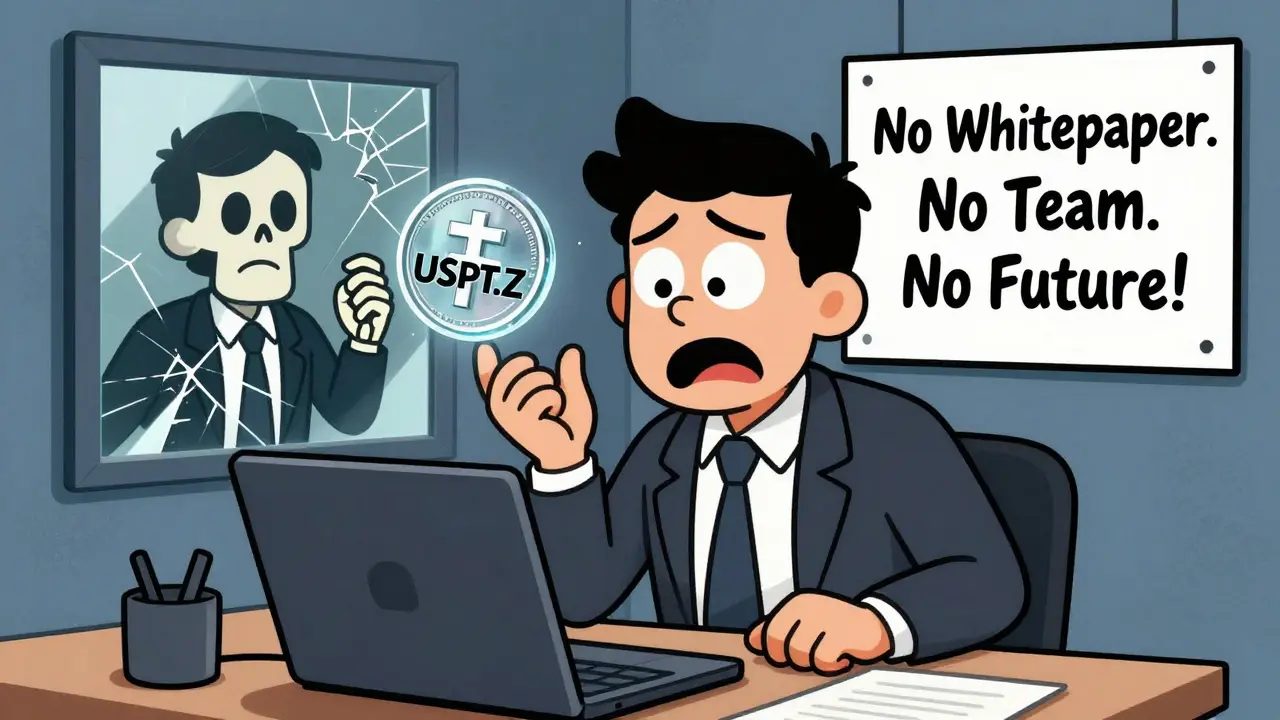
Where You’ll See It - And Why That’s Dangerous
You won’t find USDT.Z on Coinbase, Kraken, or any major regulated exchange. You’ll only see it on lesser-known platforms like WEEX, Phemex, and Binance’s Web3 Wallet. Why? Because those platforms don’t do deep due diligence. They just list anything that pays a listing fee. The buying guides are all the same: buy USDT, send it to MetaMask, swap it for USDT.Z on Uniswap or PancakeSwap. Sounds simple, right? But here’s what they don’t tell you:- You’re swapping real money (USDT) for a token with no liquidity.
- No one else is buying it. When you try to sell, you’ll be stuck.
- The smart contract address? Not published anywhere. That means you can’t verify what you’re interacting with.
No Whitepaper. No Team. No GitHub. No Future
Real crypto projects have documentation. They have GitHub repos showing code updates. They have team members with LinkedIn profiles. They have roadmaps. They have Telegram groups with active developers answering questions. USDT.Z has none of that. Zero. Nada. No whitepaper. No GitHub. No team names. No developer updates. No community forums. Just a CoinMarketCap page with marketing fluff like "earn passive income" and "unlock liquidity." Those are buzzwords used by projects that have no actual product. Security researchers like ZachXBT have warned about tokens like this since late 2025. They call them "imposter stablecoins" - fake coins built to look like real ones so they can trick people into trading them before vanishing.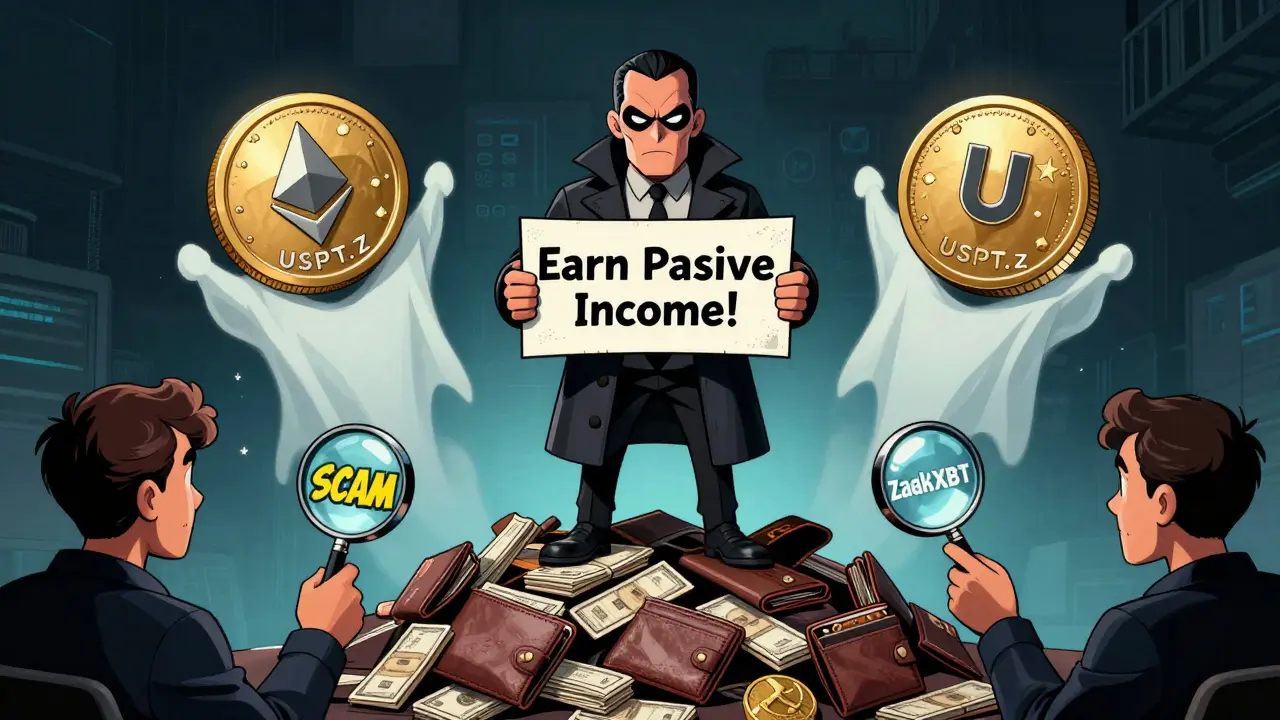
Why People Fall for It - And How to Avoid It
People fall for USDT.Z because they’re looking for quick gains. They see "USDT" and think, "Oh, it’s stable. Safe." They see "staking" and "earn passive income" and think they’re getting something new and profitable. But here’s the reality: if it sounds too good to be true, it is. Real staking happens on well-known protocols like Lido or Coinbase. Real stablecoins are backed by audited reserves. Real crypto doesn’t hide its smart contract address. The only people making money from USDT.Z are the ones who created it - and they’ve already cashed out. The rest of you? You’re the last ones holding the bag.What Should You Do?
If you already bought USDT.Z - stop trading it. Don’t try to wait for it to "recover." It won’t. You’re not investing. You’re gambling on a dead token. If you’re thinking about buying it - don’t. Walk away. Seriously. The risk isn’t just losing money. It’s exposing your wallet to malicious code that could drain your entire balance. If you see someone promoting USDT.Z on Twitter or Reddit - report it. These tokens thrive on hype. Take away the hype, and they collapse.The Bigger Picture: Why This Matters
This isn’t just about one fake token. It’s about how the crypto space is still full of loopholes. Exchanges list anything. Wallets let you swap anything. Regulators are still catching up. And scammers? They’re moving faster than ever. The real USDT is worth over $110 billion. It’s used by institutions, traders, and everyday people. It’s the backbone of crypto trading. USDT.Z? It’s a shadow. A mirage. A digital ghost. Don’t confuse branding with legitimacy. Don’t mistake hype for innovation. And never, ever trust a crypto project that won’t tell you who made it - or where the money really is.Stick to the real stuff: USDT, USDC, DAI. They’re not flashy. They don’t promise 100x returns. But they’re real. And that’s worth more than any "Z" suffix could ever be.
5 Comments
This is the exact kind of scam that gets people wiped out in crypto-and it’s SO frustrating to see it still working.
People think they’re getting a ‘better’ USDT, but it’s just a trap with a fancy name.
I’ve seen wallets drained because someone swapped USDT for USDT.Z thinking it was a ‘new feature’.
Don’t be that person. If it’s not on the official Tether website, it’s not real.
Report these listings. Block these bots. Save someone else from losing their life savings.
This isn’t just about money-it’s about trust in a space that’s already fragile.
And yes, I’ve lost friends to this exact thing. Don’t let it happen to you.
Zero circulating supply and yet it’s listed on major exchanges? That’s not incompetence, that’s complicity.
These platforms don’t care if it’s a ghost coin-they get paid to list it.
And the fact that CoinMarketCap treats USDT.Z and USDT.z as two separate entries? That’s a joke.
Someone’s making money off this chaos, and it’s not the users.
Stop pretending crypto is ‘decentralized innovation’ when it’s just a Wild West with better UIs.
Real stablecoins don’t need a ‘.Z’ to be confusing.
They’re transparent. They’re audited. They don’t hide their contracts.
This isn’t a bug-it’s the system working as intended.
Okay, let’s break this down-because this is a textbook example of how scammers exploit cognitive bias in crypto.
First, they hijack a trusted brand-Tether-because everyone knows USDT, and trust is the most valuable asset in finance.
Then they add a tiny, almost invisible tweak-'.Z'-knowing that most people won’t notice, especially if they’re scrolling fast on a phone.
They use buzzwords like ‘passive income’ and ‘bridged’ to sound technical, when in reality, ‘bridged’ just means ‘we slapped it on another chain so it looks legit’.
They create duplicate tokens with swapped letters-ZEB20 vs ZED20-because they know someone will eventually confuse them and buy both, thinking they’re ‘diversifying’.
They list only on low-barrier exchanges-WEEX, Phemex-because those platforms don’t verify, they monetize.
They don’t publish a whitepaper because they don’t have a product-just a contract address and a marketing page.
They rely on FOMO-people see ‘USDT’ and think ‘safe’-and they don’t check the contract, the supply, or the team.
And worst of all? They don’t even need to pump it-just let it sit there, untraded, and wait for someone desperate to swap real money for ghost tokens.
It’s not clever. It’s not innovative. It’s predatory. And until regulators start holding exchanges accountable for listing these, it’ll keep happening.
Every time someone buys this, they’re funding the next scam.
Don’t be a customer. Be a watchdog.
USDT.Z is a ghost and everyone pretending it’s real is just feeding the machine
It is imperative to underscore the gravity of this situation, as the proliferation of imposter stablecoins undermines the foundational principles of transparency and accountability that underpin legitimate financial instruments.
The absence of a verifiable smart contract, coupled with a non-existent circulating supply, constitutes a structural impossibility for any asset purporting to function as a stablecoin.
Furthermore, the deliberate obfuscation of the issuing entity-manifested through the absence of a public team, whitepaper, or developmental roadmap-constitutes a material breach of the fiduciary expectations inherent in decentralized finance.
Exchanges that list such tokens, regardless of fee structures, are complicit in the erosion of investor trust.
It is not sufficient to claim ignorance; due diligence is not optional-it is non-negotiable.
Investors must be educated to scrutinize not merely the name, but the provenance, the liquidity, and the verifiability of every asset they interact with.
Until regulatory frameworks catch up with the velocity of these deceptive practices, the onus remains on the community to expose, denounce, and avoid such instruments.
One cannot overstate the importance of adhering strictly to established, audited, and transparent stablecoins-USDT, USDC, DAI-whose operational integrity has been repeatedly validated through time and market scrutiny.
To engage with USDT.Z is not an act of speculation; it is an act of financial self-harm.