Crypto Sanctions 2024: What’s Banned, Who’s Affected, and How It Changes Everything
When we talk about crypto sanctions 2024, government-imposed restrictions on cryptocurrency use, trading, or access due to regulatory, security, or geopolitical concerns. Also known as crypto regulatory crackdowns, these measures are no longer theoretical—they’re actively shutting down wallets, delisting coins, and blocking exchanges worldwide. This isn’t about slowing down innovation. It’s about control. And in 2024, the rules are changing faster than most traders can keep up.
One of the biggest targets? privacy coins, cryptocurrencies designed to hide transaction details like sender, receiver, and amount—such as Monero and Zcash. Also known as anonymity-focused tokens, they’ve been quietly removed from Coinbase, Binance, Kraken, and over 30 other major platforms. Why? Because the FATF crypto rules, global standards set by the Financial Action Task Force to prevent money laundering through digital assets. Also known as FATF travel rule, they require exchanges to track and share user data across borders. Privacy coins can’t comply—and so they’re being cut off. This isn’t just about crime. It’s about visibility. Regulators don’t want crypto to be invisible. They want to know who’s sending what to whom.
Then there’s the country-level bans. Cambodia’s banking system now blocks nearly all crypto transactions, letting only two government-approved platforms operate. Pakistan created a new regulator, PVARA, to license every crypto business—no license, no access. Even countries that once welcomed crypto are now drawing red lines. The pattern? If a coin or service can’t be traced, taxed, or controlled, it’s getting banned. And the ripple effect is real: users in restricted regions are turning to peer-to-peer networks, decentralized exchanges, or wrapped tokens—but even those are under scrutiny. crypto exchange bans, when platforms are forced to delist assets or shut down operations due to regulatory pressure. Also known as exchange delistings, these aren’t just business decisions—they’re survival moves.
What does this mean for you? If you’re holding privacy coins, you might not be able to trade them on your usual exchange. If you’re in a sanctioned country, your bank might freeze your account for using crypto. If you’re using an unregulated platform like SOLIDINSTAPAY or GoodExchange, you’re not just risking your money—you’re risking legal exposure. The crypto world is splitting into two: the compliant and the underground. And the compliant side is growing faster.
The posts below show you exactly how this is playing out. From Monero being kicked off exchanges to Cambodia’s crypto blackout, from fake airdrops exploiting confusion to legitimate platforms adapting to new rules—you’ll see real examples of what’s working, what’s failing, and what’s getting wiped out. No fluff. No theory. Just what’s happening now, and how to protect yourself before the next ban drops.
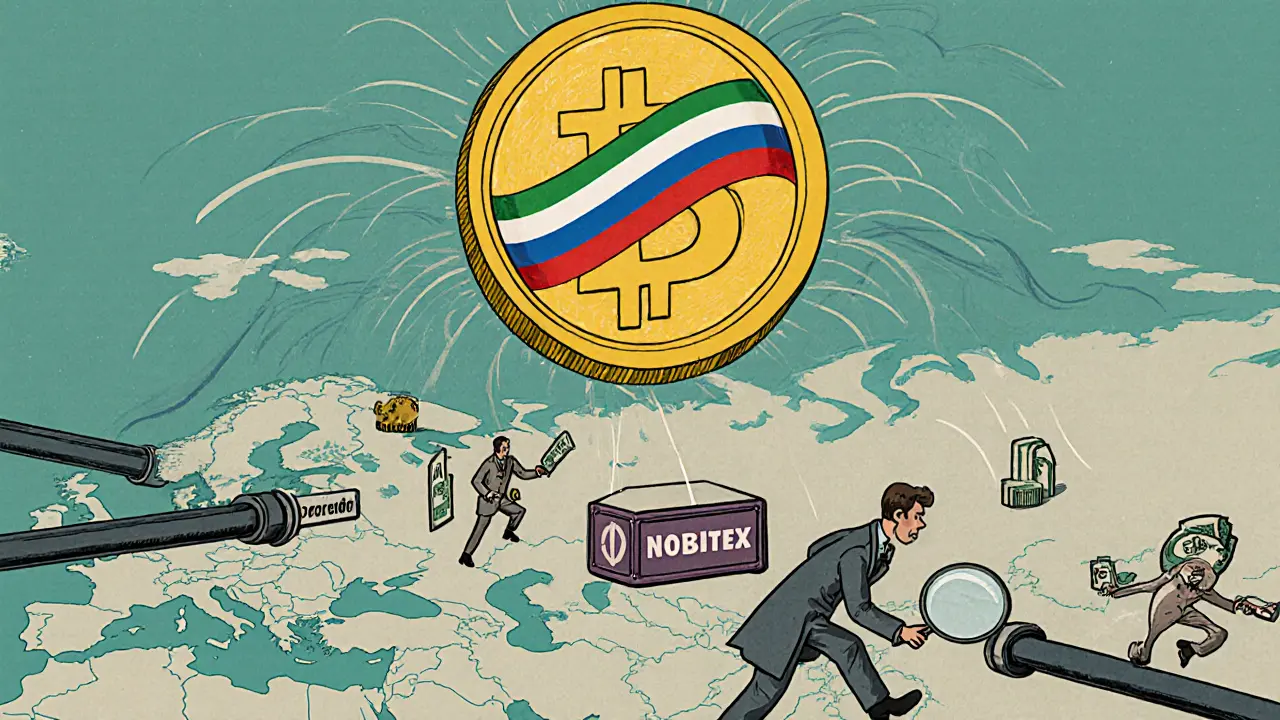
How $15.8 Billion in Sanctioned Crypto Transactions Exposed the Limits of Crypto Enforcement in 2024
In 2024, $15.8 billion in crypto transactions flowed to sanctioned entities, mostly from Iran and Russia. Bitcoin dominated the flow, while DeFi and cross-chain bridges made evasion easier than ever. Enforcement is struggling to keep up.