China crypto ban: What happened, who it affected, and what it means today
When China crypto ban, a sweeping government crackdown on cryptocurrency trading and mining that began in 2021 and intensified through 2023. Also known as China's digital currency crackdown, it didn’t just limit access—it erased entire markets overnight. This wasn’t a minor policy tweak. It was a full-scale dismantling of crypto infrastructure inside China’s borders, targeting mining farms, exchanges, and even peer-to-peer trading. The goal? To protect the financial system from what officials called "unregulated risk" and to push adoption of the digital yuan instead.
The ban hit three major areas hard: crypto mining, the process of validating blockchain transactions using powerful computers, mostly powered by cheap hydroelectricity in provinces like Sichuan and Xinjiang. Also known as Bitcoin mining, it was once the backbone of global Bitcoin production, with China handling over 60% of it before the ban. Within months, those farms were shut down, machines were seized, and miners fled to Kazakhstan, the U.S., and other countries. Then came crypto exchanges, platforms like Binance, OKX, and Huobi that once had millions of Chinese users. Also known as digital asset trading platforms, they were forced to stop serving Chinese customers or face legal action. Even P2P platforms like LocalBitcoins saw traffic collapse as banks froze accounts linked to crypto transactions. Finally, the government cracked down on crypto-related content, including social media posts, YouTube channels, and Telegram groups that promoted trading or mining. Also known as crypto education content, these were labeled as "financial scams" and removed en masse. The message was clear: if you’re not using the digital yuan, you’re not playing by the rules.
What’s left today? A shadow market. Some Chinese users still trade through offshore platforms or use VPNs, but it’s riskier than ever. Banks now monitor transactions for crypto-related keywords, and regulators actively scan for wallet addresses tied to banned platforms. Meanwhile, the digital yuan has rolled out in dozens of cities, offering a state-controlled alternative with no anonymity. The global crypto market didn’t collapse—it just moved. Mining hubs shifted. Exchanges restructured. And investors learned: if a country bans crypto, it doesn’t kill the asset—it just forces it underground. Below, you’ll find real cases of what happened after the ban, how people adapted, and which projects survived—or vanished—because of it.
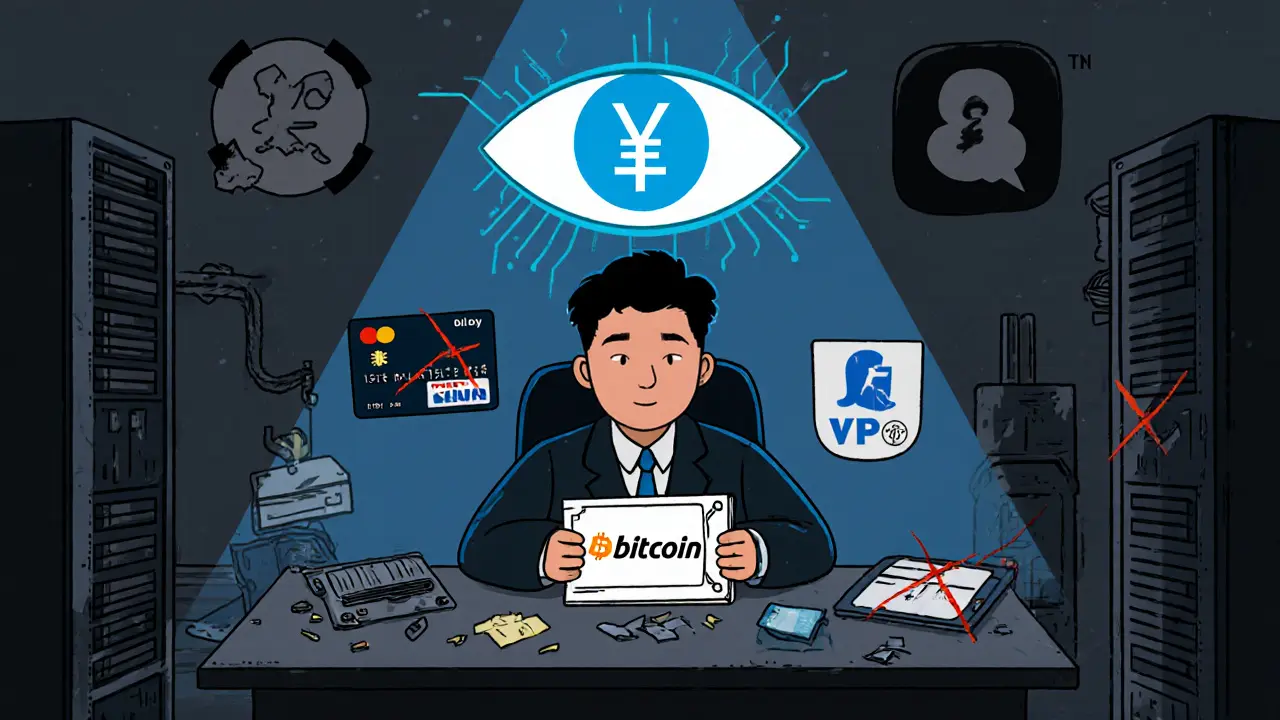
China's Complete Crypto Ban: What It Means for Bitcoin Holders
China's crypto ban blocks trading and mining but not ownership. Bitcoin holders face financial isolation, surveillance, and no legal recourse - yet the asset persists underground. The government's real focus is its own digital currency, not banning Bitcoin.