Bitcoin holders: Who they are, what they do, and why it matters
When you hear "Bitcoin holders, people who own and control Bitcoin on the blockchain, not just trading it on exchanges. Also known as Bitcoin owners, they're the ones who actually keep the network alive by holding onto their coins instead of selling." it's easy to think of them as rich traders or tech geeks. But the truth is simpler: Bitcoin holders are anyone who has a private key to a Bitcoin wallet and chooses not to sell. That’s it. No fancy tools, no insider info—just control over their own money. And that control is what makes Bitcoin different from everything else.
These holders don’t just sit on their coins. Their behavior moves markets. When large holders, often called "whales," move Bitcoin, prices react. When everyday people hold through crashes, they stabilize the network. That’s why Bitcoin’s price doesn’t just depend on news or hype—it depends on how many people are still holding. The longer someone holds, the less supply is available for sale. Less supply means more pressure on price when demand rises. It’s basic economics, but in crypto, it’s driven by real people, not banks or institutions.
Bitcoin holders also shape the network’s future. Every time someone uses a non-custodial wallet—like a hardware device or a self-custody app—they’re reinforcing Bitcoin’s core promise: no middlemen. That’s why exchanges like Coinbase, a centralized platform where users often don’t own their private keys. Also known as custodial exchanges, they hold Bitcoin on behalf of users. aren’t the same as holding Bitcoin yourself. Exchanges can freeze accounts, get hacked, or change rules. But when you hold your own Bitcoin, you’re part of a decentralized system that doesn’t need permission. That’s why so many posts here talk about wallets, security, and avoiding scams—because holding Bitcoin right means protecting your keys.
And it’s not just about money. Bitcoin holders are also testing a new kind of financial freedom. In countries like Cambodia, where banks block crypto, holders use Bitcoin to send money across borders. In places with unstable currencies, like Pakistan, holders use it to protect savings. Even meme coins like SAMO, a Solana-based memecoin designed to onboard new users into crypto. Also known as Samoyedcoin, it’s often used as a gateway into the ecosystem. attract new people who eventually learn to hold Bitcoin properly. The path often starts with a fun token, but it ends with understanding real ownership.
What you’ll find below isn’t a list of price predictions or get-rich-quick schemes. It’s a collection of real stories, warnings, and tools from people who’ve been through it. You’ll see how holders got burned by fake airdrops, why some projects vanish overnight, and how to spot the difference between a real asset and a scam. Whether you’re just starting out or you’ve held for years, this isn’t about speculation—it’s about knowing what you own, why you own it, and how to keep it safe.
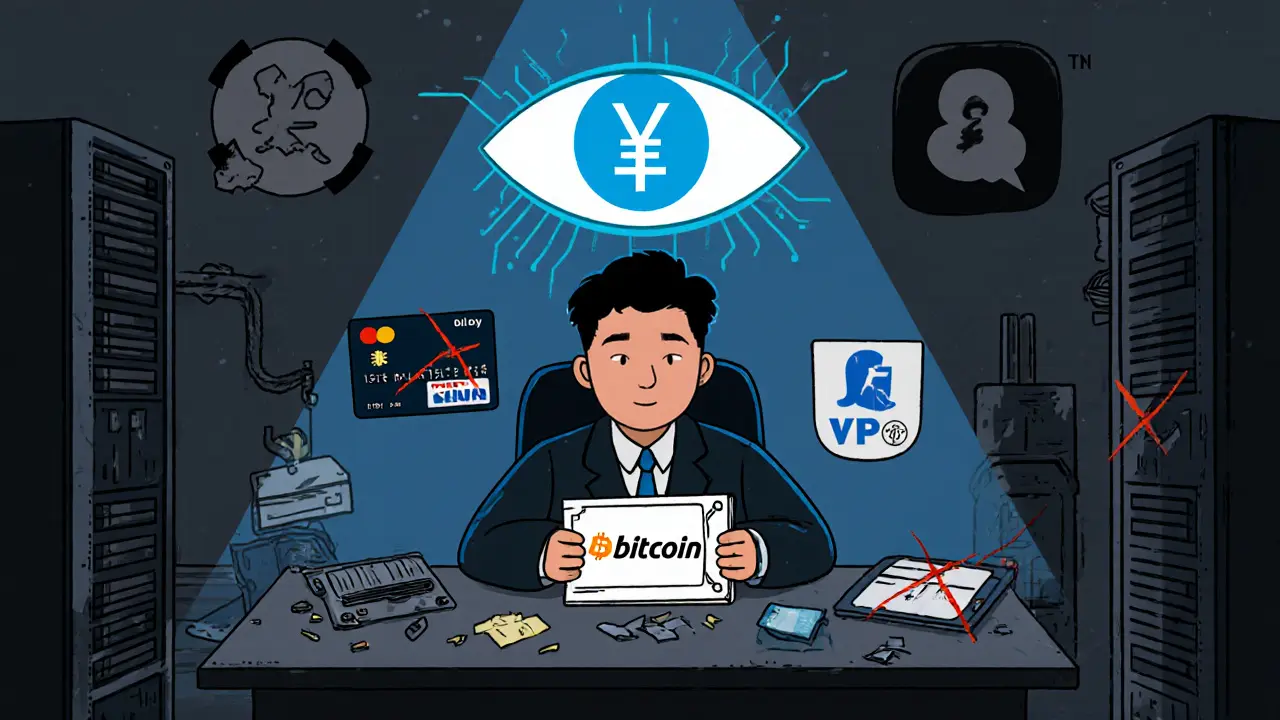
China's Complete Crypto Ban: What It Means for Bitcoin Holders
China's crypto ban blocks trading and mining but not ownership. Bitcoin holders face financial isolation, surveillance, and no legal recourse - yet the asset persists underground. The government's real focus is its own digital currency, not banning Bitcoin.