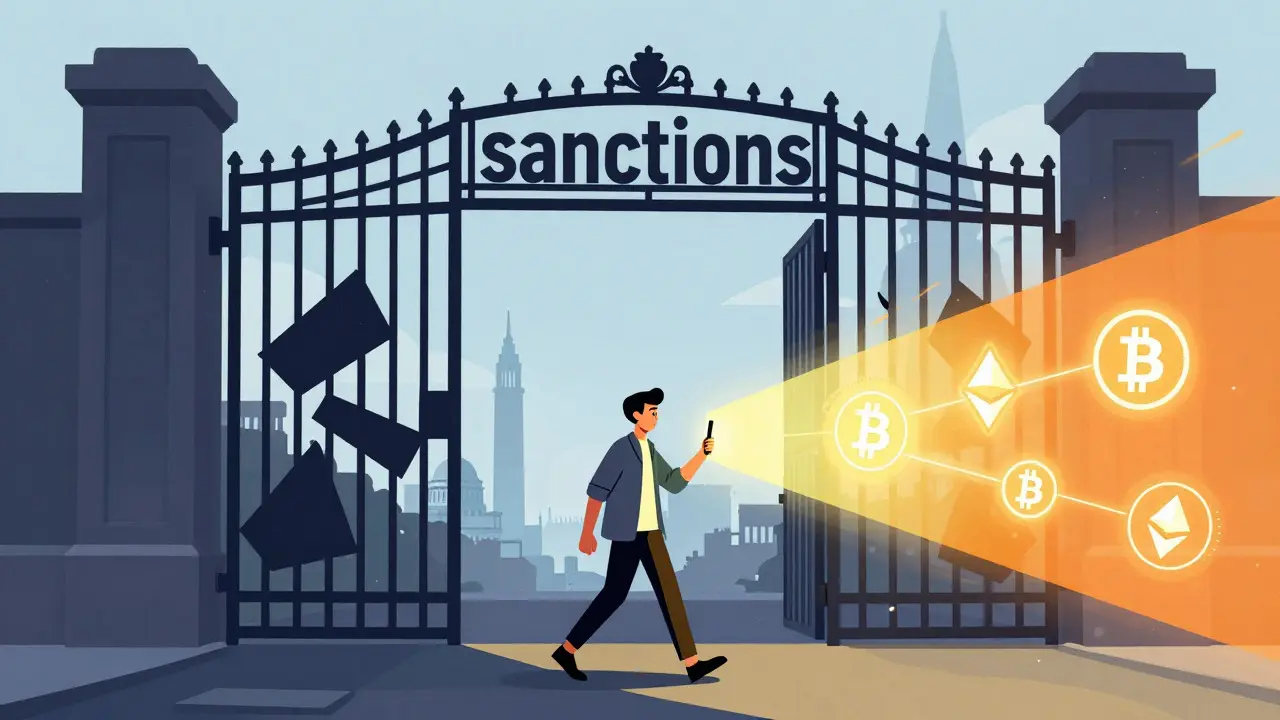
For two decades, a single line of code in a U.S. regulation effectively locked Syrian citizens out of the global digital economy. If you held Bitcoin or used a DeFi protocol, you likely didn't care about Washington's foreign policy. But for Syrians, that indifference was a luxury they couldn't afford. The blanket ban meant that using a U.S.-based exchange wasn't just risky; it was technically illegal, carrying penalties up to $20 million or twice the transaction value. That era ended abruptly in mid-2025, reshaping how Syrian crypto users interact with the global financial system.
The shift wasn't a gradual easing but a structural overhaul. On June 30, 2025, President Trump signed Executive Order 14312, revoking six foundational executive orders that had governed Syria-related financial activities since 2004. This action terminated the national emergency underlying those sanctions. By August 26, 2025, the Office of Foreign Assets Control (OFAC) published a final rule removing the Syrian Sanctions Regulations (SySR) from the Code of Federal Regulations entirely. For the average user, this means the legal barrier to accessing U.S. platforms has vanished, replaced by a more nuanced, targeted compliance landscape.
From Blanket Bans to Targeted Accountability
Understanding the current state requires looking at what actually changed. Previously, the SySR prohibited most financial transactions between U.S. persons and Syrian entities. This included cryptocurrency transfers, making virtually all interaction with U.S. exchanges or wallet providers off-limits. Now, the framework has been rebranded as the Promoting Accountability for Assad and Regional Stabilization Sanctions Regulations (PAARSS). This name change reflects a policy pivot: instead of isolating an entire nation, the focus is now on specific bad actors.
However, "targeted" doesn't mean "easy." OFAC maintains sanctions on over 100 individuals and entities affiliated with the former Bashar al-Assad regime. Restrictions also remain on human rights abusers, Captagon traffickers, and those linked to Syria's past proliferation activities. Additionally, sanctions tied to ISIS, Al-Qa'ida, and Iran proxies are still active. This creates a complex environment where being Syrian no longer automatically makes you a sanctioned party, but your specific affiliations matter significantly.
| Feature | Pre-July 2025 (SySR) | Post-July 2025 (PAARSS) |
|---|---|---|
| Scope of Prohibition | Blanket ban on most U.S.-Syria financial transactions | Targeted restrictions on specific individuals/entities |
| Crypto Access | Illegal for U.S. persons/platforms to serve Syrians | Authorized via General Licenses 24 & 25 |
| Penalties for Violation | Asset freezing, criminal prosecution, civil fines up to $20M | Applies only to designated individuals/remaining programs |
| Compliance Focus | Geographic blocking (all Syrian nationals) | Identity screening (SDN list matching) |
How General Licenses Enable Crypto Transactions
The legal pathway for Syrian users to access U.S. services is paved by two key instruments: OFAC General License 24 and General License 25. Issued in early 2025, these licenses authorize conduct that would otherwise be prohibited under other sanctions programs, such as the Global Terrorism Sanctions Regulations. General License 25, specifically issued on May 28, 2025, provides blanket authorization for transactions otherwise prohibited by the old SySR. In practice, this gives Syrian crypto users a clear legal green light to engage with U.S.-based exchanges, wallet providers, and digital asset service providers.
This isn't just theoretical. It allows for the normalization of Know-Your-Customer (KYC) processes. Before the relief, many exchanges either blocked Syrian passports entirely or required opaque workarounds. Now, compliant platforms can onboard Syrian users directly, provided those users aren't on the Specially Designated Nationals (SDN) List. The mass delisting of 518 individuals and entities from the SDN List further expanded the eligible pool, removing legal barriers for thousands who were previously stuck in limbo.

Practical Implications for Platforms and Users
While the law has changed, technology and risk management haven't caught up everywhere. Cryptocurrency platforms must now implement sophisticated screening mechanisms. The goal is to distinguish between sanctioned individuals (like former regime officials) and the broader Syrian population. For smaller exchanges or decentralized finance (DeFi) protocols, this can be a technical hurdle. Over-compliance remains a risk; some platforms might still hesitate to onboard Syrian users due to lingering fear of regulatory ambiguity, even though the comprehensive ban is gone.
For the end-user, the experience should look like this:
- Exchange Onboarding: You can now use standard KYC procedures with major U.S.-regulated exchanges. Your nationality alone shouldn't trigger a block.
- Wallet Services: Access to U.S.-based custodial wallets is legally permitted, reducing the need for offshore or anonymous alternatives.
- DeFi Participation: While DeFi is permissionless, protocols seeking U.S. market access are updating their compliance layers to align with PAARSS, ensuring smoother integrations for Syrian participants.
Beyond OFAC, other agencies have joined the relief effort. The Bureau of Industry and Security (BIS) created the License Exception Syria Peace and Prosperity (SPP) in August 2025. This authorizes the export of EAR99 items, which includes mining hardware and blockchain infrastructure equipment. This move supports the development of a domestic Syrian crypto ecosystem by making it easier to import necessary tech without cumbersome licensing.

Navigating the Remaining Compliance Hurdles
Despite the progress, don't assume everything is smooth sailing. The Department of State’s 180-day waiver of sanctions under Section 7412 of the Caesar Syria Civil Protection Act adds another layer of nuance. This waiver reduces risks for infrastructure development and investment, but it’s temporary and subject to review. Furthermore, FinCEN guidance from June 4, 2025, encourages a risk-based approach rather than a one-size-fits-all ban. This means banks and exchanges will assess your individual risk profile. If you have ties to any remaining sanctioned sectors, your transaction monitoring might be tighter.
Here are three practical tips for navigating this new landscape:
- Verify Your Status: Check the current SDN List before initiating large cross-border transactions. Being on the list is rare but possible if you have specific business ties to sanctioned entities.
- Choose Compliant Platforms: Stick to exchanges that explicitly advertise support for post-2025 Syria relief. Smaller, unregulated platforms may not have updated their compliance stacks yet.
- Keep Records: Maintain documentation of your source of funds and identity. With the shift to risk-based assessment, transparency is your best defense against accidental flagging.
What Comes Next for Syrian Crypto?
OFAC has indicated plans to supplement the PAARSS framework with more comprehensive regulations. This could include additional interpretive guidance or new general licenses. For now, the direction is clear: moving away from economic isolation toward precision targeting. Syria serves as a test case for how the U.S. handles sanctions in the age of cryptocurrencies. The lesson? Financial inclusion is becoming harder to ignore, even in geopolitical hotspots.
If you’ve been operating through underground channels or offshore entities, the time to consolidate your assets onto compliant, transparent platforms is now. The legal risks have dropped dramatically, and the infrastructure is catching up. The era of total exclusion is over, but vigilance in compliance is still required.
Are all Syrian citizens free from U.S. crypto sanctions now?
Most are. The comprehensive ban was lifted, but targeted sanctions remain on over 100 individuals linked to the Assad regime, human rights abusers, and other specific groups. If you are not on the SDN List, you can generally access U.S. crypto services.
Can I use Binance or Coinbase if I am a Syrian citizen?
Yes, provided you pass standard KYC checks. General License 25 authorizes these transactions. However, ensure the platform has updated its compliance systems to reflect the 2025 changes, as some may still have legacy blocks in place.
What happened to the Caesar Act restrictions?
The Department of State issued a 180-day waiver of sanctions restrictions imposed by Section 7412 of the Caesar Syria Civil Protection Act. This reduces compliance risks for infrastructure and investment activities supporting digital asset adoption.
Do I need special licenses to buy mining equipment in Syria?
Likely not for standard hardware. The BIS created the License Exception Syria Peace and Prosperity (SPP), which authorizes the export of EAR99 items, including mining equipment, to Syria without specific licenses.
Is DeFi safer for Syrians than centralized exchanges?
Not necessarily. While DeFi is permissionless, many protocols now implement compliance layers to serve U.S. markets. Centralized exchanges offer clearer legal standing under the new General Licenses. The safest route is using compliant, regulated platforms.