Key Takeaways
- Turns simple wallets into programmable smart contracts.
- Eliminates the "single point of failure" of seed phrases through social recovery.
- Allows developers to pay for users' transaction fees (gas sponsorship).
- Enables complex security rules like multi-sig and daily spending limits.
Moving Beyond the Dreaded Seed Phrase
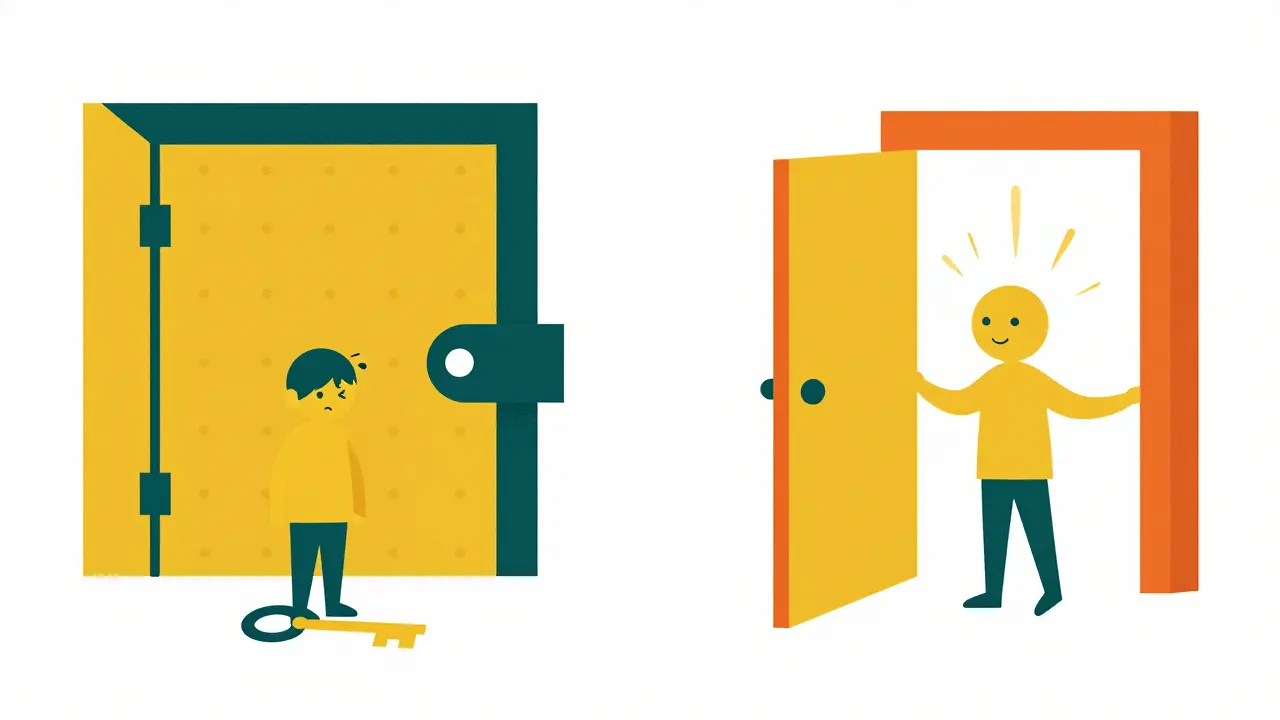
To understand the benefit, we first have to look at the problem. Most people use Externally Owned Accounts (EOAs). These are the standard accounts you get with wallets like MetaMask. An EOA is basically just a pair of keys: a public one and a private one. If you lose that private key (or the 12-24 word seed phrase), your money is gone forever. Between 2017 and 2022, roughly $3.8 billion was lost this way. It is a terrifying prospect for anyone not comfortable with high-stakes digital hoarding.
Account Abstraction (AA) changes the game by turning your account into a Smart Contract Wallet. Instead of your funds being tied to a single key, they are managed by code. This means you can program how the account behaves. For example, you can set up social recovery. If you lose your phone, you can designate a few trusted contacts-maybe a sibling and a best friend-who can collectively verify your identity and help you regain access. Argent Wallet has already seen a 98.7% success rate in account recoveries using this method, which is a massive leap over the 0% recovery rate of a lost seed phrase.
Making Gas Fees Invisible
One of the biggest hurdles for new users is "gas." Telling a beginner they need to buy Ethereum (ETH) just to move a different token is a UX nightmare. It's like being told you need to buy a specific brand of toll-road credits just to drive your car. AA introduces gas abstraction, which allows for a much smoother experience.
With AA, we can now have gas sponsorship. A company or a decentralized app (dApp) can pay the transaction fees on behalf of the user. This is a huge win for onboarding. Imagine playing a blockchain game where you don't even know you're on a blockchain because the developer is covering the gas in the background. Gelato Network has already processed over 1.2 million of these sponsored transactions monthly. Additionally, AA allows users to pay gas using tokens other than the native chain currency. Biconomy, for instance, supports 17 different tokens for gas payments, meaning you can finally use your USDC to pay for the network fee to move your USDC.
| Feature | Traditional EOA (e.g., MetaMask) | AA Wallet (e.g., Safe, Argent) |
|---|---|---|
| Key Management | Single private key / Seed phrase | Programmable logic / Multiple keys |
| Recovery | Impossible if seed is lost | Social recovery / Guardians |
| Gas Payments | Must use native token (ETH, MATIC) | Sponsorship or any supported token |
| Security | Single point of failure | Multi-sig, limits, and biometrics |
| Setup Speed | Fast (5-10 mins) | Slower (25-45 mins) |
Enterprise-Grade Security for Everyone
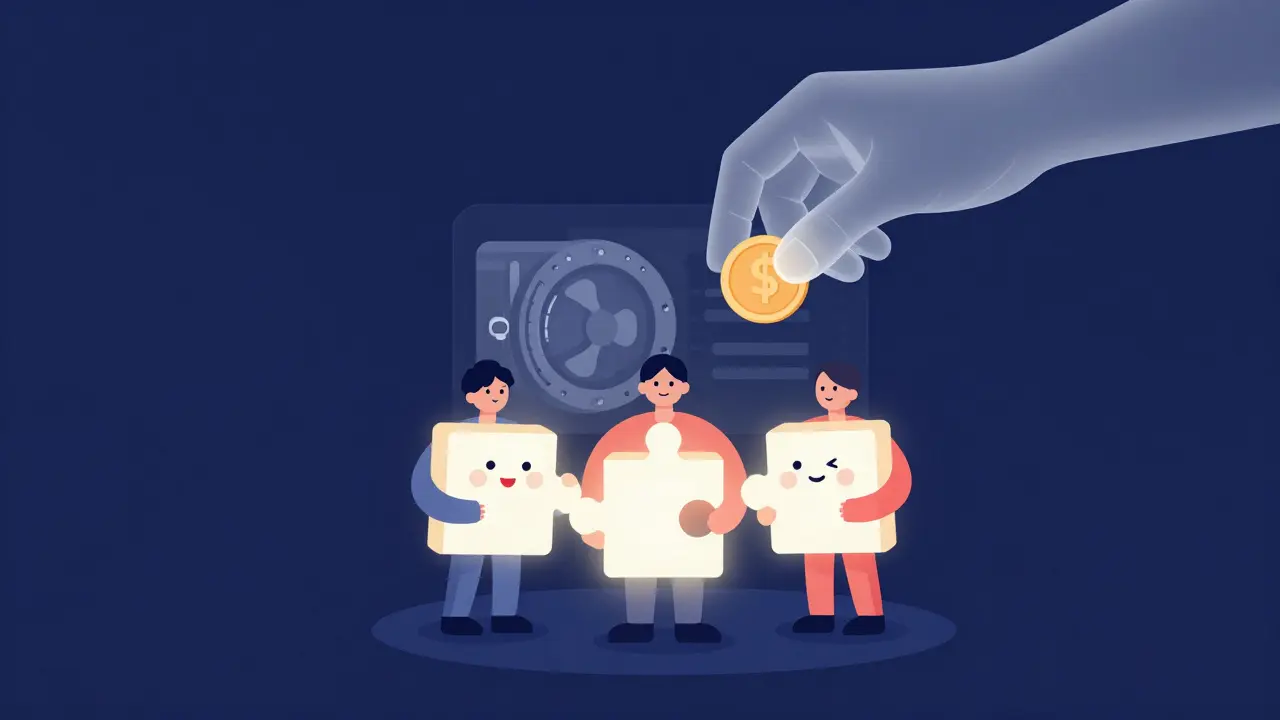
For businesses and high-net-worth individuals, a single key is an unacceptable risk. If one employee goes rogue or a single laptop is hacked, the treasury is emptied. AA enables Multi-signature (Multi-sig) wallets as a native feature. Instead of one person signing a transaction, you can require a 2-of-3 or 3-of-5 approval process. Safe (formerly Gnosis Safe) is the gold standard here, providing a way to ensure no single person can move funds alone.
Beyond multi-sig, AA allows for custom security rules. You can set daily spending limits-say, no more than $500 per day without a second approval-or time-locked withdrawals. This means even if a hacker gets into your account, they can't drain everything instantly; they'd have to wait for a 24-hour cooldown period, giving you time to freeze the account. We are also seeing the integration of biometric authentication. Ambire Wallet uses device security chips, letting users sign transactions with a fingerprint or FaceID rather than a clunky password.
The Developer's Perspective: ERC-4337
How does this actually work without changing the entire blockchain? The secret is ERC-4337. This is a standard that allows account abstraction to happen on the application layer rather than the consensus layer. It introduces a few new components: a special mempool for "UserOperations," bundlers that package these operations into standard transactions, and factory contracts to spin up new wallets.
From a dev standpoint, it's not a magic wand. Implementing ERC-4337 usually takes a few weeks of dedicated work. There is also a cost trade-off. Because an AA wallet is a smart contract, deploying it for the first time is 15-20% more expensive in gas than creating a basic EOA. However, the long-term benefits-like session keys-outweigh this. Session keys let a user sign once and then interact with a dApp for a set time (like 24 hours) without popping up a signature request every two seconds. This is a godsend for gamers who would otherwise spend 10 minutes a session just clicking "Confirm" in their wallet.
Is There a Catch?
No technology is perfect, and AA has its quirks. The most immediate issue is complexity. Because you are interacting with a smart contract, the surface area for bugs is larger. Security experts have noted that a vulnerability in the contract code could potentially allow a signature bypass. We saw this in early implementations where rigorous auditing was the only thing preventing total fund loss. If the code has a hole, the "programmable" nature of the wallet becomes a liability.
There is also the issue of compatibility. About 32% of DeFi protocols still struggle with AA wallets because they expect a simple EOA address. While this is improving, you might still run into a legacy dApp that doesn't know how to handle a smart contract wallet. Additionally, during periods of high network congestion, AA transactions can be 12-18 seconds slower because they have to be processed by bundlers before hitting the main chain.
Does account abstraction make my crypto safer?
Generally, yes. It removes the risk of permanent loss due to a forgotten seed phrase via social recovery and protects against single-point-of-failure hacks through multi-sig requirements and spending limits. However, it introduces smart contract risk; the safety depends on the quality of the wallet's code audit.
Can I convert my current MetaMask wallet to an AA wallet?
Not directly. An EOA is a type of account that cannot be "upgraded" into a contract. You would need to create a new smart contract wallet (using a service like Argent or Safe) and transfer your assets from your EOA to the new AA address.
What is the difference between ERC-4337 and native AA?
ERC-4337 is a "hack" that allows AA to work on Ethereum today without changing the core protocol. Native AA would integrate these features directly into the blockchain's consensus layer, which would likely make transactions even faster and cheaper.
Will I have to pay more in gas fees?
The initial setup of an AA wallet is typically 15-20% more expensive because you are deploying a contract. However, for daily use, the costs are similar to EOAs, and you may actually save money if the dApp you are using sponsors your gas.
What are 'Guardians' in social recovery?
Guardians are trusted entities (people, other wallets, or institutions) that you designate to help you recover your account. If you lose your key, a majority of your guardians must sign a transaction to point your account to a new key.
What's Next?
If you are a casual user, the best next step is to experiment with a smart contract wallet. Start by moving a small amount of funds into a wallet like Argent or Safe to see how social recovery and multi-sig feel in practice. If you are a developer, look into the ERC-4337 documentation and explore bundler services to see how you can remove the "gas barrier" for your users.
As we move toward 2026, the gap between "crypto wallets" and "regular apps" is closing. With the rollout of upgrades like EIP-3074 and the native AA implementation in networks like Starknet, the era of the seed phrase is slowly coming to an end. We are moving toward a world where blockchain is the engine under the hood, and the user experience is as simple as a fingerprint scan.
9 Comments
this is the way forward for sure... losing a seed phrase is basically a rite of passage in crypto but it shouldn't be that way lol
Actually ERC-4337 is just the start! 🚀 You missed how paymasters really change the game for dApp onboarding. Most people dont even realize how huge this is for mass adoption!! 💎🙌
Finally someone gets it. The US is leading the charge on this tech and we're gonna dominate the infrastructure layer while everyone else is still playing around with basic wallets. It's common sense really
I completely agree that the shift toward social recovery is a massive relief for most users because the anxiety of managing a piece of paper with twelve words on it is honestly overwhelming for the average person who just wants to explore decentralized finance without the constant fear of a total loss, and it's wonderful to see the industry finally prioritizing accessibility over these rigid, old-school security paradigms that honestly felt more like a barrier to entry than a feature.
Oh sure, just trust a "smart contract" with your entire life savings 🙄. I'm sure the developers are totally unbiased and not creating backdoors for the shadow government to freeze your funds whenever they feel like it 🤡✨. Good luck with that "security"!
If anyone is feeling overwhelmed by the technical side, just remember you can start with a small "test" wallet first. It's a great way to get comfortable with the logic of guardians without risking your main stack. I've found that taking it slow really helps the concepts stick.
Most of you are just following the hype train without understanding the fundamental flaw in the logic here. You're trading one kind of risk for another, and frankly, the lack of critical thinking in this thread is exhausting. You think a few "guardians" solve the human element of betrayal? Please.
total game changer for gaming 🎮 lets goooo!! no more signing every 5 seconds just to move an item lol
It is fascinating to consider how this mirrors the evolution of trust in human society, moving from a solitary, burden-heavy responsibility of a single secret to a distributed network of communal trust where the strength of the system lies not in the individual's memory but in the quality of their relationships with others, and it makes me wonder if this technological shift will eventually change how we perceive ownership itself in the digital age as we move away from the concept of a 'key' and toward a more fluid identity-based access system that breathes and evolves with the user's own life changes over time.