
Have you ever stumbled upon a cryptocurrency with a tiny market cap and wondered if it’s a hidden gem or a total ghost town? That’s exactly where ZENZO (ZNZ) sits right now. Launched in 2018, ZENZO isn’t just another token on Ethereum; it’s a dedicated blockchain built specifically for gamers and developers. But here’s the catch: despite its ambitious vision, it operates in the shadows of the crypto world. With a market capitalization that often dips below $20,000 and trading volumes that sometimes hit zero, ZENZO is the definition of a micro-cap asset.
If you’re reading this, you probably want to know three things: What does ZNZ actually do? Is it safe to buy? And why has its price crashed so hard from its all-time highs? Let’s break down the reality behind the hype, looking at the technology, the economics, and the stark risks involved in holding this specific coin.
The Core Concept: A Blockchain Built for Games
Unlike most cryptocurrencies that started as general-purpose money or store-of-value assets, ZENZO was designed with a very specific niche in mind: the gaming industry. The project aims to create an "all-encompassing ecosystem" where blockchain technology powers in-game economies, asset transfers, and rewards. Think of it as trying to bring the ownership model of NFTs and the transaction speed of crypto directly into video games, but on its own independent network rather than renting space on bigger chains like Polygon or Solana.
The central entity here is the ZENZO Blockchain, which serves as the infrastructure for these interactions. The native currency, ZENZO Coin (ZNZ), acts as the fuel. It’s used to pay for transaction fees, stake for security, and potentially facilitate payments within partner games. The vision is straightforward: increase crypto adoption among gamers by making the tech seamless and relevant to their hobby. However, while the idea sounds solid on paper, the actual execution-specifically, which major games have integrated ZENZo-remains largely undocumented in public data as of mid-2026.
How ZENZO Works: Proof-of-Stake and Masternodes
To understand ZENZO, you need to look under the hood at its consensus mechanism. It doesn’t use energy-intensive mining like Bitcoin. Instead, it relies on a hybrid Proof-of-Stake system combined with Masternodes. This setup is crucial because it determines how new coins are created and who gets paid.
Here is how the reward distribution works according to the project’s technical documentation:
- Block Time: New blocks are generated every 1 minute.
- Block Reward: Each block creates 9 new ZNZ coins.
- Masternode Share: 65% of the reward (5.85 ZNZ) goes to masternode operators.
- Staking Share: 35% of the reward (3.15 ZNZ) goes to regular stakers.
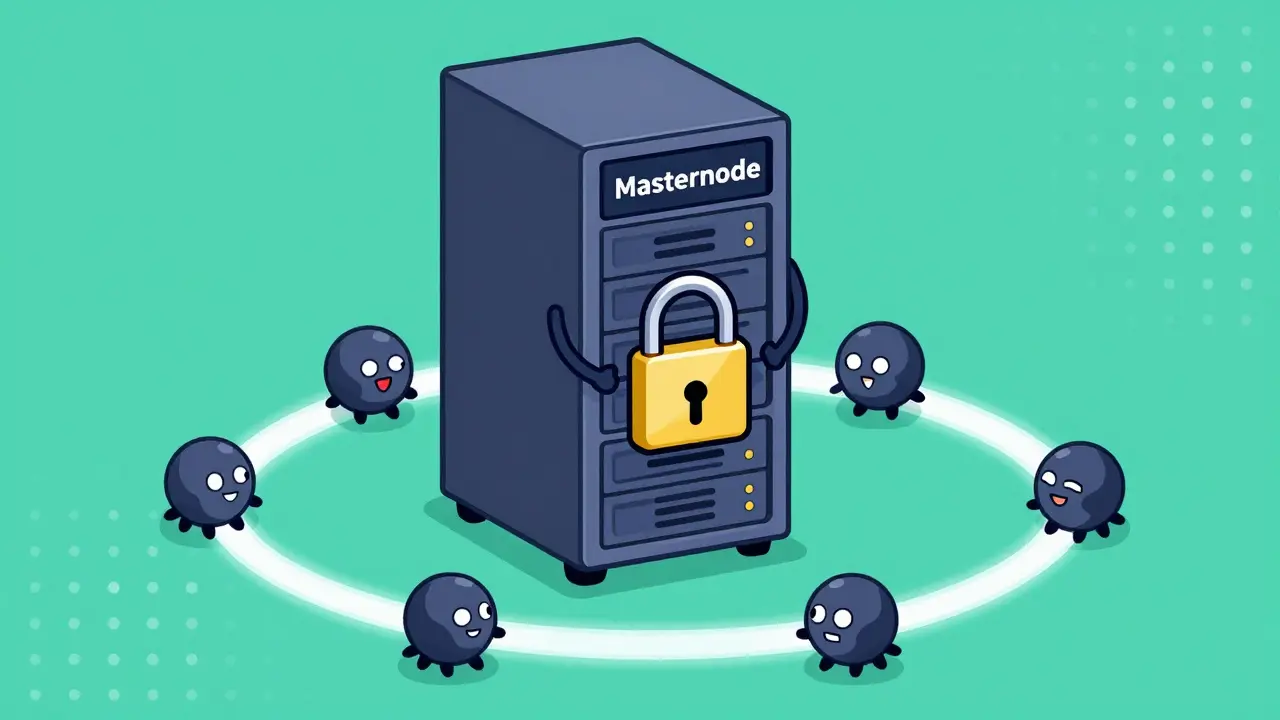
This structure heavily favors masternodes. To run one, you need to lock up 15,000 ZNZ as collateral in the ZENZO Core Wallet. This isn’t just about earning interest; masternode holders also get voting rights. When the network needed upgrades or governance decisions, such as those introduced in the v2.0 ‘Kiyori’ release in 2020, these nodes cast the votes. This makes masternodes the backbone of both the network’s security and its democratic control.
| Feature | Detail |
|---|---|
| Consensus Type | Hybrid Proof-of-Stake / Masternode |
| Block Interval | 1 Minute |
| Total Supply Cap | 83,000,000 ZNZ |
| Circulating Supply (Approx.) | ~29.6 Million ZNZ |
| Masternode Collateral | 15,000 ZNZ |
The Harsh Reality: Price History and Volatility
Let’s talk numbers, because they tell a sobering story. If you bought ZENZO at its peak, you would be down nearly 100%. Data from multiple trackers shows an All-Time High (ATH) of around $3.34 USD back in April 2019. By early 2024, the price had cratered to an All-Time Low (ATL) of roughly $0.000025. That is a decline of over 99.99%.
As of mid-2026, ZNZ trades in the fractions of a cent. Depending on the exchange and the day, prices hover between $0.0004 and $0.0045. While there might be short-term spikes due to low liquidity, the long-term trend is flat to downward. This extreme volatility is typical for micro-cap coins, but ZENZO’s case is particularly severe because it lacks the massive marketing budgets or institutional backing that usually rescue struggling projects.
Why did it drop so much? Several factors contribute:
- Lack of Liquidity: Very few people are buying or selling ZNZ daily.
- Competition: The gaming crypto space is now dominated by giants like Immutable X, Gala, and Axie Infinity.
- Adoption Gap: There is little evidence of major game studios building on ZENZO compared to other platforms.
Liquidity Crisis: Where Can You Actually Trade ZNZ?
One of the biggest red flags for any investor is liquidity-the ability to buy or sell an asset quickly without crashing the price. For ZENZO, liquidity is virtually non-existent. On days when trading volume is reported, it’s often less than $1.00. Yes, you read that right. Some aggregators even show $0.00 volume for 24-hour periods.
The primary venue for trading ZNZ has historically been small centralized exchanges like StakeCube Exchange. Pairs like ZNZ/SCC or ZNZ/BTC exist, but the order books are thin. This means if you try to sell a significant amount of ZNZ, you might not find enough buyers, forcing you to accept a drastically lower price or wait indefinitely. This illiquidity makes ZNZ extremely risky for anyone looking to enter or exit positions smoothly.

Risk Assessment: Is ZENZO Worth Your Attention?
So, should you care about ZENZO? It depends entirely on your goals. If you are a developer interested in niche blockchain experiments, studying its codebase might offer insights into smaller-scale PoS implementations. But as an investment vehicle, ZENZO carries extreme risk.
Consider these critical points before touching this coin:
- Micro-Cap Status: With a market cap often under $20,000, ZNZ is easily manipulated. A single large trade can swing the price wildly.
- Data Inconsistencies: Different trackers (CoinMarketCap, CoinGecko, CoinPaprika) often show conflicting ranks and supplies, indicating poor data maintenance and low relevance in the broader market.
- No Major Partnerships: Unlike competitors, ZENZO hasn’t announced high-profile gaming integrations that drive organic demand.
The project remains operational, and the chain still produces blocks. However, the silence from the development team regarding new features since 2020 raises questions about future roadmaps. Without fresh updates or user growth, the ecosystem struggles to gain momentum against more established rivals.
Conclusion: Proceed with Extreme Caution
ZENZO represents a fascinating but cautionary tale in the crypto world. It launched with a clear purpose-gambling and gaming-but failed to capture the market share needed to sustain its value. Today, it exists as a relic of the 2018 ICO boom, surviving on a small community of masternode operators and speculators betting on a miracle rebound.
If you are curious about blockchain gaming, there are far more liquid and actively developed options available. If you are determined to explore ZENZO, treat it as high-risk speculation, not an investment. Never put in money you can’t afford to lose, and always check the latest liquidity conditions on exchanges before attempting any transactions. The gap between ZENZO’s potential and its current reality is vast, and bridging that gap requires more than just a working blockchain-it needs users, games, and genuine demand.
What is the maximum supply of ZENZO (ZNZ)?
The maximum supply of ZENZO is fixed at 83,000,000 ZNZ. As of mid-2026, the circulating supply is approximately 29.6 million ZNZ, with the remainder likely locked in masternodes or unallocated reserves.
Is ZENZO a good investment in 2026?
ZENZO is considered a high-risk, micro-cap asset. It has experienced a near-total loss of value from its all-time highs and suffers from extremely low liquidity. Most financial experts would advise against investing in such illiquid tokens unless you fully understand the risks of total capital loss.
Where can I buy ZNZ?
ZENZO is primarily traded on small centralized exchanges like StakeCube. It is not listed on major tier-1 exchanges like Binance or Coinbase Pro. Always verify the current listing status on data aggregators like CoinMarketCap or CoinGecko, as listings can change.
How do I run a ZENZO masternode?
To run a masternode, you need to install the ZENZO Core Wallet, sync with the blockchain, and lock 15,000 ZNZ as collateral. This allows you to earn a portion of the block rewards and participate in network governance voting.
What happened to ZENZO's price?
ZENZO peaked at around $3.34 in 2019 but has since declined by over 99.9%. This drop is attributed to lack of adoption, intense competition in the gaming crypto sector, and the broader cooling of the market for micro-cap altcoins.