
Imagine holding a high-value asset that’s locked in a vault, unable to interact with the rest of your financial world. That was the reality for TAO holders before Wrapped TAO (WTAO) arrived on the scene. If you’ve ever wondered how to use your Bittensor earnings in Ethereum-based apps like Uniswap or Aave without selling them, WTAO is the answer. But here’s the catch: it comes with a significant trade-off between convenience and centralization.
This guide breaks down exactly what WTAO is, how it bridges the gap between two distinct blockchain ecosystems, and why its single-operator structure makes it both powerful and risky. Whether you’re a seasoned DeFi user or new to cross-chain assets, understanding these mechanics is crucial before you move any funds.
The Core Concept: Bridging Bittensor to Ethereum
To understand WTAO, you first need to grasp where TAO lives. Bittensor is a decentralized network for machine learning, launched in 2021 as part of the Polkadot ecosystem but running on its own Layer 1 blockchain called Subtensor. While innovative, Subtensor doesn’t natively speak the language of Ethereum’s massive Decentralized Finance (DeFi) sector. You can’t directly lend TAO on Aave or swap it on Uniswap because they run on different chains.
Wrapped TAO (WTAO) solves this by acting as an ERC-20 token on Ethereum that mirrors native TAO at a strict 1:1 ratio. Think of it as a casino chip. You hand over your cash (native TAO) at the cage (the bridge), and they give you chips (WTAO) that are worth the same amount but can be used on the gaming floor (Ethereum DeFi). When you want your cash back, you return the chips, and the bridge releases the original TAO.
This mechanism allows TAO holders to access liquidity pools, lending markets, and yield farming opportunities that simply don’t exist on the native Bittensor chain. For many, this utility justifies the complexity of wrapping assets.
How the Tao Bridge Actually Works
The process relies on a specific tool known as the Tao Bridge, developed by a community figure known as CreativeBuilts. Unlike multi-signature bridges managed by large DAOs, this bridge operates through a simpler, albeit more centralized, deposit-and-mint model.
- Deposit: You send native TAO tokens to a designated address on the Bittensor network.
- Mint: Once the transaction confirms, the bridge operator issues an equivalent amount of WTAO (ERC-20) to your Ethereum wallet.
- Use: You now hold WTAO, which behaves exactly like other ERC-20 tokens. You can send it, trade it, or lock it in smart contracts.
- Redeem: To get native TAO back, you burn the WTAO tokens, and the bridge releases the corresponding TAO from its reserve.
As of late 2023, reports indicated that approximately 150,000 TAO tokens were wrapped, representing about 2.4% of the circulating supply. This might seem small, but given TAO’s value, that’s roughly $82 million in total value locked within the bridge. The speed is generally decent-transactions often complete in under five minutes-but gas fees on Ethereum can spike, sometimes costing upwards of $15 per wrap depending on network congestion.
The Centralization Risk: One Man’s Wallet
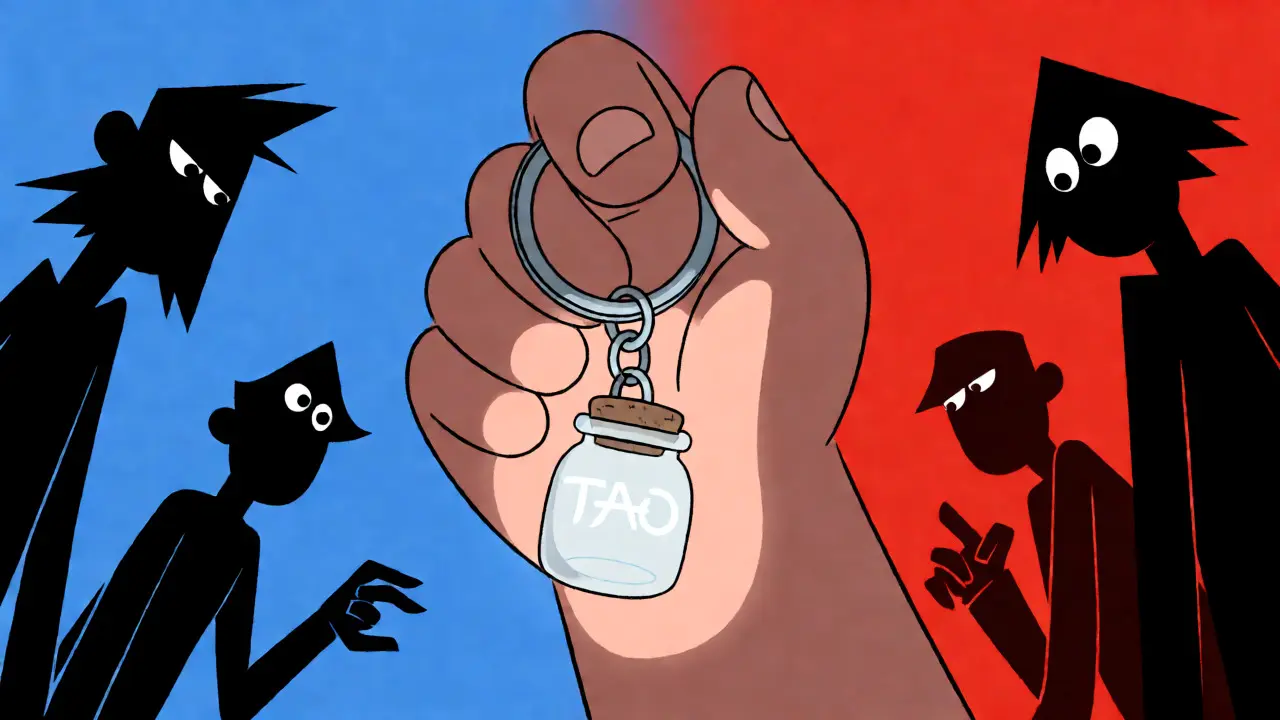
Here is where things get tricky. Most reputable cross-chain bridges, like Wormhole or Multichain, use multiple validators or smart contract audits to ensure no single point of failure. The Tao Bridge does not. It is operated by a single entity, CreativeBuilts, who controls the private keys to the vault holding all the backing TAO.
This creates counterparty risk. If CreativeBuilts loses the keys, gets hacked, or decides to rug pull, the WTAO tokens could become worthless even if native TAO remains stable. There is no multisig protection and no decentralized governance voting on upgrades. It’s essentially a trust-minimized system turned into a trust-required one.
| Feature | Native TAO | Wrapped TAO (WTAO) |
|---|---|---|
| Blockchain | Bittensor (Subtensor) | Ethereum |
| Token Standard | Native Asset | ERC-20 |
| DeFi Access | Limited (Bittensor-native) | Extensive (Ethereum DeFi) |
| Custody Model | Self-custody / Staking | Centralized Bridge Operator |
| Risk Profile | Market Volatility | Market Volatility + Smart Contract/Custodial Risk |
Why Hold WTAO? The Yield Argument
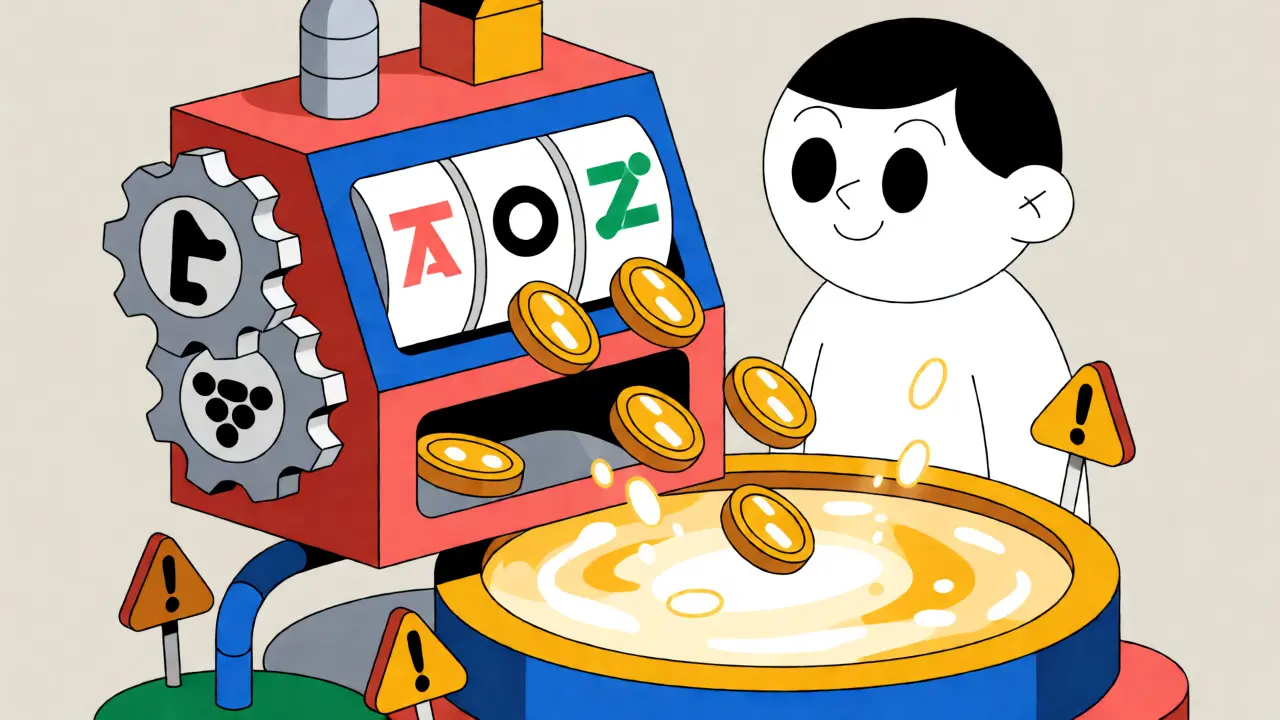
If the risks are so high, why do people bother? The answer lies in yield stacking. Native TAO staking on Bittensor offers attractive returns, often ranging between 15% and 19% APY due to the network’s inflationary reward schedule and halving events similar to Bitcoin. However, those funds are illiquid; they are locked up.
By wrapping TAO, users can deploy their capital into Ethereum protocols. For example, providing liquidity for WTAO/ETH pairs on Uniswap has historically generated additional yields around 8.2% APY on top of potential price appreciation. Some advanced strategies involve looping: borrowing against WTAO on platforms like Aave to buy more WTAO, effectively leveraging the position. While this amplifies gains, it also amplifies losses and liquidation risks.
Furthermore, the bridge operator has promised to pass through some of the staking rewards earned on the underlying TAO reserves to WTAO holders. As of recent updates, however, the implementation of this "pass-through" reward system has been inconsistent, leading to frustration among users who expected passive income simply for holding WTAO.
Step-by-Step: How to Wrap Your TAO
Ready to try it? Here’s the practical workflow. Note that you need an Ethereum wallet (like MetaMask) and some ETH for gas fees.
- Prepare your wallets: Ensure you have native TAO in your Bittensor wallet and ETH in your MetaMask.
- Connect to the Bridge: Visit the official Tao Bridge interface. Connect both your Bittensor wallet and your MetaMask.
- Select Amount: Choose how much TAO you want to wrap. Leave a buffer for gas fees.
- Approve Transaction: Confirm the transfer on the Bittensor side. Wait for confirmation.
- Mint WTAO: Once confirmed, initiate the minting process on the Ethereum side. Pay the gas fee.
- Verify Balance: Check your MetaMask. If WTAO doesn’t appear automatically, add the contract address manually.
Troubleshooting tip: If your WTAO doesn’t show up immediately, check the block explorer. Sometimes UI delays occur, but the tokens are already in your wallet. Never panic-send duplicate transactions unless you’re sure the first one failed completely.
Regulatory and Future Outlook
From a regulatory standpoint, wrapped tokens occupy a gray area. The SEC hasn’t explicitly classified WTAO as a security, but because it represents a claim on an asset held by a centralized operator, it could face scrutiny under money transmitter laws. If regulators decide that the bridge operator is acting as a custodian without proper licensing, operations could face hurdles.
Looking ahead, the future of WTAO depends on decentralization. Analysts suggest a high probability that community-driven alternatives will emerge, potentially replacing the current single-operator model. If Bittensor continues to grow as a leader in AI-blockchain convergence, demand for TAO exposure on Ethereum will likely rise. However, investors should keep an eye on whether the bridge introduces multisig security or automated reward distributions. Until then, treat WTAO as a high-risk, high-reward instrument suitable only for amounts you can afford to lose entirely.
Is WTAO safe to hold long-term?
It carries higher risk than native TAO due to the centralized nature of the Tao Bridge. Since a single operator controls the backing assets, there is counterparty risk. Long-term holders should monitor the bridge's development toward decentralization.
Can I convert WTAO back to native TAO instantly?
Not instantly. You must burn the WTAO tokens on Ethereum and wait for the bridge to release native TAO on the Bittensor network. This process typically takes a few minutes to several hours depending on network congestion and operator processing times.
Does WTAO earn staking rewards?
Theoretically, yes, because the underlying TAO is staked by the bridge operator. However, the distribution of these rewards to WTAO holders has been inconsistent and is not guaranteed by a smart contract in the same way native staking rewards are.
What happens if the Tao Bridge operator disappears?
If the operator loses control of the keys or abandons the project, WTAO could lose its peg to TAO and potentially become worthless, as there is no decentralized protocol to automatically redeem the tokens.
Which wallets support WTAO?
Since WTAO is an ERC-20 token, it is compatible with all major Ethereum wallets, including MetaMask, Trust Wallet, Coinbase Wallet, and hardware wallets like Ledger and Trezor.
5 Comments
I really appreciate how you laid out the centralization risk so clearly. It is easy to get excited about yield, but remembering that a single operator holds the keys makes me pause before moving any significant amount of capital into WTAO.
It’s crucial to remember that convenience often comes at the cost of sovereignty... When we wrap assets, we are essentially trading trust in code for trust in humans; this is a philosophical shift as much as it is a technical one. The lack of multisig protection means that if CreativeBuilts faces an unforeseen issue-be it legal, technical, or personal-the entire peg could dissolve instantly. We must ask ourselves: is the potential APY boost worth the existential risk to our principal? I believe that until we see automated reward distributions and decentralized governance, WTAO remains a speculative instrument rather than a foundational asset. The bridge is a marvel of engineering, yes, but it is also a fragile glass house in a stormy market. Let us proceed with caution, not just curiosity.
STOP BEING SO SCARED OF RISK! You guys are missing the bigger picture here because you're too focused on the 'what ifs' instead of the 'what is'! Bittensor is literally reshaping the AI landscape right now, and WTAO is the only way to actually participate in Ethereum DeFi without selling your bags! Yes, it's centralized, but look at the numbers-$82 million locked isn't nothing, that's massive validation from the market! If you wait for perfect decentralization, you'll miss the entire cycle! Embrace the chaos, leverage the yield, and stop overthinking every little detail! This is exactly what early adoption looks like, messy and high-stakes, but absolutely worth it for those brave enough to jump in!
it seems very complicated for new people like me. i just want to use my tao easily without worrying about keys.
Ah, the eternal dance between interoperability and security! As someone who has navigated the labyrinthine corridors of cross-chain protocols for years, I must say that the Tao Bridge represents a fascinating, albeit precarious, experiment in community-driven infrastructure. The narrative of 'casino chips' is apt, yet it understates the sheer audacity of a single-entity custodial model in a space that prides itself on 'not your keys, not your coins.'
From a cultural standpoint, this reflects a broader tension in the crypto ethos: the desire for seamless user experience versus the ideological commitment to decentralization. While the utility of accessing Uniswap liquidity pools is undeniable, the jargon-heavy reality is that we are introducing a counterparty risk layer that traditional finance would consider unacceptable for such high-value collateral. Yet, there is something beautifully human about trusting a known entity like CreativeBuilts over anonymous smart contracts, isn't there? It reminds us that technology is ultimately built by people, for people, and sometimes, that human element introduces both vulnerability and charm. I remain cautiously optimistic, watching for signs of multisig integration, but let us not forget that in DeFi, history is written by the survivors.