Imagine a digital asset so scarce that only a fraction of the coins available for Bitcoin will ever exist. That is the promise of Unobtanium, also known by its ticker symbol UNO. It is a proof-of-work cryptocurrency designed with extreme scarcity parameters, featuring a maximum supply cap of just 250,000 coins. While Bitcoin aims for 21 million coins, Unobtanium caps out at a mere 250k. This isn't just another altcoin trying to be faster or cheaper; it is an experiment in rarity. But does this scarcity make it valuable, or is it just a digital curiosity stuck in the shadows?
If you are looking for the next big investment that will change your life overnight, you might want to look elsewhere. Unobtanium sits deep in the long-tail of the crypto market, ranked around #4673 by market capitalization as of early 2025. Its value proposition rests entirely on its limited supply and its technical relationship with Bitcoin. To understand if UNO has any place in your portfolio-or even your wallet-you need to dig into how it works, why it exists, and the harsh realities of trading such an illiquid asset.
The Origin Story: Why 'Unobtanium'?
The name itself gives you a clue. In pop culture, unobtanium is a fictional material that is incredibly difficult to acquire. The creators of this coin adopted the name to reflect their goal: creating a digital asset that is genuinely hard to get because there is simply not much of it. Launched in August 2013, according to records from Coinlore, Unobtanium emerged during the early boom of altcoins when developers were experimenting with different supply models.
Unlike many projects that start with pre-mines or large allocations to founders, Unobtanium was designed as a fair launch. There was no initial distribution to insiders. Every single coin had to be mined. This approach aligns with the ethos of early Bitcoin maximalists who believed in decentralization and merit-based acquisition. However, the small supply means that the window to mine these coins closes much faster than Bitcoin's. With over 84% of the total supply already in circulation, new miners face stiff competition against established hardware setups.
Technical Specs: Merge Mining with Bitcoin
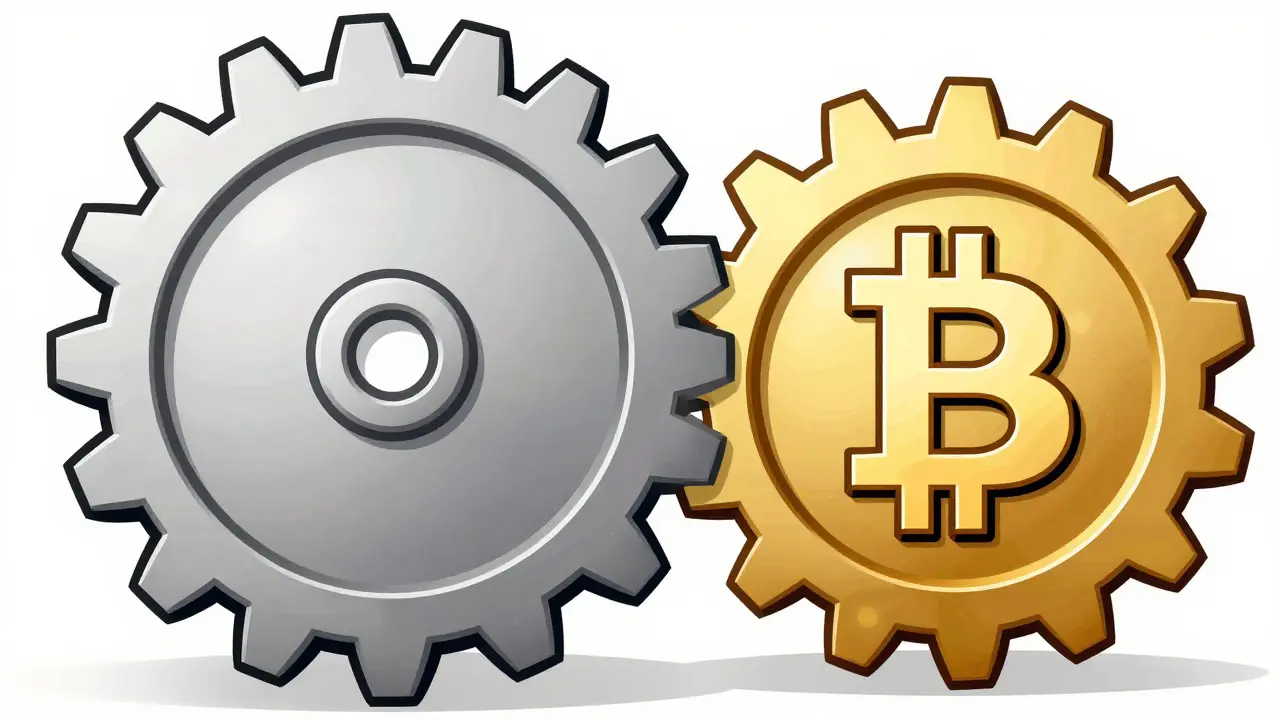
Here is where Unobtanium gets interesting technically. It uses the same hashing algorithm as Bitcoin: SHA-256 is a cryptographic hash function used in Bitcoin and several other cryptocurrencies to secure the blockchain through proof-of-work. Because they share this underlying technology, Unobtanium utilizes a process called merge mining.
Merge mining allows miners to secure two blockchains simultaneously using the same computational power. When you mine Bitcoin, you can also mine Unobtanium without extra energy cost. This provides Unobtanium with a layer of security derived from Bitcoin’s massive hash rate. Without this mechanism, a tiny network like Unobtanium would be vulnerable to 51% attacks, where bad actors could control the ledger. By piggybacking on Bitcoin’s security, UNO remains safe, even though its own native hash rate is negligible.
| Feature | Unobtanium (UNO) | Bitcoin (BTC) |
|---|---|---|
| Max Supply | 250,000 | 21,000,000 |
| Block Time | 3 minutes | 10 minutes |
| Algorithm | SHA-256 | SHA-256 |
| Mining Type | Merge Mine with BTC | Native Proof-of-Work |
| Launch Year | 2013 | 2009 |
Notice the block time difference. Unobtanium produces a block every three minutes, which is more than three times faster than Bitcoin. This was intended to provide quicker transaction confirmations. However, speed alone doesn't drive adoption if no one is using the network for payments. Currently, UNO transactions are mostly speculative transfers between traders rather than real-world commerce.
The Scarcity Trap: Is Rare Always Valuable?
Proponents of Unobtanium argue that scarcity drives value. With only 250,000 coins ever to exist, each coin represents a larger slice of the pie compared to Bitcoin. If demand were to rise, the price per coin could theoretically skyrocket due to the lack of supply. After all, diamonds are valuable partly because they are marketed as rare.
But here is the catch: scarcity without utility or demand is just emptiness. As of January 2025, Unobtanium had a market capitalization of roughly $1.7 million. Compare that to Bitcoin’s hundreds of billions. The low market cap makes UNO highly susceptible to manipulation. A single trade of a few thousand dollars can swing the price significantly. We saw this volatility firsthand with price swings ranging from $1.70 to $9.82 within a single month in some periods.
Furthermore, the circulating supply is already high relative to the max. With over 211,000 coins in circulation, the remaining ~38,000 coins will take years to mine given the current difficulty adjustments. This means the supply shock won't happen suddenly; it will taper off slowly. For investors hoping for a quick squeeze based on supply running out, the timeline is far too long to be practical.
Trading Realities: Liquidity Issues
If you decide to buy Unobtanium, you need to prepare for a frustrating experience. Liquidity is the lifeblood of any financial asset, and UNO is practically dehydrated. Trading volumes are often measured in tens of dollars per day. On platforms like CoinGecko, you might see 24-hour volumes as low as $43. What does this mean for you?
- Wide Bid-Ask Spreads: You might see a price of $8.00, but when you try to sell, the highest buyer offer might be $6.50. You lose value instantly upon entry.
- Slippage: Attempting to buy a significant amount could push the price up artificially, meaning you pay more per coin than the listed price suggests.
- Exchange Limitations: Major exchanges like Binance or Coinbase do not list UNO. You have to rely on smaller, niche platforms like Freiexchange or LATOKEN. These platforms may have higher fees, lower security standards, or fewer fiat on-ramps.
Price discrepancies across exchanges are common. One source might report UNO at $3.05 while another shows $9.43. This arbitrage opportunity sounds great in theory, but moving funds between these illiquid venues often costs more in fees than the profit margin allows. It is a trap for inexperienced traders.
How to Buy and Store UNO
Despite the risks, some collectors and speculators still hold UNO. If you are determined to participate, here is the practical path forward.
- Find a Supported Exchange: Check current listings on aggregators like CoinMarketCap or CoinGecko. Look for pairs like UNO/BTC or UNO/LTC. Note that USDT pairs often have zero volume, making them useless for actual trading.
- Acquire Bitcoin or Litecoin: Since most UNO pairs are against BTC or LTC, you will likely need to buy one of those first on a major exchange and transfer them to the platform listing UNO.
- Execute the Trade: Be prepared to use limit orders rather than market orders to avoid getting ripped off by wide spreads. Patience is key.
- Secure Your Wallet: Do not leave your UNO on the exchange. Use a wallet that supports SHA-256 assets. Many standard multi-currency wallets support UNO, but verify compatibility before sending funds. The official GitHub repository provides software for running nodes, which is the safest way to self-custody your coins.
Mining is another option, but it requires specialized ASIC hardware capable of SHA-256 hashing. Given the low price of UNO, dedicated mining is rarely profitable unless you are already mining Bitcoin and enabling merge mining as a side benefit. It is essentially free money for existing Bitcoin miners, not a viable business model for newcomers.
Risks and Red Flags
Investing in micro-cap cryptocurrencies comes with substantial risks. Beyond the obvious volatility, consider these specific issues with Unobtanium:
- Development Stagnation: While the codebase is open-source on GitHub, development activity is minimal. There are no major upgrades, partnerships, or ecosystem expansions reported in recent years. It is a static project.
- No Merchant Adoption: You cannot buy coffee or electronics with UNO. It lacks the network effect required for a medium of exchange.
- Regulatory Uncertainty: As regulations tighten globally, obscure tokens with low liquidity may face delisting from exchanges or increased scrutiny under anti-money laundering laws.
The community presence is also sparse. The subreddit r/Unobtanium exists but sees little engagement. Social media channels are largely inactive. This lack of community momentum makes it difficult for the project to gain traction or recover from bear markets.
Final Thoughts on Unobtanium
Unobtanium is a fascinating artifact from the early days of cryptocurrency. It serves as a testament to the diversity of ideas that emerged after Bitcoin proved the concept of decentralized digital cash. Its technical implementation is sound, leveraging Bitcoin’s security through merge mining. Its scarcity is genuine, with a hard cap that will never be exceeded.
However, being rare does not automatically equate to being valuable. Without utility, active development, or significant user adoption, UNO remains a niche collectible rather than a functional currency or a robust investment. If you are a crypto enthusiast who enjoys collecting obscure gems and understands the risks of illiquidity, UNO might appeal to you. But for the average investor seeking growth or stability, the risks far outweigh the potential rewards. Stick to assets with deeper liquidity and clearer use cases unless you are fully prepared to treat UNO as a speculative lottery ticket.
Is Unobtanium (UNO) a good investment in 2026?
For most investors, Unobtanium is not considered a good investment due to its extremely low liquidity, negligible trading volume, and lack of real-world utility. It is highly volatile and risky, suitable only for speculative collectors who understand the dangers of micro-cap cryptocurrencies.
How is Unobtanium mined?
Unobtanium is mined using the SHA-256 algorithm, the same as Bitcoin. It primarily relies on merge mining, allowing Bitcoin miners to secure the Unobtanium network simultaneously without additional energy costs. Dedicated mining is generally unprofitable due to the low coin price.
Where can I buy UNO coin?
You can find UNO on niche cryptocurrency exchanges such as Freiexchange and LATOKEN. It is typically traded against Bitcoin (BTC) or Litecoin (LTC). Major centralized exchanges like Binance or Coinbase do not list Unobtanium.
What is the maximum supply of Unobtanium?
The maximum supply of Unobtanium is strictly capped at 250,000 coins. As of early 2025, approximately 211,000 coins were already in circulation, meaning the majority of the supply has already been mined.
Why is Unobtanium so cheap despite being rare?
Scarcity alone does not create value; demand does. Unobtanium lacks widespread adoption, merchant acceptance, and active development. The low trading volume and limited exchange listings result in low liquidity, which suppresses the price and makes it difficult to trade efficiently.
Is Unobtanium secure?
Yes, Unobtanium is secure because it uses merge mining with Bitcoin. This means it benefits from a portion of Bitcoin's massive hash rate, protecting it from 51% attacks. The underlying SHA-256 algorithm is cryptographically robust and widely trusted.