Remember when you bought into a crypto project because the tech sounded revolutionary, only to watch it drop 97% from its peak? If you hold SIPHER, you might be feeling that exact sting right now. As of early 2026, the token trades around $0.007, a far cry from its all-time high of $0.83 in February 2024. But before you send your tokens to a burn address or write them off as a total loss, it helps to understand what Sipher actually is-and whether the roadmap still holds any water.
Sipher isn’t just another meme coin riding a hype wave. It’s the governance and utility token for the Sipher Universe, a blockchain-based gaming platform that merges artificial intelligence with casual fighting and exploration games. The project aims to create an open-world social experience where players don’t just consume content-they own digital assets, influence game development through voting, and interact with AI-driven characters. In this guide, we’ll break down the ecosystem, analyze the tokenomics, look at the brutal price history, and help you decide if SIPHER deserves a spot in your portfolio or your watchlist.
The Core Concept: AI Meets Blockchain Gaming
To understand SIPHER, you first need to understand the Sipher AGI Ecosystem. This isn’t a single game; it’s a broader infrastructure built on three pillars: Artificial Intelligence, Gaming, and Infrastructure. The vision is ambitious: creating a world where Large Language Models (LLMs) drive dynamic storytelling and decision-making within games.
In traditional video games, NPCs (non-player characters) follow scripted paths. In the Sipher Universe, specifically in titles like Sipher Odyssey, the environment and characters are more fluid. The AI layer powers autonomous agents that learn from player interactions. These aren’t just chatbots; they’re digital lifeforms called "surrogates." Players explore, battle, and forge their future in a place called Sipheria using these surrogates, which are created based on transcripts from creatures. Think of it as having a customizable companion that evolves based on how you play, powered by generative AI models running in the background.
This approach attempts to solve a major pain point in Web3 gaming: engagement. Many blockchain games failed because they prioritized financial incentives over fun. By leaning heavily into AI-driven narrative and character interaction, Sipher tries to make the gameplay loop compelling enough that players stay for the experience, not just the potential profit.
Token Utility: What Can You Actually Do With SIPHER?
A token without utility is just a speculative asset. SIPHER is designed to be multifunctional within its ecosystem. Here’s how the token flows through the network:
- Governance: This is the primary function. Holders can vote on proposals that shape the future of the Sipher Universe. Decisions might include funding new game features, adjusting economic parameters, or selecting community projects. This shifts power from centralized developers to the player base.
- In-Game Purchases: You use SIPHER to buy in-game assets, clone new characters, and acquire surrogates. These assets are likely stored as NFTs or similar blockchain-based identifiers, giving you true ownership.
- Staking Rewards: The ecosystem encourages long-term holding through staking mechanisms. By locking up your tokens, you can earn additional cryptocurrency rewards. This reduces circulating supply pressure while incentivizing loyalty.
- Developer Incentives: The token also serves as a reward system for developers and contributors who build tools or content within the Sipher infrastructure.
The key takeaway here is that SIPHER is meant to be spent and earned within the ecosystem, not just held forever. This circulation is vital for the health of the in-game economy.
Infrastructure: Built on Ethereum Layer 2
One of the smartest moves Sipher made was choosing its technical foundation wisely. The project is built on the Ethereum blockchain, but specifically utilizes the OP Stack within the Superchain ecosystem. This is an Ethereum Layer 2 solution.
Why does this matter? Ethereum mainnet transactions can be slow and expensive during peak times. For a gaming platform where users might make dozens of micro-transactions per session, high gas fees would kill adoption. By using the OP Stack, Sipher benefits from Ethereum’s robust security and decentralization while achieving the scalability needed for real-time gaming interactions. Transactions are faster and cheaper, making the user experience smoother for casual gamers who shouldn’t have to worry about complex wallet management every time they want to equip a new sword.
Price History and Market Performance: A Reality Check
Let’s talk numbers, because this is where things get painful for many investors. Sipher launched via an Initial Coin Offering (ICO) in December 2021. The ICO price was $0.36. Today, in August 2026, the price hovers around $0.007.
| Metric | Value | Note |
|---|---|---|
| Current Price Range | $0.007 - $0.008 | Varies by exchange |
| All-Time High (ATH) | $0.83 | Reached Feb 26, 2024 |
| Distance from ATH | -97.2% | Significant drawdown |
| ICO Price | $0.36 | Dec 2021 |
| Market Cap | ~$3.5 Million | Low market cap indicates high risk |
| Circulating Supply | ~319.7 Million | Max supply is 1 Billion |
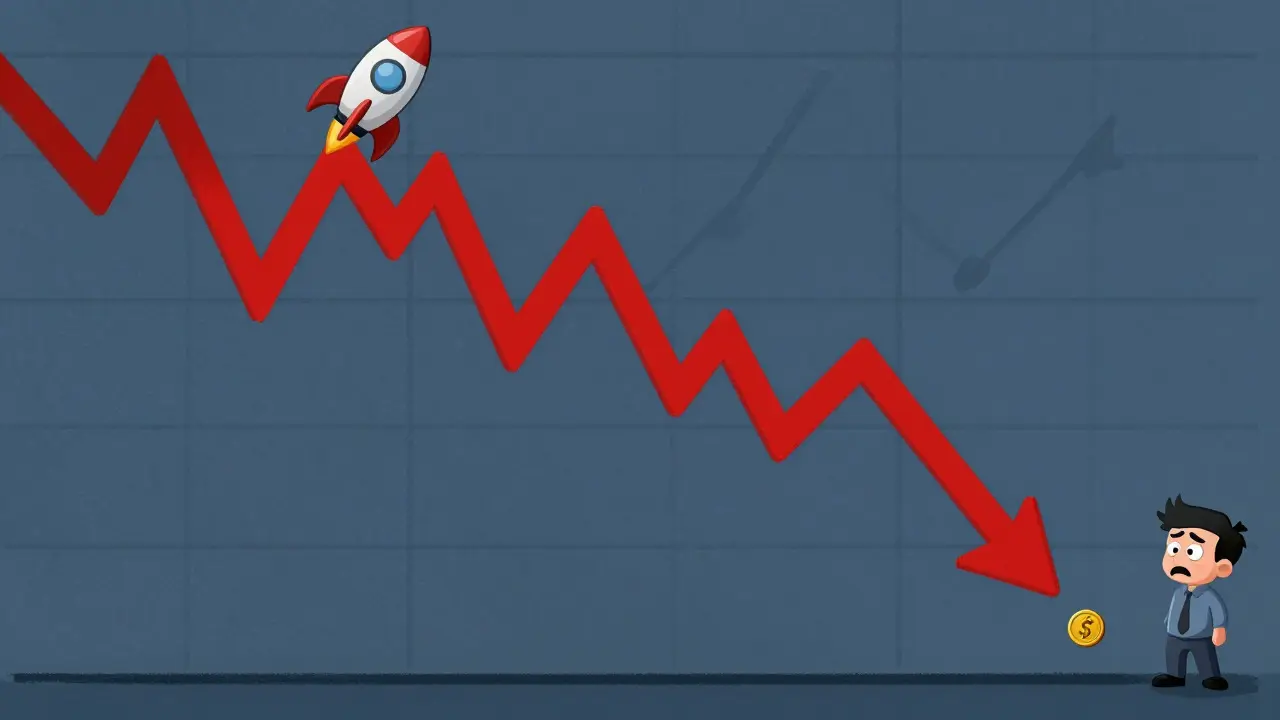
If you bought at the ICO, your Return on Investment (ROI) is roughly 0.03x. That’s a 97% loss. However, context matters. The entire crypto market experienced a brutal bear market between late 2022 and 2023. Even blue-chip assets like Bitcoin dropped significantly. SIPHER did manage to reach an ATH of $0.83 in February 2024, offering a brief moment of relief with a +232% gain from the bottom, but it couldn’t sustain that momentum.
Liquidity is also a concern. Trading volumes across exchanges like Uniswap, Coinbase, and Kraken have been low, often dipping below $3,000 in 24-hour volume. Low volume means higher volatility and slippage when buying or selling larger amounts. It’s harder to exit a position quickly without moving the price against yourself.
Investment Backing and Credibility
Despite the price struggles, the project isn’t a random launch. Sipher has backing from some heavyweight names in the venture capital space. Investors include Arrington Capital, Hashed, Defiance Capital, and Delphi Digital. These firms typically do deep due diligence before investing. Their presence suggests that the underlying technology and team have merit, even if the market sentiment has turned sour.
However, VC backing doesn’t guarantee retail success. Often, VCs invest early at low valuations and may still be profitable even if the token price crashes 90% from its peak. For retail investors, the entry price is everything.
Risks and Challenges for SIPHER
Before adding SIPHER to your portfolio, consider these risks:
- Adoption Hurdles: The biggest risk for any GameFi project is user adoption. Does Sipher Odyssey offer a better experience than free-to-play giants like Fortnite or World of Warcraft? If the AI features feel gimmicky rather than immersive, players will leave.
- Token Dilution: With a max supply of 1 billion tokens and only ~320 million currently circulating, there is significant inflation potential. Future unlocks for team members, investors, or ecosystem funds could increase supply and suppress price.
- AI Competition: The intersection of AI and Crypto is crowded. Projects like Fetch.ai and Render dominate the AI narrative. Sipher needs to differentiate itself clearly as a *gaming* AI platform, not just another AI wrapper.
- Liquidity Risk: As mentioned, low trading volume makes it difficult to trade large positions efficiently. You might find yourself stuck holding tokens if interest wanes further.
Is SIPHER Worth Buying in 2026?
This depends entirely on your investment horizon and risk tolerance. If you’re looking for quick gains, SIPHER is likely too volatile and illiquid. The chart shows a clear downtrend with weak support levels.
However, if you believe in the long-term thesis of AI-driven open-world gaming on Ethereum L2, SIPHER represents a high-risk, high-reward bet. At current prices, the valuation is low, meaning less capital is required to move the price if adoption suddenly spikes. The upcoming releases of new game features or partnerships could act as catalysts.
For existing holders, the question is whether to cut losses or double down. Given the strong VC backing and the functional nature of the token within its ecosystem, abandoning the ship completely might mean missing out on a recovery if the gaming sector rebounds. But diversifying away from such a concentrated, underperforming asset is also a prudent strategy.
Where can I buy SIPHER tokens?
You can purchase SIPHER on several decentralized and centralized exchanges. Major options include Uniswap (v2 and v3 on Ethereum), Coinbase, Kraken, and CoinEx. Always verify the contract address before trading on DEXs to avoid scams.
What is the maximum supply of SIPHER?
The maximum supply of SIPHER is capped at 1 billion tokens. As of early 2026, approximately 319.7 million tokens are in circulation, meaning a significant portion remains locked or unallocated.
How does Sipher use AI in its games?
Sipher uses Large Language Models (LLMs) to create dynamic NPCs and autonomous agents called "surrogates." These AI characters learn from player interactions, enabling unique, non-scripted gameplay experiences in titles like Sipher Odyssey.
Is SIPHER a safe investment?
Like most altcoins in the gaming and AI sectors, SIPHER is considered high-risk. It has dropped over 97% from its all-time high and suffers from low liquidity. Only invest what you can afford to lose, and ensure you understand the tokenomics and project roadmap.
What blockchain is Sipher built on?
Sipher is built on the Ethereum blockchain, specifically utilizing the OP Stack within the Superchain ecosystem. This Layer 2 solution provides faster transaction speeds and lower costs compared to Ethereum mainnet.
8 Comments
Man, seeing that -97% drop really hurts the soul 😩. I remember when everyone was hyped about AI gaming in early '24. It feels like we are all just waiting for the other shoe to drop 📉. The tech sounds cool on paper though, especially with the LLMs driving NPCs. If they can actually make it fun and not just a cash grab, maybe there is hope? 🤞
honestly its so sad to see projects like this fail :( i loved the idea of ai companions but the price action is brutal.. i think many people just forgot about it after the crash. maybe one day it will come back but right now it feels dead 🥀
The entire paradigm of Web3 gaming is fundamentally flawed because it attempts to quantify existential joy with speculative assets! You cannot put a price tag on the spiritual connection between player and surrogate, yet here we are discussing ROI as if it were a commodity rather than a digital soulmate. The market is merely a reflection of our collective lack of faith in the unseen potential of generative narratives. We are witnessing the death of imagination at the hands of liquidity constraints.
I think you guys are being too harsh. Look at the VC backing. Arrington Capital and Hashed don't throw money at vaporware. They did their due diligence. The fact that it's built on OP Stack is a huge plus for scalability. Most people ignore the infrastructure and just look at the chart. If you hold through the volatility, these types of projects often have second winds when the narrative shifts back to AI. Keep your head up, there is still utility here.
This article is practically begging you to buy the dip while simultaneously telling you it's a disaster. Typical crypto shill energy. The grammar is perfect but the logic is bankrupt. Who cares about governance votes if no one is playing the game? It's a ghost town with a fancy AI wrapper. Pathetic.
Another American-centric view on global tech!! Why do you always focus on US VCs?? What about the developers in Asia who are actually building the code?! This project is failing because Western investors treat everything like a casino instead of real innovation!!! It is an insult to true gamers everywhere!!!!
You got this! Don't let the noise get to you! Every great journey has obstacles. Sipher has a unique value proposition with the surrogates. Believe in the vision! Stay focused on the long term goals and keep pushing forward! The community needs positive energy right now!
It is important to note; however; that the tokenomics suggest significant inflation risk. With only 320 million tokens circulating out of a billion max supply; the future unlocks could be devastating to the price. One must consider; therefore; whether the current low valuation is a bargain or a trap. Prudence is advised.