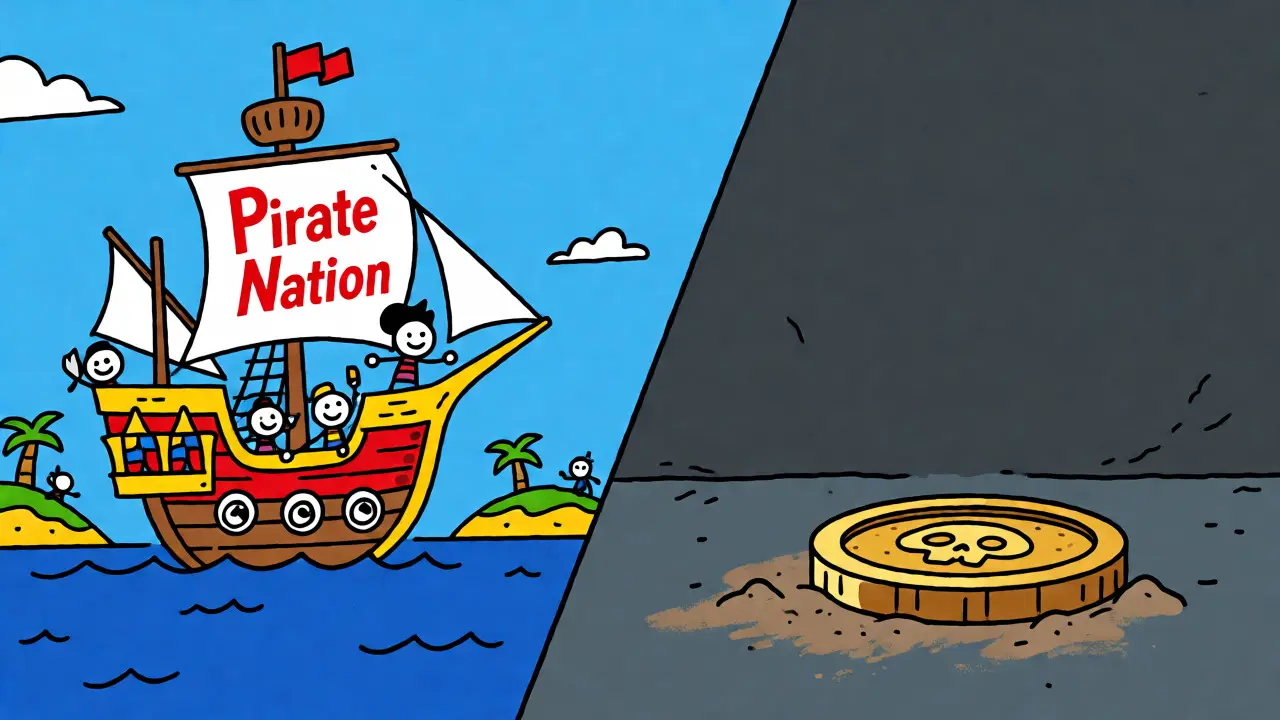
Imagine a cryptocurrency with a supply of 100 quadrillion tokens but a daily trading volume of less than $50. That’s the reality for Pirate Coin Games, also known as PirateCoin☠. If you’ve stumbled upon this token while browsing decentralized exchanges or hearing about the Pirate Nation blockchain game, you’re likely confused by the massive discrepancies in its data. Is it a hidden gem? A scam? Or just a misunderstood meme coin attached to a legitimate game?
This guide cuts through the noise. We’ll break down exactly what Pirate Coin Games is, how it relates to the Pirate Nation ecosystem, and why the numbers on CoinGecko and CoinMarketCap look so different. Whether you’re a gamer curious about the mechanics or an investor wary of low-liquidity traps, understanding the distinction between the game and the token is critical.
The Core Confusion: Game vs. Token
First, let’s clear up the biggest misconception. Pirate Nation is the game; PirateCoin☠ is the associated cryptocurrency token. Developed by Proof-of-Play, a team founded by former Zynga executives, Pirate Nation is a free-to-play, on-chain RPG where players build ships, explore islands, and battle creatures. It runs on Proof-of-Play’s proprietary Apex chain.
However, the token economy is murky. While the game itself has received positive feedback for its "Farmville-like" accessibility-requiring no crypto wallet for basic play-the token has struggled to find a clear utility or market identity. This disconnect causes significant confusion among users who assume buying the token equals investing in the game’s success.
Tokenomics: The Quadrillion Dollar Question
If you look at different crypto trackers, you’ll see wildly conflicting data. This isn’t just a glitch; it reflects the chaotic nature of small-cap gaming tokens.
- CoinMarketCap: Lists a circulating supply of roughly 482 million PIRATE coins with a market cap around $5.3 million.
- CoinGecko: Reports a total supply of 100 quadrillion tokens with a Fully Diluted Valuation (FDV) of under $300,000.
- Binance Data: Shows a price per token of less than $0.000001 USD.
Why the difference? One possibility is that different platforms are tracking different contract addresses or versions of the token. Another is extreme inflationary pressure. With a supply potentially reaching 100 quadrillion, even a tiny increase in circulation can crash the price. For context, Bitcoin’s max supply is 21 million. Comparing these two assets highlights the speculative risk involved here.
| Metric | PirateCoin☠ | Gala Games (GALA) | Axie Infinity (AXS) |
|---|---|---|---|
| Market Cap | <$6 Million | ~$948 Million | High Volatility |
| Daily Volume | ~$43 | Millions | Millions |
| Rank | #1373+ | #192 | Top Tier |
| Liquidity | Extremely Low | High | High |
Is Pirate Nation Actually Good?
Here’s the twist: many users actually like the game. Reviews from YouTube creators and Reddit communities often praise Pirate Nation for being genuinely fun without the steep learning curve of other Web3 games. You don’t need to connect a MetaMask wallet to start playing. You can jump into the browser, assemble a crew, and start exploring the Infinite Isles immediately.
The gameplay loop involves leveling up characters, crafting gear, and competing on leaderboards. It feels familiar because it borrows heavily from classic social games like FarmVille or Candy Crush, but with blockchain ownership of assets. This "Web2 feel" is a major selling point for non-crypto natives.
But does this translate to token value? Not necessarily. In traditional gaming, you buy skins or subscriptions. In Play-to-Earn (P2E), you buy NFTs or tokens hoping they appreciate. Pirate Nation’s model tries to bridge this gap, but critics argue the economic incentives are misaligned. If the game is fun for free, why hold a volatile token?
The Liquidity Trap
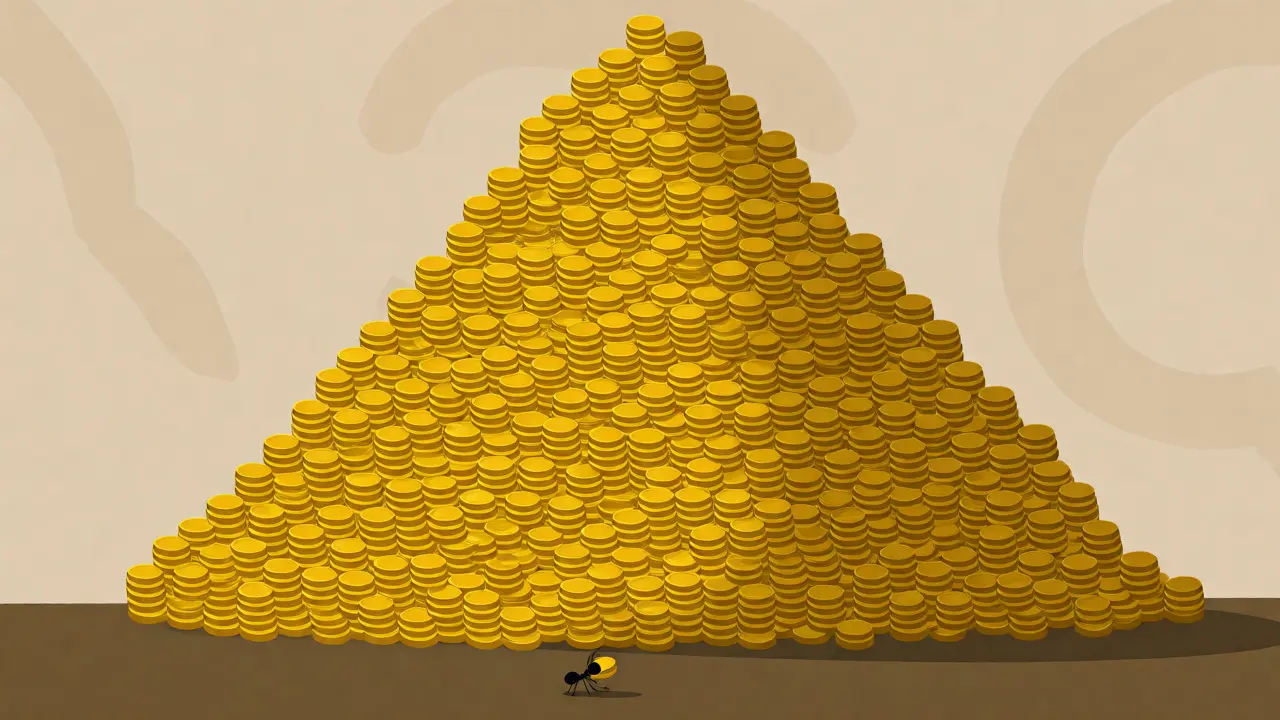
The most dangerous aspect of Pirate Coin Games for investors is liquidity. Trading volume hovers around $40-$50 per day on some platforms. What does this mean for you?
- Slippage: If you try to sell $100 worth of tokens, you might move the market price against yourself significantly.
- Exit Difficulty: You might buy easily, but selling large amounts could take days or weeks as buyers are scarce.
- Exchange Availability: You won’t find this on Coinbase or Binance main listings. It trades primarily on decentralized exchanges (DEXs) like PancakeSwap (v2).
Low volume often signals low interest. While the game has active players (around 1,800 active wallets monthly according to DappRadar), very few are actively trading the token. Most engagement happens within the game interface, not on the open market.
Expert Opinions and Skepticism
Industry analysts remain cautious. Nick Mazing, a well-known crypto journalist, suggested that tokens with sub-penny valuations and negligible volume rarely sustain long-term value unless the underlying product explodes in popularity. As of late 2023, Pirate Nation hadn’t seen that kind of viral breakout.
Community sentiment is mixed. On Trustpilot and CryptoSlate, ratings hover around 1.8/5. Common complaints include:
- "Impossible to sell tokens due to no liquidity."
- "Confusing whether I'm playing a game or investing in a questionable token."
- "The game is fun, but I don't understand why they needed a token."
Positive reviews focus almost exclusively on the gameplay experience, rarely mentioning token appreciation. This suggests the token serves more as a speculative layer than a functional part of the core user experience.
How to Buy and Play
If you still want to dive in, here’s the practical path forward.
Playing the Game
- Platform: Desktop browser (Chrome recommended). Mobile support was planned for early 2024.
- Cost: Free to play.
- Wallet: Not required for basic access.
Buying the Token
- Network: Likely Ethereum-compatible or on the Apex chain (check contract address carefully).
- DEX: Use PancakeSwap or other DEXs listed on CoinGecko.
- Steps:
- Set up a Web3 wallet (e.g., MetaMask).
- Fund it with ETH or BNB depending on the network.
- Connect to the DEX.
- Search for the correct contract address (verify via CoinGecko/CoinMarketCap).
- Swap your funds for PirateCoin☠.
Pro Tip: Always verify the smart contract address. Scam tokens often use similar names. Given the naming confusion between "Pirate Nation" and "Pirate Coin," double-check the ticker symbol and logo.
Future Outlook
Proof-of-Play has announced plans for mobile expansion and further content updates. If Pirate Nation gains mainstream traction, the token could benefit from increased demand. However, without clear utility for the token beyond speculation, growth may be limited.
Regulatory risks also loom. The SEC has scrutinized gaming tokens, though Pirate Nation’s free-to-play model might help it avoid classification as a security. Still, regulatory uncertainty adds another layer of risk for small-cap tokens.
For now, treat Pirate Coin Games as a high-risk, experimental asset. It’s best suited for gamers who enjoy the title and want to speculate lightly, rather than serious investors seeking stable returns.
Is Pirate Coin Games a scam?
Not necessarily a scam, but highly risky. The game itself is developed by credible ex-Zynga staff and is playable. However, the token suffers from extremely low liquidity and confusing tokenomics, which can lead to losses if you expect easy exits or price stability.
Why is the supply of PirateCoin so high?
There are conflicting reports. Some sources cite a supply of hundreds of millions, while others list 100 quadrillion. This discrepancy often stems from different tracking methods for total supply vs. circulating supply, or potential inflationary mechanisms. Always check the specific contract address you are interacting with.
Can I play Pirate Nation without crypto?
Yes. The core gameplay is free-to-play and accessible via a standard web browser without connecting a crypto wallet. Crypto integration is optional for those interested in owning NFTs or trading tokens.
Where can I buy PirateCoin☠?
It is primarily traded on decentralized exchanges (DEXs) like PancakeSwap. It is not typically listed on major centralized exchanges like Coinbase or Binance Spot, contributing to its low visibility and liquidity.
What is the difference between Pirate Nation and Pirate Coin?
Pirate Nation is the blockchain-based role-playing game. Pirate Coin (or PirateCoin☠) is the cryptocurrency token associated with the ecosystem. They are related but distinct entities; buying the token does not automatically grant special game advantages unless specified by current game mechanics.