Kintsugi kBTC Collateral Calculator
Most people know Bitcoin as digital gold - locked away, rarely moved, and mostly held as a store of value. But what if you could actually use your Bitcoin inside a whole new world of decentralized finance? That’s where Kintsugi (KINT) comes in. It’s not another meme coin or a speculative gamble. It’s a technical bridge - one that lets Bitcoin holders tap into the Kusama blockchain’s DeFi tools without giving up control of their BTC. And yes, it’s real. But it’s also niche, volatile, and not for everyone.
What Exactly Is Kintsugi?
Kintsugi is a blockchain network built on Kusama, the experimental sibling of Polkadot. It was launched in late 2021 by Interlay, a team focused on connecting Bitcoin with DeFi. Think of it as a testing ground - a canary network. Every new feature, upgrade, or security fix gets tried here first. If it works, it moves over to Interlay’s mainnet on Polkadot. Kintsugi doesn’t just copy Bitcoin - it makes it usable. Its core product is called kBTC. This isn’t a token that pretends to be Bitcoin. It’s a 1:1 backed digital version of BTC, created when you lock real Bitcoin into a decentralized vault. You get kBTC in return, and you can use it like any other crypto asset on Kusama - lend it, borrow against it, earn yield, or trade it. The original Bitcoin stays locked and secure, untouched by anyone except the system itself.How Does Kintsugi Work?
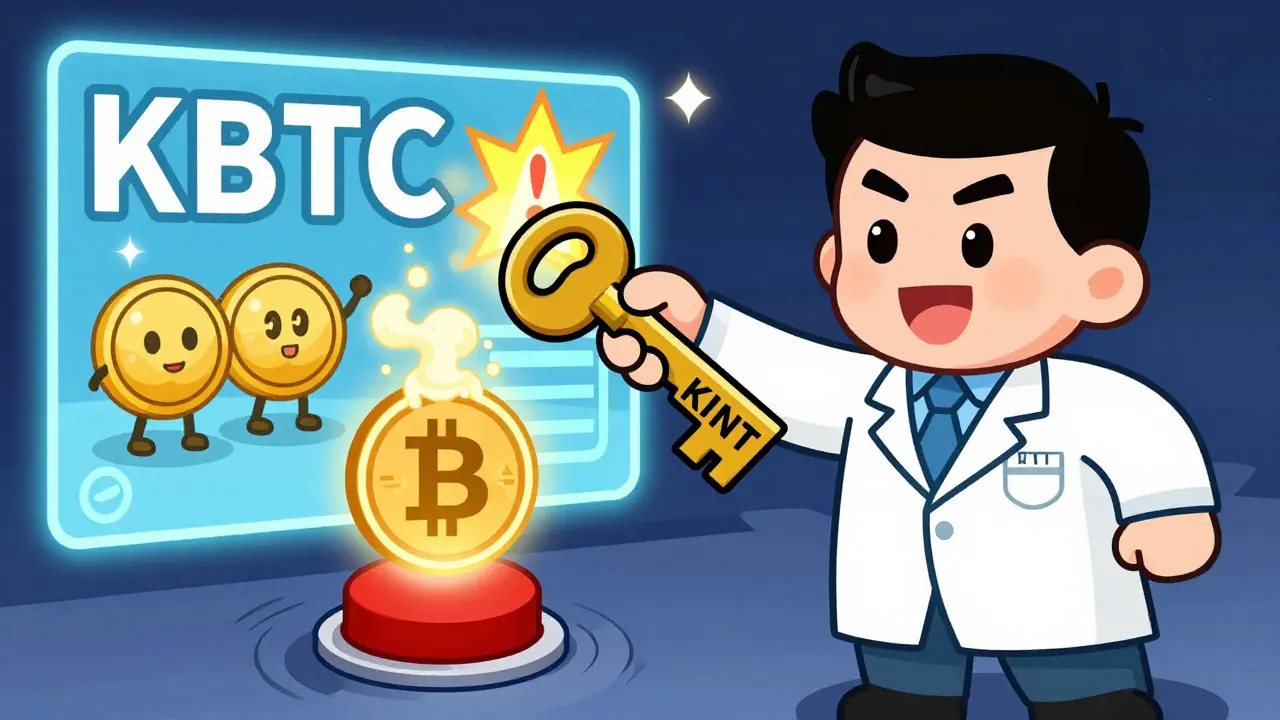
Here’s how it actually works on the ground:- You send Bitcoin (BTC) to a trustless vault on the Kintsugi network.
- That vault locks your BTC and issues you an equal amount of kBTC.
- To secure the system, the vault operator must lock up collateral - usually KSM (Kusama’s native token) - worth more than the kBTC they issue.
- If the value of the collateral drops too low, the system automatically sells part of it to cover the debt. This is called slashing.
- If you want your BTC back, you return your kBTC, and the vault releases your original Bitcoin.
What Is KINT Used For?
KINT is the native token of the Kintsugi network. It has two main jobs:- Governance: Holders vote on upgrades, fee changes, and how new funds are allocated. If you own KINT, you help decide the future of the network.
- Transaction fees: You pay KINT to interact with the network - minting kBTC, redeeming BTC, or moving assets around.
Why Kintsugi? Why Not WBTC or tBTC?
There are other ways to use Bitcoin in DeFi. WBTC (Wrapped Bitcoin) is the most popular - but it’s centralized. A group of companies holds the real BTC, and they issue WBTC on Ethereum. You have to trust them. If one gets hacked or goes rogue, your Bitcoin is at risk. tBTC is more decentralized, but it’s slow, expensive, and rarely used. Kintsugi’s advantage? It’s designed for Kusama - a network built for speed, experimentation, and low fees. That makes kBTC much more practical for everyday DeFi use. Also, Kintsugi’s code is always ahead of Interlay’s mainnet. That means if you’re into cutting-edge DeFi, Kintsugi gives you early access to new features before they hit Polkadot. You’re not just using Bitcoin - you’re helping shape its future.Market Reality: Small, Volatile, and Illiquid
Don’t be fooled by the tech. The market for KINT is tiny. As of late 2023, its market cap hovered around $84,000. That’s less than 0.0004% of the total crypto market. Compare that to WBTC, which has over $6 billion in circulation. Trading volume is low - often under $15,000 in 24 hours. Most of it happens on Gate.io, with small amounts on Kraken and Bit2Me. This means big price swings. One day, KINT might trade at $0.04. The next, it could drop 12% in a few hours. There’s no liquidity to absorb big buys or sells. Total Value Locked (TVL) in the Kintsugi system? Around $30,000. That’s not a typo. For a project that lets you use Bitcoin in DeFi, that’s barely a drop in the bucket. Most users aren’t using kBTC for lending or farming - they’re just holding KINT, hoping it goes up.
Who Is Kintsugi For?
This isn’t a coin for casual investors. It’s for:- Bitcoin holders who want to earn yield without selling BTC
- DeFi enthusiasts who want to experiment with cross-chain tech
- Developers building on Kusama and needing Bitcoin liquidity
- Early adopters who believe in decentralized Bitcoin bridges
How to Get Started
Using Kintsugi isn’t plug-and-play. You need:- Some KSM (Kusama tokens) to pay for gas fees
- A compatible wallet like Polkadot.js or Talisman
- Bitcoin (BTC) to deposit
- Technical patience
- Buy KSM on an exchange like Kraken or Binance.
- Install Polkadot.js extension and connect it to the Kintsugi network.
- Send BTC to the Kintsugi vault interface (you’ll get a unique deposit address).
- Wait for confirmation (Bitcoin blocks take ~10 minutes).
- Receive your kBTC and start using it on Kusama DeFi apps like Karura or Moonriver.
The Bigger Picture: Kintsugi’s Future
Kintsugi’s success isn’t about its own price. It’s about whether kBTC becomes widely adopted on Kusama. If more lending platforms, DEXs, and yield protocols start accepting kBTC as collateral, then the whole system grows. That’s when KINT’s value might rise - not because of speculation, but because it’s needed to run the network. Right now, Kintsugi is a prototype. It’s not broken - it’s just not finished. And that’s okay. The real test will be when Interlay moves its best features to Polkadot. If Kintsugi’s model proves secure and scalable, Bitcoin could finally become a real player in DeFi - not just a bystander. Until then, KINT remains a quiet experiment. It’s not the flashiest crypto. It doesn’t have celebrity endorsements or viral memes. But it’s one of the few projects trying to solve a real problem: How do you make Bitcoin useful - without giving up its core promise of decentralization?Is Kintsugi (KINT) a good investment?
KINT is not a typical investment. Its price is extremely volatile, with low trading volume and a tiny market cap. If you’re looking for steady growth or passive income, it’s not the right choice. But if you believe in decentralized Bitcoin bridges and want to support early-stage DeFi innovation, holding KINT gives you a voice in the network’s future through governance. Only invest what you can afford to lose.
Can I convert kBTC back to Bitcoin?
Yes. The entire system is built around 1:1 redeemability. You send your kBTC back to the Kintsugi network, and the vault releases your original Bitcoin. This process is trustless - no one holds your coins. The system only releases BTC if the kBTC is burned and the collateral is properly secured. It’s designed to be secure even if the vault operator tries to cheat.
Is Kintsugi safe?
The system is designed to be safe - no central entity controls your Bitcoin. Vaults are over-collateralized, and misbehavior triggers automatic slashing. However, no system is perfect. Smart contract bugs, extreme market drops, or network congestion could lead to losses. Always understand the risks before locking BTC into any bridge. Never deposit more than you’re willing to risk.
Where can I buy KINT?
KINT is available on a few exchanges: Gate.io (main volume), Kraken, and Bit2Me. You can’t buy it on Coinbase, Binance, or most major platforms. You’ll need to transfer funds from a centralized exchange to one of these, then trade for KINT. Always check the trading pair - it’s usually paired with USDT, BTC, or ETH.
Does Kintsugi work on Ethereum?
No. Kintsugi only operates on the Kusama blockchain. It’s specifically built to bring Bitcoin liquidity into Kusama’s DeFi ecosystem - apps like Karura, Moonriver, and Shiden. If you want to use Bitcoin on Ethereum, look at WBTC or tBTC instead. Kintsugi is not a cross-chain solution for multiple blockchains - it’s focused, narrow, and intentional.
What’s the difference between Kintsugi and Interlay?
Kintsugi is the experimental canary network on Kusama. Interlay is the mainnet version on Polkadot. They share the same codebase, but Kintsugi always has new features first. Think of Kintsugi as the beta test, and Interlay as the stable release. If a feature works on Kintsugi, it eventually moves to Interlay. So if you want to use kBTC on Polkadot, you’ll use Interlay - not Kintsugi.
6 Comments
Kintsugi is one of those projects that feels like whispering in a crowded room-no one’s listening, but the people who care? They’re all nodding along. I’ve held kBTC for a year now, just to see how it holds up. No big gains, no drama. Just quiet, trustless Bitcoin usage on Kusama. That’s the magic. No exchange, no middleman. Just code doing what it’s supposed to. I don’t trade it. I use it. And honestly? That’s enough.
So let me get this straight-you’re telling me people are locking up BTC to get a token that’s worth less than a cup of coffee, on a blockchain no one’s heard of, just to ‘support innovation’? Bro. The TVL is $30k. That’s less than what I spent on my last NFT flip. This isn’t DeFi. It’s a garage sale for crypto masochists.
i know kintsugi is niche but i think its kinda beautiful? like, imagine if bitcoin could actually DO something besides sit there and be ‘digital gold’? kbtc lets you earn yield without selling your btc. that’s wild. sure, the volume is trash, and yeah, the price swings like a pendulum in a hurricane-but the tech? it’s real. i’ve used it. no hacks, no drama. just cold hard crypto math working. maybe it’s not for everyone, but it’s for me. and that’s okay.
Why are we letting some tech bros in California build Bitcoin alternatives on some obscure blockchain? We already have WBTC on Ethereum and it works fine. This Kintsugi thing is just another distraction. Bitcoin was meant to be simple. Not some overengineered DeFi toy for people who think they’re smarter than everyone else. We don’t need this. We need stability. Not more experiments.
Oh, here we go again. Another ‘hidden gem’ that only exists because someone’s uncle knows a dev on Discord. KINT’s market cap is smaller than the average Twitter influencer’s Patreon. The fact that people still treat this like a serious project is both hilarious and sad. And don’t get me started on the ‘governance’-you think a handful of people holding 0.0001% of supply actually vote? Please. It’s theater. A performance for the delusional. The real innovation here is how effectively this project fools people into thinking they’re part of something revolutionary. They’re not. They’re just paying gas fees to feel important.
Let’s be clear: Kintsugi isn’t about speculation. It’s about infrastructure. The fact that you can lock Bitcoin into a decentralized vault and get a 1:1 redeemable token on a scalable, experimental chain is a technical milestone. Yes, the market is tiny. Yes, the liquidity is thin. But that’s because it’s a testnet. Interlay’s mainnet on Polkadot will be the real benchmark. Until then, Kintsugi is the sandbox where the future of Bitcoin DeFi is being stress-tested. If you can’t see the value in that, you’re not looking at the right thing.