Most people think of meme coins as nothing more than digital jokes. You buy them because the internet thinks a dog or a cat looks funny, hoping someone else pays more later. But Gorilla (GORILLA) is a hybrid cryptocurrency token that blends viral meme culture with actual functional utility features on blockchain networks. Launched in 2025, it tries to stand out from pure speculation by offering tools like cross-chain swapping and an IDO launchpad.
If you are wondering whether this token is just another flash-in-the-pan trend or if it has legs, you need to look past the name. The project claims to solve common pain points in decentralized finance while keeping the community engagement high. Let's break down what Gorilla actually is, how its economy works, and whether it fits into your portfolio strategy in 2026.
The Core Concept: More Than Just a Meme
Gorilla (GORILLA) operates as both an ERC-20 token on Ethereum and a BEP20 token on BNB Smart Chain. This dual-chain approach is significant. It means you can interact with the token using major wallets like MetaMask regardless of which network you prefer. The contract address for the Ethereum version is 0xcf640fdf9b3d9e45cbd69fda91d7e22579c14444, which serves as the primary identifier for verifying authenticity.
Unlike early meme tokens that relied solely on brand recognition, Gorilla positions itself as a comprehensive ecosystem. The team behind the project uses the motto "Everything we do, we ape it!" to signal a commitment to bold moves in the crypto space. They argue that combining entertainment with utility creates a stronger foundation for long-term value than humor alone.
The key differentiator here is functionality. While competitors like Dogecoin and Shiba Inu have massive communities, they often lack integrated tools for users beyond holding and trading. Gorilla attempts to bridge this gap by embedding services directly into the token's purpose.
Key Features of the Gorilla Ecosystem
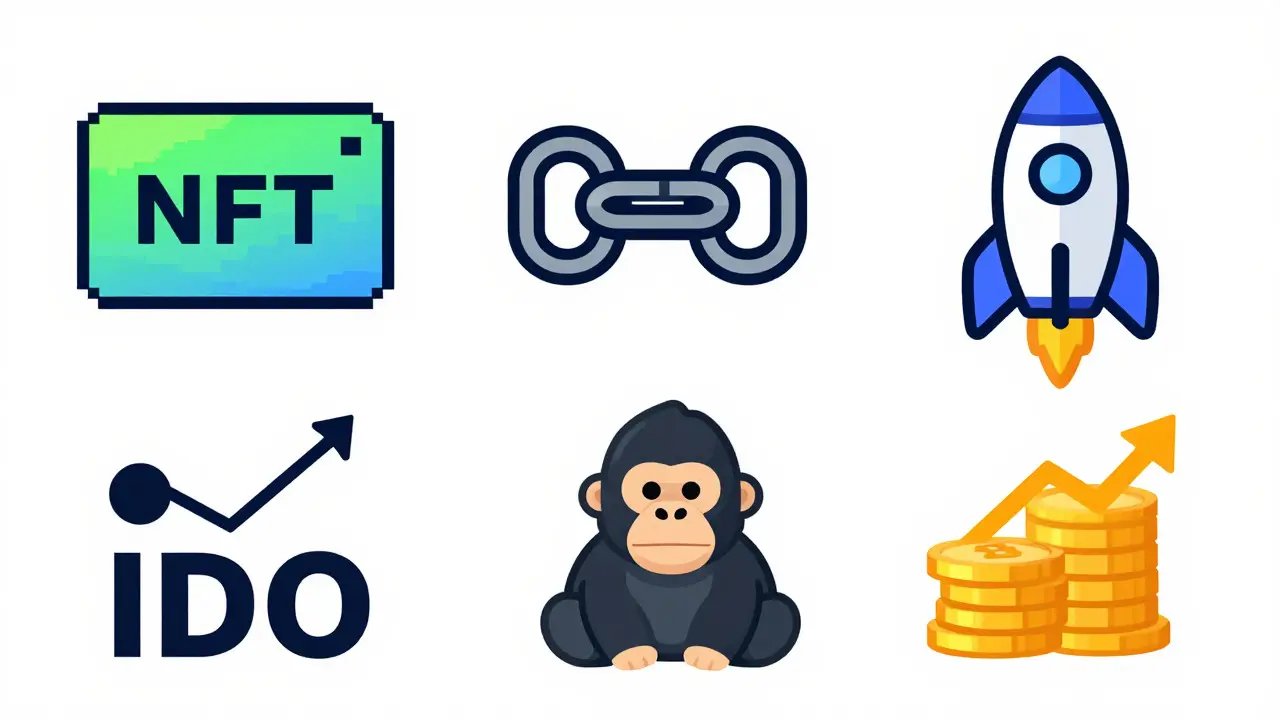
To understand why someone would hold GORILLA tokens, you need to look at the four main pillars supporting the project. These features are designed to create demand for the token beyond simple price speculation.
- Mad Gorilla NFT Collection: Non-fungible tokens serve as a gateway for community members. Holding these NFTs may provide access to exclusive features or governance rights within the ecosystem, tying digital art ownership to utility.
- Decentralized Cross-Chain Swapping: This platform allows users to trade assets across different blockchains without intermediaries. By removing centralized exchanges, the project aims to reduce vulnerability to hacks and give users full control over their funds.
- IDO Launchpad: An Initial D Offering launchpad helps new cryptocurrency projects raise capital. GORILLA token holders likely get priority access to these new launches, creating a tangible benefit for holding the asset.
- Staking Mechanisms: Users can lock their tokens to earn rewards. This not only generates passive income for holders but also reduces the circulating supply temporarily, supporting network stability.
These components work together to create a loop where the token is needed for transactions, governance, and accessing new opportunities. This structure is meant to mimic the utility seen in established DeFi protocols while maintaining the accessible, fun vibe of a meme coin.
Tokenomics: Supply, Scarcity, and Deflation
The economic model behind any cryptocurrency dictates its potential value trajectory. For Gorilla, the design focuses on scarcity and deflationary pressure. The total supply is fixed at 1 billion GORILLA tokens. As of early 2026, the circulating supply sits between 870 million and 900 million tokens. This means a portion of the supply is already removed from circulation, either through burns or locked mechanisms.
A critical part of this model is the transaction fee structure. A percentage of every transaction fee generated within the ecosystem is burned. Burning means those tokens are sent to an inaccessible wallet, permanently removing them from existence. Over time, this reduces the total available supply. If demand remains steady or increases while supply decreases, basic economics suggests upward price pressure.
| Attribute | Value / Detail |
|---|---|
| Total Supply | 1,000,000,000 GORILLA |
| Circulating Supply | ~870-900 Million GORILLA |
| Token Standard | ERC-20 (Ethereum), BEP20 (BNB Smart Chain) |
| Burn Mechanism | Portion of transaction fees burned |
| Staking | Available for rewards and network security |
This conservative approach to supply contrasts with some meme tokens that issue trillions of tokens, leading to hyperinflationary conditions. By capping supply at one billion, Gorilla aims to make each token individually more valuable in the long run, assuming adoption grows.
Market Performance and Price Analysis (2026 Context)
Cryptocurrency markets are notoriously volatile, and meme tokens are no exception. Understanding the current market position of Gorilla requires looking at recent data trends from early 2026. Prices vary significantly depending on the exchange and liquidity pool you check.
Recent reports show the price ranging from approximately $0.00034 to $0.00126 USD. On platforms like CoinGecko, the market capitalization was recorded around BTC 19.14, while CoinMarketCap listed a market cap near $450,000 USD with a trading price closer to $0.00043. These discrepancies highlight the fragmented nature of liquidity in smaller-cap tokens.
Despite the low absolute price, performance metrics show interesting activity. In a seven-day period prior to March 2026, Gorilla saw a 42.9% price increase, vastly outperforming the global crypto market average of 0.2%. The 24-hour trading volume hovered around $250,000, indicating active interest but modest liquidity compared to top-tier coins.
Rankings fluctuate based on methodology. CoinMarketCap placed Gorilla at #2291 by market cap, while CoinGecko ranked it lower at #3029. This places it firmly in the mid-to-lower tier of cryptocurrencies, meaning it carries higher risk but potentially higher reward compared to giants like Bitcoin or Ethereum.
Risks and Considerations for Investors
Before adding Gorilla to your wallet, it is crucial to weigh the risks. The project launched in 2025, which means it has a relatively short operational history. There is limited data on how the team handles crises or long-term development challenges.
Volatility is inherent to meme tokens. Prices can swing wildly based on social media sentiment rather than fundamental changes in the technology. Additionally, the reliance on community engagement means that if the "viral" aspect fades, utility adoption might struggle to sustain price levels alone.
Liquidity is another factor. With daily volumes under $300,000, large trades could impact the price significantly. Slippage-the difference between expected price and executed price-can be higher on decentralized exchanges like PancakeSwap (v2), which is the most popular venue for trading GORILLA.
Finally, regulatory uncertainty looms over all cryptocurrencies. As governments clarify rules for digital assets, tokens with unclear utility or heavy speculative components may face scrutiny. Always conduct your own research and never invest more than you can afford to lose.
Future Outlook and Price Predictions
Analysts often provide long-term forecasts to help investors gauge potential growth. While these predictions should be taken with a grain of salt due to market unpredictability, they offer a perspective on expert sentiment.
Changelly analysts have projected several milestones for Gorilla. For late 2028, estimates suggest a price range between $0.0117 and $0.0147. Looking further ahead to 2031, predictions jump to an average of $0.0359. The most aggressive forecasts extend to 2040 and 2050, suggesting prices could reach averages of $2.17 and $2.86 respectively.
These numbers assume successful adoption of the IDO launchpad, sustained burn mechanisms reducing supply, and broader acceptance of the cross-chain swapping tool. If the ecosystem fails to attract developers or users, these projections become irrelevant. The success of Gorilla hinges on executing its roadmap and maintaining community trust.
How to Buy and Store Gorilla Tokens
If you decide to participate in the Gorilla ecosystem, the process involves standard steps for acquiring ERC-20 or BEP20 tokens. First, set up a compatible wallet such as MetaMask. Ensure you configure the wallet to support both Ethereum and BNB Smart Chain networks.
- Add the Token Contract: Import the GORILLA token using the official contract address to ensure you are buying the legitimate asset.
- Choose an Exchange: Access decentralized exchanges like PancakeSwap for BEP20 tokens or Uniswap for ERC-20 tokens. Centralized exchanges may also list the token, though options are currently limited.
- Execute the Swap: Trade ETH or BNB for GORILLA. Monitor gas fees, especially on Ethereum, as they can eat into small investments.
- Secure Your Holdings: Once purchased, consider moving tokens to a hardware wallet for long-term storage to protect against online threats.
Always verify links and contract addresses from official sources like the project website (gorillabsc.vip) to avoid phishing scams. The crypto space is rife with copycat tokens designed to steal funds.
Is Gorilla (GORILLA) a safe investment?
No cryptocurrency is entirely safe, but Gorilla offers more utility than typical meme coins. However, it remains highly volatile and speculative. Its recent launch in 2025 means limited track record. Diversify your portfolio and only invest what you can afford to lose.
Which blockchain does Gorilla use?
Gorilla operates on two blockchains: Ethereum (as an ERC-20 token) and BNB Smart Chain (as a BEP20 token). This dual presence allows users to choose based on fee preferences and liquidity availability.
What is the total supply of GORILLA tokens?
The total supply is fixed at 1 billion GORILLA tokens. This capped supply, combined with a burn mechanism, aims to create scarcity and potential value appreciation over time.
How does the Gorilla IDO Launchpad work?
The IDO Launchpad enables new crypto projects to raise funds. GORILLA holders typically get early access to these token sales, providing an opportunity to invest in emerging projects before they hit public exchanges.
Where can I buy Gorilla tokens?
You can trade GORILLA on decentralized exchanges like PancakeSwap (for BNB Chain) and Uniswap (for Ethereum). Some centralized exchanges may also list it, but DEXs currently offer the most direct access.
Does Gorilla have a staking program?
Yes, Gorilla includes staking opportunities. By locking your tokens, you help secure the network and earn rewards. This incentivizes long-term holding and reduces selling pressure.
8 Comments
honestly this looks like another rug pull waiting to happen. the tokenomics are so confusing and why do we need another gorilla coin? i feel drained just reading about it. nobody cares about utility in meme coins anymore its all about hype and then crash. typical crypto scam vibes.
Another foreign project trying to bleed American investors dry!!! Why can't we have a proper American cryptocurrency that respects our sovereignty??? This Gorilla nonsense is just another way for overseas scammers to steal our hard-earned dollars!!! We need regulation NOW!!! Not more digital monkey business!!!
You guys are missing out on the potential here! The cross-chain swapping feature is actually quite innovative for a meme coin. It's great to see projects trying to add real value instead of just relying on memes. Keep an open mind and maybe you'll find some hidden gems. Believe in yourself and your research!
It is morally bankrupt how these projects prey on desperate people looking for quick riches. They promise utility but deliver nothing but empty promises. I feel so exhausted by the constant greed in this space. People should focus on real value creation instead of gambling their savings on digital apes. It is truly disheartening.
The entire premise is laughable, really. A "hybrid" meme coin with utility? Please. It is either a meme or a utility token, not both. This dual-chain approach sounds like a convenient excuse for poor liquidity management. And don't get me started on the IDO launchpad; it is just a fancy word for a cash grab. Absolutely dreadful concept.
I've been digging into the contract addresses mentioned, and while the dual-chain setup on Ethereum and BNB Smart Chain is technically sound, the liquidity fragmentation is a genuine concern. The burn mechanism is interesting, but without consistent transaction volume, the deflationary pressure is negligible. It’s a bit of a technological Rorschach test-what you see depends on whether you’re looking at the code or the community sentiment. Fascinatingly precarious ecosystem.
centralized control disguised as decentralization. the team holds too much power over the IDO launchpad. they will pump their own bags and dump on retail. watch the wallet addresses closely. its a classic honeypot structure. dont be a sheep.
Just bought some. 🦍💰 Let's gooo! 🚀🌕