DUST Token Verification Tool
Enter Contract Address
Verification Results
When you hear "Dust (DUST)" in crypto, you might think it’s one coin. It’s not. There are at least three different tokens with the same ticker symbol - and mixing them up can cost you money. If you’re looking to buy or understand DUST, you need to know which one you’re dealing with. The confusion isn’t just annoying - it’s dangerous.
There’s more than one DUST
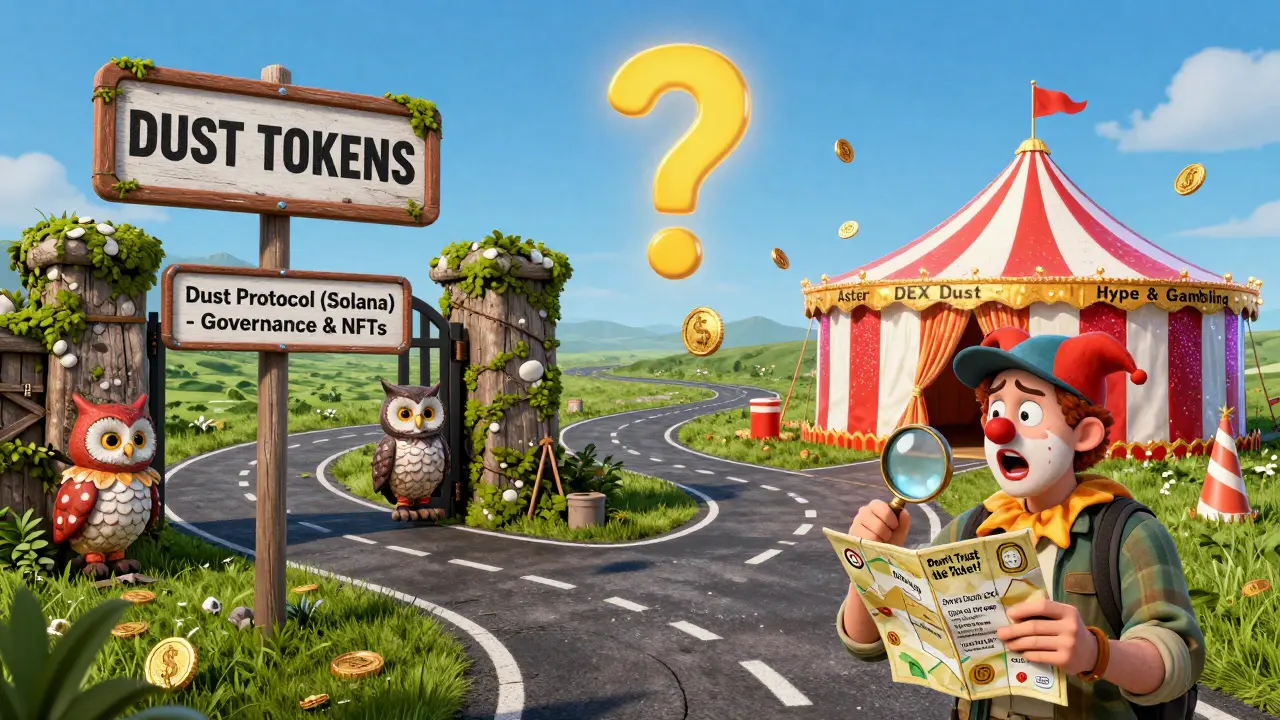
The name "Dust" is used by multiple tokens on different blockchains. The two main ones are Dust Protocol on Solana and Dust on Aster DEX (Ethereum). There’s also a BEP-20 version on BNB Smart Chain, but it’s far less active. All of them use DUST as their symbol. That’s the problem.
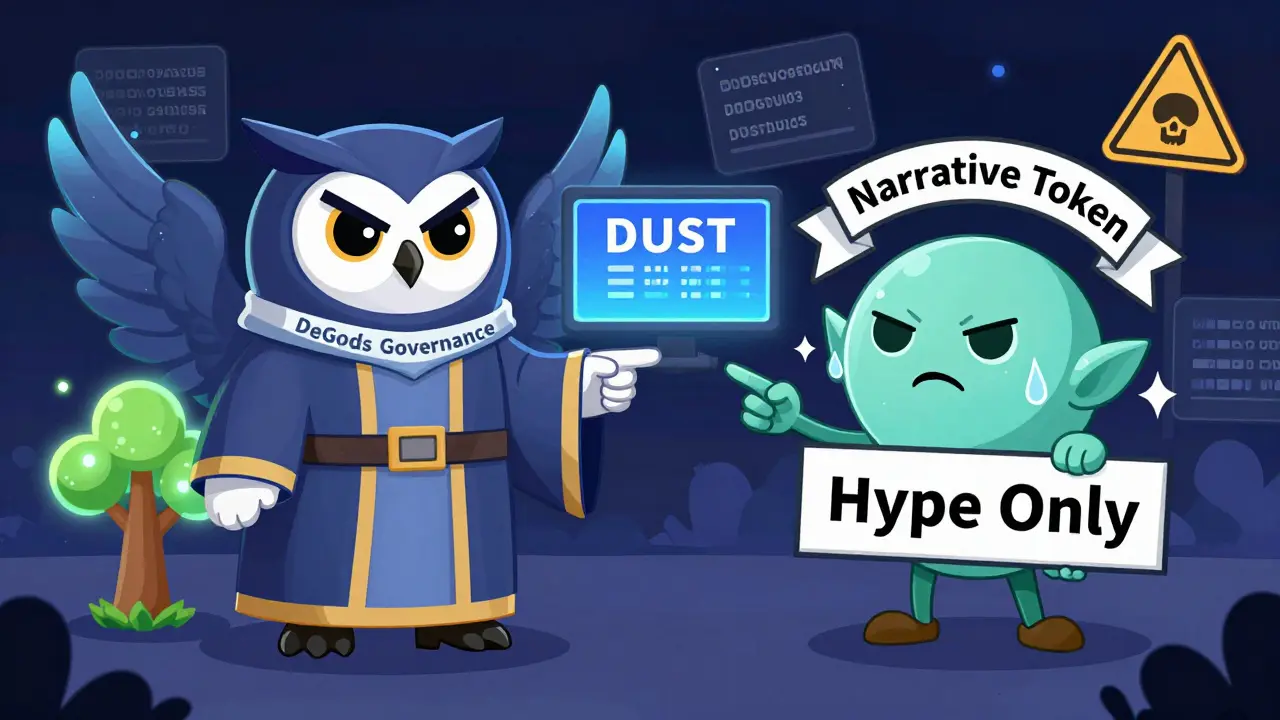
Dust Protocol (Solana) was built for the DeGods NFT community. It doesn’t have a pre-sale, no team allocation, and no initial supply. Instead, it was distributed fairly - only to people who staked their DeGods NFTs. Every DUST token you get comes from burning an NFT or locking one up. The total supply is capped at 33.3 million, but only about 19 million are in active circulation as of late 2023. It’s a governance token, meant to give NFT holders a voice in the Dust DAO.
On the other hand, the Dust token on Aster DEX is a completely different animal. It’s not tied to NFTs. It’s a narrative token - a character, almost. The project calls it a "sprite light, mischievous, and full of energy," symbolizing the idea that liquidity should be free and open for everyone. It’s more about community and myth than utility. You can trade it on Aster DEX, but you won’t get any special rights or rewards just by holding it.
Price and liquidity: Don’t be fooled by the numbers
As of December 2023, Dust Protocol trades around $0.016 per token with a market cap near $314,000. Sounds small? It is. But here’s the catch: its 24-hour trading volume is only around $367. That means almost no one is buying or selling it. For every $1 you try to trade, you could lose 10% or more just to slippage. If you try to sell a large amount, the price could crash before your order fills.
The Aster DEX Dust token looks better on paper. It trades at $0.0012 and has a 24-hour volume of nearly $480,000. That’s over a thousand times more active than Dust Protocol. But here’s the twist: its market cap isn’t listed clearly, and its price is so low that even a small pump can make it look like a miracle coin. The high volume doesn’t mean it’s safe - it just means more people are gambling on it.
Both tokens are tiny compared to the overall crypto market. Dust Protocol ranks #3986 on CoinGecko. That puts it in the bottom 5% of all cryptocurrencies by market cap. Most of these coins vanish within a year.
Why people lose money on DUST
Reddit is full of stories about people buying the wrong DUST. One user reported losing $250 because they thought they were buying Dust Protocol on Solana - but the exchange gave them the Aster DEX version instead. Exchanges list both tokens under "DUST," and unless you check the contract address or blockchain, you won’t know the difference.
Trustpilot reviews for platforms that list DUST have an average rating of 2.3 out of 5 - mostly because of this exact issue. Users say they’ve been scammed by accident. There’s no warning. No label. Just two coins with the same name, on different chains, with totally different values.
Even worse, some price prediction sites mix up the two. CoinLore claims Dust Protocol will hit $1.98 by 2025 - a 15,000% gain. But that prediction might be based on the Aster DEX token’s volume, not the real Solana token’s supply. It’s like predicting the price of a lemon based on data from a Ferrari.
What’s the real use case?
If you own a DeGods NFT, Dust Protocol gives you something real: governance power. You can vote on proposals, influence how the DAO spends funds, and even help decide future NFT drops. It’s a tool for the community - not a speculation play. The token’s value is tied to the health of the DeGods ecosystem. As long as those NFTs hold value (they’re still trading above 5.8 SOL), Dust Protocol has a reason to exist.
The Aster DEX version? Its only use is to participate in a story. It’s like buying a fictional currency from a fantasy novel. There’s no staking, no voting, no utility beyond trading. Its value comes from hype and community belief. That’s fine - if you’re okay with gambling on a myth.
Security risks: Dust attacks and privacy dangers
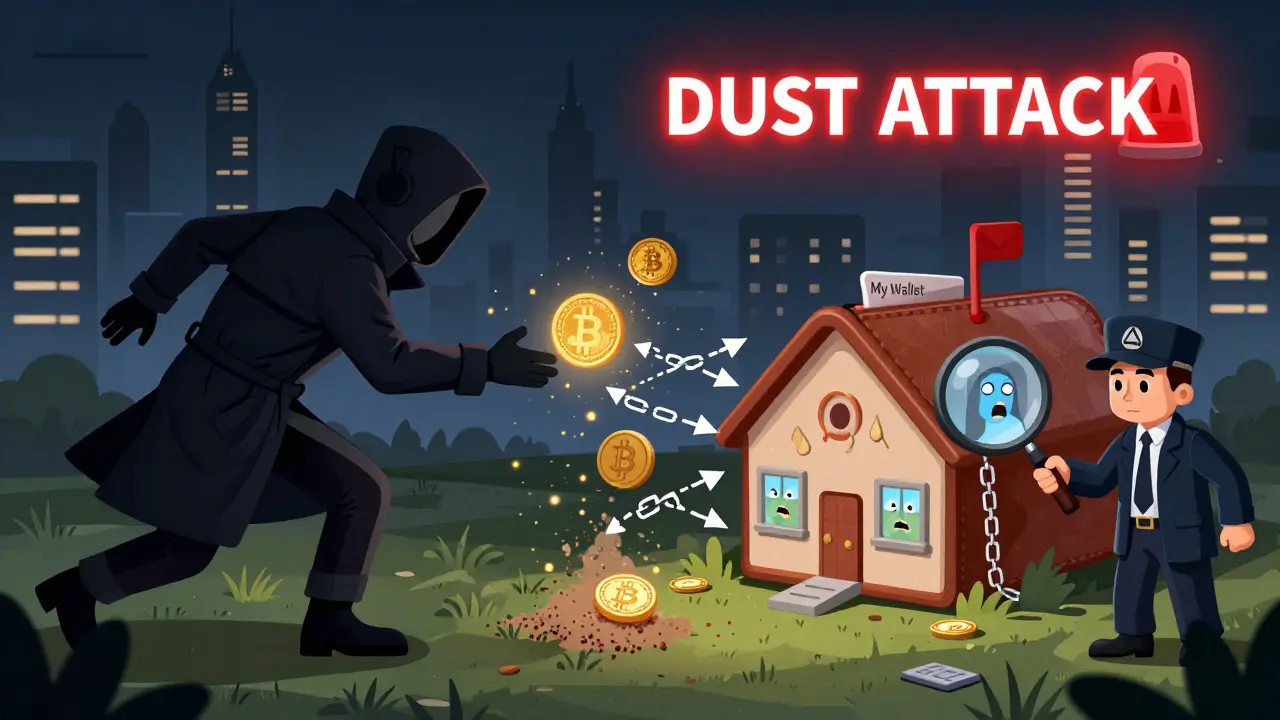
And then there’s the other kind of "dust" - the technical kind. In crypto, "dust" means tiny, leftover amounts of a coin after a transaction. On Bitcoin, it’s anything under 546 satoshis. On Ethereum, it’s fractions of a cent. These amounts are too small to be worth spending - but bad actors use them to track you.
Dusting attacks happen when someone sends you 0.000001 ETH or 0.00001 BTC to your wallet. They don’t want your money. They want to see how you move it. By watching your transactions, they can link your wallet to your identity - maybe even your real name. Chainalysis reported a 37% jump in these attacks in late 2023. If you’re holding any DUST token, you might have dust in your wallet already. Don’t ignore it.
Should you buy DUST?
Only if you know exactly which one you’re buying - and why.
If you own DeGods NFTs and want to help shape the project’s future, Dust Protocol (Solana) is worth exploring. But don’t expect to flip it for a quick profit. Liquidity is terrible. You’ll need a Solana wallet like Phantom, and you’ll need to learn how to stake NFTs. It’s not beginner-friendly.
If you’re drawn to the Aster DEX version because it’s "trending," think again. High volume doesn’t mean safety. It means more people are betting. And when the hype fades, the price can drop fast - with no one left to buy.
Neither token is a solid investment. Both are high-risk, niche plays. If you’re looking for long-term growth, look elsewhere. But if you’re into NFT communities or DeFi storytelling, and you’re okay with losing your money - then go ahead. Just make sure you’re buying the right DUST.
How to avoid getting scammed
- Always check the blockchain: Solana vs. Ethereum vs. BSC
- Verify the contract address before sending funds - never trust the ticker alone
- Use CoinGecko or CoinMarketCap to cross-check the token’s official page
- Never buy DUST from an exchange unless you’ve confirmed the underlying chain
- Watch out for "dusting" - if you see tiny, unexplained amounts in your wallet, don’t move them
There’s no shortcut. If you don’t verify the contract, you’re gambling - not investing.
What’s next for DUST?
Dust Protocol hasn’t had major updates since February 2023, when emissions ended. Its community has shrunk from 3,500 to 2,300 members on Discord. The project is quiet - but stable, because it’s tied to a real NFT ecosystem.
Aster DEX, on the other hand, added new liquidity pools in late 2023. That could mean more trading activity - or just more speculation. Its documentation hasn’t been updated since September, which isn’t a good sign.
Analysts at Delphi Digital say there’s a 68% chance one or both DUST tokens become worthless within 18 months. That’s not a prediction. It’s a warning.
Bottom line: DUST isn’t a coin. It’s a cautionary tale. And the only safe way to handle it is to know exactly what you’re getting into - before you click "Buy."
Is Dust (DUST) a good investment?
Dust (DUST) is not a good investment for most people. There are two main DUST tokens - one tied to DeGods NFTs on Solana, and another on Aster DEX with no real utility. Both have extremely low liquidity, high price volatility, and a high risk of becoming worthless. If you’re not deeply involved in the DeGods NFT community, there’s little reason to hold it.
What’s the difference between Dust Protocol and Aster DEX Dust?
Dust Protocol is a governance token on Solana, earned by staking DeGods NFTs. It gives holders voting rights in the Dust DAO. Aster DEX Dust is a narrative token on Ethereum with no governance power - it’s meant to represent the spirit of DeFi, not provide utility. They’re on different blockchains, have different contract addresses, and serve completely different purposes.
Why is Dust (DUST) so confusing?
Multiple projects use the same ticker symbol "DUST" on different blockchains. Exchanges don’t always label them clearly, so users accidentally buy the wrong one. One version is worth $0.016, the other $0.0012 - but they look identical on your trading screen. This has led to users losing hundreds of dollars by mistake.
Can I earn DUST by staking?
Only with Dust Protocol on Solana - and only if you own a DeGods NFT. You stake your NFT, and you earn DUST tokens over time. The Aster DEX version cannot be earned through staking. Other versions, like the BEP-20 token, offer no staking rewards at all.
What is crypto dust, and should I worry about it?
Crypto dust is tiny, leftover amounts of cryptocurrency - like 0.000001 ETH - that are too small to spend. Malicious actors send dust to wallets to track activity and link them to real identities. This is called a "dusting attack." If you see unexplained tiny amounts in your wallet, don’t move them. Use a new wallet or a privacy tool to isolate them.
Where can I trade DUST safely?
For Dust Protocol (Solana), trade on Raydium, Orca, or Meteora - always verify the contract address. For Aster DEX Dust, use the Aster DEX platform directly. Never buy DUST on centralized exchanges without checking the blockchain and contract. Always cross-reference with CoinGecko or CoinMarketCap before trading.
5 Comments
I’ve had this happen to me - bought DUST thinking it was the Solana one, ended up with the Aster DEX garbage. Lost $180 before I even realized. Now I check contract addresses like they’re passwords. No more guessing.
Also, dusting attacks? Yeah, I got 0.000003 ETH in my wallet last week. Didn’t move it. Just left it there like a landmine. Smart move.
People still fall for this? You’re telling me someone didn’t check the blockchain before buying a token with a generic name like DUST? This isn’t crypto - it’s a cartoon. If you can’t tell the difference between Solana and Ethereum contracts, you shouldn’t be near a wallet. You’re not an investor. You’re a snack.
And don’t get me started on those price prediction sites mixing up tokens. That’s not ignorance. That’s negligence dressed up as hope.
Thank you for this breakdown. As someone from India who’s seen multiple meme coins collapse, I appreciate the clarity.
What’s alarming is how exchanges don’t flag these duplicates. Imagine if Amazon sold two different products under the same name - one a laptop, one a charger - and didn’t label them. People would sue. But in crypto? We just lose money and shrug.
I’ve started using Etherscan and SolanaFM religiously. Even if a token looks promising, I verify the contract first. No exceptions. The cost of one mistake is higher than the profit of ten wins.
Also, the dust attack warning is critical. I didn’t realize how easily wallets can be tracked. I’ve started using burner wallets for speculative tokens now. Better safe than tracked.
And yes, Dust Protocol’s governance model is actually interesting - if you’re already in the DeGods ecosystem. But for outsiders? It’s like being invited to a private club you didn’t know existed. The door’s locked, and the key costs 5 SOL.
Bottom line: If you don’t know the difference between these tokens, you’re not investing. You’re playing Russian roulette with your wallet.
Just wanted to add - if you’re holding any DUST, check your wallet for tiny amounts of ETH, SOL, or BTC. That’s dust. Don’t send it anywhere. Just isolate it in a new wallet or use a privacy mixer if you’re serious about anonymity.
Also, the Aster DEX token’s volume is misleading. High volume + low market cap = pump-and-dump waiting to happen. I’ve seen this movie before. The credits roll fast.
And honestly? The fact that Dust Protocol has no team allocation and no pre-sale is rare and kinda beautiful. It’s rare to see a project that trusts its community this much. But that also means no one’s pushing updates. It’s a ghost town with a good foundation.
Still, I’d rather hold this than some token with a celebrity CEO and zero code transparency.
DUST isn’t a coin. It’s a warning label.