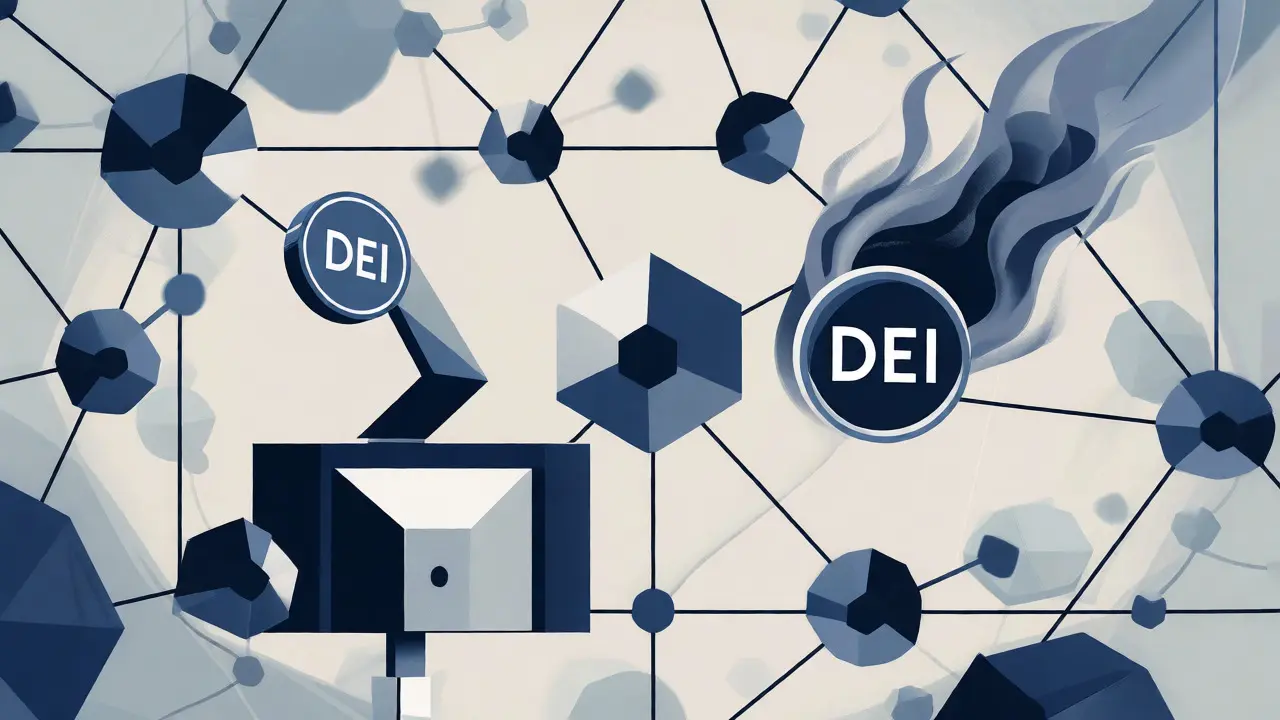
Imagine a cryptocurrency that gets scarcer every time you use its companion stablecoin. That’s the core mechanic of DEUS Finance, a decentralized fintech platform that challenges traditional monetary policy with a unique fractional-reserve model. If you’ve been watching the DeFi space, you might have noticed DEUS ($DEUS) and its sibling token, DEI ($DEI), making waves with their complex but intriguing economic design. But what exactly is DEUS Finance, and why does it matter for your portfolio in 2026?
The Core Concept: Fractional Reserve Banking on Blockchain
At its heart, DEUS Finance isn’t just another meme coin or utility token. It’s an infrastructure layer designed to tokenize real-world assets and facilitate derivatives trading. The genius-and complexity-lies in how its two main tokens interact. Think of DEI as a digital dollar, backed not by fiat in a bank vault, but by a mix of USDC and DEUS tokens. This is where the magic happens. When users mint new DEI stablecoins, they must lock up collateral. Part of this process burns DEUS tokens. Conversely, when users redeem DEI back to their underlying assets, DEUS tokens are minted again.
This inverse relationship creates a powerful deflationary pressure on DEUS. As demand for the stablecoin DEI grows across the ecosystem, the supply of DEUS shrinks. It’s a bit like a central bank raising interest rates to curb inflation, but here, the mechanism is automated via smart contracts. For investors, this means holding DEUS is essentially betting on the adoption of the DEI stablecoin. If more people want stable, yield-bearing dollars within the DEUS ecosystem, DEUS becomes rarer and potentially more valuable.
Tokenomics Breakdown: DEUS vs. DEI
To understand DEUS Finance, you need to grasp the distinct roles of its two primary tokens. They aren’t interchangeable; they serve different functions within the same machine.
| Feature | DEUS Token | DEI Token |
|---|---|---|
| Primary Role | Governance, Liquidity Provider, Deflationary Asset | Stablecoin, Collateral, Medium of Exchange |
| Backing | Fractional reserve backing from DEI minting/burning | Fractional reserve backing from USDC and DEUS |
| Mechanism | Burned when DEI is minted; Minted when DEI is redeemed | Minted via collateral; Redeemed for underlying assets |
| Utility | Voting rights (veDEUS), fee distribution exposure | Trading pairs, lending markets, payment settlement |
| Network | Ethereum (ERC-20) | Cross-chain (Native unified bridge) |
The DEUS token runs primarily on the Ethereum network. It acts as the liquidity provider for the ecosystem. When you stake DEUS, you’re not just earning yield; you’re providing the essential fuel that keeps the DEI stablecoin pegged and functional. Meanwhile, DEI is designed to be a cross-chain stablecoin. Unlike many stablecoins trapped on a single blockchain, DEI uses a native, unified bridge to move seamlessly between major EVM chains. This interoperability is crucial for a platform aiming to become a hub for third-party financial services.
veDEUS: Governance and Long-Term Alignment
If you plan to hold DEUS long-term, you’ll likely encounter veDEUS. This stands for "vote-escrowed DEUS." It’s a mechanism borrowed from other successful DeFi protocols like Curve, designed to align incentives between long-term holders and the protocol’s health.
Here’s how it works: You lock your DEUS tokens for a period ranging from one day to four years. In return, you receive veDEUS. The longer you lock, the more veDEUS you get. This isn’t just a badge of honor; veDEUS grants you voting power in the DEUS DAO. You help decide on critical parameters, such as reward distributions, treasury management, and protocol upgrades. Furthermore, veDEUS holders receive a share of the platform’s fees. This creates a passive income stream tied directly to the usage of the DEUS ecosystem. If traders use the platform heavily, fees increase, and so do your rewards.
Why lock up your tokens? Because it protects against dilution. By removing DEUS from circulation for extended periods, you reduce the circulating supply further, reinforcing the deflationary model. It’s a commitment strategy that rewards patience over speculation.

The Decentralized FIX Protocol: Beyond Simple Trading
Most DeFi platforms focus on swapping tokens or lending. DEUS Finance aims higher with its Decentralized FIX (Financial Information eXchange) protocol. FIX is a standard used in traditional finance for electronic trading. DEUS adapts this for blockchain, enabling Master Agreements for over-the-counter (OTC) derivatives.
What does this mean for you? It means institutional-grade trading tools are coming to DeFi. Third-party exchanges and market makers can build on top of DEUS’s base-layer contracts. These contracts are oracle-verified and audited, providing a secure foundation for complex financial instruments like leverage trading and prediction markets. Instead of building everything from scratch, developers can plug into DEUS’s infrastructure to offer sophisticated products to end-users. This modular approach positions DEUS as a backend provider for the next generation of DeFi applications.
Roadmap and Future Developments
As of October 2026, DEUS Finance has evolved significantly since its inception. The project follows a structured roadmap named after mythological figures, signaling ambitious goals at each stage.
- Apollo (Version 2): Focused on launching DEI as a true cross-chain stablecoin with high APY farming opportunities that minimize impermanent loss.
- Athena (Version 3): Introduced automated counter-trading and liquidation systems with keeper bots to improve capital efficiency.
- Vulcan (Version 4): Implemented targeted incentive systems, customizable referral programs, and enhanced leverage trading features.
- Generation 2: Currently enabling partners to create advanced position management tools, including stop-loss and limit orders.
These updates show a clear trajectory: moving from basic token swaps to becoming a comprehensive financial infrastructure provider. The addition of leverage trading and automated rebalancing suggests DEUS is targeting users who want more than just simple yield farming-they want active trading capabilities within a decentralized environment.

Price Volatility and Market Context
Let’s talk numbers. In early 2026, DEUS exhibited significant volatility, typical of mid-cap altcoins. Prices fluctuated widely depending on the exchange and timeframe. For instance, some data points showed DEUS hovering around $9.05, while others reported values closer to $2.70. This discrepancy often stems from differences in liquidity depth across exchanges and the timing of snapshots.
Over a 90-day period leading up to mid-2026, DEUS saw a decline of approximately 58%. While this might look alarming, it reflects broader market corrections and the specific dynamics of its deflationary model. During bearish phases, reduced demand for DEI leads to less burning of DEUS, which can temporarily soften price support. However, the static phase mechanism-a built-in appreciation bonus for early supporters-helps stabilize investor sentiment during these dips.
It’s also worth noting that DEUS X Pay, a separate entity offering regulated institutional stablecoin transactions, is distinct from the DEUS Finance protocol. Don’t confuse the two. DEUS Finance is the open-source, community-governed DeFi platform, while Deus X Pay serves enterprise clients needing fiat-crypto bridges.
Is DEUS Finance Right for Your Portfolio?
DEUS Finance offers a compelling narrative for those interested in deflationary mechanics and DeFi infrastructure. Its dual-token model creates interesting arbitrage opportunities and long-term value accrual through veDEUS. However, it comes with risks. The complexity of the fractional-reserve model requires careful monitoring of the DEI peg. If confidence in DEI wanes, the entire system faces stress.
For beginners, starting with small amounts of DEUS to experience the staking and governance features is wise. For advanced users, the Decentralized FIX protocol and leverage trading tools offer avenues for sophisticated strategies. Always remember that DeFi yields are never guaranteed, and smart contract risks remain present despite audits.
What is the difference between DEUS and DEI?
DEUS is the governance and liquidity token with a deflationary supply model, while DEI is a stablecoin backed by a fraction of USDC and DEUS. DEUS burns when DEI is minted, creating scarcity, whereas DEI maintains price stability for trading and payments.
How does the deflationary mechanism work in DEUS Finance?
The mechanism relies on the interaction between DEUS and DEI. When users mint DEI stablecoins, they lock collateral that includes DEUS, which is then burned. When DEI is redeemed, DEUS is minted. Thus, increased demand for DEI reduces DEUS supply, driving potential value appreciation.
What is veDEUS and why should I lock my tokens?
veDEUS (vote-escrowed DEUS) represents locked DEUS tokens. Locking provides voting power in the DEUS DAO and entitles holders to a share of platform fees. Longer lock periods yield higher rewards and greater influence over protocol decisions.
Is DEUS Finance the same as Deus X Pay?
No. DEUS Finance is a decentralized protocol with DEUS and DEI tokens focused on DeFi infrastructure. Deus X Pay is a separate, regulated service provider for institutional cryptocurrency transactions and settlements.
Which blockchains support DEUS Finance?
DEUS tokens primarily operate on the Ethereum network. However, the DEI stablecoin is designed as cross-chain, utilizing a native unified bridge to function across multiple major EVM-compatible blockchains.