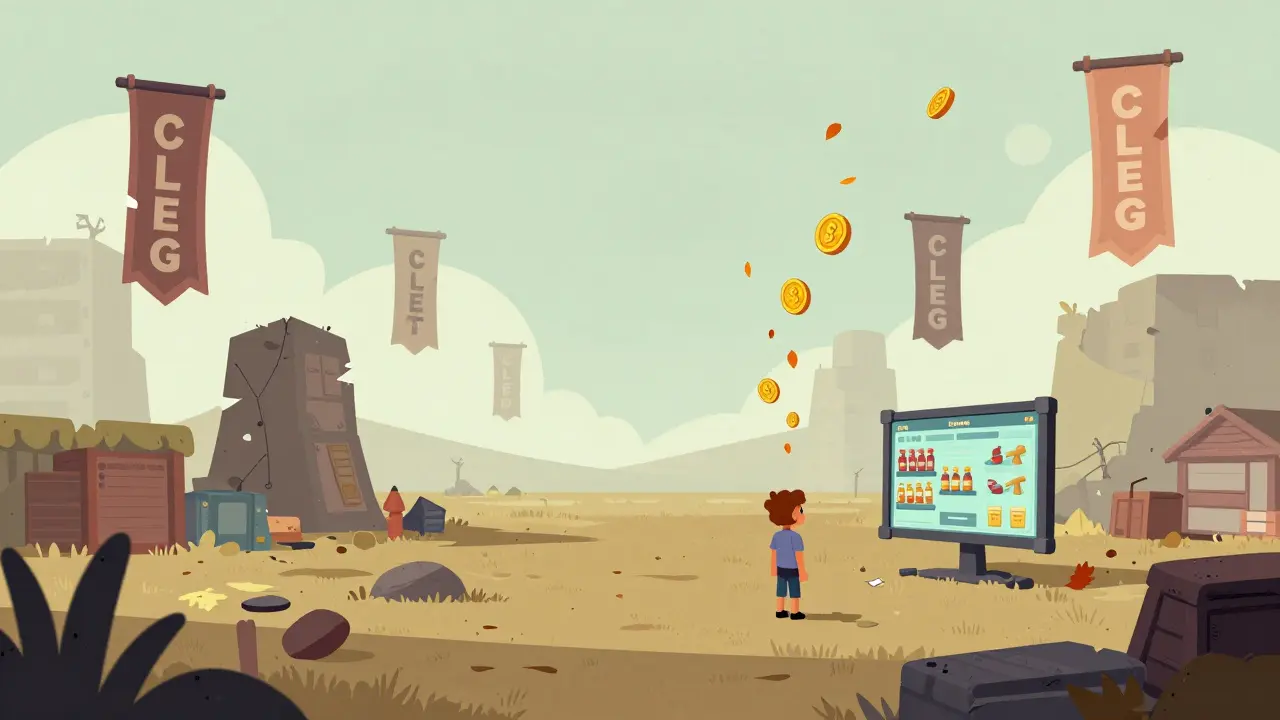
Chain of Legends (CLEG) was once promoted as a play-to-earn crypto game where you could earn real money just by playing. But by December 2025, it’s a ghost of what it promised. The token hit an all-time high of $0.1332 in February 2024. Today, it trades at around $0.000441 - a 99.67% drop. That’s not a market correction. That’s a collapse.
What CLEG was supposed to be
CLEG was launched in early 2024 as the native token for a blockchain game called Chain of Legends. The pitch was simple: play for free, mine resources, battle other players, collect NFTs, and earn CLEG tokens you could sell for cash. No upfront cost. No skill required. Just log in and earn. The website claimed it had a "hyper-deflationary" token model, meaning tokens would disappear over time to make them scarcer and more valuable. It operated on the Binance Smart Chain, using the BEP-20 standard. The contract address is0x4027d91eCD3140e53AE743d657549adfeEbB27AB, and the total supply was capped at 1 billion CLEG. At launch, it looked like any other promising play-to-earn project - similar to Axie Infinity or STEPN in its early days.
What happened to CLEG?
The game never delivered. By mid-2024, updates stopped. The promised features - like a working NFT marketplace, real-time battles, and multiplayer events - never launched. Players who bought land NFTs or spent hours mining in the game found their earnings worthless. The token price started sliding fast. By October 2024, industry analysts at Messari flagged CLEG as a classic case of "pump-and-dump" gaming tokens. The initial hype attracted early buyers who sold quickly at peak prices. Those who held on got stuck. Today, the market cap sits at just $75,908. That’s less than the cost of a used laptop. For comparison, Axie Infinity’s AXS token still trades with a $1 billion+ market cap. CLEG isn’t just behind - it’s in a different universe.Is the game even playable?
Technically, yes. You can still visit ChainofLegends.com, connect your MetaMask or Trust Wallet, and click around. But the experience is broken. The marketplace doesn’t work. NFTs won’t sell. Transactions fail. Customer support doesn’t respond. Reddit threads from December 2025 show users asking if anyone still plays - and getting replies like: "Spent $50 in March 2024. Game has 100 active players now. I’m out." The official Telegram group had 15,000 members in February 2024. Now, it has fewer than 200 daily active users. The project’s GitHub repo hasn’t seen a single code commit since September 2024. The website’s roadmap promised 600,000 players by Q4 2025. The actual peak was 8,342 players in April 2024. Now, DappRadar reports just 47 daily active users.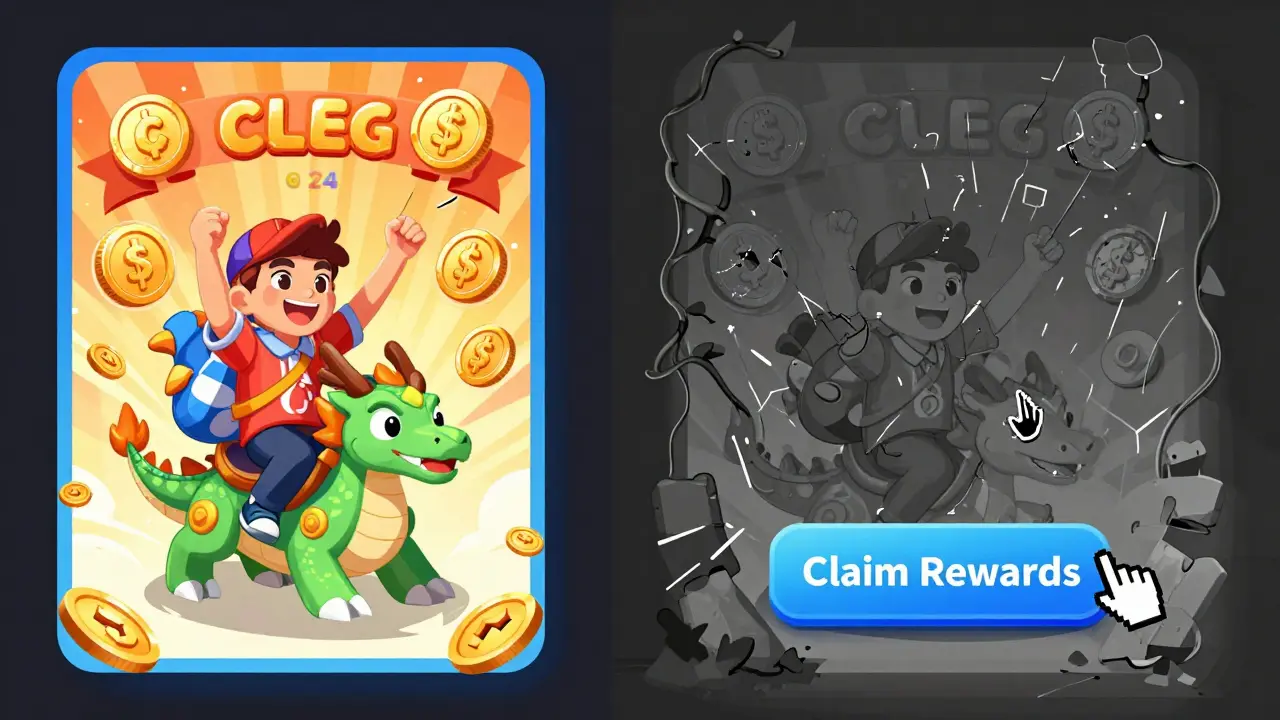
Why does CLEG still have any value at all?
It doesn’t - not really. The price you see on exchanges like Azbit or Binance isn’t based on utility. It’s based on speculation. A few traders still buy tiny amounts, hoping for a miracle bounce. But liquidity is near zero. Binance shows $0 in market depth for CLEG/USDT pairs. That means if you tried to sell even 10,000 CLEG tokens, you’d crash the price. No one’s buying at the listed price. You’re stuck. Even the tokenomics don’t add up. The "hyper-deflationary" model sounds smart on paper. But in reality, it backfires. If tokens disappear faster than people earn them, players have no incentive to keep playing. Why grind for rewards you can’t spend? That’s exactly what happened. The game became a dead end.What do experts say?
Dr. Evelyn Torres from the University of California called CLEG’s token model "mathematically unsustainable" in her October 2025 paper. Messari’s Mika Honkasalo said in November 2025: "Tokens with 99%+ drawdowns and sub-$100,000 market caps usually mean the team walked away." The SEC’s November 2025 guidance on gaming tokens specifically warned against projects with "predominantly speculative value and minimal utility" - a perfect description of CLEG. No reputable financial institution or crypto analyst has published a positive review in 2025. Every major source - CoinGecko, CoinMarketCap, Delphi Digital, CryptoQuant - treats it as a failed project.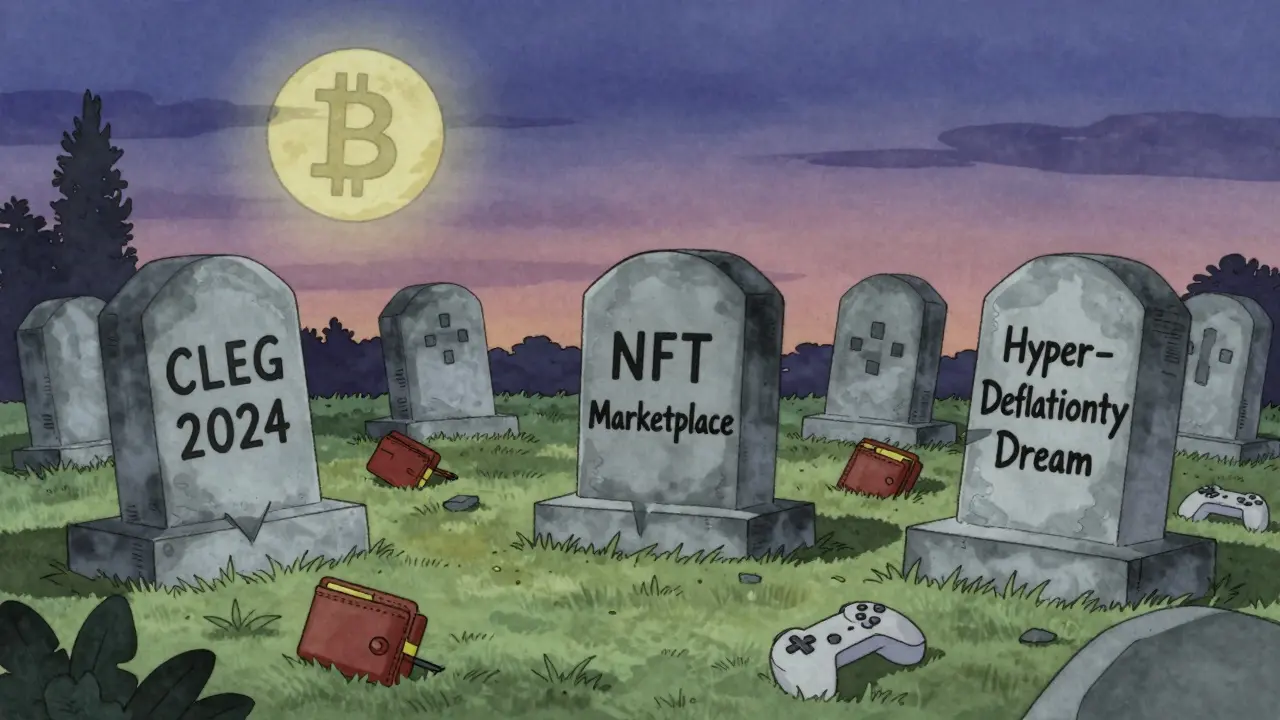
Who still holds CLEG?
About 7,310 wallets still hold the token, according to CoinMarketCap. That’s tiny. Splinterlands, a successful play-to-earn game, has over 150,000 holders. CLEG’s holder count is shrinking. Most of the remaining holders are either:- People who bought at the peak and are waiting for a rebound they’ll never get
- Speculators gambling on a 1000x return (a fantasy)
- Scammers running fake airdrops or pump groups to lure new victims
Should you buy CLEG?
No. Not unless you’re prepared to lose every dollar you put in. The project has no development activity. No community. No liquidity. No future roadmap. The token’s only value is as a cautionary tale. If you’re looking to get into play-to-earn games, look at projects with real usage, active teams, and market caps above $10 million. CLEG isn’t an investment. It’s a graveyard.What’s the bottom line?
Chain of Legends (CLEG) is a dead crypto project. It launched with big promises, attracted early investors who cashed out, and left everyone else holding worthless tokens. The game doesn’t work. The team is gone. The token’s price is a shadow of its peak. The market has moved on. If you’re reading this and you still hold CLEG, your best move is to accept the loss and move on. If you’re thinking of buying, don’t. There’s no recovery coming. This isn’t a coin you invest in - it’s a lesson in what not to do.Is Chain of Legends (CLEG) still active?
No. Chain of Legends has been effectively abandoned since mid-2024. There have been no meaningful updates to the game, website, or smart contract since September 2024. Developer activity is zero, community engagement has collapsed, and the promised features never launched.
Can you still earn CLEG tokens by playing the game?
Technically yes - you can still log in and mine or battle. But the rewards are worthless. The marketplace where you’re supposed to sell NFTs doesn’t work. There’s no demand for CLEG tokens, and exchanges show near-zero liquidity. Earning tokens won’t get you any real money.
What’s the current price of CLEG?
As of December 2025, CLEG trades at approximately $0.000441 USD. This is down 99.67% from its all-time high of $0.1332 in February 2024. Prices vary slightly across exchanges like Azbit and Binance, but all show extremely low trading volume.
Is CLEG a good investment?
No. CLEG is not a good investment. It has a market cap under $80,000, zero development activity, no community, and no liquidity. Industry analysts classify it as a failed project. Any price movement now is pure speculation, not fundamentals. You’re not investing - you’re gambling on a dead token.
Where can I buy or sell CLEG?
You can trade CLEG on small exchanges like Azbit and Binance, but liquidity is almost nonexistent. Market depth for CLEG/USDT is $0, meaning large sales will crash the price. Selling even a small amount may be impossible without accepting a massive discount. Avoid exchanges that promote it as a "hot coin" - they’re often pump groups.
Why did CLEG fail so badly?
CLEG failed because it had no real game, no team transparency, and flawed tokenomics. The "hyper-deflationary" model discouraged long-term play. The promised features never launched. The team disappeared. Players were left with worthless NFTs and a token no one wanted to buy. It followed the classic pattern of a pump-and-dump gaming token.
Is CLEG a scam?
It’s not officially labeled a scam by regulators, but it matches every red flag: anonymous team, broken product, vanished community, zero development, and a token price that collapsed after early investors sold out. The lack of transparency and the timing of the collapse strongly suggest intentional deception.
How many people still hold CLEG?
As of December 2025, around 7,310 wallets hold CLEG. That’s a fraction of the 150,000+ holders of successful gaming tokens like Splinterlands. Most holders are either speculators hoping for a miracle or people who bought at the top and refuse to accept loss.
What’s the total supply of CLEG?
The maximum supply of CLEG is capped at 1 billion tokens. However, only about 172 million are in circulation as of December 2025. The fully diluted valuation (FDV) - assuming all 1 billion are in circulation - is $441,063.37, but this is purely theoretical since most tokens are locked or unreleased.
Can I get my money back if I bought CLEG?
No. There is no refund process. The project has no customer support, no legal entity you can contact, and no mechanism to reverse transactions. Once you bought CLEG, you took on full risk. The only way to recover value is to sell on an exchange - but with near-zero liquidity, that’s unlikely to happen at any meaningful price.
5 Comments
Look, I know people love to hate on these play-to-earn scams, but honestly? CLEG was always a house of cards built on TikTok hype and Discord shills. The tokenomics were a joke from day one - hyper-deflationary sounds smart until you realize it punishes the very people who actually play. No one’s going to grind for rewards they can’t spend, and the devs knew it. They weren’t building a game; they were building a exit strategy. The fact that the website still loads but everything else is broken? Classic. I saw the same script with 12 other tokens in 2023. This isn’t a collapse - it’s the natural endpoint of a project that never had a pulse to begin with.
And don’t get me started on the ‘1000x’ hopefuls in the Telegram group. You’re not investing, you’re just donating to the fantasy that the team will magically come back. They’re not coming back. The GitHub repo is a tombstone. The team’s wallets are empty. The only thing still moving is the FOMO of new suckers who haven’t read the thread yet.
It’s sad, really. Not because I lost money - I didn’t touch it - but because people keep falling for the same fairy tale. ‘This time it’s different.’ No. It’s never different. The only difference is how loud the hype gets before the lights go out.
OMG I KNEW IT!!! 😭💸 I bought CLEG at $0.11 like a total idiot in March 2024… spent my whole tax refund on it… thought I was gonna buy a new car 😅 now I’m lucky if I can sell 5000 tokens for $0.02… the marketplace is DEAD, the discord is ghost town, and the devs? vanished like my will to live after watching the 2024 roadmap video again… 😔
Just wanted to say to anyone reading this: if you’re thinking of jumping in… DON’T. I’m not mad, just… tired. I learned the hard way. No refunds. No second chances. Just a lesson in greed and glitter.
There’s a quiet tragedy here, and it’s not just about money. CLEG didn’t just fail as a token - it failed as a promise. It promised agency: play, earn, own. That’s a powerful idea, especially for people who feel excluded from traditional economic systems. But when that promise is hollow, it doesn’t just leave people with worthless tokens - it leaves them with a sense of betrayal. The game didn’t collapse because of bad code. It collapsed because it was never meant to be played. It was meant to be harvested.
What’s worse is that the next wave of projects will use the same language - ‘hyper-deflationary,’ ‘play-to-earn,’ ‘community-owned’ - and people will believe again. Because the dream is seductive. But we have to ask: who benefits when the dream dies? And why do we keep building altars to it?
Maybe the real lesson isn’t ‘don’t invest in CLEG.’ Maybe it’s ‘don’t invest in promises that can’t be kept.’
I held CLEG for a year. Lost everything. Still can’t believe I didn’t cash out when it hit $0.02. Lesson learned: if the devs aren’t talking, walk away. No exceptions.
Wait wait wait - you guys are all acting like this is some kind of tragedy. 🤡 CLEG was a joke from day one. The only people who lost money are the ones who didn’t sell at the peak. The early whales? They cashed out and bought Lambos. The rest? Congrats, you funded their vacation. This isn’t a scam - it’s capitalism. If you can’t tell a pump-and-dump from a real project, maybe don’t touch crypto. And yeah, I still hold CLEG. Not because I think it’ll rebound - but because I’m waiting for someone to buy it off me at $0.001. 😎