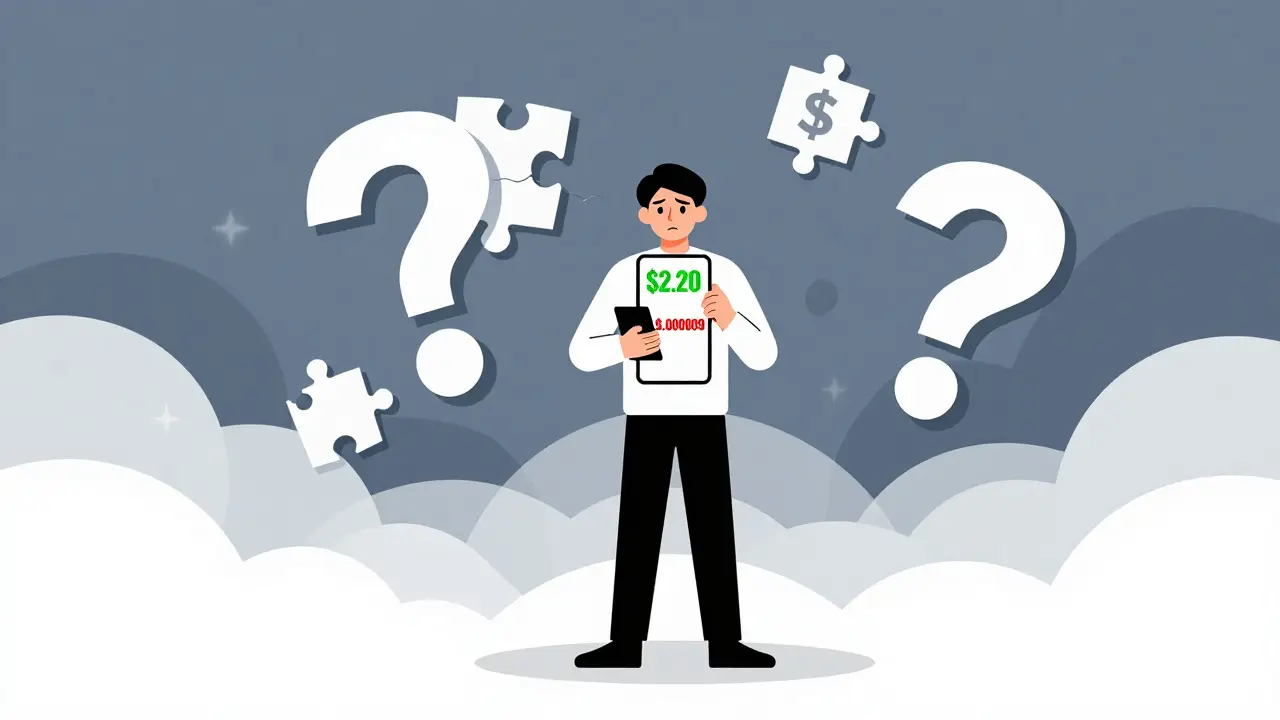
You’ve seen the ticker ADF. You might have even heard it called "Art de Finance" or just "ADF Coin." But if you look up its price today, you’re going to get hit with a wall of confusion. One site says it’s worth $2.20. Another says it’s practically zero-$0.000009. One claims there are no coins in circulation; another says all 2 billion are out there. It’s messy, and frankly, it’s dangerous if you don’t know what you’re looking at.
This isn’t just bad data entry. It’s a classic case of a low-visibility, high-risk asset that lacks the transparency we expect from established cryptocurrencies like Bitcoin or Ethereum. If you are wondering whether ADF is a legitimate investment or a potential trap, you need to peel back the layers of conflicting information. Let’s break down exactly what ADF is, why the numbers don’t match, and what this means for your wallet in 2026.
The Identity Crisis: What Exactly Is ADF?
First, let’s try to pin down who-or what-is behind the ticker. In the crypto world, names matter, but they can also be misleading. ADF is generally associated with two different branding angles, which adds to the confusion.
On major tracking platforms, it appears simply as ADF, a token launched in 2022. Its stated mission is broad: leveraging blockchain for secure data management and decentralized business operations. This sounds like a standard utility token pitch.
However, on consumer-facing swap services and wallets, it is often labeled as Art de Finance. This branding suggests a focus on art, NFTs, or creative finance. An Instagram account linked to the project markets itself from Dubai, promising an ecosystem that includes an exchange, an academy, payment solutions, and charity initiatives. Here lies the first red flag: the disconnect between the generic technical description on data aggregators and the specific, lifestyle-focused marketing on social media. Are these the same project? Probably. But the lack of unified, clear communication makes it hard to verify their actual capabilities.
The Price Paradox: Why Do Numbers Vary So Wildly?
If you check the price of ADF right now, you won’t find a single answer. This volatility in reported price is not normal market fluctuation; it indicates a lack of reliable liquidity and standardized data feeds.
| Platform Type | Reported Price | Circulating Supply | Market Cap / FDV |
|---|---|---|---|
| U.S. Exchange Tracker | $2.20 - $3.20 (ATH) | 0 ADF | $4.4B FDV (Fully Diluted) |
| Bitget Analytics | ~$0.70 (Implied) | 0 ADF | $1.4B FDV |
| CoinMarketCap | $0.00 | 2,000,000,000 ADF | $0.00 |
| Swap Services / Crypto.com | $0.00000099 - $0.000009 | N/A | Negligible |
Look at that table. The difference between a $2.20 valuation and a $0.000009 valuation is astronomical. How does this happen?
Synthetic vs. Real Trading: The higher prices ($2.20+) often come from trackers that may be using stale data, derivative pricing, or illiquid order books where a single small trade can spike the price artificially. When a token has near-zero volume, the "price" becomes meaningless because you can’t actually buy or sell significant amounts at that rate without crashing the market.
Liquidity Fragmentation: The lower prices found on swap services reflect the reality of trying to trade the token peer-to-peer or through automated market makers (AMMs). These platforms aggregate real-time liquidity. If there’s very little demand, the price drops to fractions of a cent. This is likely the closer-to-reality value for someone trying to move funds today.
Supply Discrepancies: Where Are the Coins?
Beyond price, the supply data is equally contradictory. Most sources agree on a maximum total supply of 2,000,000,000 ADF. But the circulating supply-the number of coins actually available to trade-is where things get weird.
- Zero Circulation: Some major trackers report 0 ADF in circulation. This usually means the token hasn’t been properly indexed by the platform, or the team hasn’t released any tokens to the public yet. However, if the price is non-zero, how are people trading it?
- Full Circulation: Other sources, like CoinMarketCap, self-report that all 2 billion tokens are already in circulation. If this were true, and the price was truly $0.00, the market cap would be zero. But if the price were $2.20, the market cap would be billions. The fact that these two metrics clash suggests neither source has verified on-chain data.
Without a clear circulating supply, you cannot calculate the true market capitalization. This makes it impossible to compare ADF fairly against other assets. Is it a micro-cap gem or a ghost town? The data doesn’t tell us.
Technical Transparency: The Missing Whitepaper Problem
In the crypto industry, trust is built on code. For established projects, you can read the whitepaper, check the smart contract address on Etherscan or BscScan, and see the transaction history. For ADF, this trail goes cold.
There is no widely recognized whitepaper, no audited security report, and no clear documentation of the underlying technology. Is ADF an ERC-20 token on Ethereum? A BEP-20 token on BNB Chain? Or a native coin on its own layer? The sources do not say. This lack of technical specification is a major risk factor. Without knowing the contract address, you can’t verify if the token is safe from hacks or scams like honeypots (where you can buy but not sell).
The only concrete technical detail available is that Atomic Wallet supports ADF. This means the token is compatible with standard multi-currency wallets. You can download Atomic Wallet, create a seed phrase, and generate an address to receive ADF. But being supported by a wallet doesn’t mean the project is legitimate-it just means the token follows a basic format that the wallet can recognize.
Community and Sentiment: Who Is Talking About It?
A healthy crypto project has a community. They discuss developments, complain about bugs, and hype new features. For ADF, the silence is deafening.
Social sentiment analysis shows that in a recent 24-hour period, only 8 unique individuals mentioned ADF across monitored platforms. That’s it. Six tweets, one Reddit post with zero comments, and zero news articles. While the sentiment score was technically "bullish" (because there were no bearish posts), this is statistically irrelevant. A sample size of eight people tells you nothing about market confidence.
Compare this to top-tier cryptocurrencies that have millions of daily mentions. ADF ranks around #4,995 in market relevance. This places it in the category of obscure, low-activity assets. When you invest in such tokens, you are betting on speculation, not community-driven growth.

Risks and Red Flags: Should You Buy ADF?
Let’s be direct. Investing in ADF carries extreme risk. Here is why you should proceed with caution:
- Data Integrity Issues: The massive discrepancies in price and supply mean you don’t know what you’re buying. You could think you’re buying a $2 asset when it’s really worth less than a penny.
- Lack of Liquidity: Even if you buy ADF, selling it might be difficult. With negligible trading volume on major exchanges, you may face high slippage (getting much less than the quoted price) or be unable to exit your position entirely.
- No Regulatory Clarity: The project claims a base in Dubai but offers no regulatory licenses or team identities. In the current crypto landscape, anonymity combined with vague promises is a common trait of scam projects.
- Marketing Over Substance: The focus on "charity," "academy," and "art" without technical backing suggests a marketing-first approach rather than a product-first approach.
If you are looking for stable growth or proven technology, ADF is not the answer. It is a speculative asset with unclear fundamentals. If you still decide to interact with it, treat it as high-risk gambling money-money you are fully prepared to lose.
How to Verify ADF Yourself
Don’t take anyone’s word for it, including mine. Here is how you can do your own due diligence:
- Find the Contract Address: Look for the official website or Twitter account of ADF. Find the smart contract address. Paste it into a block explorer (like Etherscan or BscScan) to see real transactions, holder distribution, and contract verification.
- Check Multiple Aggregators: Compare CoinMarketCap, CoinGecko, and DEX tools like DexScreener. If the prices differ by orders of magnitude, assume the lower price is more accurate for immediate trading.
- Test Small Amounts: Never send large sums to an unverified token. Try sending a tiny amount to your wallet to ensure it arrives correctly. Then try swapping it back to see if the liquidity holds.
Conclusion: Proceed With Extreme Caution
ADF (Art de Finance) is a confusing, low-visibility cryptocurrency with conflicting data across all major platforms. The disparity between its reported high-value metrics and its actual near-zero trading activity suggests that most of the "value" seen on charts is synthetic or outdated. Without a clear team, transparent technical docs, or a strong community, ADF remains a high-risk speculative asset. In the crowded crypto market of 2026, there are thousands of projects with better transparency and stronger fundamentals. Unless you have a specific reason to believe in this particular niche, it is safer to stick to assets with verifiable data.
Is ADF (Art de Finance) a legitimate cryptocurrency?
Legitimacy is hard to define without transparency. ADF lacks a publicly available whitepaper, audited smart contracts, and identifiable team members. While it is listed on some trackers and supported by wallets like Atomic Wallet, the conflicting price and supply data raise serious questions about its reliability and market integrity.
Why is the price of ADF so different on different websites?
The price differences stem from a lack of liquidity and standardized data feeds. Some sites may show stale or synthetic prices based on minimal trading volume, while decentralized swap services show the real-time market rate, which is often near zero due to low demand.
Can I store ADF in my wallet?
Yes, ADF is supported by multi-currency wallets such as Atomic Wallet. You can generate an ADF address within these wallets to receive tokens. However, ensure you are using the correct network (e.g., Ethereum or BNB Chain) to avoid losing funds.
What is the total supply of ADF?
Most sources agree that the maximum total supply of ADF is 2,000,000,000 (2 billion) tokens. However, the circulating supply is disputed, with some sources reporting 0 and others reporting the full 2 billion.
Is ADF related to NFTs or Art?
The branding "Art de Finance" suggests a connection to art or NFTs, and marketing materials mention an ecosystem for creative industries. However, there is no technical documentation or active marketplace evidence provided in public sources to confirm specific NFT functionalities.
Where can I buy ADF?
ADF is not listed on major centralized exchanges like Binance or Coinbase. It can potentially be swapped via decentralized platforms or non-custodial swap services, but liquidity is extremely low, meaning trades may be difficult or expensive to execute.