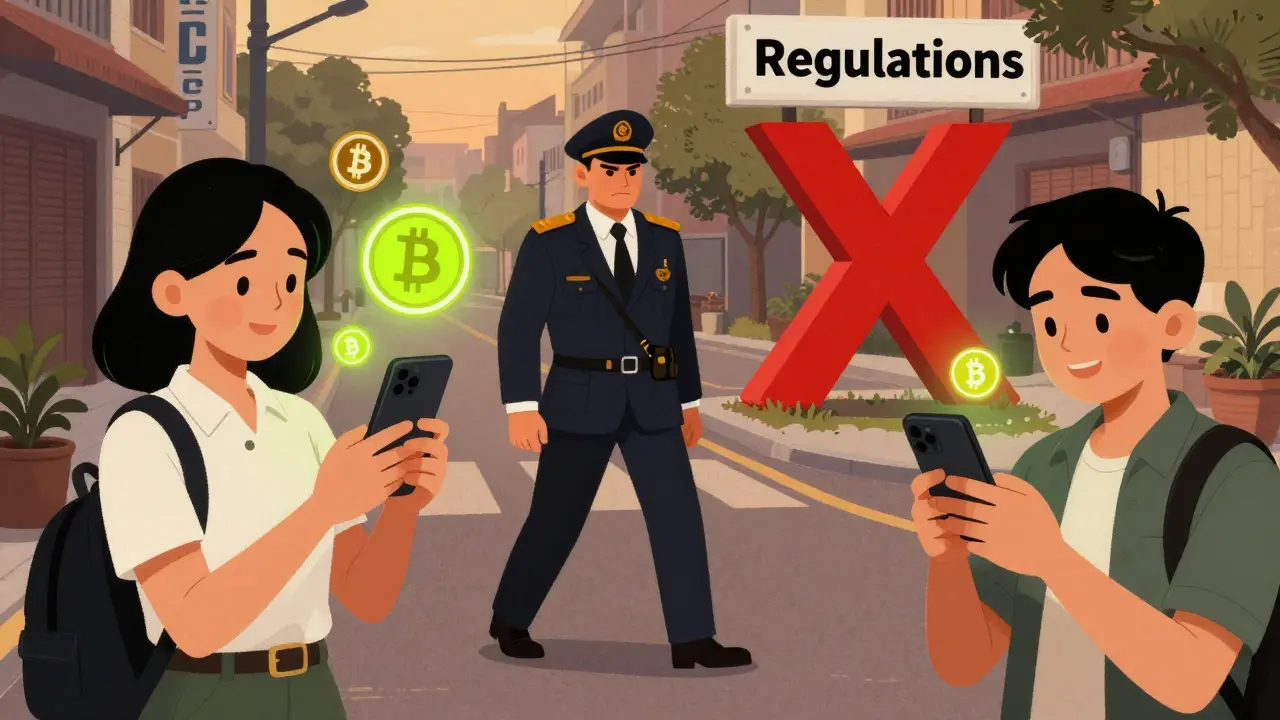
When you hear Vietnam is one of the top countries for crypto use, you might picture a free-for-all crypto boom-everyone trading Bitcoin on their phones, startups popping up overnight, and banks embracing digital assets. But the reality is far more complicated. Vietnam ranks #6 in the 2025 Chainalysis Global Crypto Adoption Index-not #5, not #4, but sixth-behind countries like India, Pakistan, the U.S., and Nigeria. What’s surprising isn’t just the ranking, but how it happened under some of the strictest crypto rules in Southeast Asia.
How Vietnam Became a Crypto Powerhouse Against the Odds
Vietnam has about 98.8 million people. As of late 2025, nearly 17 million of them are actively using crypto. That’s 17.2% of the entire population. For comparison, the U.S. has around 14% of its population using crypto. Vietnam’s annual crypto transaction volume hit over $100 billion in 2025, with $200.6 billion of that coming from the broader Asia-Pacific region, which saw a 69% jump in crypto activity year-over-year. This isn’t because the government encouraged it. In fact, the State Bank of Vietnam (SBV) has spent years trying to shut it down. In June 2025, they passed the Law on Digital Technology Industry, which officially recognized crypto as either “virtual assets” (backed by real-world goods) or “crypto assets” like Bitcoin and Ethereum. But here’s the catch: you can’t trade crypto for U.S. dollars or any other foreign currency directly. All trades must happen in Vietnamese Dong (VND). And no one-no startup, no foreign company, no individual-is allowed to issue stablecoins tied to the dollar or any other fiat currency. So how are people still trading? They’re using offshore platforms. Binance P2P is used by 63% of Vietnamese crypto users. Bybit and OKX are next. These platforms let users trade VND for USDT or other stablecoins, but at a cost. Users pay 3-5% premiums just to get their money in and out. And the verification process? It’s a nightmare. Trustpilot reviews for Binance Vietnam show 68% of complaints are about KYC delays and high fees.Why the Government Keeps Crypto in a Cage
The SBV’s goal isn’t to stop crypto-it’s to control it. They want trading to move from shady P2P channels into regulated, taxed, and traceable systems. But their solution is so strict that no one wants to play along. In September 2025, they launched a five-year regulatory sandbox for crypto companies. To join, you need:- Minimum capital of 10 trillion VND ($379 million USD)
- 14 separate compliance certifications
- A real-time transaction monitoring system that handles 5,000+ trades per second
- Approval from the Ministry of Finance, SBV, and Ministry of Public Security
What People Actually Use Crypto For
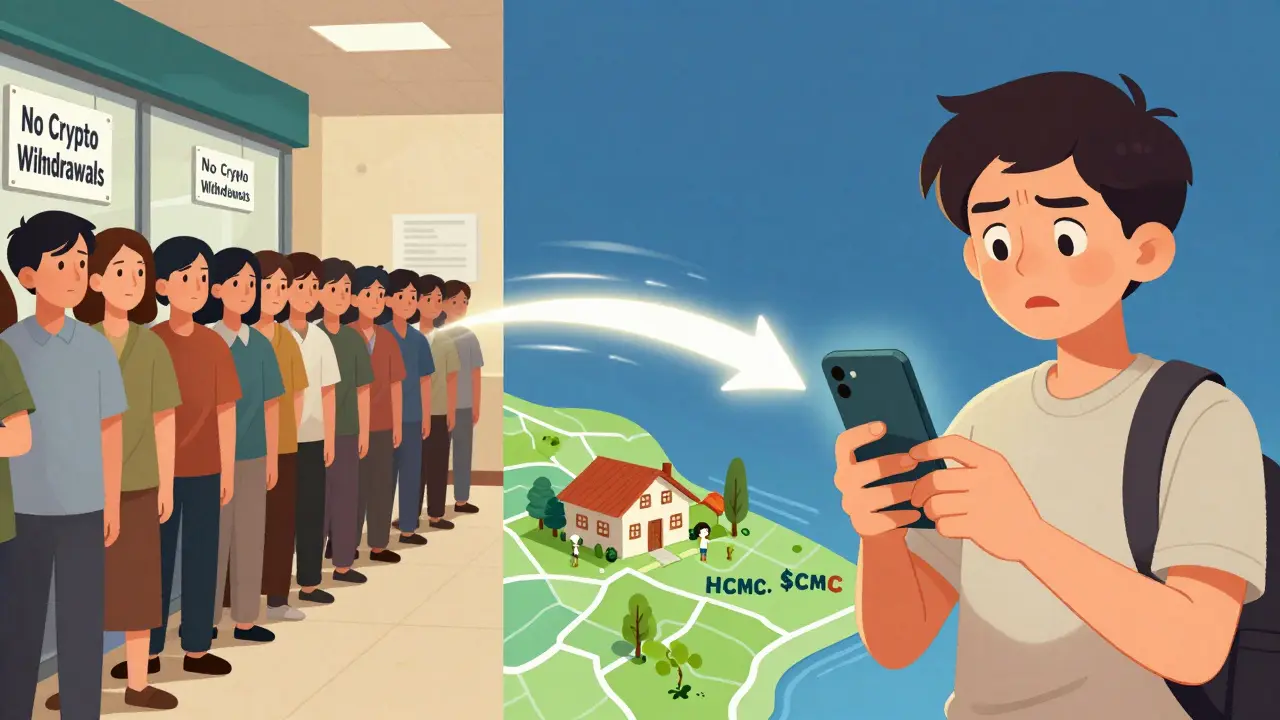
Despite the red tape, people are using crypto for real, practical reasons. One of the biggest drivers? Remittances. Vietnam received $19.2 billion in international remittances in 2024. Traditional services like Western Union charge up to 6.8% in fees. Crypto? Users report average fees of just 1.2%. A September 2025 survey found 74% of Vietnamese crypto users rely on it to send money home to family. Another growing use? Online shopping. Shopee Vietnam launched a crypto payment pilot in March 2025. While still small, it lets users pay for goods using USDT. Over 41% of crypto users now use digital assets for e-commerce purchases. And then there’s the youth. Sixty-eight percent of crypto users in Vietnam are between 18 and 35. More than half have university degrees. Nearly 60% earn between $568 and $1,514 a month. They’re not speculating on moonshots-they’re using crypto because it’s faster, cheaper, and more accessible than the banking system.How Vietnam Compares to Its Neighbors
Vietnam leads Southeast Asia in retail adoption-20.3% of its population owns crypto. Thailand is at 14.7%. Indonesia is at 18.2%. But when you look at institutional adoption, Vietnam falls far behind. Singapore, for example, allows regulated stablecoin issuance. That’s why 49% of Singapore’s crypto activity comes from institutions. In Vietnam, it’s just 17%. Deloitte’s September 2025 report found Singapore’s institutional adoption rate is 32% higher than Vietnam’s. The Philippines is another example. GCash, the country’s top mobile wallet, launched GCrypto in 2023. It now has 8.7 million users-27% of its total base. All of it happens onshore, with clear rules and local currency integration. Vietnam doesn’t have anything like that. The difference? Singapore and the Philippines built crypto into their financial infrastructure. Vietnam built walls around it.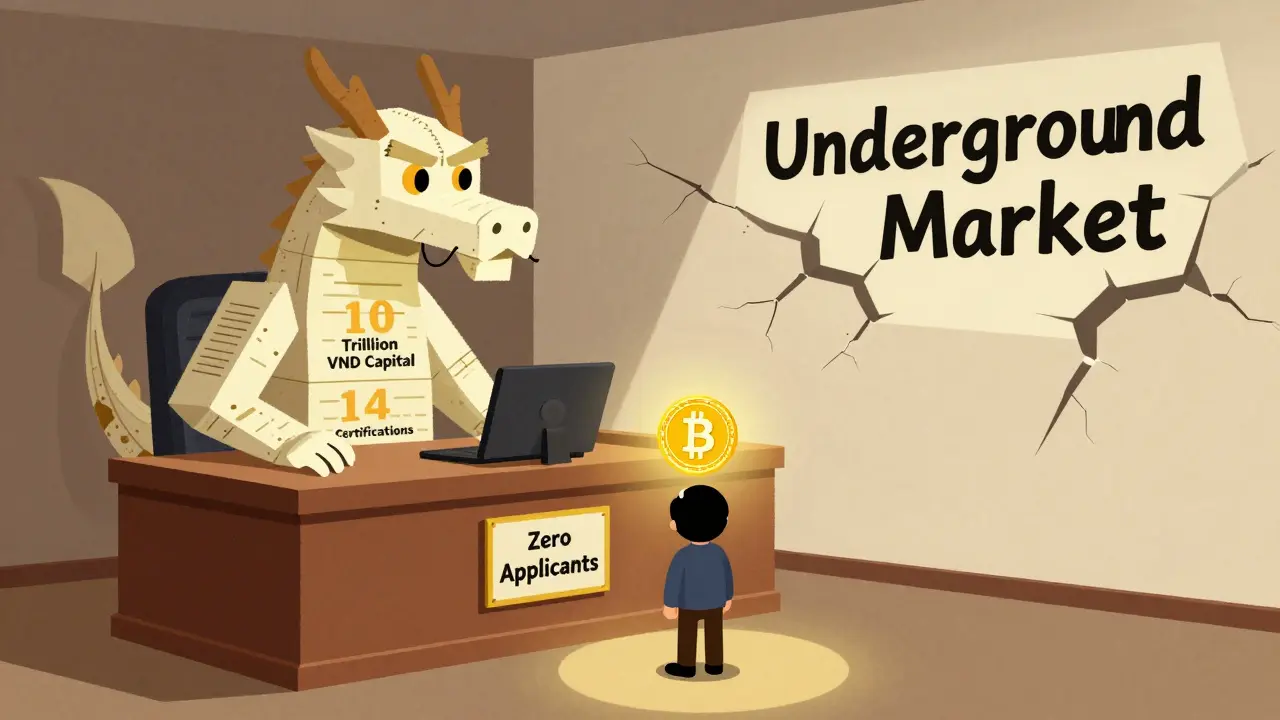
The Hidden Risks of an Underground Market
Here’s the scary part: 92% of Vietnam’s crypto activity happens outside the official system. That means:- No taxes are being collected
- No consumer protections exist
- No oversight of money laundering risks
What’s Next for Vietnam’s Crypto Future
There are signs of change. The SBV announced a digital đồng pilot in October 2025-its central bank digital currency (CBDC)-in partnership with 20 commercial banks. If this system can connect with crypto exchanges, it could become a bridge between the formal and informal markets. Morgan Stanley predicts that if Vietnam allows stablecoins under proper regulation, its crypto market could grow 25-30% annually through 2028. That could mean capturing 12-15% of its $19.2 billion remittance market and a slice of its $137 billion e-commerce sector. Right now, Vietnam is stuck in a paradox. It has one of the most active crypto markets in the world, built entirely by people who refuse to wait for permission. But its government is trying to build a system that only big, state-backed players can enter. The real question isn’t whether Vietnam will keep ranking high in adoption. It’s whether it will realize that adoption doesn’t mean control-it means understanding. The people are already ahead of the regulators. The question is: will the government catch up?Why do some sources say Vietnam is #5 in crypto adoption?
Some media outlets confuse the population-adjusted ranking with the raw transaction volume ranking. Vietnam is #6 in the Chainalysis 2025 Global Crypto Adoption Index when adjusted for population size. It ranks higher in total transaction volume, but that doesn’t reflect how widely crypto is used by regular people. The official index uses population-adjusted data to give a fairer comparison between countries of different sizes.
Can I legally buy Bitcoin in Vietnam?
Yes, you can buy and hold Bitcoin and other crypto assets in Vietnam. The law allows individuals to own crypto as a digital asset. But you cannot use it to pay for goods or services directly in stores, and you cannot trade it for foreign currencies through local banks. All trades must go through P2P platforms like Binance, and you must convert everything back to Vietnamese Dong.
Why doesn’t Vietnam allow stablecoins?
The State Bank of Vietnam fears that stablecoins tied to the U.S. dollar could undermine control over the Vietnamese Dong and expose the financial system to foreign monetary shocks. They also worry about unregulated issuers creating fake stablecoins or enabling capital flight. Their solution? Ban them entirely and force all crypto activity through the VND system-even if it makes transactions slower and more expensive.
Are Vietnamese crypto users losing money because of the regulations?
Yes, indirectly. The lack of local exchanges and the ban on stablecoins mean users pay higher fees-3-5% on P2P trades instead of under 1% on regulated platforms. They also face delays: converting crypto profits to VND can take 3-4 days through informal channels. That’s money lost to inefficiency, not just fees.
Will Vietnam’s crypto market grow if regulations loosen?
Almost certainly. If Vietnam allows regulated stablecoins and lowers the capital requirements for crypto firms, adoption could explode. The infrastructure is already there-millions of users, strong smartphone penetration, and a tech-savvy youth population. The only thing missing is a legal pathway that matches their behavior, not fights it.
10 Comments
Look, I get it-Vietnam’s crypto adoption is wild. But let’s not romanticize regulatory evasion as ‘grassroots innovation.’ When 92% of activity is underground, that’s not freedom-that’s systemic failure. The SBV isn’t the villain; they’re just the only adults in the room trying to prevent a financial bloodbath.
And don’t even get me started on ‘remittance savings.’ Those 1.2% fees? They’re not magic. They’re just laundering through unregulated P2P hubs with zero recourse if you get scammed. The IMF’s warning isn’t a footnote-it’s a red alert.
Also, ‘crypto for e-commerce’? Shopee’s pilot is a PR stunt. 41% of users? That’s like saying ‘41% of Americans use cash’-it doesn’t mean it’s scalable or safe.
Bottom line: adoption ≠ legitimacy. And we’re all just watching a train wreck with popcorn.
Wow. Just wow. This is so cool. People are using crypto to send money home, to buy stuff online, to skip the broken banking system. That’s real. That’s human.
They don’t care about regulations. They care about their families. They care about getting paid. They care about not getting ripped off by Western Union.
The government should be helping them-not punishing them. Let them use crypto. Regulate it gently. Don’t make them pay 5% just to get their own money.
This isn’t a threat. It’s a solution. And it’s already working.
Let the people win.
One must question the epistemological validity of conflating informal, unregulated transaction volume with genuine financial adoption. The Chainalysis index, while statistically robust, is susceptible to normative misinterpretation when divorced from institutional context.
What we observe is not adoption-it is circumvention. A populace leveraging technological affordances to evade state monetary sovereignty. This is not innovation. It is parasitism.
And to frame this as a ‘youth-driven revolution’ is to romanticize financial illiteracy. The 18–35 demographic is not empowered; they are exploited.
Regulation is not oppression. It is civilization.
THIS IS AMAZING!!! 🚀🔥
Vietnam is showing the world what real financial rebellion looks like! No banks? No problem. No stablecoins? Still trading! People are just… figuring it out. With their phones! With P2P! With grit!
SBV wants control? Fine. But control without access is just tyranny. The people are already building the future. The government just needs to get out of the way and say ‘congrats, you’re now the world’s first crypto-native economy!’
Let’s go Vietnam!!! 💪🌍 #CryptoWithoutBorders
Everyone’s acting like this is some kind of victory but it’s just a mess. People are paying 5% just to get their money in and out. That’s not innovation. That’s extortion by default.
And now the government wants to tax it? Great. So now we’re taxing the only thing keeping people from being completely screwed by their own banking system.
Everyone’s a genius until they’re the one losing money because the system’s rigged.
They’re not ahead of regulators. They’re just stuck.
There’s something deeply poetic about this. A country that’s been shaped by war, colonialism, and economic isolation now uses crypto not as a gamble-but as a lifeline.
The SBV wants to control the flow of money. But money doesn’t care about borders or laws. It flows like water. And the Vietnamese people? They’re the ones who learned how to channel it.
This isn’t about Bitcoin. It’s about dignity. The dignity of a mother sending money home without paying 7% in fees. The dignity of a student buying textbooks without waiting for a bank transfer that takes three days.
Regulation isn’t the enemy. But control without compassion? That’s just another kind of poverty.
We’re not watching a market. We’re watching a culture adapt.
And maybe… just maybe… the world should be listening.
🙂
okay so like… vietnam is #6?? but the govt hates crypto??
so… is this like the crypto version of ‘we don’t talk about it but we all do it’??
also i love how the youth are just out here using usdt to buy shoes on shopee like it’s no big deal. meanwhile in the us we’re still arguing if crypto is ‘real money’
also the part where they say ‘10 trillion vnd minimum capital’?? that’s not a sandbox. that’s a gold-plated prison. 😭
also… who’s the one writing the laws? because they clearly never used a p2p app.
also also… i think i’m in love with vietnam now.
Wait, wait, wait-hold on. You say Vietnam is #6 in adoption? But you just admitted 92% of activity is illegal. So if 92% is illegal, then technically, it’s not adoption-it’s crime. You’re calling a black market a ‘market’ because it’s big?
And you think the government is wrong for trying to stop money laundering? You think it’s okay that people are using unregulated platforms with zero consumer protection?
Also, ‘remittances’? So you’re fine with people bypassing AML/KYC because it’s cheaper? That’s not empowerment-that’s enabling organized crime.
And why are you all acting like this is some kind of underdog story? It’s not. It’s a disaster waiting to explode.
im so confused. so people are using crypto to send money home and its cheaper but the government says you cant do it legally? so theyre doing it anyway… but its risky? and the government is like ‘we’re gonna tax it now’ but the system is broken?
why cant they just make it easy?? like… why make people pay 5% and wait 4 days? why not just let them use usdt like the philippine’s gcrypto??
it feels like the government is building a wall… but everyone’s already on the other side.
and the part about the 10 trillion vnd requirement?? that’s not regulation. that’s a joke. who even has that kind of money??
also… i just wanna cry. this is so messed up.
but also… kinda inspiring??
As someone from India, where crypto adoption is also growing rapidly despite regulatory ambiguity, I find Vietnam’s story deeply resonant.
It is not about defiance-it is about necessity. When formal systems fail the people, they turn to technology-not out of rebellion, but out of resilience.
The State Bank’s intentions may be sound, but its methods are outdated. A sandbox that requires $2.8 million and 11 months to enter is not a path to innovation-it is a monument to bureaucratic inertia.
Perhaps the solution lies not in control, but in collaboration. Let regulated entities partner with P2P platforms. Integrate CBDC with existing crypto flows. The people are already bridging the gap. The government must now follow.
Adoption is not a threat. It is a signal.