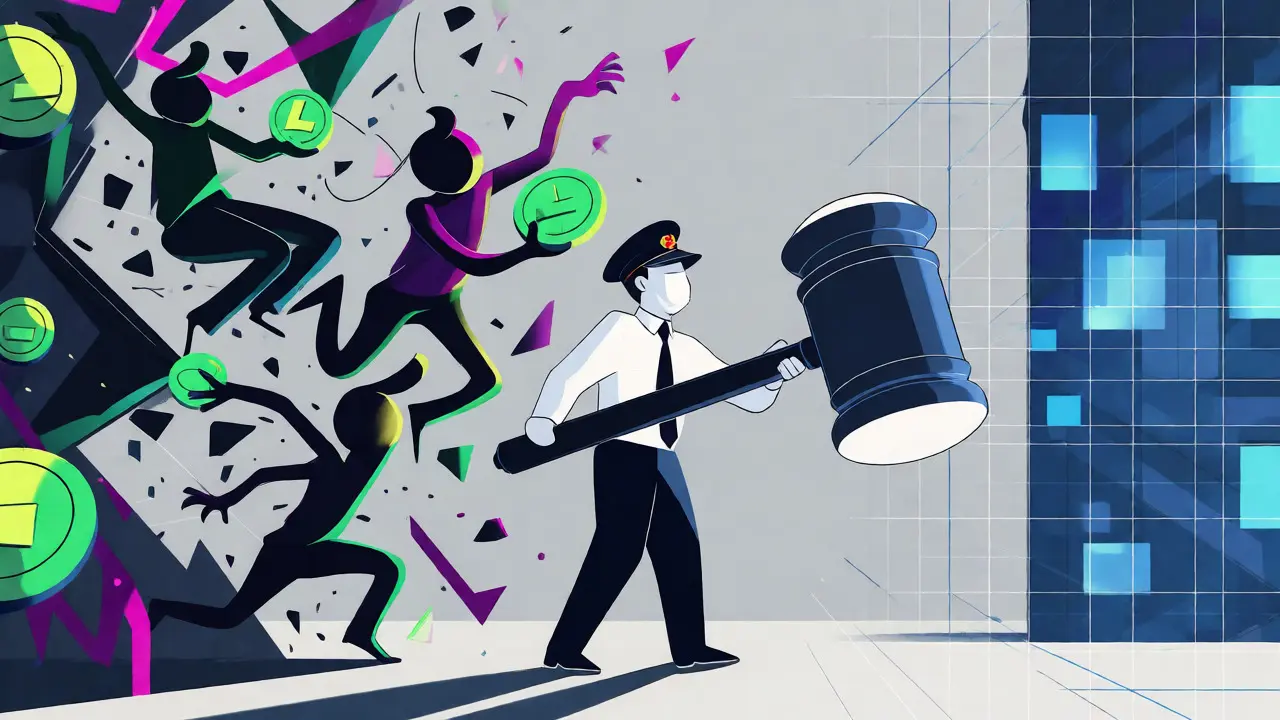
If you thought Vietnam was still the wild west for crypto trading, think again. As of late 2025, the country shifted from a gray zone to one of the most tightly controlled digital asset markets in Asia. The big question on everyone's mind isn't just "is it legal?"-it's "how do I actually trade without getting fined or having my funds frozen?" The answer lies in a five-year pilot program that runs through 2030, creating a specific sandbox where rules are strict, licenses are mandatory, and offshore exchanges are slowly being pushed out.
This isn't your typical "wait and see" regulatory stance. Vietnam has moved fast, passing laws that formally recognize virtual assets while simultaneously banning them as a method of payment. It’s a paradox, but it’s a calculated one. The government wants the capital and innovation of blockchain without losing control over its currency. For investors and traders, this means the days of casually buying Bitcoin on Binance with a local bank card are numbered. You need to understand the new framework to survive in this market.
The Legal Backbone: Two Laws That Changed Everything
Everything hinges on two pieces of legislation passed in mid-2025. First, there's Law No. 71/2025/QH15 on Digital Technology Industry. This is the broad stroke that defines what a "virtual asset" actually is under Vietnamese civil law. Before this, crypto existed in a legal void. Now, it has a definition, which means it can be owned, traded, and taxed.
The second piece is Resolution 05/2025/NQ-CP. This is the operational manual. Signed by Deputy Prime Minister Ho Duc Phoc in September 2025, it sets up the actual pilot program. It doesn't just say "crypto is okay"; it says "crypto is okay, but only if you play by these very specific rules." The resolution establishes a controlled environment where the Ministry of Finance acts as the gatekeeper. If you aren't interacting with a licensed entity, you are operating outside the sanctioned system.
Resolution 05/2025/NQ-CP is a government decree establishing a five-year pilot program for cryptocurrency operations in Vietnam, running from 2025 to 2030, which mandates licensing for service providers and restricts crypto usage as a payment method.
What Counts as a Virtual Asset?
Not every digital token falls under this new umbrella. The law draws clear lines. There are three categories, but only one matters for most traders: Crypto Assets. These are digital representations using encryption technology for issuance and transfer. Think Bitcoin, Ethereum, or Solana. They are recognized as legitimate property.
However, the definition explicitly excludes things like securities (stocks) and digital forms of legal currency (like a central bank digital currency, if and when it launches). It also excludes traditional financial assets digitized onto a ledger. Why does this matter? Because if your token is classified as a security, it might fall under different, stricter securities laws rather than this crypto pilot. Misclassifying a token can lead to compliance headaches later, so checking the technical classification of any project you invest in is now a necessary step.
The End of Offshore Freedom
Here is the part that frustrates many long-time users: the push toward domestic licensing. The Ministry of Finance is currently issuing licenses to crypto asset service providers. Once a provider gets that license, they become the approved channel for Vietnamese residents. After a six-month transition period following the first license issuance, domestic transactions should ideally flow through these licensed platforms.
Does this mean you get arrested for using Binance or OKX today? No. But the pressure is mounting. Banks are barred from processing payments to unlicensed foreign exchanges. If you try to wire money to an offshore platform, you might find the transaction blocked or flagged for review. The goal is to capture the tax revenue and monitor the capital flows. Over time, using unlicensed exchanges will become inconvenient, risky, and potentially non-compliant for serious volume traders.
Payment vs. Investment: The Critical Distinction
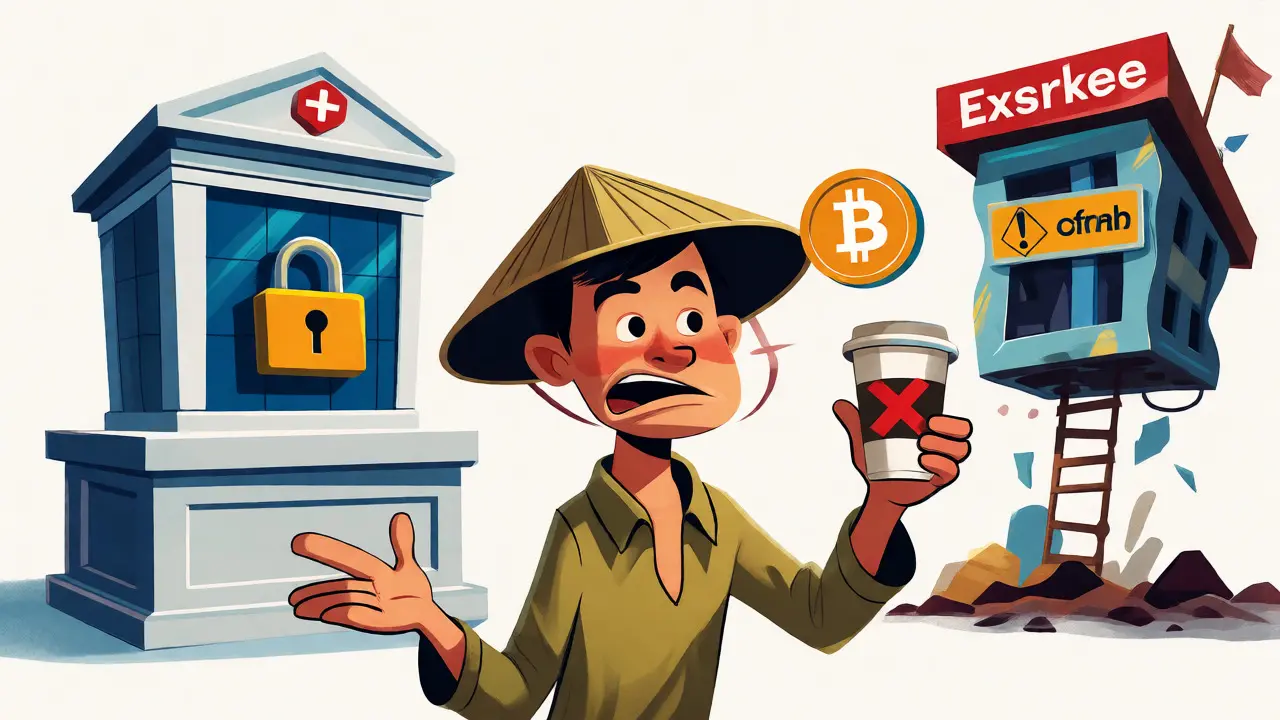
You cannot buy coffee with Bitcoin in Hanoi. Period. The State Bank of Vietnam maintains a strict prohibition on using cryptocurrencies as a means of payment. This hasn't changed. If a merchant accepts crypto directly, they are technically operating in a gray area that could invite scrutiny.
But you can buy Bitcoin as an investment. You can hold it. You can sell it for profit. The distinction is sharp: Crypto is an asset class, not a currency. This creates a unique friction point. You have to convert fiat (VND) to crypto via a licensed exchange, hold it, and then convert back to VND to spend it. The double conversion costs eat into returns, and the spread on licensed local exchanges is often wider than on global giants due to lower liquidity and higher compliance overheads.
| Feature | Licensed Domestic Exchanges | Unlicensed Offshore Exchanges |
|---|---|---|
| Legal Status | Fully Compliant | Gray Area / Restricted Banking Access |
| Bank Transfers | Direct & Easy | Often Blocked or Flagged |
| Tax Reporting | Automated / Simplified | User Responsibility (High Risk) |
| Liquidity | Lower (Initial Phase) | Higher (Global Volume) |
| Fees | Generally Higher | Competitive / Lower |
Taxes and Mining: The Missing Pieces
While the framework is set, the details on taxes are still rolling out. Currently, temporary application of securities taxation rules applies. This means gains from crypto trading are likely treated similarly to stock profits. Expect a capital gains tax structure, though the exact rate and reporting mechanisms are being finalized by the Ministry of Finance.
Mining is another murky area. Is it legal? The law recognizes the creation of assets via encryption, but it doesn't explicitly bless industrial-scale mining operations yet. Energy consumption and environmental impact are concerns for the government. If you are running a small home rig, you are probably fine. If you are setting up a warehouse full of ASICs, you need to wait for specific sector guidance before investing heavily.

Why Vietnam Did This: Strategic Control
Vietnam didn't open up because they love decentralization. They did it because they couldn't stop it. With over $600 million in daily crypto transactions flowing through the country, ignoring the market meant losing billions in potential tax revenue and ceding influence to foreign entities. By creating a pilot, they keep the data inside their borders.
This approach mirrors what we see in parts of the EU with MiCA, but with a heavier hand on banking integration. Vietnam aims to position itself as a regional hub for digital finance, attracting tech talent and foreign direct investment. But unlike Singapore, which offers a more liberal regime, Vietnam prioritizes stability and oversight. The pilot allows regulators to test enforcement tools without committing to permanent, rigid laws until 2030.
Practical Steps for Investors Today
If you are active in the Vietnamese market right now, here is how you navigate the shift:
- Check the License: Before depositing large sums, verify if the exchange is applying for or has received a license from the Ministry of Finance. Look for announcements on their official site.
- Keep Records: Since tax rules are evolving, maintain detailed logs of all trades, including timestamps and fiat equivalents at the time of transaction.
- Avoid P2P Pitfalls: Peer-to-peer trading is popular, but it lacks protection. Use escrow services or trusted platforms within the licensed ecosystem to avoid fraud.
- Monitor Bank Policies: Your bank may change its stance on crypto-related transfers overnight. Keep communication open with your account manager.
The next few years will be a test case for emerging markets balancing innovation with control. For now, stay compliant, stay informed, and don't assume old habits apply to the new reality.
Is Bitcoin legal in Vietnam in 2026?
Yes, holding and trading Bitcoin is legal under the new pilot program. However, using it as a direct method of payment for goods and services remains prohibited by the State Bank of Vietnam.
Do I have to use a licensed exchange?
It is strongly recommended. While not immediately illegal to use offshore exchanges, banks are restricting transfers to unlicensed platforms. Licensed domestic exchanges offer safer banking rails and clearer tax compliance.
How long does the pilot program last?
The pilot program runs for five years, starting from September 9, 2025, and ending on September 8, 2030. After this period, the regulations may be made permanent or adjusted based on the program's success.
Are there taxes on crypto profits?
Yes. Currently, crypto gains are subject to taxation similar to securities. Specific detailed guidelines are being developed by the Ministry of Finance, so consulting a local tax advisor is advisable for significant amounts.
Can foreigners trade crypto in Vietnam?
Foreigners can participate, but they must comply with anti-money laundering (AML) and know-your-customer (KYC) requirements. Access may be limited to licensed platforms that accept international identities.