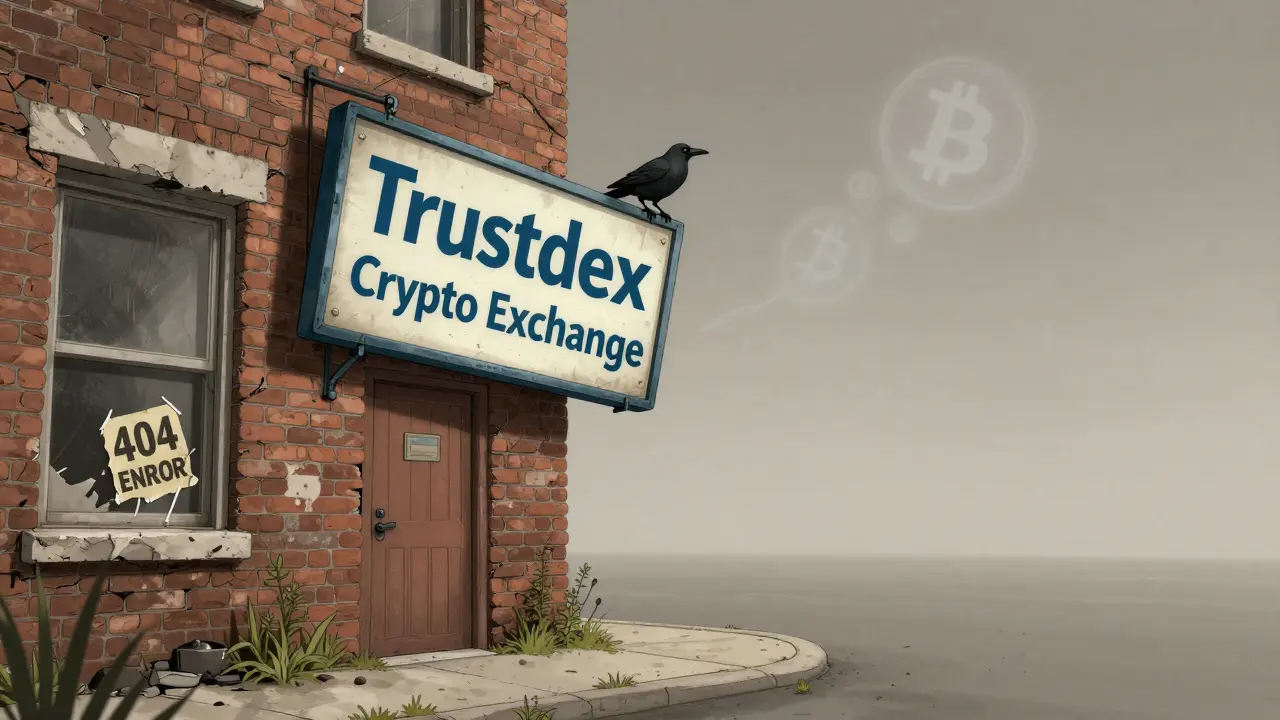
Trustdex was once a cryptocurrency exchange that tried to stand out with a flat 0.25% trading fee and low Bitcoin withdrawal costs. But today, it doesn’t exist. If you're searching for Trustdex to trade crypto, you won’t find it. The website is gone. The servers are offline. The team has vanished. This isn’t a temporary outage - it’s permanent.
What Happened to Trustdex?
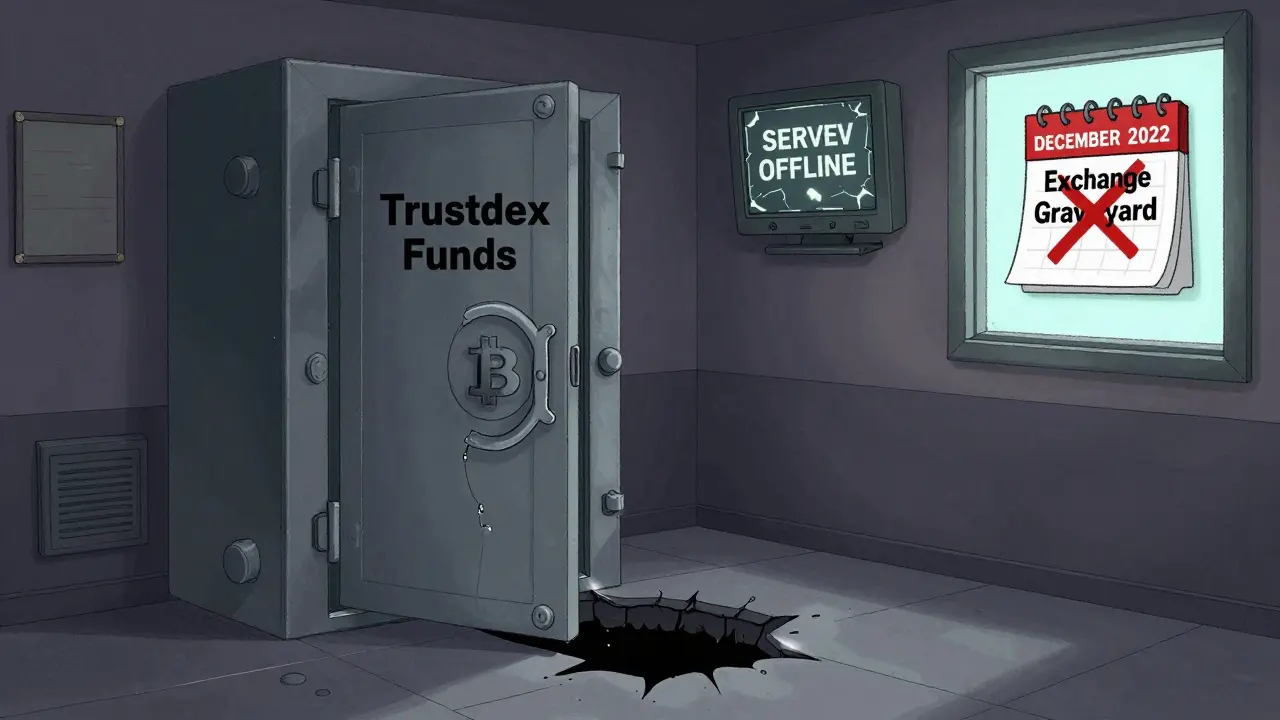
Trustdex stopped operating around 2019. The last public post from their official Twitter account was in 2019, and since then, there’s been zero communication from the company. No shutdown notice. No email to users. No explanation. By December 2022, Cryptowisser, a well-known crypto exchange review site, officially added Trustdex to its "Exchange Graveyard" - a list of platforms that have shut down without warning.No users have come forward with stories of losing funds, and no former employees have spoken up. That silence speaks volumes. Most exchanges that fail do so with complaints, lawsuits, or at least a public apology. Trustdex just disappeared.
How Trustdex Worked When It Was Alive
When Trustdex was running, it offered a simple trading experience. Instead of the complex maker-taker fee system used by most exchanges, Trustdex charged a flat 0.25% on every trade. That rate wasn’t terrible - it matched the global average at the time - but it was higher than what many Asian exchanges were offering. Binance, for example, already had fees as low as 0.1% by then.Where Trustdex did better was withdrawals. For Bitcoin, they charged just 0.0005 BTC per withdrawal. That was about 40% lower than the industry average of 0.0008 BTC. If you were moving BTC regularly, that added up. They also supported credit card deposits and bank wire transfers, which made it easier for beginners to get into crypto without needing another exchange first.
Trustdex wasn’t just a trading platform. It tried to be a full crypto financial hub. You could earn interest on your holdings, lend out your crypto, and even get secured loans against your digital assets. That was ambitious for a mid-sized exchange in 2018-2019. Most competitors were still focused on trading pairs and order books. Trustdex wanted to be your bank, broker, and wallet all in one.
Why It Failed
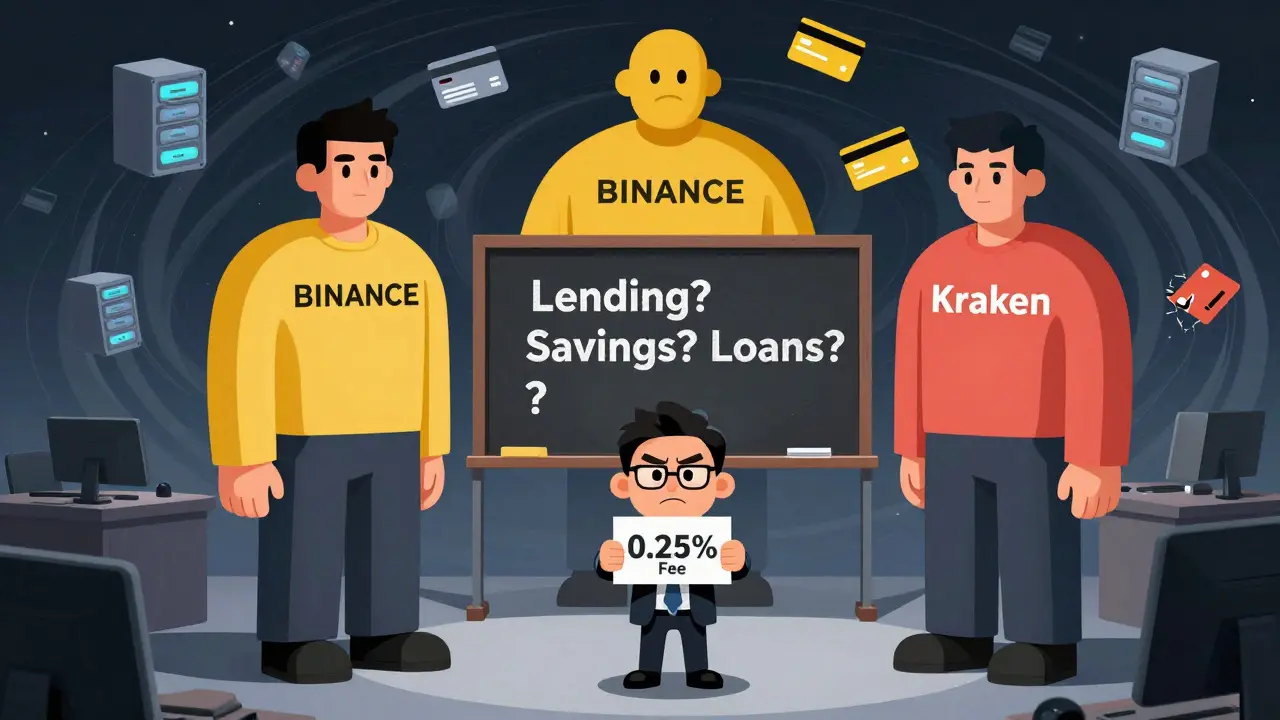
The crypto exchange market in 2017-2019 exploded. Hundreds of new platforms launched every year. Trustdex wasn’t alone - it was fighting giants like Binance, Coinbase, Kraken, and Huobi. Those exchanges had deeper pockets, global marketing teams, and regulatory licenses.Trustdex’s flat fee structure didn’t give it enough of an edge. A 0.25% fee was average, not competitive. And while their withdrawal fees were low, most users didn’t withdraw often enough for that to be a deciding factor. Meanwhile, the bigger exchanges slashed fees to 0.1% or even 0% for makers. Trustdex didn’t adapt.
It also didn’t expand beyond Asia. Most of its user base was concentrated in a few countries. When regulatory pressure hit in 2019, Trustdex didn’t have the resources to navigate compliance like Binance or Coinbase did. No U.S. licenses. No EU registration. Just a small team and a quiet website.
What You Can’t Do With Trustdex Today
You can’t deposit money. You can’t trade. You can’t withdraw. You can’t even log in - the site returns a server error or a blank page. There’s no customer support. No email address. No social media activity. The domain may still exist, but it’s a ghost.Some users might still have funds locked in old accounts. But without any official channel to recover them, those assets are gone. No legal recourse. No recovery process. Just silence.
What to Do Instead
If you’re looking for a reliable crypto exchange today, don’t waste time on dead platforms. Focus on exchanges with:- Clear regulatory status - licensed in the U.S., EU, or other major markets
- Transparent fee structures - no hidden charges, clear maker-taker models
- Proven security - cold storage, two-factor authentication, insurance funds
- Active customer support - live chat, ticket systems, responsive teams
- Long track record - at least 5+ years of continuous operation
Platforms like Coinbase, Kraken, and Binance (where available) meet these standards. Even newer players like Bitstamp or Crypto.com have public licenses and documented histories. Trustdex had none of that.
The Bigger Lesson
Trustdex’s story isn’t unique. Hundreds of crypto exchanges have shut down since 2017. Most didn’t have enough funding. Some were scams. Others just got outpaced. But the common thread? They all ignored one rule: trust isn’t built on fees - it’s built on transparency and longevity.Don’t fall for exchanges that promise low fees but leave no trace. If a platform doesn’t have a public team, a license, or a history of customer service, it’s not worth the risk. Your crypto is too important to leave in a black box with no name on the door.
Today, crypto exchanges are regulated, audited, and monitored. The wild west days are over. If you’re still using or considering a platform that vanished years ago - walk away. There are better, safer options out there.
Is Trustdex still operational?
No, Trustdex has been completely offline since around 2019. Its website no longer loads, and there has been no communication from the company since then. As of December 2022, it was officially marked as defunct by Cryptowisser and added to their Exchange Graveyard.
Can I recover my funds from Trustdex?
There is no way to recover funds from Trustdex. The platform has no customer support, no contact information, and no legal entity to file claims against. Any assets left on the platform are permanently inaccessible.
What were Trustdex’s trading and withdrawal fees?
Trustdex charged a flat 0.25% fee on all trades, which was average for its time but higher than competitors like Binance. For Bitcoin withdrawals, it charged 0.0005 BTC, which was about 40% lower than the industry average of 0.0008 BTC at the time. These fees were competitive on withdrawal but not enough to keep users loyal.
Did Trustdex offer lending or savings products?
Yes, Trustdex offered crypto lending and interest-bearing savings accounts while it was active. It tried to position itself as a full financial ecosystem, not just a trading platform. However, these services are no longer available since the platform shut down.
Why did Trustdex fail when other exchanges survived?
Trustdex failed because it lacked regulatory compliance, global reach, and financial backing. While larger exchanges like Binance and Coinbase scaled rapidly with licenses and marketing, Trustdex remained small and regional. It didn’t adapt to rising competition, and when regulatory pressure increased in 2019, it had no resources to respond.
8 Comments
Honestly? I'm not surprised. I remember seeing Trustdex pop up in 2018 and thinking it looked too clean, too simple. No team page, no real social presence. Just a sleek site and a flat fee. That's not a business model, that's a landing page.
Let's be real - Trustdex wasn't a failure, it was a sacrifice. The market was already being monopolized by Binance and Coinbase with their VC cash and regulatory bribes. Small players like Trustdex were never meant to survive. They were test cases. The system eats the small ones. Period.
i still have like 0.3 btc in there lol. i forgot about it until last week when i tried to withdraw and got a 404. rip.
You're all missing the point. Trustdex didn't die because it was small. It died because it was naive. Charging a flat fee in a market where makers were getting rebated? That's not a strategy, that's a suicide pact. And the withdrawal fee advantage? Who the hell withdraws BTC every week? The real value was in trading volume, not liquidity. They didn't understand the game.
lol u guys act like trustdex was some revolutionary platform. it was just another copycat with a fancy ui and zero compliance. i used it for like 3 months back in 2018. the app kept crashing. customer service? no reply in 12 days. i moved to binance before the end of the month. they never even emailed me when they shut down. classic.
I think about Trustdex sometimes and it makes me sad. Not because I lost money - I didn't use it much - but because it represented something real. A small team trying to build something simple for regular people. No flashy ads, no influencer partnerships, no promises of moonshots. Just a clean interface and a fair fee. It didn't have to be the biggest. It just had to be honest. And honesty doesn't survive in a market where you need a lawyer just to read the terms. I miss when crypto felt like a community, not a casino.
The real tragedy isn't that Trustdex died - it's that nobody learned anything. We keep seeing this pattern: small exchange with decent UX, low fees, no regulatory baggage → gets traction → gets ignored by regulators → gets crushed by giants → vanishes without a trace. Meanwhile, users get burned, and the cycle repeats with the next 'disruptor'. We need to stop glorifying 'low fees' as a selling point. Security, transparency, and longevity > 0.05% savings on a trade. But no one wants to hear that.
I appreciate the thorough breakdown. This isn't just a history lesson - it's a warning label for anyone entering crypto today. The industry has changed, and the rules have hardened. What worked in 2018 won't work in 2025. If you're choosing an exchange based on fee structure alone, you're already behind. Look for licenses, audit reports, and team transparency. Those are the real indicators of trust. Trustdex had none. And that's why it's gone.