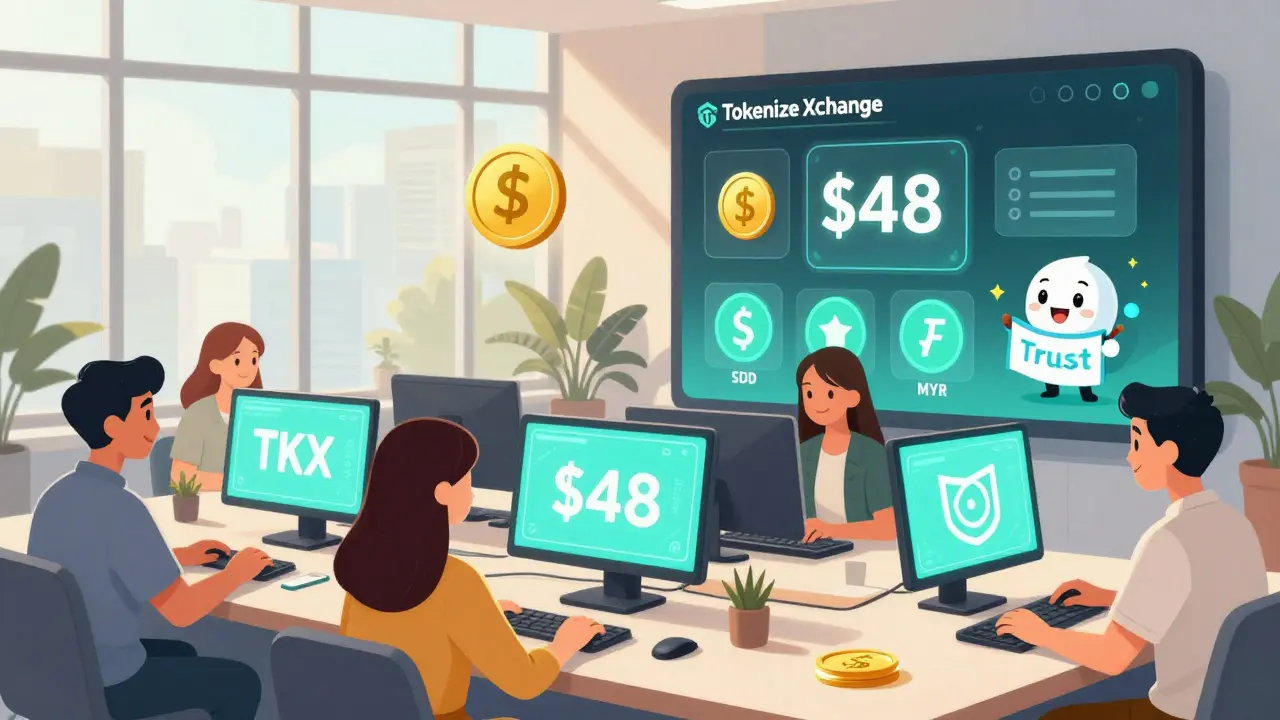
Tokenize Xchange wasn’t just another crypto exchange. For years, it presented itself as the go-to platform for Southeast Asian traders - regulated, reliable, and built for real people. It offered SGD, USD, and MYR deposits, staking rewards, automated investing, and even a loyalty program called Solitaire. Its native token, TKX, was everywhere: used for fees, governance, and rewards. At its peak in January 2025, TKX hit nearly $48. Investors saw it as a safe bet. Then, in July 2025, it vanished.
The Rise of Tokenize Xchange
Founded in 2017 in Singapore by Hong Qi Yu, Tokenize Xchange operated under AmazingTech Pte Ltd. It didn’t just list coins - it built a whole ecosystem. The platform ran on Titan Chain, an EVM-compatible blockchain with low fees, designed to attract developers. It had partnerships with big names like Animoca Brands and launched a $100 million grant program to fund dApps built on its chain. Users could trade over 126 cryptocurrencies across 319 pairs. It even had features like Dollar-Cost Averaging and Tokenize Express for fast trades.Security was a big selling point. Tokenize Xchange used BitGo-backed insurance and passkey authentication. It claimed to be compliant with Singapore’s financial rules, applying for a digital token payment license from the Monetary Authority of Singapore (MAS). That gave users confidence. Many believed they were safer here than on offshore exchanges with no oversight.
The TKX Token: The Heart of the Ecosystem
TKX wasn’t just a utility token - it was the engine. Holders got fee discounts, early access to new features, and higher rewards in the Solitaire loyalty program. You needed TKX to pay gas fees on Titan Chain dApps, vote on governance proposals, and delegate to validators. It was woven into everything: staking, DeFi lending, even digital gifting via Fortune Ingot.By January 2025, TKX was trading at $47.97. That price wasn’t just hype - it reflected real demand. People were buying TKX to use the platform, not just to speculate. But after that peak, things started to unravel. By June 30, 2025, TKX had dropped to $24.85. That’s a 48% loss in just six months. By mid-July, it crashed to $6 - an 87.5% drop from its high. That wasn’t market volatility. That was a system under extreme stress.
The Collapse: How It Happened
On July 17, 2025, users woke up to find trading and withdrawals disabled. No warning. No notice. Just a silent shutdown. An email arrived at 9:00 PM Singapore time saying operations were being wound down. By then, it was already too late.One user, Mr. Tan, had noticed the TKX crash and tried to withdraw his funds on July 17. He managed to pull out only S$500 before the system locked up. He emailed support the same day - no reply. Others reported similar stories: login worked, balances showed up, but withdrawal buttons were grayed out. The exchange didn’t respond to complaints. The MAS received dozens of reports about delayed withdrawals within days.
The platform didn’t just disappear - it vanished with $266.3 million in user funds trapped inside. Over 2,200 people filed claims. Some had life savings. Others had invested their monthly income through DCA. None could access their assets. The interim judicial managers appointed by the court confirmed the scale: no clear audit trail, no solvent reserves, no recovery plan.
Why It Failed: Red Flags Ignored
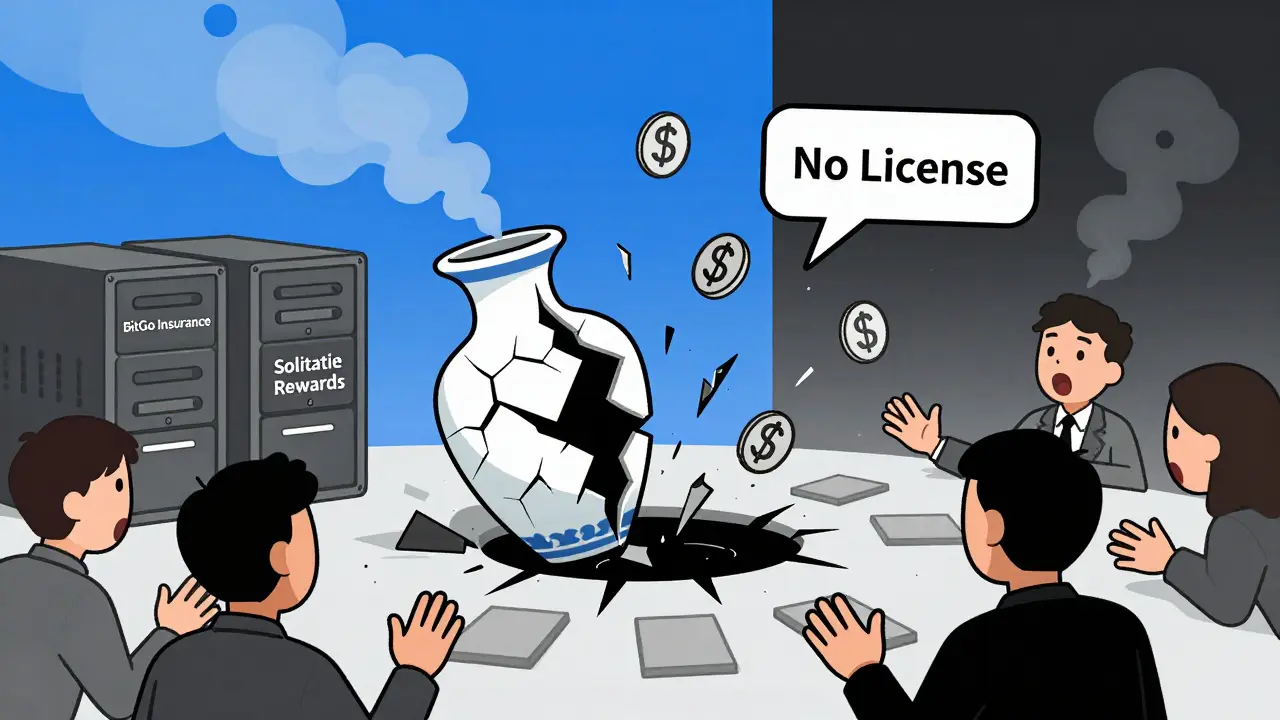
Tokenize Xchange claimed to be regulated. But here’s the truth: it never got its full license. It operated under temporary exemptions from MAS - a gray area many exchanges exploit. That’s not the same as being licensed. It’s like driving without a license but claiming you’re following traffic laws.The TKX price collapse was the clearest signal. When a platform’s native token drops 87% in under a month, it’s not a market correction - it’s a death knell. Tokenize Xchange was likely using TKX to fund operations, pay rewards, or back liquidity pools. When the token’s value tanked, the whole house of cards fell. But instead of warning users, they kept the platform open. That’s not negligence - it’s betrayal.
Even the security claims didn’t hold up. BitGo insurance doesn’t cover exchange insolvency. It protects against hacks - not when the exchange itself steals or mismanages funds. Passkey authentication? Useless if the company holds your keys and decides to disappear.
What Users Lost
People didn’t just lose money. They lost trust. Many had moved funds from Binance or KuCoin because they wanted a “safer” option - one with local currency support, clear compliance, and a Singaporean address. Tokenize Xchange sold them security. It delivered nothing but silence.For beginners, this was a devastating lesson. They thought regulation meant safety. It doesn’t. A license isn’t a guarantee - it’s a process. And if a platform is already collapsing while still applying for one, you’re not a customer. You’re a funding source.
For experienced traders, the betrayal was deeper. They knew the signs. They saw TKX’s fall. They tried to act. But the system was rigged. Withdrawals were disabled before the email went out. The platform had already siphoned what it could.

The Aftermath: No Recovery in Sight
As of October 2025, three months after the collapse, there’s still no sign of fund recovery. The police investigation is ongoing. The MAS is reviewing its oversight of crypto exchanges operating under exemptions. But for the 2,200 affected users, the clock is ticking - and no one is coming to save them.Tokenize Xchange’s failure isn’t just a story about one bad actor. It’s a warning to every crypto user: don’t trust the branding. Don’t trust the “regulated” label. Don’t trust the token price surge. Trust only what you can control - your private keys, your withdrawals, your timing.
If you’re using a centralized exchange today, ask yourself: can I withdraw my funds right now? If the answer isn’t a quick, easy yes - you’re already at risk.
What You Should Do Now
If you still hold TKX or had funds on Tokenize Xchange, file a claim with the interim judicial managers. Keep all transaction records, screenshots, and emails. But don’t expect results. The odds of recovery are slim.If you’re looking for a new exchange, stick to ones that:
- Have a full, active license - not just an application
- Allow instant withdrawals without delays or fees
- Are transparent about where user funds are held
- Don’t rely on a single token to power their entire ecosystem
- Have a proven track record of at least 3+ years
And if you’re holding a platform’s native token - especially one tied to staking or rewards - monitor its price like a heartbeat. A sudden, steep drop isn’t a buying opportunity. It’s a red flag screaming at you to get out.
Tokenize Xchange promised to be the future of crypto in Southeast Asia. Instead, it became its most expensive lesson.
Was Tokenize Xchange a regulated crypto exchange?
Tokenize Xchange applied for a digital token payment license from Singapore’s Monetary Authority of Singapore (MAS) but never received it before collapsing in July 2025. It operated under temporary exemptions, which are not the same as full regulatory approval. This gray area allowed it to function like a licensed exchange while avoiding full oversight - a common tactic among failing platforms.
How much money did users lose on Tokenize Xchange?
Over 2,200 users filed claims totaling S$266.3 million (approximately US$197 million) in trapped funds after the exchange shut down on July 17, 2025. These funds included both cryptocurrency and fiat deposits in SGD, USD, and MYR. No recoveries have been made as of October 2025.
What happened to the TKX token after the collapse?
The TKX token lost over 87% of its value between January and July 2025, dropping from $47.97 to around $6. After the exchange shut down, trading on all major platforms ceased. TKX is now essentially worthless - no liquidity, no utility, and no roadmap. The Titan Chain ecosystem it powered has been abandoned.
Could users withdraw funds before the shutdown?
Some users managed to withdraw small amounts in the days before July 17, 2025, as the TKX price collapsed. But by mid-July, withdrawals were disabled without warning. Most users were locked out before they could react. The exchange did not notify users in advance - it simply turned off access.
Is there any chance of getting my money back from Tokenize Xchange?
The chances are extremely low. Court-appointed interim judicial managers are handling claims, but there’s no evidence of recoverable assets. The exchange’s funds appear to have been dispersed or used to prop up the failing TKX token. Legal proceedings are ongoing, but recovery timelines are uncertain - and most experts expect little to no repayment.
Should I avoid exchanges that have their own native tokens?
Not necessarily - but be extremely cautious. Exchanges like Binance (BNB) and KuCoin (KCS) have strong, independent ecosystems and real utility beyond just fee discounts. The danger comes when an exchange’s entire business model depends on its token’s price - like Tokenize Xchange did. If the token crashes, the exchange collapses. Always ask: is the token used to pay for real services, or is it just a way to pump and dump?
Final Thoughts
Tokenize Xchange didn’t fail because of a hack. It failed because it was built on lies - lies about regulation, lies about security, and lies about sustainability. It used the trust people placed in Singapore’s financial reputation to lure them in, then took their money and vanished.If you’re trading crypto today, remember: the safest wallet is the one you control. The safest exchange is the one you can leave at any time. And the safest rule? Never invest more than you can afford to lose - especially when the platform’s own token is crashing.
8 Comments
Bro this is why you never trust a platform that makes its whole economy revolve around its own token. TKX was basically a Ponzi engine disguised as a utility token. I saw the price drop from $48 to $24 and thought 'maybe a correction'... then it went to $6 and I knew they were already gone. The fact they kept trading open after that? Criminal. I lost my entire DCA stack here. No regrets though - just lessons learned the hard way.
The real tragedy isn't the money lost. It's the erosion of trust in local regulatory frameworks. Singapore has one of the most respected financial systems in the world, and this exploit weaponized that reputation. People didn't invest in Tokenize Xchange - they invested in the idea that MAS oversight meant safety. That illusion is now shattered. Rebuilding it will take years.
TKX crash was the clearest red flag possible. When a token used for fees and governance drops 87% in a month its not market correction its systemic failure. No one should have been surprised. Withdrawal delays followed by silence is the oldest trick in the book. File claims if you must but dont expect anything back.
This case represents a fundamental failure of fiduciary responsibility in the digital asset space. The platform operated under temporary exemptions, a regulatory loophole that enabled predatory behavior under the guise of compliance. The use of BitGo insurance as a marketing tool was egregiously misleading - insurance does not cover insolvency. Users were not merely victims of market volatility; they were victims of institutional deception. Legal recourse is minimal, but the ethical breach is absolute.
Lmao people still think 'regulated' means safe? Bro I've seen exchanges with actual licenses get rug pulled harder than this. Tokenize Xchange was just the first one dumb enough to use Singapore as a brand. Meanwhile I'm over here hodling BTC in my cold wallet laughing. If you're not holding your keys you're not owning anything. Also TKX was trash from day one - anyone who bought it after $30 was asking for it.
i still get nightmares about logging in and seeing my balance but the withdraw button grayed out 😭 i had my rent money in there... i thought 'oh its sgp so its safe'... i was so dumb. to anyone reading this: if you can't withdraw right now, you don't own it. period. i'm switching to self-custody. no more exchanges. ever.
This isn't just about one exchange. It's about how the entire crypto industry normalizes risk by hiding behind buzzwords like 'regulated', 'decentralized', and 'ecosystem'. Tokenize Xchange didn't fail because of bad luck - it failed because its entire business model was a pyramid disguised as innovation. The lesson? If your token's value depends on new users buying in to pay rewards to old users, you're not building a platform - you're running a casino. And casinos always close when the money runs out.
Let me be perfectly clear: the entire narrative surrounding Tokenize Xchange is a distraction. The real issue is the pathological overreliance on centralized exchanges in the first place. The fact that users believed a Singapore-based entity with a 'temporary exemption' was safer than a non-KYC, non-custodial wallet reveals a profound intellectual failure in the crypto community. You don't need a license to be secure - you need a private key. The TKX token was a psychological manipulation tool, not a utility. The fact that 2,200 individuals entrusted their life savings to a platform whose blockchain was named 'Titan Chain' - a name that screams marketing over engineering - is less a financial tragedy and more a sociological one. The MAS didn't fail. The users failed to understand that regulation is a process, not a guarantee. And in crypto, processes are designed to be exploited. The only true compliance? Self-custody. The only true security? Ignorance of the platform. The only true wisdom? Not investing at all.