UAE Cryptocurrency: Rules, Exchanges, and What You Can Do in 2025
When it comes to UAE cryptocurrency, the legal and regulated use of digital assets within the United Arab Emirates. Also known as crypto in the Middle East, it’s one of the few regions where digital assets aren’t just tolerated—they’re actively encouraged under strict oversight. Unlike countries that ban crypto outright, the UAE built a clear framework: the Virtual Assets Regulatory Authority (VARA) in Dubai and the Securities and Commodities Authority (SCA) in Abu Dhabi now license and monitor exchanges, wallets, and trading platforms. This isn’t guesswork—it’s a regulated market with real rules.
That means if you’re in Dubai or Abu Dhabi, you can legally buy Bitcoin, trade Ethereum, or stake tokens—but only through licensed platforms like Binance UAE, a fully licensed crypto exchange operating under VARA supervision or BitOasis, a homegrown platform approved by UAE regulators. These aren’t offshore apps with shady backgrounds. They’re local businesses that must prove they hold customer funds securely, report suspicious activity, and follow anti-money laundering rules. If you use an unregulated exchange like SOLIDINSTAPAY or GoodExchange, you’re not just risking your money—you’re breaking local law.
And yes, crypto is taxable in the UAE—but not how you might think. There’s no capital gains tax on personal crypto trades, and no income tax on mining or staking rewards. That’s why so many traders and investors moved here. But if you’re running a business that accepts crypto or runs a crypto exchange, you’ll need a license and may owe corporate taxes. The UAE doesn’t tax your wallet, but it does track your business.
What about crypto airdrops or DeFi? They’re allowed, but you need to be careful. Projects like Impossible Finance or RACA airdrops have drawn attention here, but the UAE doesn’t approve every token. If a project has no clear team, no regulatory filings, or no local presence, it’s a red flag—even if it’s trending on Twitter. The same goes for DeFi lending platforms. You can use Aave or Compound, but only if you’re using them through a licensed gateway. No anonymous wallets, no unverified smart contracts.
So what’s actually happening on the ground? People in the UAE are buying crypto not just as speculation, but as part of everyday finance. Some use it for remittances, others for cross-border business payments. You’ll find crypto ATMs in malls, and even some supermarkets accept Bitcoin through licensed processors. The government isn’t trying to kill crypto—it’s trying to own it. That’s why you’ll see more crypto-related events, licensing updates, and official guidance in 2025 than ever before.
Below, you’ll find real reviews and breakdowns of exchanges, scams to avoid, and what’s actually working for users in the UAE right now. No fluff. No hype. Just what you need to know to stay safe, legal, and informed.
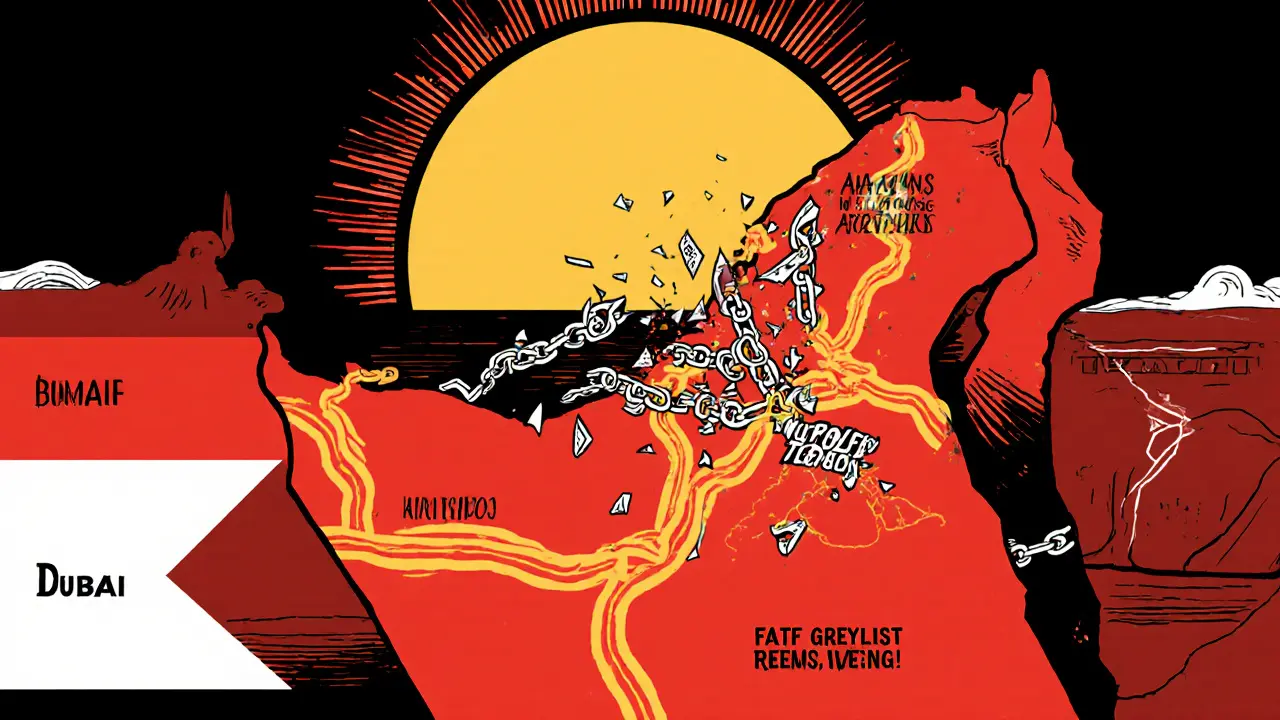
UAE Removal from FATF Greylist: How It Changed the Crypto Industry
The UAE's removal from the FATF grey list in 2024 transformed its crypto industry, unlocking banking access, attracting global exchanges, and boosting investor trust. Compliance reforms created a credible, regulated hub for digital assets.