Smart Contracts Explained: How They Power Crypto, DeFi, and NFTs
When you hear smart contracts, self-executing code on a blockchain that runs when conditions are met. Also known as blockchain contracts, they’re the invisible engines behind most crypto apps today. No middleman. No paperwork. Just code that automatically sends tokens, locks funds, or transfers NFTs when rules are satisfied. This isn’t theory—it’s what lets you lend on Aave, trade on Solarbeam, or claim an NFT from a game like xPET tech.
Smart contracts rely on blockchain, a tamper-proof digital ledger that stores code and data across many computers. Without this, the contract could be changed or deleted. That’s why Ethereum is the most common home for smart contracts—it’s built for them. But they’re not limited to Ethereum. You’ll find them on Arbitrum, Solana, BSC, and Polygon too. Each chain has its own rules for how contracts run, how much they cost, and how fast they execute. That’s why a contract on Arbitrum might cost pennies while the same one on Ethereum could cost dollars.
They’re not magic. A bad contract can leak funds, lock users out, or get hacked. That’s why projects like SundaeSwap on Cardano or Thruster v3 on Blast need audits—and why you should never trust a contract without one. Many of the posts below show what happens when contracts go wrong: a fake airdrop tied to a broken contract, a token with zero circulation because the code was never finished, or a DEX that looks safe but has hidden flaws. Even NFT standards like ERC-721 and ERC-1155 are just smart contracts with specific rules for digital ownership. And DeFi lending platforms? They’re all built on smart contracts that automatically match lenders and borrowers, adjust interest rates, and seize collateral if you default.
What you’ll find here aren’t abstract explanations. These are real cases: a pet game on Arbitrum that uses contracts to track digital pets, a recycling coin that pays out only if a machine verifies your trash, and a meme coin that vanished because its contract had no way to distribute tokens. Some contracts work perfectly. Others are scams hiding behind code. Understanding how they work isn’t about becoming a coder—it’s about knowing when to trust a project and when to walk away.
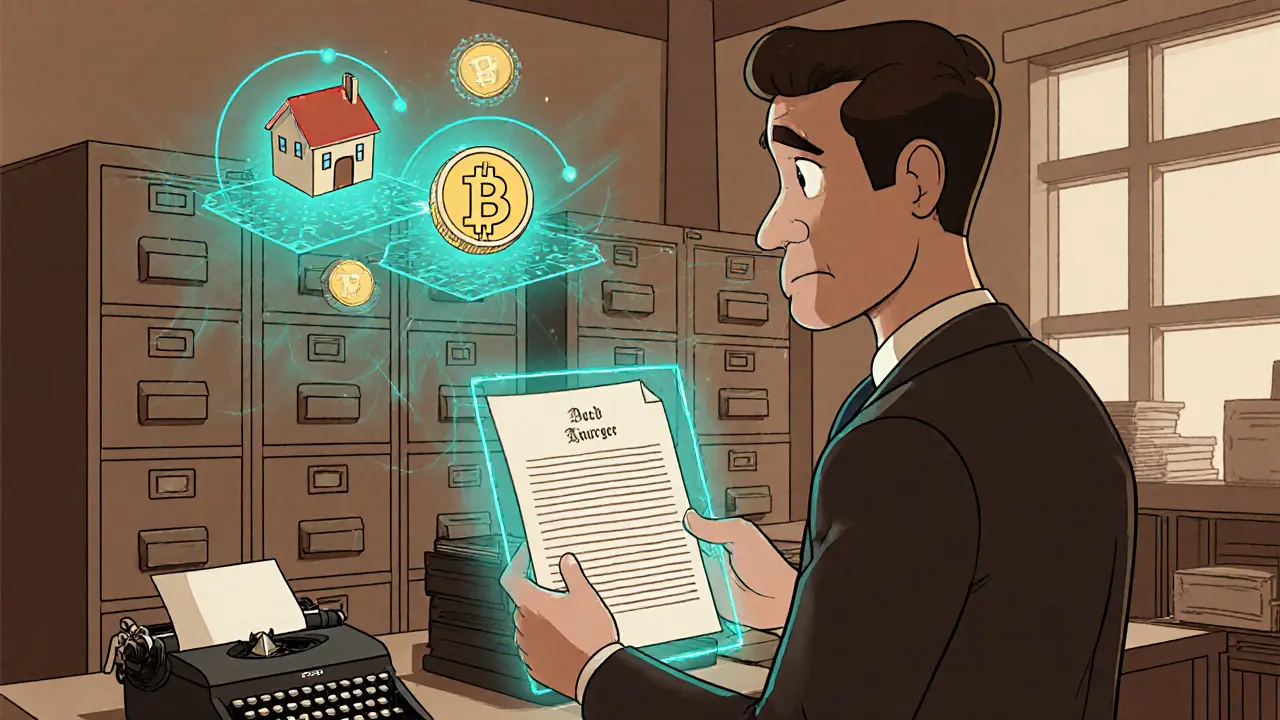
Future of Digital Asset Ownership: How Blockchain Is Rewriting Property Rights
Digital asset ownership is transforming how we hold property, with blockchain enabling instant transfers, fractional investments, and automated compliance. Real estate, private equity, and more are being tokenized - and institutions are moving fast.