Replay Attack: What It Is and How Crypto Projects Prevent It
When a blockchain splits—like when Ethereum became Ethereum and Ethereum Classic—a replay attack, a malicious trick where a transaction on one chain is copied and reused on another can steal your funds. If you sent 10 ETH to a friend on the new chain, that same transaction could be replayed on the old chain, sending 10 ETC to someone else—without you knowing. It’s not magic. It’s a flaw in how blockchains validate transactions when they share the same signature rules.
That’s why modern chains like Arbitrum, a Layer 2 scaling solution built on Ethereum and Solana, a high-speed blockchain with unique transaction hashing use replay protection. They add unique chain IDs or transaction prefixes so a signature from one network can’t be reused on another. Without this, every hard fork would be a free-for-all for hackers. Even simple wallet moves—like swapping tokens on a DEX—could become dangerous if replay protection isn’t built in from day one.
Look at what happened with Bitcoin Cash. When it forked from Bitcoin in 2017, users who didn’t use replay protection lost coins to cloned transactions. That’s why today, every major wallet—MetaMask, Phantom, Trust Wallet—checks for chain-specific signatures before confirming a send. It’s not optional anymore. If a project launches on a forked chain and doesn’t mention replay protection, treat it like a red flag. The same goes for airdrops. If you claim tokens on a new chain without knowing if it’s replay-safe, you might accidentally lock your original coins or trigger a double-spend.
Replay attacks aren’t just a technical footnote—they’re a live threat in DeFi, NFT marketplaces, and cross-chain bridges. Projects like SundaeSwap, Cardano’s main decentralized exchange and Solarbeam, a DEX on Moonriver have to account for this when designing their smart contracts. Even if you’re not a developer, you should care. Your wallet’s safety depends on it. The posts below break down real cases where replay attacks almost happened, how exchanges fixed them, and what you can do to protect yourself before it’s too late.
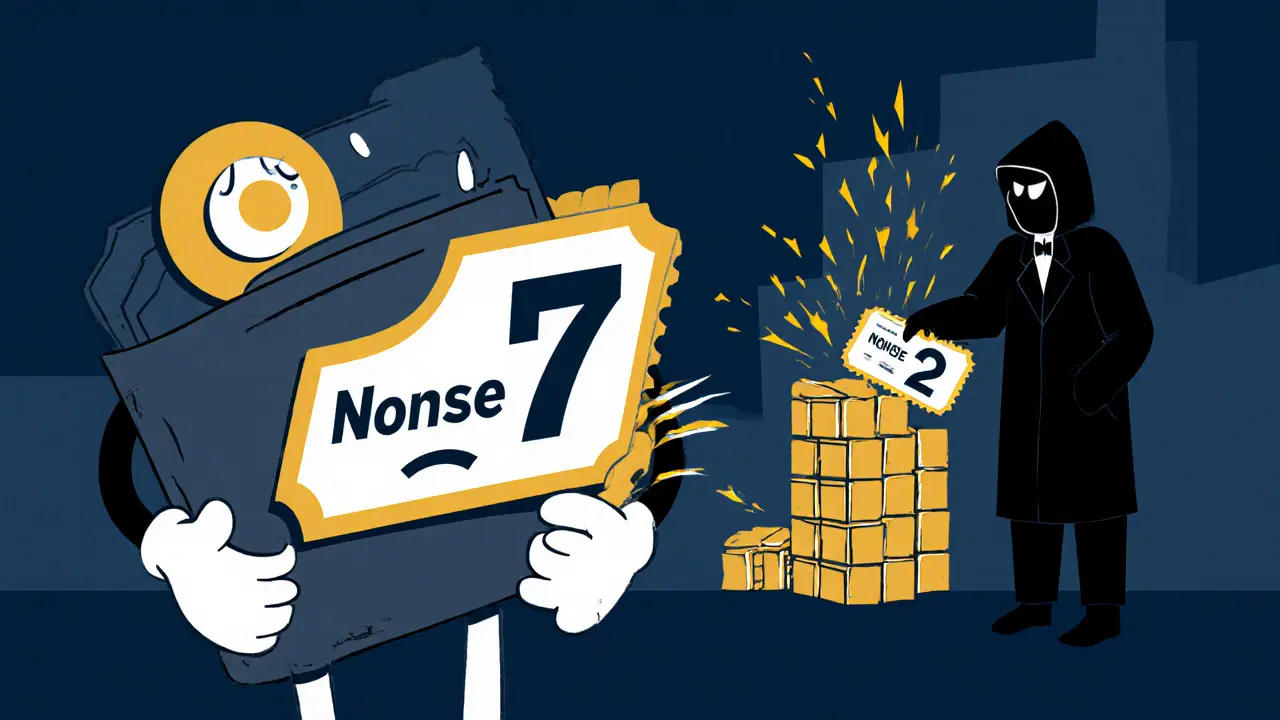
How Nonce Prevents Transaction Replay Attacks in Blockchain
A nonce prevents replay attacks in blockchain by ensuring each transaction is used only once. It's a simple counter that keeps your funds safe from being copied and reused by attackers.