OpenSea Verification: What It Is, Why It Matters, and How to Avoid Scams
When you see the OpenSea verification, a blue checkmark on an NFT collection page that signals official approval by OpenSea. Also known as OpenSea verified collection, it’s meant to tell you this project isn’t a random copy-paste job—it’s been reviewed by the platform itself. But here’s the catch: verification doesn’t mean it’s a good investment, or even safe. It just means OpenSea confirmed the team owns the brand and the contract isn’t a blatant ripoff. Many people think that blue checkmark is a stamp of approval for quality or long-term value. It’s not. It’s a basic trust signal—like a verified Twitter account. You still need to do your homework.
OpenSea verification is tied to NFT verification, the process where a platform confirms a project’s identity, ownership, and contract legitimacy. This happens when the team submits official documents, proves they control the project’s social accounts, and shows they’re not copying someone else’s art or name. But NFT scams, fraudulent projects designed to trick buyers into spending money on worthless or stolen assets. Also known as rug pulls, they’ve gotten smarter. Some fake verification by cloning verified logos, using similar names, or even buying old verified collections and relisting them as new. You can’t trust the badge alone. Always check the contract address. Look at the collection’s trading history. Are there real buyers? Or is it just bots pumping the price? Check the team’s Twitter and Discord—are they active, or did they disappear after launch? OpenSea doesn’t audit the project’s code, its team’s background, or its roadmap. It just checks if they’re who they say they are.
That’s why so many people lose money after seeing that blue check. They assume safety. They don’t dig deeper. The OpenSea verification badge is a starting point, not an ending one. It’s like seeing a ‘FDA Approved’ label on a supplement—yes, it’s legal, but that doesn’t mean it works. The same goes for NFTs. A verified collection can still be dead on arrival, with zero community, no utility, and a team that vanished after the sale. What you need is context: who’s behind it? What’s the real use case? Is there any actual demand? The posts below break down real cases—some verified, some not—so you can spot the difference before you click ‘Buy’.
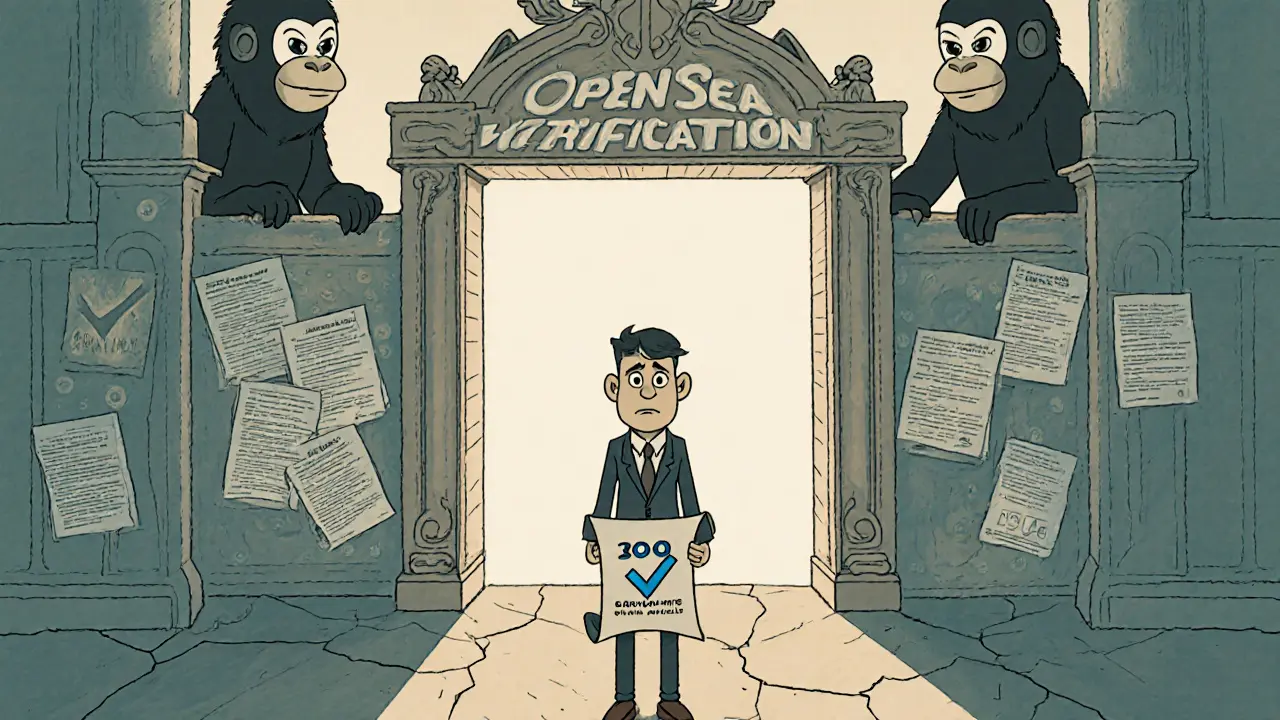
How NFT Marketplaces Verify Collections: Volume, Trust, and the Fight Against Scams
NFT marketplaces verify collections using volume thresholds, manual reviews, and celebrity ties to fight scams-but these systems are opaque, exclusionary, and easily gamed. Here’s how OpenSea, LooksRare, and others decide who gets verified-and why it’s not what you think.