North Korea crypto hacking: How state-backed cyberattacks are reshaping crypto security
When you hear about a crypto exchange getting hacked, it’s rarely random. More often, it’s the work of a well-funded, highly organized team with ties to a nation-state—specifically, North Korea crypto hacking, state-sponsored cyber operations targeting digital assets to fund military programs and evade sanctions. Also known as crypto theft by DPRK actors, these attacks are not petty scams—they’re strategic operations backed by government resources. The Lazarus Group, a cyberwarfare unit linked to North Korea’s Reconnaissance General Bureau has been responsible for over $3 billion in crypto theft since 2017, according to Chainalysis. They don’t break into wallets with brute force. They target weak points: poorly secured exchanges, unpatched smart contracts, and employees tricked into handing over access.
This isn’t just about stealing coins. It’s about bypassing global financial controls. With sanctions blocking traditional banking, North Korea turned crypto into its cash machine. They use mixers, cross-chain bridges, and fake DeFi platforms to launder funds. The blockchain security, the collective defenses protecting digital assets from theft and manipulation industry is playing catch-up. Most exchanges still don’t require multi-sig for large withdrawals. Many DeFi protocols haven’t been audited. And users? They still click on phishing links that look like Coinbase or Binance.
The crypto theft, the unauthorized transfer of digital assets through fraud, hacking, or social engineering tactics used by North Korean hackers are now copied by criminal gangs worldwide. But only a nation-state has the patience, funding, and impunity to run operations for years—like the 2022 Ronin Bridge heist, where $625 million vanished in one day. That attack didn’t happen because someone forgot their password. It happened because insiders were compromised, and security layers were ignored.
What you’ll find below isn’t just a list of articles. It’s a map of the battlefield. You’ll see how exchanges like CoinCasso collapsed under fraud, how unregulated platforms like SOLIDINSTAPAY are sitting ducks, and how even legitimate tools like HDEX and Solarbeam carry hidden risks. You’ll learn why privacy coins are being delisted, why airdrops like SOS Foundation are fake, and how scams like YOTSUBA and SUIA prey on the same trust that North Korea exploits. This isn’t about fear. It’s about awareness. If you hold crypto, you’re already in the crosshairs. The question isn’t if you’ll be targeted—it’s whether you’re ready.
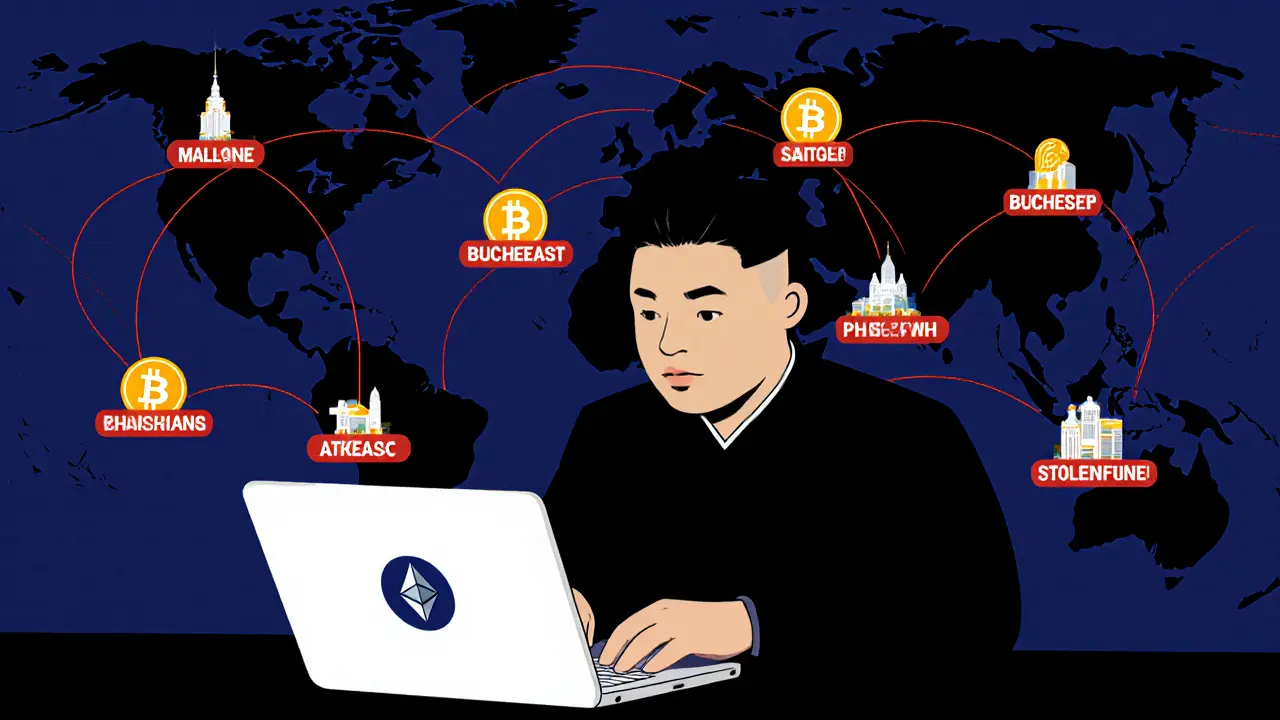
North Korea Crypto Ban and State-Sponsored Hacking Operations in 2025
North Korea stole over $2.17 billion in crypto in 2025, mostly through the ByBit hack. State-sponsored hackers use remote workers and Cambodia-based laundering networks to fund nuclear programs. Here's how it works - and why it's getting harder to stop.