What is a nonce in crypto? Key roles in blockchain, mining, and security
When you hear nonce, a one-time number used in cryptographic operations to prevent replay attacks and ensure transaction uniqueness. Also known as number used once, it’s the tiny but vital piece of data that makes blockchain mining possible. Without a nonce, Bitcoin and other Proof-of-Work chains couldn’t verify blocks or secure their networks. It’s not a coin, not a token — it’s a number. But that number is what keeps the whole system honest.
The proof of work, the consensus mechanism that requires miners to solve complex puzzles using computational power depends entirely on the nonce. Miners take a block of transactions, add a nonce, and hash the whole thing. If the hash doesn’t meet the target (like starting with 18 zeros), they change the nonce and try again. Billions of tries per second. That’s how new blocks get added. This process isn’t magic — it’s brute force, and the nonce is the only variable they can tweak.
But nonce isn’t just for mining. It shows up in cryptographic nonce, a random or pseudo-random number used once in authentication protocols to prevent replay attacks across wallets, smart contracts, and transaction signing. Every time you send crypto from your wallet, your software generates a unique nonce tied to your account’s transaction count. If you send two transactions at once, the second one needs a higher nonce — otherwise, the network rejects it. This keeps your transactions in order and stops hackers from replaying old ones.
Some of the posts here dig into how nonce behaves in real projects — like how a faulty nonce implementation can crash a token contract, or why certain airdrops require specific nonce values to claim rewards. Others explain how mining pools optimize nonce selection to reduce wasted hash power. You’ll also find cases where scams pretend to "unlock" nonce values or sell fake mining tools — all nonsense. The nonce doesn’t work that way. It’s not a secret code. It’s math.
You won’t need to generate your own nonce as a regular user. But understanding it helps you spot red flags. If someone says they can "predict" the next nonce or sell you a tool to "mine faster by controlling nonces," walk away. That’s like selling a magic dice that always rolls six. The system is designed so no one can predict it. That’s the point.
What follows are deep dives into crypto projects where nonce plays a hidden role — from DeFi lending platforms that rely on ordered transactions, to DEXs that use it for transaction sequencing, to failed airdrops where nonce errors caused users to lose claims. These aren’t theory lessons. These are real cases where nonce made the difference between success and failure.
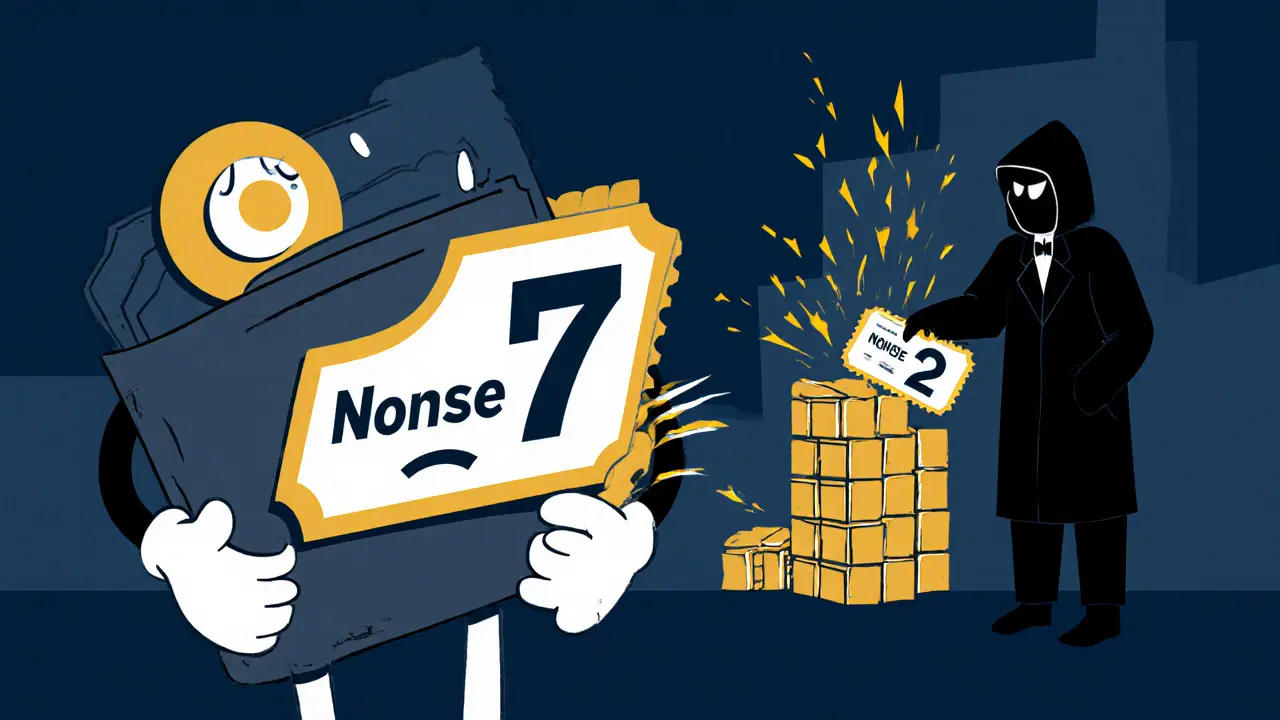
How Nonce Prevents Transaction Replay Attacks in Blockchain
A nonce prevents replay attacks in blockchain by ensuring each transaction is used only once. It's a simple counter that keeps your funds safe from being copied and reused by attackers.