NFT Scams: How to Spot Fake NFTs and Avoid Losing Your Crypto
When you buy an NFT, a unique digital token that proves ownership of art, music, or other assets on the blockchain. Also known as non-fungible token, it’s supposed to be a secure way to own digital items. But too many NFTs are just digital ghosts—no real value, no real owner, and no real project behind them. The hype made people think NFTs were a sure thing. Turns out, they’re also the favorite playground for scammers.
Most NFT scams follow the same script: a flashy Twitter post, a fake celebrity endorsement, a limited-time drop that disappears after you pay. You’re told you’re buying a rare Bored Ape, but the contract is copied from a dead project. Or you get a link to claim a free NFT, and it drains your wallet before you even click. These aren’t rare cases—they’re the norm. In 2023, over $1 billion was stolen through NFT-related fraud, according to blockchain security firms tracking real wallet movements. And it’s not just new users getting fooled. Even experienced traders have lost six figures to fake marketplaces and fake minting sites.
The biggest red flag? No real team. If you can’t find a GitHub profile, a LinkedIn page, or even a real phone number behind the project, walk away. Fake NFTs often use stolen art, cloned smart contracts, or bots to fake trading volume. Look at the floor price—if it’s been stable for months with zero sales, it’s probably dead. Check the contract on Etherscan. If the owner key hasn’t been renounced, the creator can delete your NFT anytime. And if the project promises future utility—like access to a game or token—but has no code, no roadmap, and no updates in six months? That’s not innovation. That’s a trap.
Then there’s the fake airdrop. You get a DM saying you won an NFT from CryptoPunks or Bored Ape Yacht Club. You click the link to claim it. Your wallet connects. Next thing you know, your ETH and tokens are gone. These aren’t phishing emails—they’re polished websites that look like OpenSea. They even copy the exact layout. The only way to avoid them? Never connect your wallet unless you’re on the official site. Bookmark it. Double-check the URL. And never, ever trust a link sent to you on Discord or Twitter DMs.
Scammers don’t just target buyers. They fake influencer endorsements, hire actors to pretend they’re collectors, and even create fake NFT marketplaces that look real until you try to cash out. Some even copy legitimate projects, change one letter in the name, and wait for tired users to click. There’s no magic tool to stop this. The only defense is skepticism. If it sounds too good to be true, it is. If it asks for your private key, run. If it pressures you to act now, it’s a scam.
Below, you’ll find real breakdowns of failed NFT projects, fake airdrops that stole wallets, and the exact signs that separate real NFTs from digital trash. No fluff. No hype. Just what to look for—and what to avoid—before you spend another dollar.
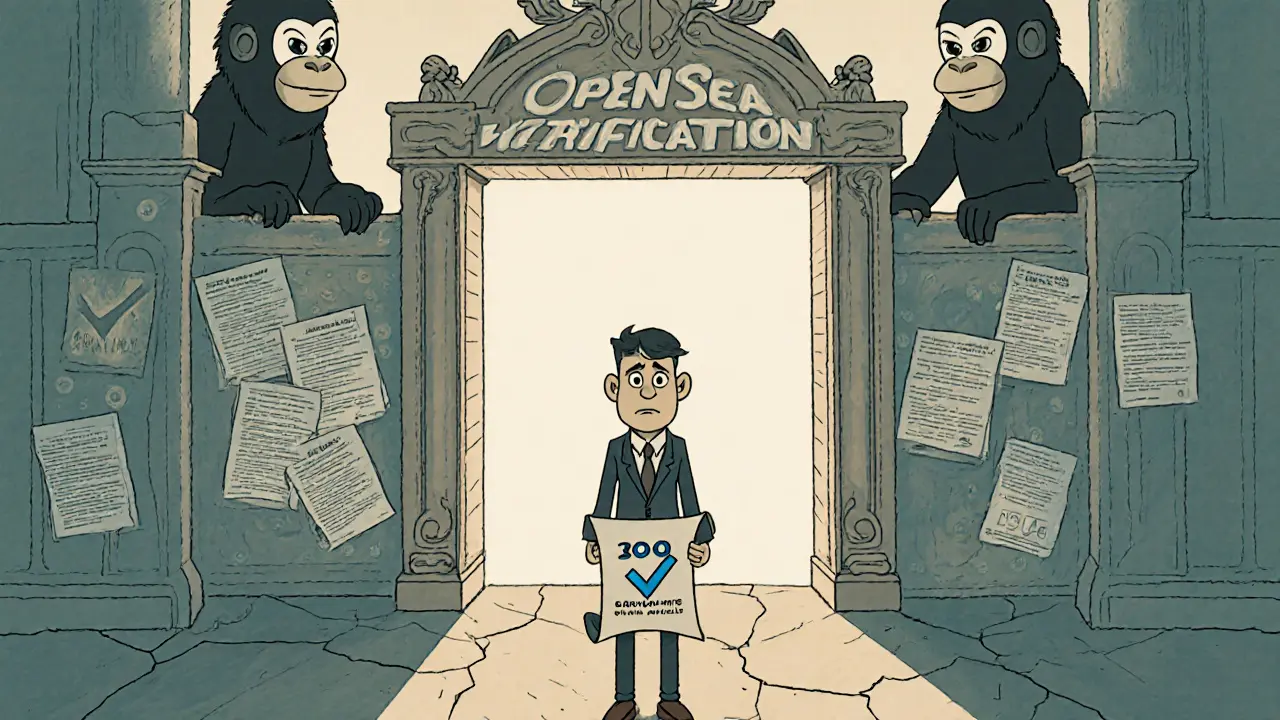
How NFT Marketplaces Verify Collections: Volume, Trust, and the Fight Against Scams
NFT marketplaces verify collections using volume thresholds, manual reviews, and celebrity ties to fight scams-but these systems are opaque, exclusionary, and easily gamed. Here’s how OpenSea, LooksRare, and others decide who gets verified-and why it’s not what you think.