NFT Marketplace Verification: How to Spot Legit Platforms and Avoid Scams
When you buy an NFT, you're not just buying a picture—you're buying proof of ownership on a blockchain. But that proof means nothing if the NFT marketplace, a platform where digital assets are bought, sold, and verified. Also known as NFT exchange, it is fake, unsecured, or rigged. Many users lose money because they trust a marketplace that looks real but has no real verification process. Without proper NFT marketplace verification, your NFT could vanish overnight, your wallet could be drained, or you could end up paying for a copy of something already free online.
NFT marketplace verification isn’t just about checking if a site has a green lock icon. It’s about knowing who runs it, how they secure trades, and whether they’ve been audited by trusted third parties. Platforms like OpenSea and Blur have built reputations by making their smart contracts public, hiring security firms like CertiK, and requiring creators to verify their identities. But thousands of copycat sites mimic these names with tiny spelling changes—OpenSae, OpenSeaNFT, OpenSeaa. These fake marketplaces don’t just steal your crypto—they steal your trust. The NFT scams, fraudulent schemes that trick users into sending funds or signing malicious approvals are getting smarter. One common trick? A fake "verified" badge next to a fake NFT collection. Another? A pop-up claiming your wallet needs to be "updated" to claim a reward. These aren’t bugs—they’re designed to exploit urgency and confusion.
Real NFT marketplace verification includes three things: contract audits, identity checks for sellers, and transparent fee structures. If a marketplace doesn’t show you the audit report from a known firm like Quantstamp or PeckShield, walk away. If every seller has the same profile picture and no history, it’s a bot farm. If the gas fees change depending on how much you’re buying, that’s a red flag. Even big platforms can have bad actors, so you still need to check the NFT’s history yourself—look at the token’s mint date, how many times it’s traded, and if the original creator is still active. The NFT platform safety, the level of protection a marketplace offers against theft, fraud, and rug pulls isn’t something you get by default—it’s something you demand.
You don’t need to be a coder to protect yourself. Just ask: Can I trace this NFT back to its original creator? Is this marketplace listed on CoinGecko or CoinMarketCap? Has anyone else reported a problem? If the answer to any of those is no, you’re playing Russian roulette with your crypto. The NFT marketplace security, the technical and operational measures that prevent unauthorized access and fraudulent transactions of a good platform is visible—not hidden behind a login screen. It’s in the open-source code, the verified creator badges, the clear dispute process, and the fact that they don’t ask for your private key.
Below, you’ll find real-world breakdowns of NFT marketplaces that got it right—and the ones that turned into ghost towns overnight. You’ll see how users lost thousands on fake platforms, how audits exposed hidden risks, and what simple checks can save you from becoming the next cautionary tale. This isn’t theory. These are the exact mistakes people made last year—and how to avoid them in 2025.
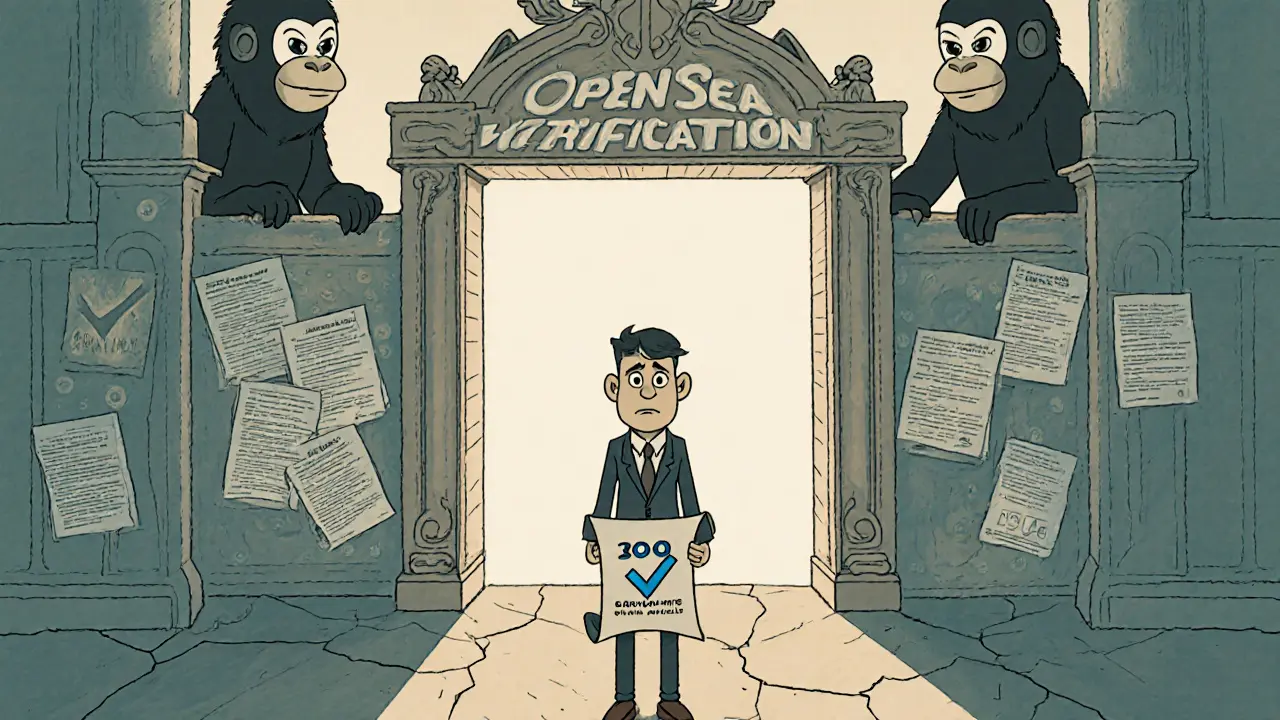
How NFT Marketplaces Verify Collections: Volume, Trust, and the Fight Against Scams
NFT marketplaces verify collections using volume thresholds, manual reviews, and celebrity ties to fight scams-but these systems are opaque, exclusionary, and easily gamed. Here’s how OpenSea, LooksRare, and others decide who gets verified-and why it’s not what you think.