NFT Collection Verification: How to Spot Real NFTs and Avoid Scams
When you buy an NFT collection verification, the process of confirming that an NFT project is legitimate, has a verifiable smart contract, and isn’t a copycat or scam. Also known as NFT authenticity check, it’s the first thing you should do before clicking "mint" or sending any crypto. Too many people lose money because they trust a flashy Twitter post or a Discord link with no proof. Real NFTs leave a trail—on-chain data, verified contracts, public team identities, and clear documentation. Fake ones vanish the moment you pay.
NFT collection verification isn’t just about checking if a project has a website. It’s about digging into the NFT token standards, the technical rules that define how digital ownership is recorded on blockchains like Ethereum or Solana. Also known as blockchain standards, these include ERC-721 and ERC-1155, which determine if an NFT can be traded, transferred, or displayed properly. If a project doesn’t say which standard it uses—or worse, claims to use one but doesn’t—run. You’re dealing with a bot-generated collection, not a real asset. Then there’s the NFT contracts, the code that runs the NFT project on the blockchain and controls things like royalties, mint limits, and ownership transfers. Also known as smart contracts, these must be open-source and audited by trusted firms like CertiK or PeckShield. If the contract is hidden, unverified, or says "no owner can withdraw funds"—that’s a red flag. Real projects publish their code on Etherscan or Solana Explorer so anyone can inspect it.
Scammers copy popular NFTs all the time. They change a few pixels, rename the project, and flood social media with fake testimonials. NFT collection verification means checking the official Twitter account, the verified Discord, and the original mint date. If the project launched last week but claims to be "the next Bored Ape," it’s not. Look at the transaction history. Are there hundreds of small buys from new wallets? That’s often a pump-and-dump. Are there large, consistent buys from known collectors or funds? That’s a sign of real interest. You don’t need to be a coder to do this—just patient. Use tools like NFTScan or OpenSea’s contract verification badge. If the project doesn’t show up there cleanly, it’s not safe.
There’s no magic button that says "this NFT is real." But there are clear signs you can check in under five minutes. And if you skip verification, you’re not being early—you’re being baited. Below, you’ll find real cases of NFT scams, broken contracts, and verified collections that actually delivered. Learn from what went wrong. Protect your wallet. Don’t let hype replace homework.
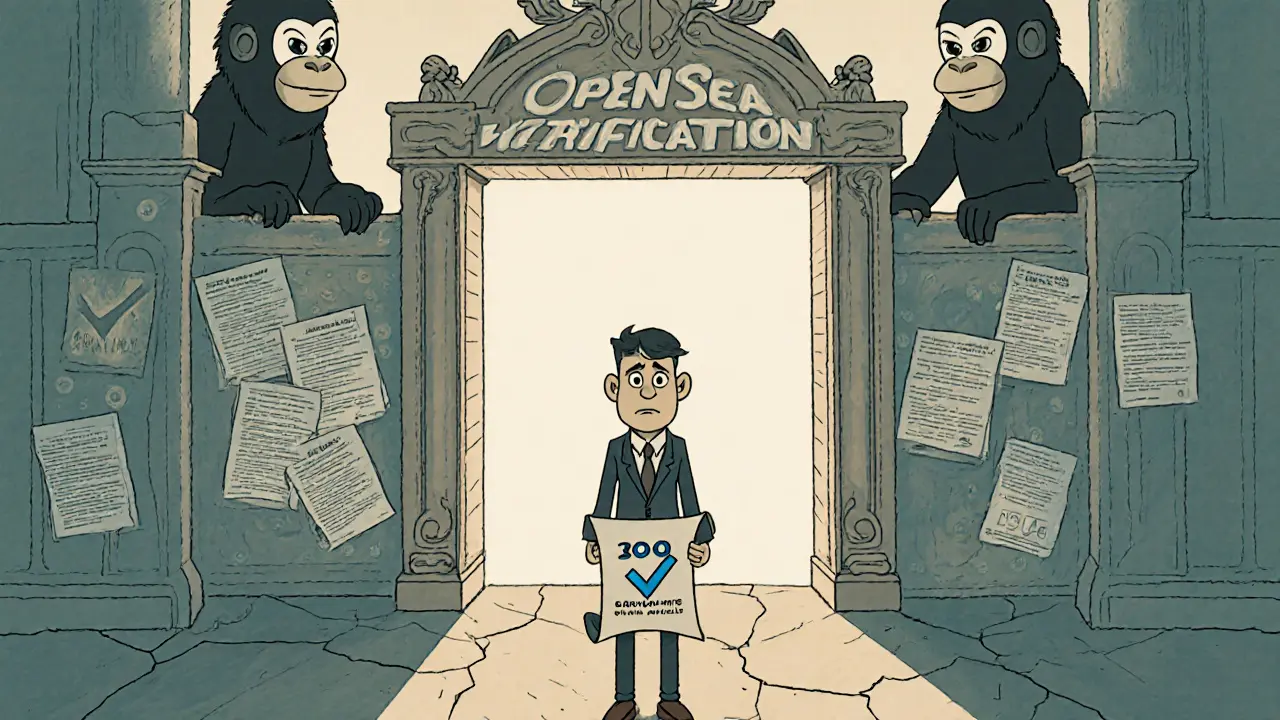
How NFT Marketplaces Verify Collections: Volume, Trust, and the Fight Against Scams
NFT marketplaces verify collections using volume thresholds, manual reviews, and celebrity ties to fight scams-but these systems are opaque, exclusionary, and easily gamed. Here’s how OpenSea, LooksRare, and others decide who gets verified-and why it’s not what you think.