LooksRare verification: What It Is and Why It Matters in Crypto
When you hear LooksRare verification, the process users go through to prove they qualify for NFT rewards and token distributions on the LooksRare platform. Also known as LooksRare eligibility check, it’s not just a form you fill out—it’s your ticket to claiming tokens tied to real trading activity or NFT ownership on Ethereum. Without it, you’re just watching from the sidelines while others claim free rewards.
LooksRare verification links directly to your wallet activity. If you traded NFTs on OpenSea or other marketplaces before a certain date, you might have been eligible for a snapshot. That snapshot is what triggers the verification process. It’s not about signing up—it’s about proving you were already there. This is why so many people lost out: they didn’t track their wallet history or assumed signing up was enough. The system doesn’t care if you’re new. It only cares if your wallet was active when the rules were set.
Verification isn’t just about getting tokens. It’s about trust. LooksRare built its platform on the idea that early NFT traders should be rewarded. That’s why verification checks things like the number of NFTs you bought, how often you traded, and whether your wallet was active during key periods. It’s not random. It’s calculated. And if you didn’t meet those thresholds, no amount of clicking ‘claim’ will give you anything. That’s why fake airdrop sites popping up claiming to verify you for LooksRare are scams—they can’t access your wallet history, and they don’t have the keys to the system.
LooksRare verification also connects to bigger ideas like on-chain reputation and community-driven rewards. It’s not just a one-time thing—it’s part of a trend where platforms reward users based on actual behavior, not just hype. Other platforms like Blur and Genie use similar models. But LooksRare was one of the first to make it public, transparent, and tied directly to Ethereum transaction data. That’s why it mattered. And that’s why people still talk about it, even after the initial rush faded.
What you’ll find in the posts below are real examples of how verification worked—or didn’t—for real users. Some got lucky with early trades. Others lost money chasing fake claims. You’ll see how wallets were checked, what data mattered, and how scams tried to copy the system. There’s no magic trick. Just clear facts about what actually happened during LooksRare verification, and how you can spot the difference between real rewards and empty promises.
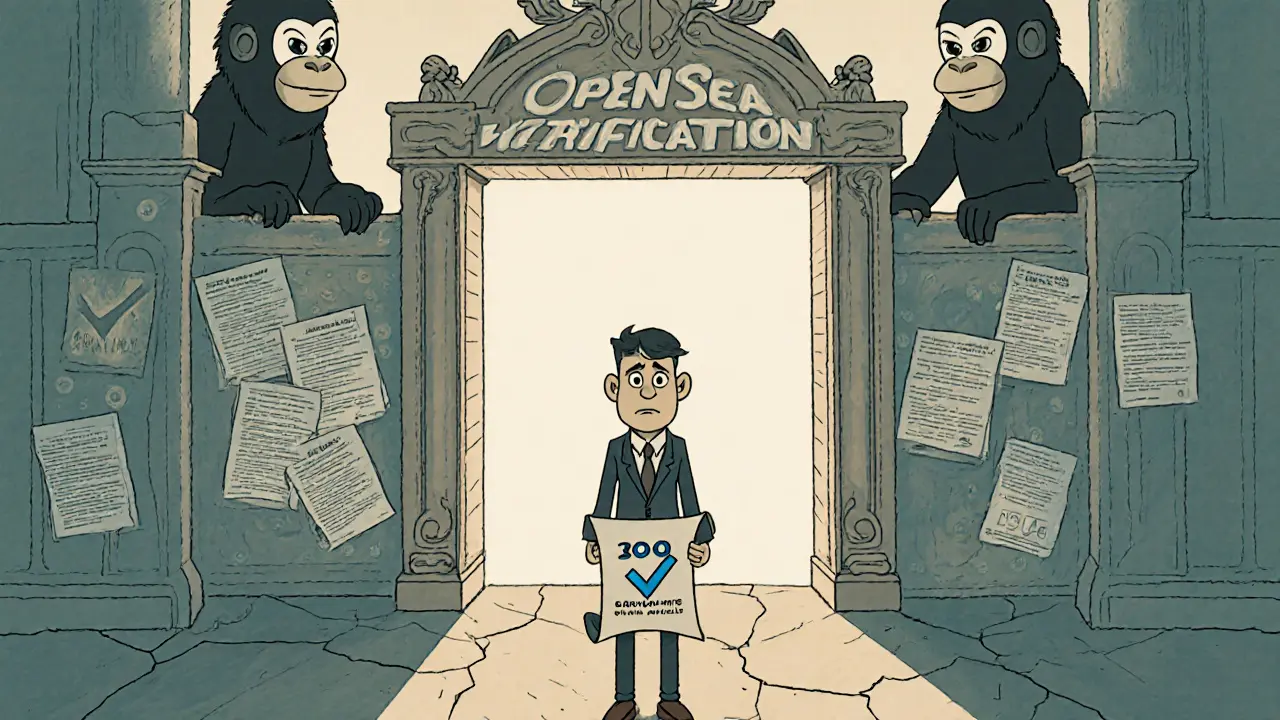
How NFT Marketplaces Verify Collections: Volume, Trust, and the Fight Against Scams
NFT marketplaces verify collections using volume thresholds, manual reviews, and celebrity ties to fight scams-but these systems are opaque, exclusionary, and easily gamed. Here’s how OpenSea, LooksRare, and others decide who gets verified-and why it’s not what you think.