Digital Asset Ownership: What It Really Means and How It Works
When you own a digital asset, a piece of data with verifiable ownership recorded on a blockchain. Also known as blockchain-based ownership, it means you hold the keys—not a bank, not a platform—to something that can’t be copied, seized, or deleted by anyone else. This isn’t theory. It’s what happens when you buy an NFT, stake a token, or trade a wrapped Bitcoin on Ethereum. Real ownership means you control the private key, and the blockchain proves it forever.
But not all digital assets are created equal. NFT token standards, like ERC-721 and ERC-1155, define how ownership data is stored and transferred on blockchains. Some let you own a single unique item, like a piece of digital art. Others let you own fractions of many items, like in-game skins or collectibles. Then there’s wrapped asset custody, a system where real crypto like Bitcoin is locked up and represented as a token on another chain, like Ethereum. That’s not true ownership—it’s a proxy. You don’t hold the original Bitcoin. Someone else does. And if that custodian fails, your wrapped asset vanishes. That’s why many traders prefer native tokens over wrapped ones.
Digital asset ownership also means you can sell, lend, or use your asset across platforms—if the system allows it. But too many projects promise ownership and deliver nothing. Some tokens have no smart contract. Others are locked behind centralized servers. A few, like the fake YOTSUBA coin, don’t even exist. True ownership requires transparency: public code, verifiable balances, and no hidden controls. That’s why the posts below dig into real cases—from the rise of Solana’s SAMO coin as a community tool, to the collapse of BitOrbit’s IDO, to why privacy coins are being delisted from exchanges. Each story shows how ownership can be clear, fragile, or completely fake.
You’ll find guides here on how NFTs actually work, why wrapped assets carry hidden risks, and how to spot scams pretending to offer ownership. Whether you’re holding an NFT, trading on a DEX, or wondering if your crypto is really yours, this collection cuts through the noise. No fluff. Just what you need to know to own your digital stuff for real.
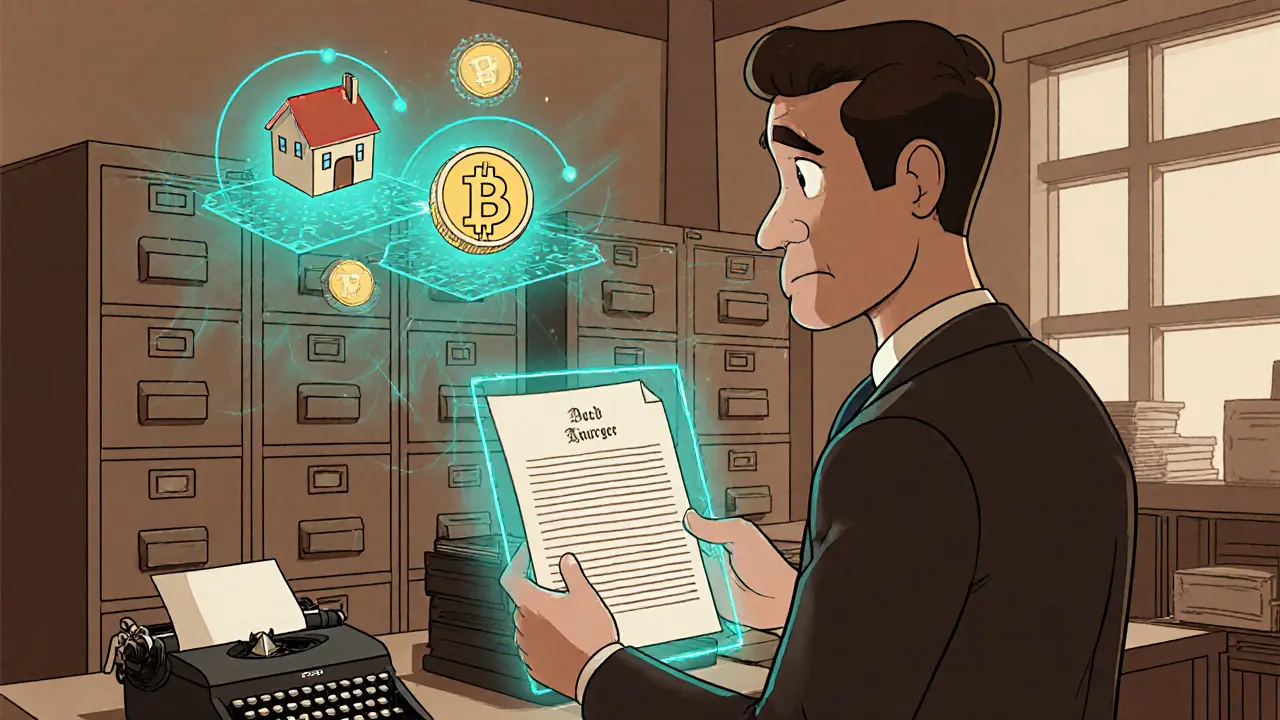
Future of Digital Asset Ownership: How Blockchain Is Rewriting Property Rights
Digital asset ownership is transforming how we hold property, with blockchain enabling instant transfers, fractional investments, and automated compliance. Real estate, private equity, and more are being tokenized - and institutions are moving fast.