Cryptocurrency Legal Tender: Where It’s Recognized, Why It Matters, and What’s Changing
When we talk about cryptocurrency legal tender, a form of digital money officially recognized by a government as valid for settling debts. Also known as digital currency legal status, it’s not just about tech—it’s about who controls money, how payments flow, and whether your crypto can buy groceries like cash. Most countries still treat crypto as property or an asset, not money you can use at the store. But a few have flipped the script.
El Salvador, the first country to make Bitcoin legal tender in 2021. Also known as Bitcoin nation, it forced businesses to accept BTC for goods and services, even setting up government-backed wallets. The goal? Cut remittance fees and bring the unbanked into the financial system. But the reality? Most citizens still prefer dollars. The experiment is ongoing, and it’s reshaping how other nations think about digital currency regulation, the rules governments create to control or restrict crypto use. Also known as crypto legal framework, it’s the invisible hand behind every exchange ban, tax rule, and banking restriction you see.
Meanwhile, places like Cambodia, where banks are banned from processing crypto transactions. Also known as crypto-restricted economy, the government pushed its own digital currency, Bakong, to replace Bitcoin and Ethereum. Why? Control. If you can’t track it, you can’t tax it. That’s why crypto government adoption, when a nation officially accepts or integrates crypto into its financial system. Also known as state-backed digital currency, is rarely about freedom—it’s about replacing one system with another that’s easier to monitor. The same logic applies in Pakistan, where PVARA now licenses crypto firms, or in Nigeria, where banks were once ordered to cut off crypto users entirely.
This isn’t just about laws—it’s about survival. When privacy coins like Monero get delisted from exchanges, it’s because regulators see them as tools for evasion. When a meme coin like Dogelon Mars gets flagged as a scam, it’s because there’s no legal backbone behind it. And when a project like RecycleX tries to tie crypto to real-world recycling, it’s testing whether blockchain can solve real problems—or just create another speculative bubble.
What you’ll find here aren’t theories. These are real cases: countries that said yes, countries that said no, and the messy middle ground where people are trying to make crypto work despite the rules. You’ll see how regulations are changing faster than anyone expected—and how your next crypto move might depend on where you live, not what the price chart says.
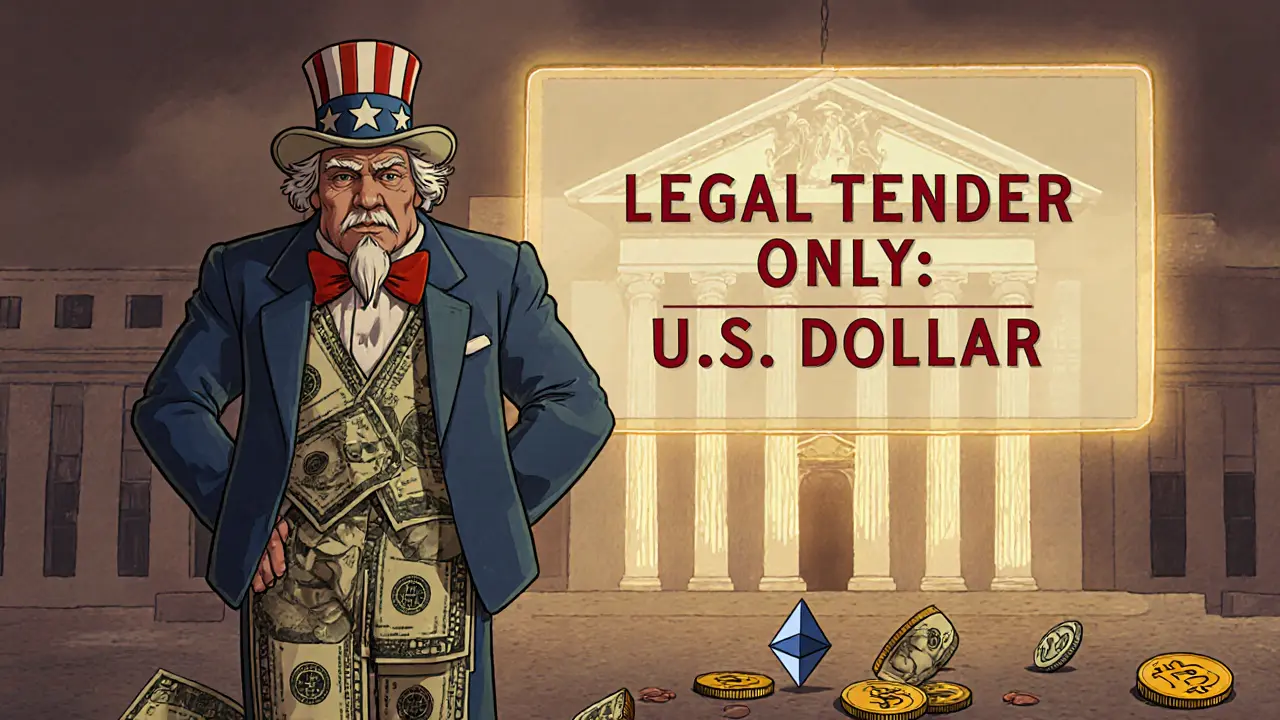
Legal Tender Status for Cryptocurrency: What’s Really Happening in 2025
As of 2025, cryptocurrency is still not legal tender in the U.S., but new laws like the GENIUS Act and CLARITY Act have created a clear regulatory path for stablecoins, Bitcoin, and Ethereum-making crypto safer, more legitimate, and easier to use without replacing the dollar.