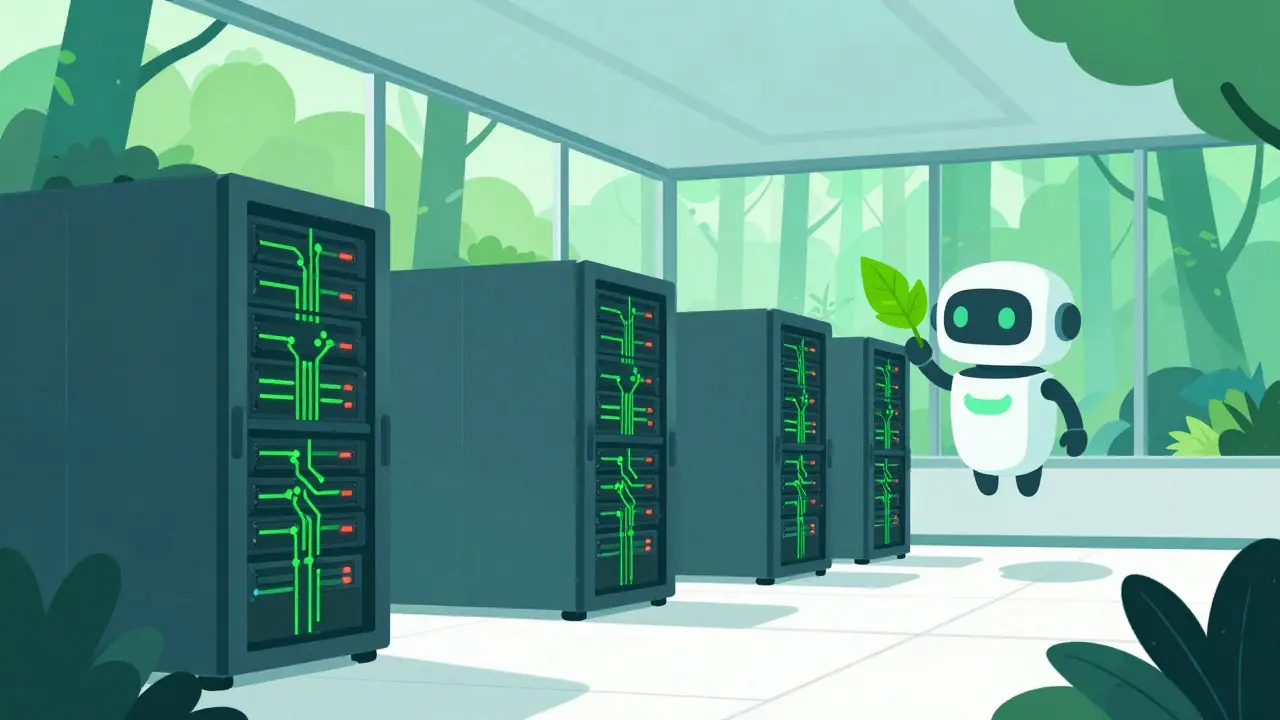
Remember when people said Bitcoin was killing the planet? It feels like a lifetime ago. Back then, mining rigs were chugging electricity at rates that made environmentalists sweat. But here we are in June 2026, and the conversation has shifted entirely. The question isn't whether blockchain is sustainable anymore; it's how you can use sustainable blockchain practices to actually fix real-world problems like supply chain waste and carbon accounting.
The industry didn't just pivot; it evolved. We moved from energy-hungry experiments to enterprise-grade infrastructure. The World Economic Forum marked this year as pivotal because regulatory certainty finally caught up with technological innovation. If you're looking to integrate blockchain into your business or investment strategy, you need to understand that 'green' is no longer a marketing buzzword-it's a technical requirement.
The Energy Shift: From Proof-of-Work to Efficient Consensus
To understand where we are, you have to look at what changed under the hood. For years, the dominant consensus mechanism was Proof-of-Work (PoW). It worked by having computers race to solve complex math puzzles. This process required massive amounts of computational power and, consequently, electricity. It was secure, but it was dirty.
The shift to Proof-of-Stake (PoS) changed the game completely. Instead of competing with hardware, validators stake their own coins to secure the network. This simple change reduced energy consumption by approximately 99.95% compared to traditional PoW systems. That’s not a small improvement; it’s an order-of-magnitude difference.
But PoS isn't the only player in town. You also have Delegated Proof-of-Stake (DPoS), which allows token holders to vote for delegates who validate transactions, making the process even faster. Then there's Proof-of-Authority (PoA), often used in private enterprise chains where identity matters more than anonymity. These mechanisms allow networks to maintain decentralization and security without burning coal.
| Mechanism | Energy Efficiency | Speed (TPS) | Best Use Case |
|---|---|---|---|
| Proof-of-Stake (PoS) | ~99.95% reduction vs PoW | High | Public blockchains, DeFi |
| Delegated PoS (DPoS) | Very High | Very High | Community-driven governance |
| Proof-of-Authority (PoA) | Extremely High | Ultra-High | Private enterprise chains |
| Proof-of-History (PoH) | High (when paired with renewable energy) | >50,000 TPS | High-throughput applications |
Real-World Examples of Green Infrastructure
It’s one thing to talk about theory; it’s another to see it running in production. Several networks have set the standard for what sustainable blockchain looks like in 2026.
Take Algorand. It uses a pure Proof-of-Stake algorithm that achieves zero carbon usage through automatic compensation schemes. It’s a fully zero-carbon network, meaning every transaction processed doesn’t add to the global carbon footprint. Then there’s Hedera Hashgraph, which provides enterprise-level performance with a sustainable architecture designed for high-volume business applications.
Solana is another major player. It operates on a renewable resource-powered Proof-of-History algorithm. This allows it to process more than 50,000 transactions per second sustainably. That throughput advantage is crucial for scaling decentralized finance (DeFi) and Web3 applications without creating an ecological disaster. These aren't niche projects; they are handling billions of dollars in value daily.

Tokenizing Nature: Carbon Credits and Green Assets
One of the most exciting developments in sustainable blockchain is the tokenization of carbon credits. In the past, buying carbon offsets was opaque. You paid money, hoped someone planted trees, and trusted the system. Now, blockchain enables on-chain carbon credits that automatically retire verified compensations with every transaction.
This brings transparency to climate finance. Specialized protocols handle carbon neutrality accounting without traditional intermediaries. Cornell researchers recently developed a platform to improve how these commitments are recorded, addressing long-standing credibility issues in carbon registries. When you buy a tokenized carbon credit, you can trace its origin and verify its retirement instantly.
It goes beyond credits. Real environmental resources are being converted into liquid tokens. Solar plants are becoming Non-Fungible Tokens (NFTs) or fungible tokens. Wind projects are tokenized for investment purposes. This makes restoration projects accessible to everyday investors, not just large institutions. Geothermal and hydroelectric enterprises are shifting operations to support this ecosystem, creating a feedback loop where green energy powers green finance.
Supply Chain Transparency: Fighting Waste and Greenwashing
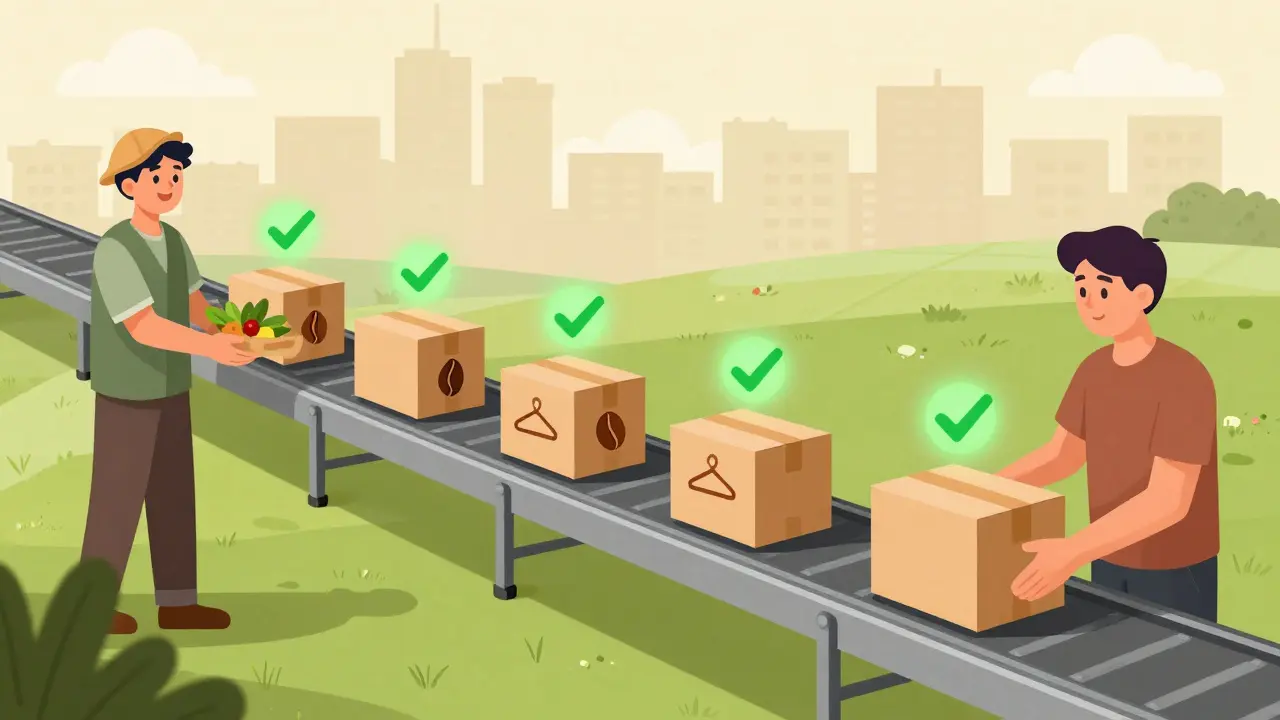
If carbon credits are the financial side, supply chains are the physical side of sustainable blockchain. Blockchain enables decentralized ledgers where all authorized participants track goods from start to finish in real time. This isn't just about knowing where your coffee came from; it's about verifying ethical labor practices and living wages paid to farmers.
Fashion brands are using immutable record-keeping to prove they aren't using forced labor. Food producers are tracking freshness to reduce spoilage. Here’s a concrete stat: blockchain tools help companies reduce excess inventory by 15-30% through live visibility tracking. Warehouses require less safety stock, which means fewer trucks on the road and a smaller environmental footprint. Timestamps ensure stock moves in the correct order, preventing good products from going to waste.
Perhaps most importantly, blockchain prevents greenwashing. Because records are immutable, organizations cannot modify environmental certification data after the fact. If a company claims a product is sustainable, the blockchain holds the evidence. Products with these verified credentials sell for 7-22% more than those without, proving that consumers are willing to pay for authenticity.
The Convergence of TradFi and DeFi
You might think sustainable blockchain is still a crypto-only phenomenon. Think again. Traditional financial institutions (TradFi) are actively integrating these technologies. JP Morgan issued the JPM coin USD deposit token on a public blockchain. Citi integrated its Token Services with 24/7 USD clearing for real-time cross-border payments.
This convergence is driven by efficiency and regulation. The World Economic Forum noted that entire asset classes may become tradable on-chain, reshaping capital flows and liquidity. As regulations solidify in 2025 and 2026, corporations are embedding blockchain into core operations. This isn't speculation; it's infrastructure modernization. Interoperability is key here-multi-chain ecosystems and cross-chain bridging allow different blockchains to work together seamlessly.
Implementation Challenges and Next Steps
Adopting sustainable blockchain isn't plug-and-play. It requires discipline and resources. The UNDP advises viewing blockchain as one element within a broader systems-based approach, not a silver bullet. Companies should start with pilot programs in high-risk areas to measure improvements and detect fraud before rolling out fully.
There are also tax considerations. As PwC documented in 2026 global crypto tax developments, transactions are becoming more visible to authorities. Reporting obligations are expanding, and cross-border information sharing is increasing. You need to be prepared for this scrutiny.
For technologists, the focus is on designing for interoperability, privacy, and resilience. For business leaders, it's about evaluating how blockchain integrates with asset bases and capital structures. The goal is to transform sustainability from a marketing promise into a measurable, defensible practice.
What is the biggest benefit of switching from Proof-of-Work to Proof-of-Stake?
The primary benefit is a drastic reduction in energy consumption, typically around 99.95%. This makes the network environmentally friendly while maintaining security and decentralization, allowing for scalable growth without ecological damage.
How does blockchain prevent greenwashing in supply chains?
Blockchain creates an immutable ledger. Once data about a product's origin, labor conditions, or carbon footprint is recorded, it cannot be altered. This provides verifiable proof of sustainability claims, which builds consumer trust and allows companies to charge premium prices.
Are carbon credits on blockchain reliable?
They are significantly more reliable than traditional methods due to transparency. On-chain credits allow for automatic retirement verification and traceability from source to buyer, reducing fraud and double-counting issues common in older registry systems.
Which industries are adopting sustainable blockchain first?
Food production, fashion, pharmaceuticals, and finance are leading the way. These sectors face high pressure for ethical verification, waste reduction, and regulatory compliance, making blockchain's transparency features highly valuable.
Is Solana considered a sustainable blockchain?
Yes, Solana is widely regarded as sustainable because it uses a Proof-of-History consensus mechanism powered largely by renewable energy sources. It handles high transaction volumes with a much lower carbon footprint than legacy Proof-of-Work networks.