Venezuela Mining Profitability Calculator
Calculate potential Bitcoin mining profits considering Venezuela's unique conditions: $0.03/kWh electricity, 40-60 hours monthly power outages, and government fees.
Note: Based on current Bitcoin price of $60,000 and Venezuela's $0.03/kWh electricity rate. Power outages reduce operational hours by 40-60 hours/month.
Miners with 150 TH/s equipment typically spend $300-500/month on electricity. Government fees can reduce profits by 30-40%.
When Venezuela first launched its state-run crypto mining program, it looked like a bold solution to an economic crisis. With hyperinflation eating away at salaries and savings, the government saw cryptocurrency mining as a way to generate hard currency using the country’s cheap electricity. But what started as a promising experiment turned into a tangled mess of broken promises, shifting rules, and paralyzed agencies. Today, crypto mining in Venezuela isn’t just regulated-it’s controlled, restricted, and often suspended, depending on who’s in charge and how bad the power outages have gotten.
How the Government Took Over Crypto Mining
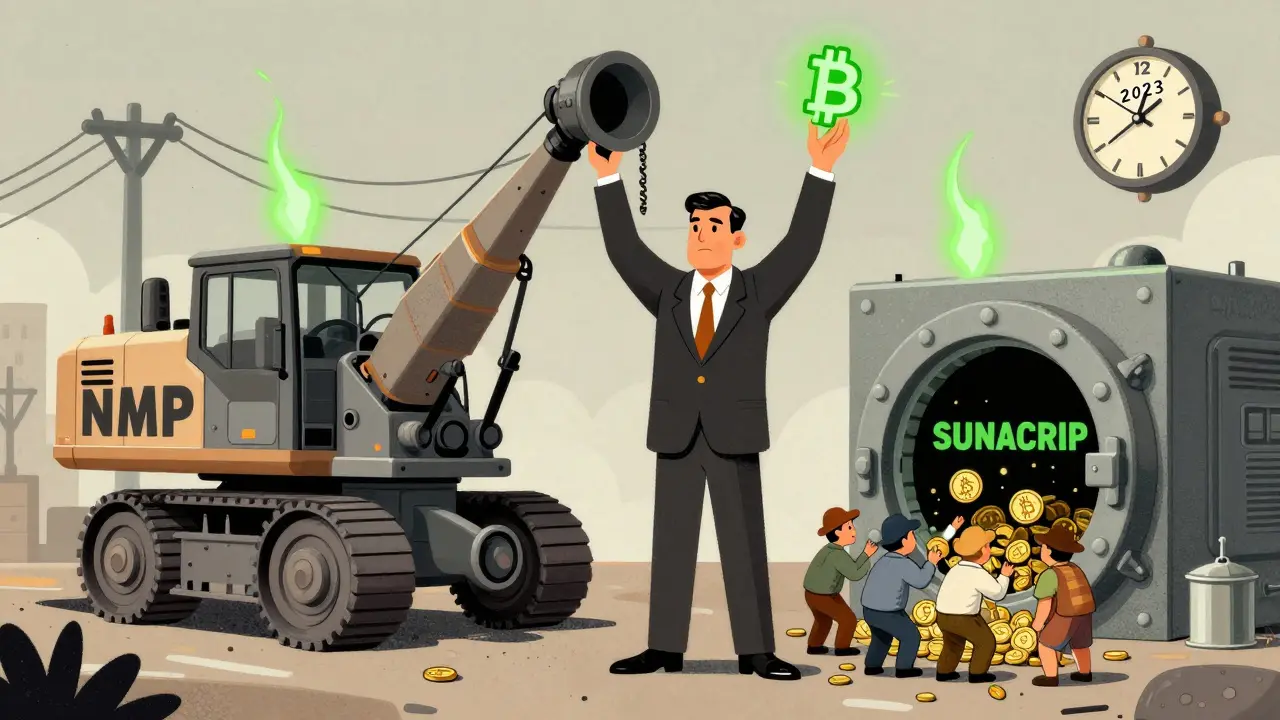
In 2018, Venezuela created SUNACRIP, the National Superintendence of Cryptocurrencies, to take direct control over all digital mining activity. This wasn’t just a tax agency-it was a full regulatory body with power to license, monitor, and shut down miners. The goal? To funnel all mining profits into state coffers and prevent private operators from keeping the gains. To operate legally, miners had to register in one of two government databases: RISEC (for service providers) or RIM (for miners). They needed to prove they had at least 500 kilowatts of power capacity, submit detailed equipment lists, and pass identity checks. The process took three to four months. And once approved, miners weren’t free to choose their own pools. They were forced into the National Mining Pool (NMP), a government-run system that distributed rewards and tracked every hash rate. The logic was simple: if the state controls the energy and the infrastructure, it controls the output. Venezuela has some of the cheapest electricity in the world-around $0.03 per kWh-thanks to massive hydroelectric dams. That should have made it a global mining hotspot. But instead of attracting private investment, the government turned it into a bureaucratic nightmare.The NMP: A Broken System
The National Mining Pool was supposed to be the backbone of Venezuela’s crypto strategy. In theory, it would ensure fair distribution of rewards, prevent fraud, and give the government a direct cut. In practice, it was unreliable. Miners reported that rewards were delayed or never arrived. Some said they mined for weeks without seeing a single Bitcoin payout. Others described constant connection drops and server crashes. One operator in Maracaibo told analysts his mining rig ran at 20% efficiency because the NMP kept losing sync with his hardware. Independent miners who bypassed the NMP saw 15-20% higher returns-until they got raided. The government didn’t just control the pool-it controlled access to power. In 2023, during a corruption probe tied to oil and mining officials, over 300 licensed mining centers were shut down overnight. No warning. No appeal. Just power cuts and sealed doors. Many of these facilities had spent months and thousands of dollars getting licensed. Now they were gone.
Energy vs. Control: The Real Conflict
Venezuela’s power grid is crumbling. Even with abundant water resources, the country suffers 40 to 60 hours of blackouts every month. Miners who didn’t have backup generators lost everything. Those who did? They paid 25% more to run diesel-powered systems just to keep their rigs alive. The government claims crypto mining uses 10% of the nation’s electricity. That sounds high-until you realize most of that power is wasted. Transmission losses, outdated transformers, and illegal connections drain more energy than all the mining rigs combined. Yet instead of fixing the grid, the government blamed miners. In May 2024, SUNACRIP announced a full ban on crypto mining, citing “excessive energy consumption.” But the real trigger wasn’t electricity use-it was a corruption scandal. The head of the crypto ministry had been arrested. His associates had been siphoning mining profits into offshore accounts. The ban was a distraction, a way to shift blame. The ban didn’t last. By August 2024, licensed operations quietly resumed. Why? Because the government still needed the dollars. Bitcoin and stablecoins are the only things keeping Venezuela’s economy from total collapse. Over 70% of Venezuelans now use crypto for daily purchases, rent, and sending money to family abroad. The state can’t afford to kill it.Regulation Without Enforcement
SUNACRIP still exists on paper. Its website still lists rules, forms, and contact details. But since March 2023, the agency has been functionally dead. Its offices are empty. Its staff has vanished. Even the private sector group CAVEMCRIP, created in 2024 to help regulate mining, has no real authority. This isn’t just incompetence-it’s chaos. Miners don’t know if they’re legal today. A facility that was approved in 2021 might be raided tomorrow. A miner who paid $10,000 for a rig could wake up to find it confiscated because “the system flagged it as unregistered.” There’s no appeals process. No hotline. No transparency. Baker McKenzie, a global law firm that tracks crypto regulations, calls Venezuela’s system “a legal fiction.” The laws are clear. The enforcement? Nonexistent. The result? A gray zone where only those with connections survive.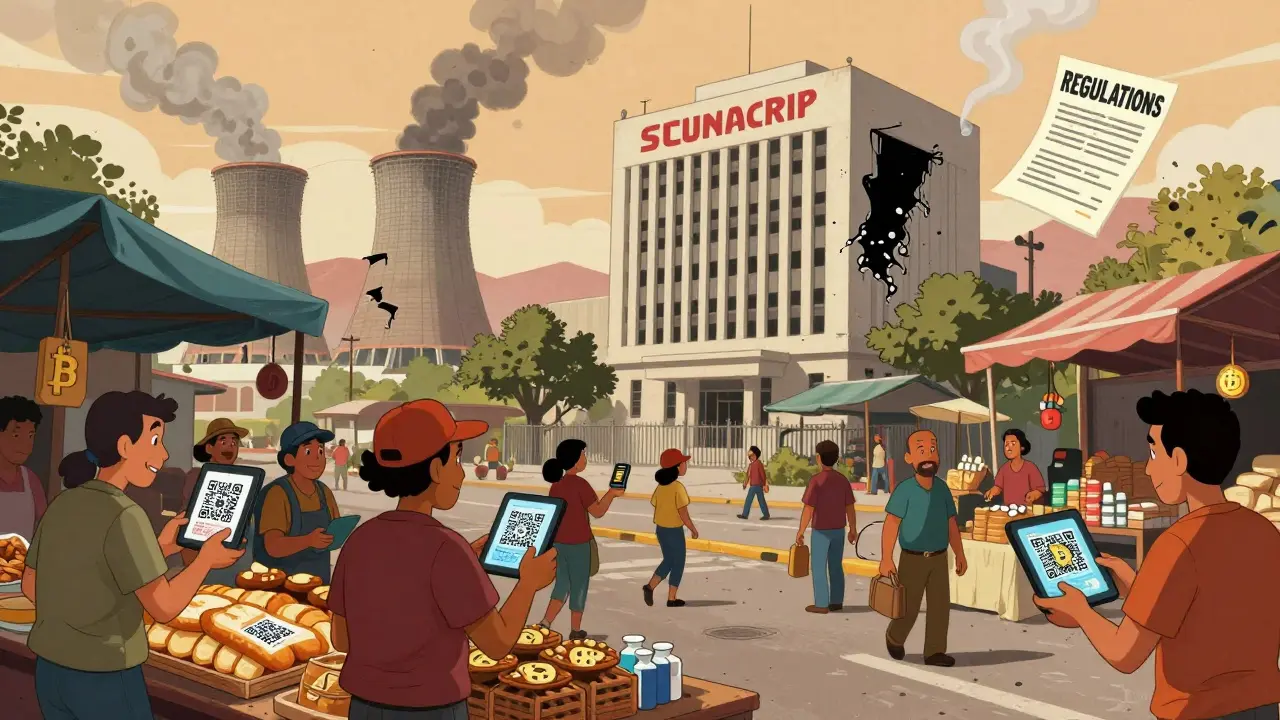
6 Comments
It’s wild how Venezuela turned a survival mechanism into a state surveillance project. Crypto wasn’t invented to be a government revenue stream-it was born out of distrust in centralized systems. Now they’re trying to own the very thing that lets people eat. The irony is thick enough to spread on toast. You can’t control something that exists outside your borders, especially when your own grid can’t keep a lightbulb on. The state wants to be the middleman, but middlemen need trust, and trust is the one thing they’ve burned to ash.
What’s left isn’t mining-it’s digital scavenging. People aren’t HODLing for Lambo dreams; they’re HODLing so their kid doesn’t go to bed hungry. The government’s crackdowns aren’t about energy-they’re about power. And power, in this case, means controlling the only thing keeping the economy from collapsing into a black hole.
It’s not capitalism. It’s not socialism. It’s just survival with a blockchain ledger.
Oh wow, the Venezuelan government actually did something stupid for once? Shocking. I mean, who knew that putting a bureaucracy in charge of a decentralized technology would end in disaster? Did they also try to regulate oxygen next? ‘Sorry, you need a permit to breathe. Here’s Form 7B-Δ: Cryptocurrency Respiratory Access Application.’
And let’s not forget the ‘National Mining Pool’-because nothing says ‘innovation’ like a state-run monopoly that can’t even pay you on time. Meanwhile, miners in Texas are using flared gas and making bank. But hey, at least Venezuela’s power outages are a great excuse to stop doing math.
Also, 70% of the population uses crypto? That’s not a policy failure-that’s a referendum. The people voted with their wallets. The government just hasn’t accepted the results yet.
It’s heartbreaking to see how deeply systemic failure can warp even the most liberating technologies. Cryptocurrency was meant to empower the unbanked, to give agency to those excluded from traditional financial systems. In Venezuela, that promise was hijacked-not by malicious intent alone, but by the crushing weight of institutional collapse. The state didn’t just fail to regulate; it failed to understand. The miners aren’t the problem. The grid is. The corruption is. The lack of transparency is.
What’s remarkable is how the people adapted. They didn’t wait for permission. They didn’t protest in the streets-they just started using Bitcoin to buy milk. That’s not rebellion. That’s resilience. And the government, in its bureaucratic fog, still hasn’t realized that you can’t control what people need to survive.
Perhaps the real lesson here isn’t about crypto, but about governance: when institutions lose legitimacy, people create their own. And sometimes, those alternatives are more just, more efficient, and more human than the systems they replace.
So let me get this straight-Venezuela’s government is mad because their people are using crypto to survive, but they won’t fix the power grid? Classic socialist incompetence. You think we’re gonna send aid to fix their electricity so they can keep stealing Bitcoin? No. Let them rot. They had a chance to be a functioning country and chose to print money like Monopoly.
And now they want to tax the only thing keeping their citizens alive? Give me a break. If they actually cared about energy, they’d fix the damn transformers. But nope-better to shut down miners and blame the victims. That’s the real Venezuelan dream: poverty with paperwork.
My cousin’s a miner in Colombia. He told me about guys in Venezuela just running rigs in their garages with solar panels and car batteries. No paperwork. No NMP. Just vibes and diesel. They don’t care about the laws-they care about feeding their families. The state’s rules? They’re just background noise. Like traffic laws in a city with no cops.
And honestly? Good for them. If the government wants to be the middleman, fine. But don’t act surprised when the middleman gets cut out.
One must pause to reflect upon the profound epistemological paradox at play here: a state, ostensibly designed to provide order and stability, has paradoxically become the very architect of its own obsolescence by attempting to co-opt a technology inherently designed to circumvent such centralized authority. The National Mining Pool is not merely inefficient-it is ontologically incoherent. One cannot command decentralization; one can only suppress it, and in doing so, reveal the fragility of the state’s legitimacy.
Furthermore, the assertion that 70% of the population uses crypto for daily transactions is not evidence of innovation-it is a damning indictment of institutional failure. When a citizenry must rely on cryptographic ledgers to procure bread, the state has abdicated its most fundamental duty: the provision of economic security.
It is no surprise, then, that SUNACRIP’s offices stand empty. The bureaucracy has been rendered redundant by the very people it sought to control. The future of Venezuela does not lie in state-run mining pools, but in the quiet, defiant autonomy of its citizens-who, in the absence of governance, have created their own.