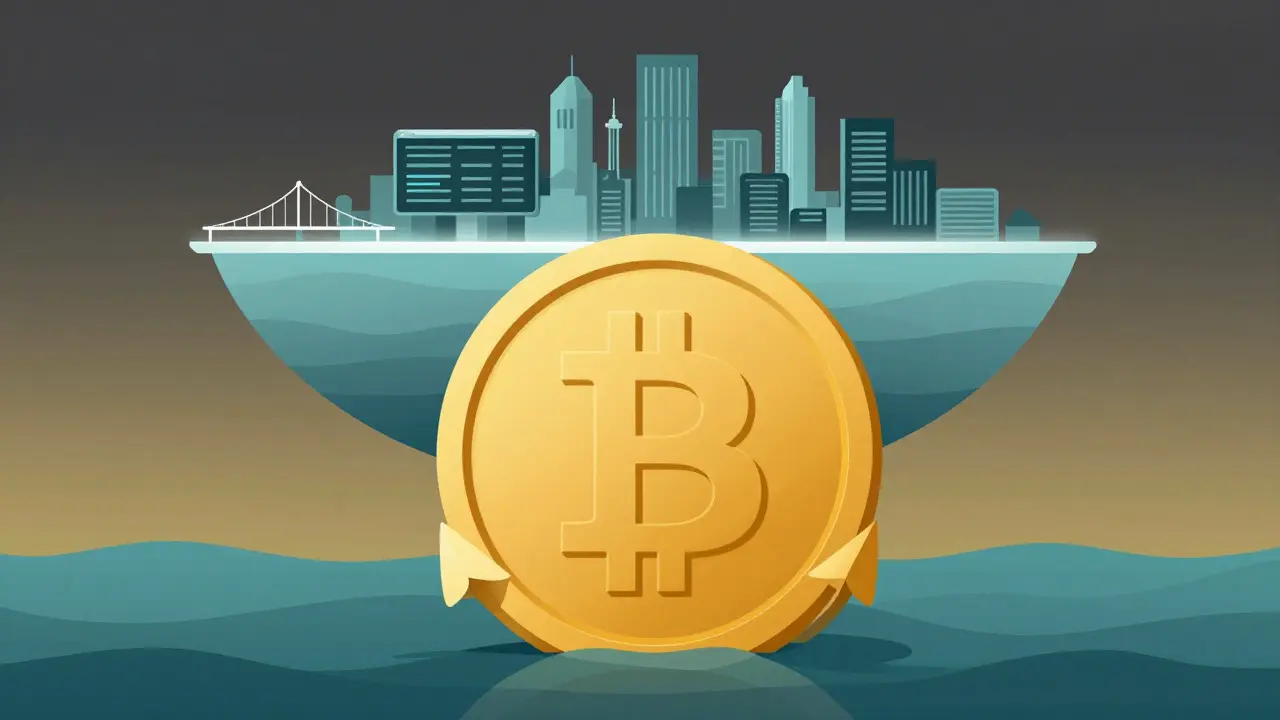
How Stackswap Actually Works
Unlike a traditional exchange where a company matches buyers and sellers, Stackswap uses an Automated Market Maker (or AMM), which is a protocol that uses liquidity pools to allow assets to be exchanged automatically without a middleman. Here is the catch: it doesn't run directly on the Bitcoin mainnet (because Bitcoin can't handle complex smart contracts natively). Instead, it lives on the Stacks blockchain, which acts as a bridge. This setup allows Stackswap to inherit Bitcoin's security while providing the tools needed for swapping tokens and providing liquidity. To get started, you can't just use any wallet; you'll need the Hiro Wallet, as it's the primary gateway for interacting with the Stacks ecosystem.The Role of the STSW Token
Every major DEX has a heart, and for this platform, it's the STSW token. This isn't just another speculative coin; it has three practical jobs:- Governance: If you hold STSW, you get a say in how the protocol evolves.
- Staking: Users can lock up their tokens to earn rewards, helping secure the network.
- Incentives: The protocol uses the token to attract liquidity providers who keep the markets running.
Performance and Technical Edge
One thing that stands out about Stackswap is its use of AI. According to reports from Blockchain-Ads.com, the platform integrates AI models to optimize performance. In the world of DEXs, this usually means better routing for trades and more efficient liquidity management, which helps reduce "slippage" (the difference between the expected price of a trade and the price at which the trade is executed). When you compare it to Ethereum-based platforms, the cost is a big win. We've all seen gas fees on Ethereum spike during a bull run, making small trades impossible. Stackswap, by leveraging the Stacks Layer-2 solution, generally keeps transaction costs much lower while still settling the finality of the trade through Bitcoin.
Stackswap vs. The Heavy Hitters
It is a bit unfair to compare a niche Bitcoin DeFi tool to a behemoth like Uniswap, but it helps to see where it stands in the market. Stackswap isn't trying to be everything to everyone; it's trying to be the best for Bitcoin DeFi.| Feature | Stackswap | Uniswap / PancakeSwap |
|---|---|---|
| Primary Security | Bitcoin-anchored | Ethereum/BNB Chain |
| TVL (Approx) | $406 Million | $1.8 Billion - $6.2 Billion |
| Asset Variety | Stacks Ecosystem Only | Multi-chain / Global |
| Onboarding | Hiro Wallet Required | MetaMask / TrustWallet |
| Specialization | #1 for Bitcoin DeFi | General Purpose |
The Trade-offs: What You Need to Watch Out For
No platform is perfect. The biggest hurdle for Stackswap is its "walled garden." Because it operates exclusively within the Stacks ecosystem, you can't just swap an Ethereum-based token for a Bitcoin-based token in one click. You are limited to assets that are anchored to Bitcoin via Stacks. Then there's the adoption risk. Stackswap's success is essentially a bet on the Stacks blockchain. If more people move toward Stacks for smart contracts, Stackswap wins. If they don't, the liquidity might dry up. For instance, analysts have noted that Stacks can be volatile-sometimes swinging nearly 30% in a single month. If the base layer struggles, the DEX on top of it feels the heat.
User Experience and Onboarding
If you are a pro DeFi user, you'll find the interface intuitive. However, for a beginner, there's a steeper learning curve. You can't just sign up with an email; you have to understand how to manage a non-custodial wallet, handle seed phrases, and keep a balance of STX (the native Stacks currency) to pay for transaction fees. Unlike centralized giants like Coinbase, there is no 24/7 customer support ticket system. If you lose your keys or send tokens to the wrong address, there is no one to call. Your support system consists of the community Discord and GitHub. This is standard for a permissionless protocol, but it's a shock for those moving from traditional finance.Final Verdict: Who Is This For?
Stackswap is a powerhouse for a very specific type of investor. If you are a "Bitcoin Maximalist" who wants to earn yield or trade tokens without leaving the security umbrella of the most secure network in the world, this is your playground. It's a high-conviction play on the growth of Bitcoin-based smart contracts. However, if you're looking for a one-stop-shop for every meme coin across ten different chains, you'll find Stackswap too restrictive. It's a specialized tool, not a general-purpose Swiss Army knife. The $406 million TVL shows there is real institutional interest, but the retail crowd is still catching on.Is Stackswap safe to use?
Stackswap is built on the Stacks blockchain, which anchors its security to Bitcoin. While the underlying architecture is highly secure, the platform is permissionless. This means anyone can list a token, and some of those tokens may be scams or high-risk. The security of the protocol is strong, but the security of the individual tokens you trade varies wildly.
Do I need STX to use Stackswap?
Yes. Since Stackswap operates on the Stacks blockchain, you must have STX tokens in your Hiro Wallet to pay for the "gas" or transaction fees required to execute swaps and provide liquidity.
What wallet is required for Stackswap?
The primary requirement is the Hiro Wallet. This wallet is specifically designed for the Stacks ecosystem and is necessary to interact with the Stackswap interface and manage your STX and STSW assets.
How does STSW differ from other DEX tokens?
While many DEX tokens are purely for speculation, STSW is deeply integrated into the Stacks-Bitcoin bridge. It facilitates governance, provides staking rewards for network participants, and acts as an incentive for liquidity providers specifically within the Bitcoin DeFi niche.
Can I trade Ethereum tokens on Stackswap?
No. Stackswap is not a multi-chain DEX. It operates exclusively within the Stacks ecosystem. To trade Ethereum tokens, you would need to use a different platform or a cross-chain bridge to move those assets into the Stacks environment.