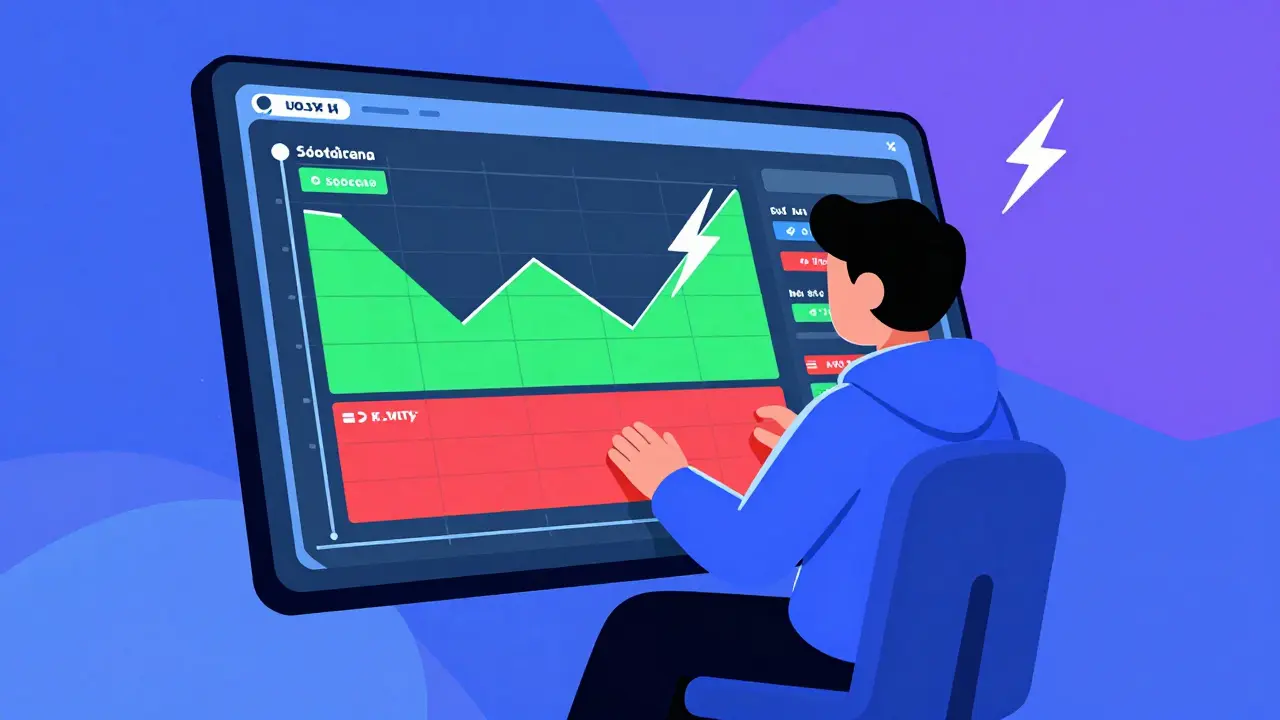
Imagine logging into a high-speed trading platform, executing a trade in milliseconds for less than a penny, and keeping full control of your funds. That was the promise of Serum DEX, a decentralized exchange built on the Solana blockchain that uses an order book model instead of automated market makers. But if you’ve been following crypto news, you know Serum’s story isn’t just about speed. It’s also about survival.
In November 2022, the collapse of FTX-a centralized exchange that held upgrade authority over Serum-effectively killed the original protocol. The community didn’t give up. They forked the code, rebuilt governance, and kept the engine running. Today, in mid-2026, Serum is back. But is it safe? Is it fast? And should you actually use it?
This review cuts through the hype and the fear. We’ll look at how Serum works now, what changed after the FTX fallout, and whether it still holds its ground against competitors like Raydium, Uniswap, and newer order-book DEXes. If you’re thinking about trading on Serum, read this first.
How Serum DEX Works (And Why It’s Different)
Most decentralized exchanges (DEXes) use something called an Automated Market Maker (AMM). Think of Uniswap or PancakeSwap. You swap tokens against a liquidity pool, and the price adjusts automatically based on supply and demand. It’s simple, but it can suffer from slippage and impermanent loss for providers.
Serum does things differently. It uses a central limit order book (CLOB), just like Binance or Coinbase Pro. You place bids and asks. Orders match when prices align. This gives you professional-grade control: limit orders, stop-losses, and real-time depth charts. But unlike those centralized giants, no company holds your keys. Your assets stay in your wallet until the moment of trade execution.
Here’s why that matters:
- Speed: Built on Solana, Serum handles 50,000-65,000 transactions per second (TPS). Compare that to Ethereum’s ~15 TPS without Layer-2 solutions. Trades execute almost instantly.
- Fees: Serum charges zero platform fees. You only pay Solana network gas, which averages $0.00025 per transaction as of Q1 2025. Even during peak congestion, costs rarely exceed $0.01.
- Liquidity: Serum integrates with Raydium, a hybrid AMM/order-book DEX that feeds liquidity into Serum’s order book. This creates deeper markets for major Solana tokens like SOL, USDC, and wrapped BTC.
If you’re used to swapping tokens on MetaMask with high gas fees and slow confirmations, Serum feels like stepping into a Ferrari. But speed comes with trade-offs-and one of them is complexity.
The FTX Collapse: What Happened to Serum?
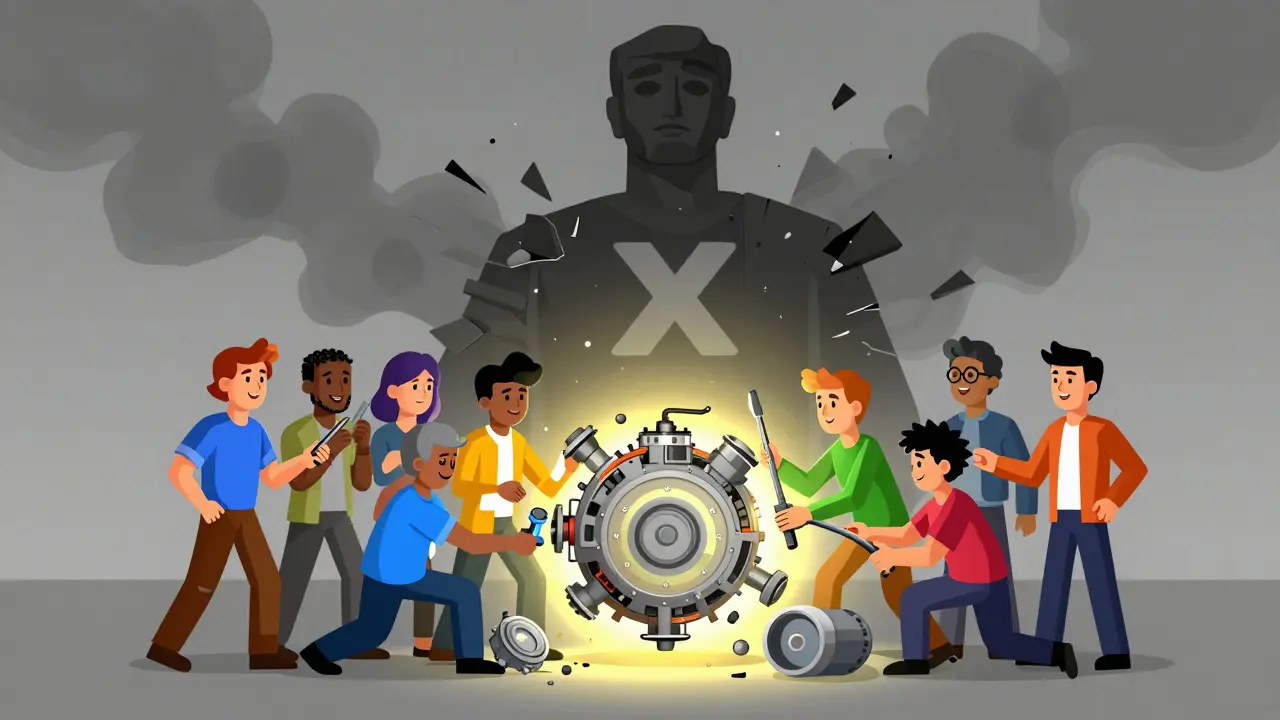
You can’t talk about Serum without addressing the elephant in the room: FTX. When Sam Bankman-Fried’s exchange collapsed in November 2022, it took Serum down with it. Why? Because FTX held the “upgrade authority” for the Serum protocol. In plain English, they could pause or modify the smart contracts at any time. That’s not very decentralized.
When FTX went bankrupt, regulators froze its assets-including the private keys needed to maintain Serum. Trading stopped. Users panicked. Many thought their tokens were gone forever.
But here’s where it gets interesting. The Solana community stepped up. Developers forked the Serum codebase, removed FTX’s control, and launched a new version under community governance. By early 2023, Serum was operational again. Not the same Serum-but close enough.
So, is today’s Serum decentralized? Mostly. Governance is now distributed among token holders and core contributors. There’s no single point of failure. But the shadow of FTX lingers, and some users remain skeptical.
Serum vs. Competitors: Where Does It Stand in 2026?
Let’s compare Serum to other popular DEXes. We’ll look at speed, fees, usability, and security.
| Feature | Serum DEX | Uniswap (Ethereum) | Raydium (Solana) | PancakeSwap (BNB Chain) |
|---|---|---|---|---|
| Model | Order Book | AMM | Hybrid (AMM + Order Book) | AMM |
| TPS | 50,000-65,000 | ~15 (L1) | 50,000-65,000 | ~100 |
| Avg. Fee | $0.00025 (gas only) | $2-$50+ (gas) | $0.00025 (gas only) | 0.25% trading fee |
| Beginner Friendly? | No (steep learning curve) | Moderate | Moderate | Yes |
| Governance | Community-led (post-fork) | DAO-based | Team-led | Team-led |
| Security Risk | Low (but depends on Solana uptime) | Low (battle-tested) | Medium (newer tech) | Low |
Key takeaways:
- Serum wins on speed and cost if you’re trading frequently. No trading fees mean more profit for scalpers and day traders.
- Uniswap remains the gold standard for security and has broader token support across multiple chains.
- Raydium is Serum’s closest rival on Solana, offering similar speed but with a simpler interface for beginners.
- PancakeSwap is best for casual users who don’t mind paying a small fee for ease of use.
If you’re an advanced trader looking for precision and low costs, Serum is hard to beat. If you’re new to DeFi, you might want to start elsewhere.
Is Serum Safe in 2026?
Safety in DeFi means three things: code security, governance transparency, and network reliability. Let’s break them down.
Code Security
Since the 2022 fork, Serum’s code has been audited by multiple firms, including Trail of Bits and CertiK. No critical vulnerabilities have been found since then. The removal of FTX’s upgrade authority eliminated the biggest risk factor. Today, changes require community approval via SRM token voting.
Governance Transparency
Serum’s governance is still evolving. As of Q1 2025, there’s no formal DAO structure yet. Decisions are made by a council of developers and large SRM holders. This is better than FTX’s unilateral control, but not fully decentralized. Expect improvements in 2026 as planned governance upgrades roll out.
Network Reliability
Serum depends entirely on Solana’s uptime. Solana has had outages in the past (notably in 2021 and 2022), though stability has improved significantly. As of 2025, Solana boasts 99.9% uptime. Still, if Solana goes down, Serum goes down. That’s a risk you need to accept.
Bottom line: Serum is safer now than it was in 2022, but it’s not risk-free. Always do your own research (DYOR).
How to Use Serum DEX: A Quick Start Guide
Getting started with Serum takes a bit more effort than signing up for Binance. Here’s what you need to do:
- Set up a Solana wallet. Phantom is the most popular choice. Download it from phantom.app or install the browser extension. Create a new wallet and write down your seed phrase securely.
- Fund your wallet. Buy SOL on a centralized exchange (like Coinbase or Kraken) and send it to your Phantom wallet address. You’ll need SOL to pay for gas fees.
- Connect to Serum. Go to serum.dev and click “Connect Wallet.” Choose Phantom and approve the connection.
- Add tokens. Serum doesn’t auto-detect all tokens. For major ones like USDC or mSOL, they appear automatically. For others, you may need to paste the contract address manually.
- Start trading. Navigate to the “Trade” tab. Select a pair (e.g., SOL/USDC). Place a limit order or market order. Confirm the transaction in Phantom.
Pro tip: If you’re unfamiliar with Solana wallets, spend time testing with small amounts first. Mistakes happen, especially when dealing with SPL tokens.
Common Issues & Troubleshooting
Even experienced traders run into problems on Serum. Here are the most common issues and how to fix them:
- Transaction fails during congestion. Solana occasionally experiences high load. Wait 5-10 minutes and retry. Avoid trading during major announcements or meme coin pumps.
- Token doesn’t show up. Paste the official contract address from Solscan.io into the “Add Token” field. Never copy addresses from random Discord messages.
- Wallet disconnects randomly. Clear your browser cache or try a different device. Phantom sometimes glitches on older browsers.
- Slippage too high. Increase your slippage tolerance in settings (default is 0.5%). For volatile tokens, set it to 1-2%.
If all else fails, join Serum’s Discord server (38,500+ members as of Q1 2025). Community support is active and helpful, though responses can be technical.
Who Should Use Serum DEX?
Serum isn’t for everyone. Here’s who benefits most:
- Advanced traders who need limit orders, real-time charts, and low fees.
- Solana ecosystem enthusiasts who already hold SOL and want to trade native tokens.
- DeFi power users comfortable with wallets, gas fees, and manual token additions.
Who should avoid it?
- Beginners who prefer one-click swaps and customer support chatbots.
- Multi-chain investors who trade tokens on Ethereum, Polygon, and Arbitrum regularly.
- Risk-averse users uncomfortable with potential network outages or governance uncertainty.
If you fall into the “avoid” category, consider starting with Raydium or Uniswap instead. Once you’re comfortable, come back to Serum.
The Future of Serum: What’s Next?
Serum’s roadmap for 2026 includes several key developments:
- Decentralized Governance Council: A formal DAO structure will replace the current ad-hoc decision-making process. Expected launch: Q3 2026.
- Cross-Chain Messaging: Direct bridging from Ethereum and Bitcoin to Serum without intermediaries. Already partially live as of January 2025.
- Mobile App Enhancement: Improved UI/UX for iOS and Android users. Beta testing began in late 2025.
- Solana Compression Integration: Leveraging Solana’s new compression tech to reduce transaction costs even further. Target: late 2026.
Analysts at Delphi Digital estimate a 65% chance of Serum surviving the next three years. The main risks? Continued competition from Hyperliquid and Drift Protocol, plus any major Solana outages.
But if Serum executes its roadmap, it could become the go-to DEX for serious traders on Solana. The technology is solid. The community is resilient. The question is whether governance can keep up.
Is Serum DEX still operational in 2026?
Yes. After being defunct following the FTX collapse in 2022, Serum was revived by a community fork. It operates under decentralized governance and processes around $180 million in daily trading volume as of Q1 2025.
Does Serum charge trading fees?
No. Serum does not charge any platform trading fees. Users only pay minimal Solana network gas fees, averaging $0.00025 per transaction.
What happened to Serum after FTX collapsed?
FTX held upgrade authority over Serum’s smart contracts. When FTX went bankrupt, regulators froze those keys, halting Serum operations. The community later forked the code, removed FTX’s control, and relaunched the platform under decentralized governance.
Can I use Serum with my Ethereum wallet?
Not directly. Serum runs on Solana, so you need a Solana-compatible wallet like Phantom. However, you can bridge assets from Ethereum to Solana using cross-chain bridges, then trade on Serum.
Is Serum safer than Uniswap?
Safety depends on context. Uniswap has a longer track record and broader multi-chain support. Serum offers faster speeds and lower fees but relies on Solana’s network stability. Both are considered secure, but Serum carries higher complexity risks for beginners.
What is the SRM token used for?
SRM is Serum’s governance token. Holders can vote on protocol upgrades and participate in future DAO decisions. Additionally, 68% of fees collected on the exchange are used to buy back and burn SRM tokens, increasing scarcity over time.
Why is Serum faster than other DEXes?
Serum is built on Solana, which supports 50,000-65,000 transactions per second. Most Ethereum-based DEXes handle only ~15 TPS without Layer-2 scaling solutions. This makes Serum ideal for high-frequency trading with minimal slippage.
Should I invest in SRM token?
Investing in SRM carries significant risk. While the buy-and-burn mechanism increases scarcity, the token’s value is tied to Serum’s adoption and Solana’s performance. Always conduct thorough research and never invest more than you can afford to lose.
9 Comments
Look, I get the hype around Solana speed but you have to respect the engineering resilience here. The community didn't just patch a hole; they rebuilt the foundation while the house was still burning down. It’s a testament to open-source philosophy that Serum survived when FTX turned into ash. Most protocols would have died with their central authority. This fork proves that decentralization isn’t just marketing fluff; it’s an insurance policy against human greed and incompetence. If you’re trading on Ethereum mainnet paying $40 in gas for a simple swap, you’re basically donating to miners who don’t care about your PnL. Serum gives you institutional-grade tools without the institutional overhead. Just make sure your wallet is secure because no one is coming to save you if you lose your keys.
You seem to be overlooking the fundamental governance risks that persist despite the fork. 🧐 While the code may be audited, the decision-making process remains opaque and heavily influenced by large SRM holders rather than a true democratic DAO structure. This creates a centralized bottleneck that contradicts the very ethos of decentralized finance. Furthermore, relying on Solana’s network stability is a precarious strategy given its historical propensity for outages during high-volume events. One major outage could wipe out millions in pending trades, leaving users with no recourse. The comparison to Uniswap ignores the battle-tested security of Ethereum’s broader ecosystem. Proceed with extreme caution. ⚠️
Stop crying about governance like it’s some moral failing. It works. That’s what matters. You want perfect democracy? Go vote in a local election and see how fast that moves. Here, decisions get made, upgrades happen, and we keep trading. The fact that you’re worried about 'opaque' processes shows you’ve never actually built anything or run a protocol. We moved past the FTX trauma years ago. If you can’t handle the risk of a non-DAO structure, stick to your safe, slow, expensive Ethereum swaps. Don’t bring your fragility into our thread. We are building the future of high-frequency trading, not a kindergarten circle time. Get over it.
I think there's a middle ground here folks. Jon makes a valid point about efficiency, but Fiona has a fair concern about transparency. For those new to this, remember that Serum is really only worth using if you understand order books. If you're used to AMMs, the learning curve is steep. I suggest starting with small amounts to get comfortable with the interface before committing significant capital. The integration with Raydium helps liquidity, but it also adds another layer of complexity to monitor. Take your time, read the docs, and don't let FUD or hype drive your decisions.
The article conveniently omits the severe implications of the lack of formal DAO structures until Q3 2026! This delay is unacceptable for a protocol claiming decentralization. Moreover, the reliance on Solana's uptime is a critical failure point that cannot be overstated. Users must recognize that 'community governance' often devolves into plutocracy where large token holders dictate terms. The buy-and-burn mechanism for SRM is merely a speculative pump designed to incentivize holding rather than using the platform. Do not fall for the narrative of safety; audit reports do not guarantee immunity from exploits or rug pulls. Exercise extreme diligence.!!!
It is frankly amusing to watch retail traders debate the nuances of CLOB versus AMM models as if they possess any real understanding of market microstructure. Serum’s value proposition is irrelevant to the majority of users who lack the sophistication to utilize limit orders effectively. The platform caters to a niche demographic of quant traders and bots, not the casual speculator. Your concerns about fees are trivial compared to the opportunity cost of slippage on inefficient AMMs. However, expecting a robust DAO structure from a project born out of a bankruptcy estate is naive at best. The elitism of the developer community ensures that only those with technical acumen will thrive here. Everyone else is merely noise.
Why bother reading all this? It's the same old story. Fork, fix, forget. Nothing changes. The tech is cool but the people are always the problem. I'm sticking to my savings account. At least the bank doesn't crash when someone tweets about a meme coin. Good luck to those jumping in though. Probably going to end up losing everything anyway.
It is important to remain calm and informed. The transition post-FTX was indeed challenging, yet the community demonstrated remarkable resilience. We should appreciate the progress made in security audits and governance improvements. Patience is key as the DAO structure matures. Let us support each other in navigating these complexities with wisdom and care.
honestly the ui is still kinda clunky but i love that i can set stop losses without paying a fortune in fees. it feels like using a pro tool even if im just a regular guy trying to trade sol. the raydium integration is smart because it keeps the depth good. yeah solana goes down sometimes but when it works it flies. just dont put all your eggs in one basket obviously. but for active trading serum is hard to beat right now on solana. the future looks bright if they nail the dao launch next year. lets hope so.