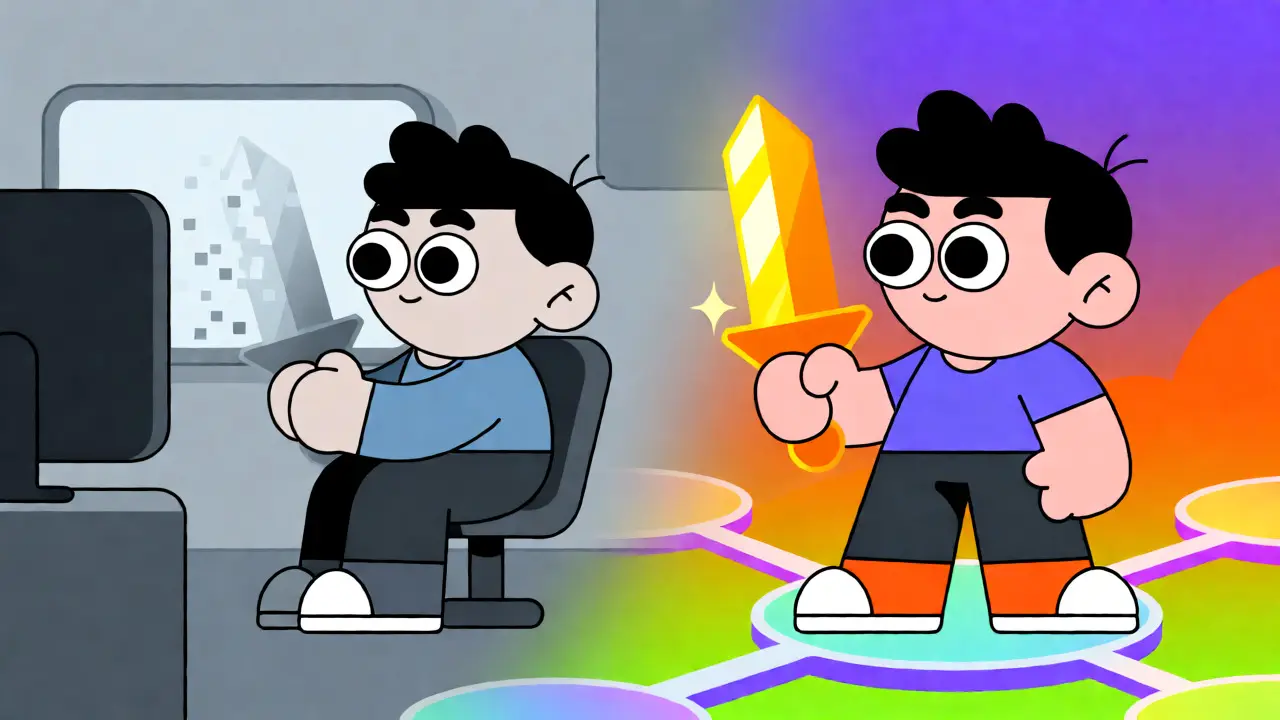
You grind for hours in a traditional video game. You level up your character, unlock rare skins, and maybe even beat the final boss. Then you close the app. What do you have to show for it? A digital file on a server owned by a corporation that can wipe it out tomorrow. Play-to-Earn (P2E) gaming flips this script entirely. It’s not just about fun; it’s about ownership. By leveraging blockchain technology and smart contracts, P2E models allow players to earn real-world value through gameplay. But how does the money actually flow? Is it sustainable, or is it just another hype cycle?
The Core Shift: From Consumer to Stakeholder
In traditional gaming economics, the developer captures all the value. You buy the game, you buy the DLC, you pay for the subscription. The assets you collect are licensed, not owned. In P2E, the economic relationship changes. Players become stakeholders. When you play, you aren’t just consuming content; you’re providing labor and liquidity that keeps the game’s economy alive. This model relies on three pillars: Non-Fungible Tokens (NFTs) for asset ownership, utility tokens for in-game currency, and decentralized marketplaces for trading.
Think of it like a small nation. The developers create the laws (smart contracts) and the infrastructure (the blockchain). The players provide the workforce and trade goods. If the economy thrives, both sides win. If inflation runs wild or new player growth stalls, everyone feels the pain. Understanding this dynamic is crucial before you invest time or capital into any P2E title.
How Value Is Created and Captured
So, where does the cash come from? It doesn’t appear out of thin air. In healthy P2E ecosystems, value is generated through multiple streams. First, there’s the entry cost. Many games require you to purchase an initial NFT-like a character in Axie Infinity or land in The Sandbox. This buys you access and provides immediate revenue to developers and early adopters.
Once inside, you earn utility tokens by completing quests, winning battles, or crafting items. These tokens have market value because other players need them to progress or upgrade their own assets. This creates a circular economy. You sell your earned tokens to new players who want to skip the grind. Those new players bring fresh capital into the system. As long as new players keep joining, the price of these tokens remains stable or grows. But what happens when the music stops?
| Feature | Traditional Gaming | Play-to-Earn (P2E) |
|---|---|---|
| Asset Ownership | Licensed to player | True ownership via NFTs |
| Value Flow | Player → Developer | Bidirectional (Player ↔ Player ↔ Developer) |
| Revenue Source | Sales, Subscriptions, Ads | Transaction Fees, Token Sales, NFT Royalties |
| Exit Strategy | Stop playing | Sell assets on open markets |
| Risk Factor | Time spent | Capital invested + Market volatility |
The Developer’s Cut: Smart Contracts and Royalties
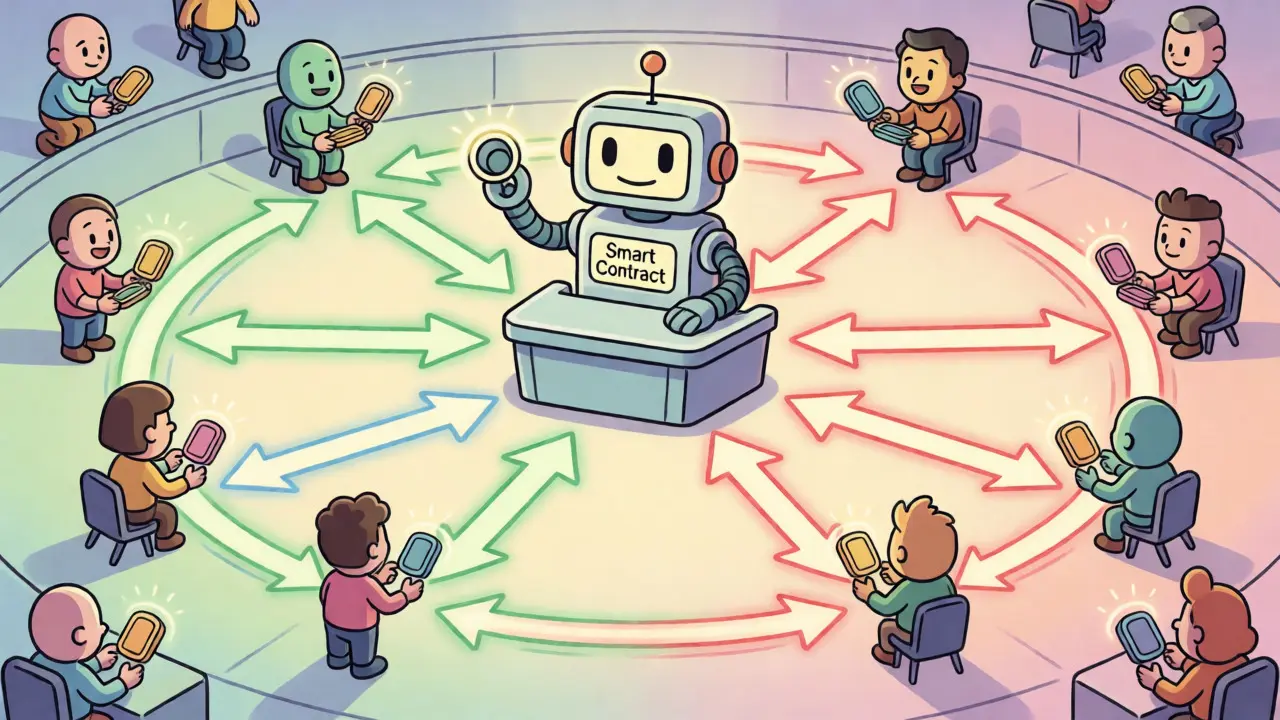
Developers aren’t left out of the loop. They engineer the economy to ensure they profit from secondary sales. Every time an NFT changes hands on a marketplace, a royalty fee is automatically deducted by the smart contract. This might be 5% or 10%. If a rare sword sells for $100, the original creator gets $5 without lifting a finger. This incentivizes developers to build engaging communities rather than just selling a one-time product.
Additionally, many projects hold a significant portion of their total token supply. As demand for the game rises, the value of these held tokens increases. This aligns developer incentives with player success. If the game dies, the developer’s holdings become worthless too. This shared risk is a key differentiator from Web2 studios, which often pivot away from older titles regardless of community sentiment.
Sustainability Challenges: The Ponzi Question
Critics often label P2E as a Ponzi scheme. Is that fair? Sometimes. If a game relies solely on new player deposits to pay old players’ rewards, it’s unsustainable. Once new user growth slows, token prices crash. We saw this clearly in late 2021 and 2022. Many early P2E titles collapsed because their economies were designed for infinite growth in a finite world.
To survive, games must introduce "faucets" and "sinks." Faucets release tokens into the economy (rewards). Sinks remove tokens from circulation (repair costs, breeding fees, cosmetic purchases). A healthy economy balances these. For example, if breeding a new creature costs 100 tokens, but only 50 are minted per day, scarcity drives value. If costs are too low, inflation destroys purchasing power. Successful projects constantly tweak these parameters based on data. They treat their game economy like a central bank manages interest rates.
Barriers to Entry and Hidden Costs
Don’t let the word "free" fool you. While some games offer free-to-play modes, serious earning usually requires upfront investment. You might need to buy a starter pack for $50 or rent assets from a guild. Beyond the sticker price, consider gas fees. These are transaction costs paid to the blockchain network. On Ethereum, gas fees can eat up small profits. That’s why many P2E games have migrated to Layer-2 solutions like Polygon or sidechains like Ronin to lower costs.
There’s also the learning curve. You need to understand wallets, private keys, and decentralized exchanges. One wrong click can send your funds to the void. Financial literacy is now part of gaming literacy. You’re not just a gamer; you’re a portfolio manager. If you can’t track your ROI (Return on Investment), you’re likely losing money despite having fun.
The Future: Hybrid Models and Mainstream Adoption
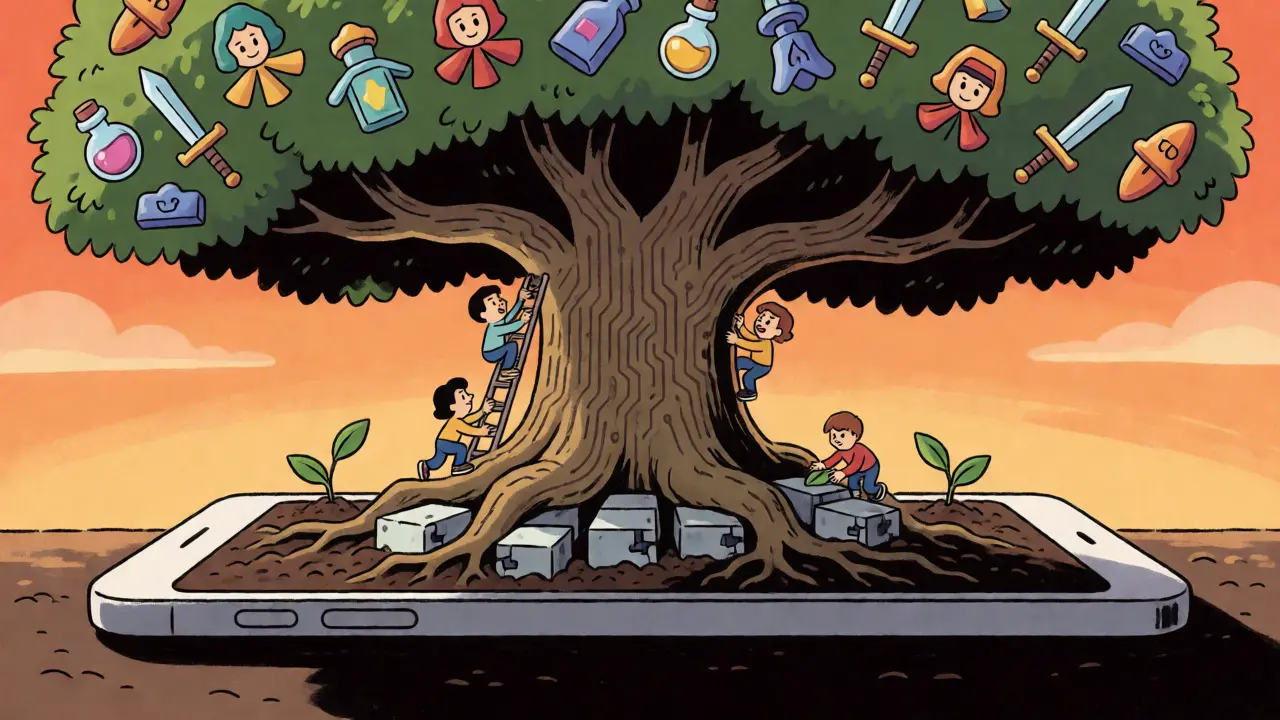
The pure "earn-first" model is evolving. Developers realize that if the game isn’t fun, people won’t stay after the money dries up. We’re seeing a shift toward "Play-and-Earn," where entertainment comes first, and earnings are a bonus. Titles like Illuvium focus on AAA-quality graphics and gameplay, using blockchain subtly in the background for asset trading.
Regulatory clarity will also shape the future. In the US, the SEC is still determining whether certain game tokens are securities. This uncertainty scares off institutional investors. However, as major brands like Ubisoft and Square Enix enter the space, legitimacy grows. The sector is projected to reach $6.3 billion by 2031, according to recent industry analysis. That’s not just noise; it’s a maturing market finding its footing.
Key Takeaways
- Ownership is Real: Your assets exist on-chain, not just on a company server.
- Economy Balance is Critical: Look for games with clear mechanisms to burn tokens and control inflation.
- Fees Matter: High gas fees or steep royalty cuts can destroy thin margins.
- Fun Comes First: Sustainable P2E games prioritize gameplay quality over speculative token value.
- Risk is High: Treat P2E investments as high-risk venture capital, not savings accounts.
Is Play-to-Earn gaming profitable for casual players?
Generally, no. Casual players often struggle to cover their initial investment and time costs. Profitability usually favors dedicated players who optimize strategies, understand market trends, and invest significant time. For most casual gamers, the earnings are negligible compared to the effort required.
What happens if I stop playing a P2E game?
You retain ownership of your NFTs and tokens. You can sell them on secondary marketplaces like OpenSea or internal game markets. However, the resale value depends on the game's active player base. If the community leaves, your assets may lose most of their value, similar to stocks in a dying company.
Are P2E games safe from hacking?
Blockchain itself is secure, but smart contracts can have bugs. Additionally, users are vulnerable to phishing scams and wallet theft. Always use hardware wallets for large amounts and verify official links carefully. Security is a shared responsibility between the protocol developers and the user.
Do I need expensive hardware to play P2E games?
Not necessarily. Many P2E games run on mobile devices or standard PCs. The complexity lies in the software setup (wallets, browsers) rather than hardware specs. However, high-end blockchain games with complex 3D graphics may require better GPUs, similar to traditional AAA titles.
How do taxes apply to P2E earnings?
In many jurisdictions, including the US, cryptocurrency received as income is taxable at its fair market value when received. Selling NFTs for profit triggers capital gains tax. Rules vary by country, so consult a tax professional familiar with crypto assets to avoid compliance issues.