Remember the summer of 2021? It was the golden era of crypto airdrops. If you were active on CoinMarketCap back then, you might have seen an opportunity involving Peanut.Trade, operating under the ticker symbol NUX. Many users are now searching for details on this specific campaign, wondering if they missed out, how to claim rewards, or what happened to the project since that time.
The short answer is that the primary Peanut.NUX airdrop concluded in August 2021. There are no active, large-scale public airdrops for NUX running today. However, understanding the mechanics of that past event, the technology behind Peanut, and the current state of the token provides crucial context for anyone interested in this asset. Let’s break down exactly how the distribution worked, why it matters, and where NUX stands in the market as of mid-2026.
How the Original Peanut (NUX) Airdrop Worked
To understand the value-or lack thereof-for latecomers, we need to look at the structure of the original campaign. This wasn’t a random scatter; it was a targeted marketing effort designed to build community engagement during the height of the DeFi boom.
In 2021, Peanut.Trade partnered with CoinMarketCap to distribute a total pool valued at approximately $22,000 USD. The core mechanism involved distributing 71,000 NUX tokens among 2,000 winners. Here is how the eligibility criteria broke down:
- Watchlist Addition: Users had to add the NUX token to their main CoinMarketCap watchlist. This signaled genuine interest to the platform’s algorithm.
- Social Media Engagement: Participants were required to join the official Peanut Telegram group (
t.me/peanuttrade) and the announcement channel (t.me/peanutann). They also needed to follow the project’s Twitter account (@PeanutTrade). - Registration: A final step involved completing a registration form directly through CoinMarketCap’s interface.
The winners were announced on August 27, 2021. Successful participants received up to 35.50 NUX tokens each. The actual distribution of these tokens occurred between August 27 and August 31, 2021. If you did not complete these steps during that specific window, you were not eligible. Unlike some modern airdrops that use snapshot-based retroactive rewards based on on-chain activity, this was a task-based promotional giveaway.
What Is Peanut.Trade and Why Did It Exist?
Airdrops are rarely given away for free without purpose. The goal was to drive attention to the underlying technology. Peanut Protocol positions itself as a DeFi price balancer. But what does that actually mean for a trader?
In decentralized finance, Automated Market Makers (AMMs) like Uniswap often suffer from slippage-the difference between the expected price of a trade and the executed price. When liquidity is low, slippage eats into profits. Peanut aimed to solve this inefficiency.
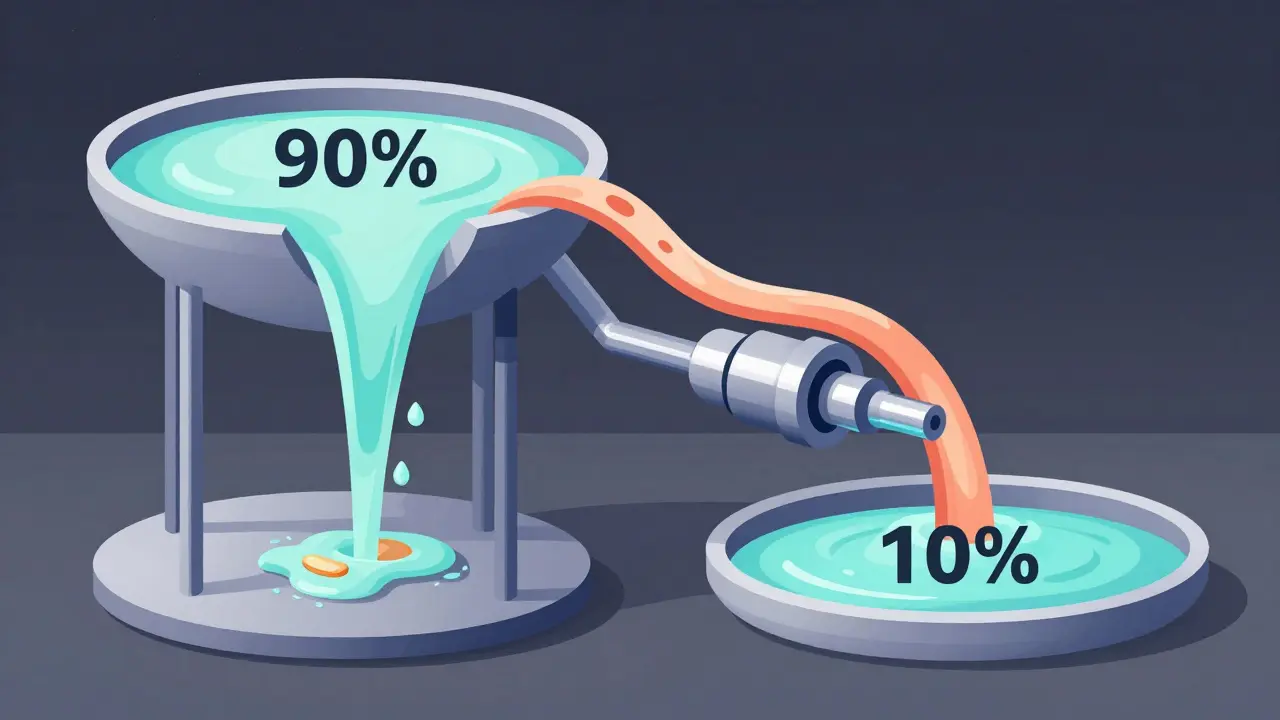
The protocol’s architecture splits assets into two distinct portions:
- 90% Allocation: Most assets are deposited into a standard DEX like Uniswap to provide baseline liquidity.
- 10% Allocation: A smaller portion goes to an intermediary mechanism. This part actively balances prices between decentralized exchanges (DEXs) and centralized exchanges (CEXs).
This hybrid approach attempts to capture the best of both worlds: the security and autonomy of DeFi with the tight spreads of CEXs. Additionally, Peanut incorporates preventative measures against DeFi bots. These bots often exploit price discrepancies by front-running trades, which hurts regular retail traders. By mitigating bot activity, Peanut sought to create a fairer trading environment.
Tokenomics and Distribution History
Understanding the supply dynamics is essential for evaluating any crypto asset. The Token Generation Event (TGE) for Peanut took place on February 15, 2021. At that moment, only 3.5% of the total token supply was unlocked. The remaining 96.5% was subject to a linear vesting schedule, releasing daily over approximately 700 days (about 23 months). Some allocation pools referenced a slightly longer 750-day unlock period.
This slow release mechanism was designed to prevent immediate sell-offs by early investors. Before the token launch, Peanut raised a total of $7.96 million across five funding rounds, including an Initial Exchange Offering (IEO) and three undisclosed private rounds. This significant capital injection suggests strong initial institutional interest, even if the retail outcome has been mixed.
Current Market Status of NUX (2026 Perspective)
If you are holding NUX from the 2021 airdrop or bought in later, the current reality is stark. As of late 2025 and continuing into 2026, NUX has experienced severe depreciation. The token reached an all-time high of $31.69. Today, it trades at approximately $0.0042 per token. That represents a decline of roughly 99.99% from its peak.
| Metric | Value |
|---|---|
| All-Time High | $31.69 |
| Current Price (Approx.) | $0.0042 |
| Circulating Supply | 50,000,000 NUX |
| Market Cap | ~$210,121 |
| Primary Trading Venue | Gate.io (NUX/USDT) |
The circulating supply stands at 50 million NUX tokens. With a market cap hovering around $210,000, NUX is classified as a micro-cap asset. Liquidity is thin. While Gate.io remains the primary venue for trading, with alternative options on LATOKEN and Uniswap V2, the volume is insufficient to support large-scale institutional movement. For example, a hypothetical winner of the 2021 airdrop who received the maximum 35.50 NUX would have held tokens worth over $1,100 at the peak. Today, those same tokens are worth approximately $0.15. This illustrates the extreme volatility and risk associated with small-cap DeFi projects.
Price Predictions and Future Outlook
Despite the bearish fundamentals, prediction models vary wildly. This divergence highlights the speculative nature of the asset. On one end, platforms like CoinLore use AI-driven historical pattern analysis to project massive long-term gains. Their models suggest NUX could reach $1.80 in 2026, potentially climbing to $28.52 by 2041. These forecasts assume a return to aggressive bull market conditions similar to 2021.
Conversely, more conservative technical analyses from sources like CoinCodex and CoinDataFlow paint a grim near-term picture. They project NUX fluctuating between $0.003 and $0.006 through 2025 and 2026. Technical indicators such as the Relative Strength Index (RSI) and Moving Average Convergence Divergence (MACD) show limited momentum. The Fear & Greed Index often registers in "Greed" territory due to low float, but this doesn't translate to sustained upward price action.
The discrepancy between these predictions serves as a warning. Relying solely on optimistic long-term AI forecasts can be dangerous when the immediate technical reality shows sustained downward pressure. The 99.99% drop from the all-time high suggests either a loss of utility adoption, failure to compete with newer Layer-2 solutions, or simply the broader market correction that wiped out thousands of similar DeFi projects post-2021.
Is There a New Airdrop Coming?
With the rise of new blockchain ecosystems, many old projects attempt to revitalize interest through new incentives. As of June 2026, there is no credible evidence of a major new Peanut.Trade airdrop. Be extremely cautious of any websites or Telegram channels claiming otherwise. Scammers frequently recycle names of defunct or dormant projects to harvest wallet connections or steal private keys.
If Peanut.Trade launches a new initiative, it will likely be announced through their verified social media channels (@PeanutTrade on Twitter) and official documentation. Always verify URLs. Do not connect your wallet to unverified sites promising "free NUX."
Next Steps for Investors
If you hold NUX from the past, you face a decision: hold for a potential multi-year recovery, sell to cut losses, or convert to more liquid assets. Given the low market cap and thin liquidity, exiting large positions may cause significant slippage. Consider using limit orders on Gate.io rather than market orders to preserve value.
If you are looking for exposure to DeFi price aggregation or MEV protection, consider researching more established protocols that currently dominate this space. The landscape has evolved significantly since 2021, with newer solutions offering better scalability and lower fees. Peanut.Trade’s original innovation is sound, but execution and market timing play critical roles in survival.
Can I still participate in the Peanut NUX airdrop?
No. The primary Peanut NUX airdrop via CoinMarketCap ended in August 2021. Winners were selected and paid out between August 27 and August 31, 2021. There are no active public airdrops for NUX as of 2026.
Where can I buy or sell NUX tokens?
The primary trading venue for NUX is Gate.io, specifically the NUX/USDT pair. Alternative options include LATOKEN and Uniswap V2 on the Ethereum network. Due to low liquidity, always check the order book depth before executing large trades.
What is the current price of Peanut (NUX)?
As of mid-2026, NUX trades at approximately $0.0042. This is a significant decrease from its all-time high of $31.69. Prices are highly volatile and can change rapidly due to low trading volume.
Is Peanut.Trade a scam?
Peanut.Trade is a legitimate protocol that launched in 2021 with real fundraising and technology. However, like many crypto projects, its token value has crashed dramatically. The project itself is not a scam, but investors should be wary of third-party sites impersonating the brand to offer fake airdrops.
How does the Peanut Protocol work?
Peanut acts as a price balancer. It allocates 90% of assets to a DEX like Uniswap and 10% to an intermediary mechanism that balances prices between DEXs and CEXs. This aims to reduce slippage and protect traders from front-running bots.
10 Comments
bro this is such a dump 💀 i remember adding it to my watchlist back in the day and got nothing just vibes now its dead 💔
You people are absolutely delusional if you think this trash has any value. The technicals are abysmal and anyone holding this is simply lacking basic financial literacy. It is a micro-cap joke with zero liquidity depth. Do not listen to these AI predictions they are pure fiction designed to trap retail idiots like yourselves. Sell everything immediately.
There is a profound lesson here about the nature of hype cycles. We chase the narrative but ignore the fundamental utility which evaporates quickly. It is sad to see how easily we are manipulated by marketing rather than substance. Perhaps we should reflect on why we participate in these games at all. 🤔
Thanks for sharing this info guys. I was wondering about the status since i heard rumors online. Good to know its over so i dont waste time looking for fake links. Stay safe everyone!
It is frankly embarrassing that anyone still discusses this token. The market has moved on to superior protocols and clinging to past glory is a sign of weakness. You need to educate yourself on modern DeFi standards instead of dwelling on failed experiments from three years ago. Wake up.
I know it feels tough seeing those losses but please remember that every experience teaches us something valuable. Many projects fail and that is part of the journey in crypto. Focus on learning from this and finding better opportunities moving forward. You can bounce back stronger if you stay positive and keep studying the market trends carefully.
i actually held some nux from the airdrop and yeah its basically dust now. kinda funny how we thought it would moon back then. oh well cant change the past right? hope nobody gets scammed by fake sites claiming new drops though.
you think this is real? no way the central banks let you have real freedom with tokens like this. its all controlled by algos to drain your wealth. i saw the charts they manipulate the wicks to scare you out before the pump. dont trust the gate.io data its fed to you by insiders. wake up sheeple.
I have been following the Peanut protocol since its inception and while the price action has been undeniably poor, the underlying technology for price balancing between CEX and DEX environments remains theoretically sound even if the execution failed to capture market share effectively against larger competitors who had more capital to burn on marketing campaigns which ultimately led to this current state of obscurity where only die-hard holders remain checking their portfolios daily hoping for a miracle reversal that seems increasingly unlikely given the broader macroeconomic conditions affecting small cap assets specifically.
its obvious the vesting schedule was rigged from day one to dump on retail. they knew the tech was flawed but raised millions anyway. look at the private rounds they sold cheap then dumped when we bought high. its a classic pump and dump scheme orchestrated by venture capitalists who don't care about the little guy. i bet there is a secret group chat laughing at us right now while we debate worthless coins. never trust an IEO again they are all scams disguised as innovation.