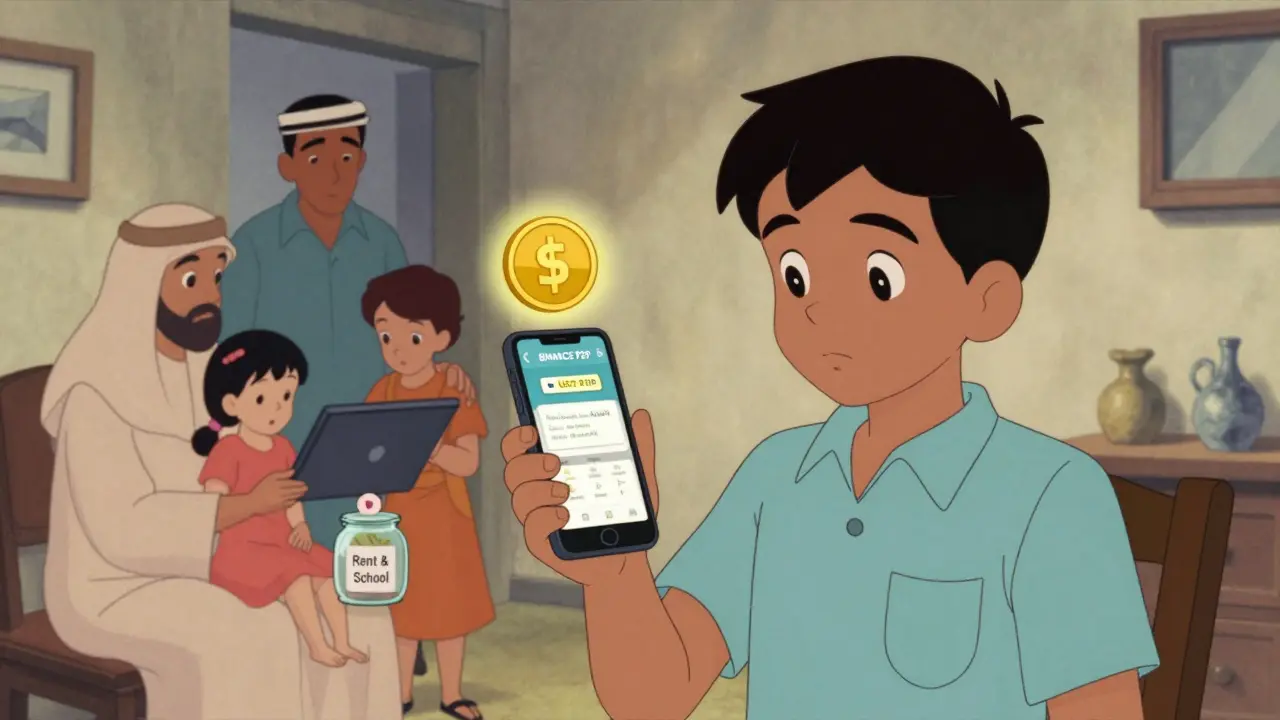
In Bangladesh, buying and selling cryptocurrency isn’t just a tech trend-it’s a necessity. Despite being officially banned by the central bank, P2P crypto trading has grown into a lifeline for millions. People aren’t doing it for speculation. They’re doing it to send money home, avoid insane fees, and keep up with a world that’s already moved online. The government says it’s illegal. But over 3.5 million Bangladeshis are doing it anyway. And here’s how they’re making it work.
Why P2P Crypto Is the Only Option
Bangladesh Bank has made its stance clear since 2014: any exchange of taka for cryptocurrency violates the Foreign Exchange Regulation Act. Banks are ordered to freeze accounts linked to crypto. Mobile money apps like bKash and Nagad are warned not to process crypto payments. Yet, in 2024, Bangladesh ranked 35th globally in crypto adoption, according to Chainalysis. Why? Because remittances matter. In 2022, workers abroad sent $21.5 billion back home. Traditional services like Western Union charge 3% to 8% in fees. P2P crypto? Often under 2%.Imagine sending $5,000 to your family in Dubai. With a bank, you pay $400 in fees. With P2P crypto, you pay $80. That’s $320 saved. For families living paycheck to paycheck, that’s rent, food, school fees. That’s why, even with the risk, people keep doing it.
How P2P Trading Actually Works in Bangladesh
There are three main ways people trade crypto in Bangladesh-and only one is safe enough to rely on.1. Binance P2P (Used by 68% of traders)
This is the backbone of crypto trading here. Binance’s P2P platform acts like a middleman. You pick a seller offering USDT (Tether) for BDT. You send taka via bKash or Nagad. The money hits their account. Then, Binance holds the crypto in escrow until they confirm payment. Only then does the crypto release to you. It’s simple. It’s fast. And it’s the only method with built-in dispute protection.
Most transactions are between ৳5,000 and ৳500,000 ($46-$460). The average trade finishes in 8.2 minutes. Over 99% of trades succeed, even when the government tries to block Binance’s servers. Users report that the platform’s mobile app works fine on Android 7 devices, even if they’re old. That’s important-most users aren’t tech experts. They just need a phone that works.
2. Informal Agent Networks
These are local guys-often bKash agents-who act as crypto dealers. You walk into a shop, hand them cash, and they send you crypto. No app. No login. Just a handshake. Sounds easy? It is. Until it isn’t. In 2023, Datawallet found over 12,000 such agents in Dhaka alone. But they charge 4% to 8% in fees. Worse, there’s no escrow. If they disappear after you send money, you have zero recourse. Over 63% of negative reviews on Trustpilot and Reddit cite agent fraud. One trader lost ৳250,000 ($2,300) after an agent reversed the bKash payment.
3. Decentralized Exchanges (DEX) like PancakeSwap
This is for the tech-savvy. You install MetaMask, connect it to Binance Smart Chain, and swap tokens directly. No KYC. No middleman. But it’s risky. You pay gas fees in BNB (about $0.15 per trade). If you mess up the address? Your crypto is gone forever. Only 8% of users use DEX. Most don’t understand wallets, private keys, or gas fees. It’s not practical for remittances. It’s a niche tool for those who know what they’re doing.
Payment Methods: bKash and Nagad Are King
You can’t use bank transfers. Banks monitor every transaction. If you send ৳50,000 to a crypto seller, your account gets flagged. So everyone uses mobile money.bKash is used in 61% of P2P trades. Nagad? 29%. The rest? Bank transfers or cash. But even these have limits. bKash blocks transactions over ৳100,000 unless you’re a verified business. Nagad freezes payments over ৳50,000 due to fraud algorithms. Traders have learned workarounds: split large payments into smaller chunks. Use the ‘Send Money’ function, not ‘Cash In.’ Always confirm the recipient’s mobile number matches the seller’s profile. One wrong digit? Your money vanishes.
And holidays? Don’t even try. During Eid, mobile networks get overloaded. Average trade time jumps from 8 minutes to 47 minutes. That’s when scams spike. People panic. Sellers disappear. Buyers panic and cancel. That’s why most experienced traders avoid big deals during festivals.

The Real Risks: No Protection, No Laws
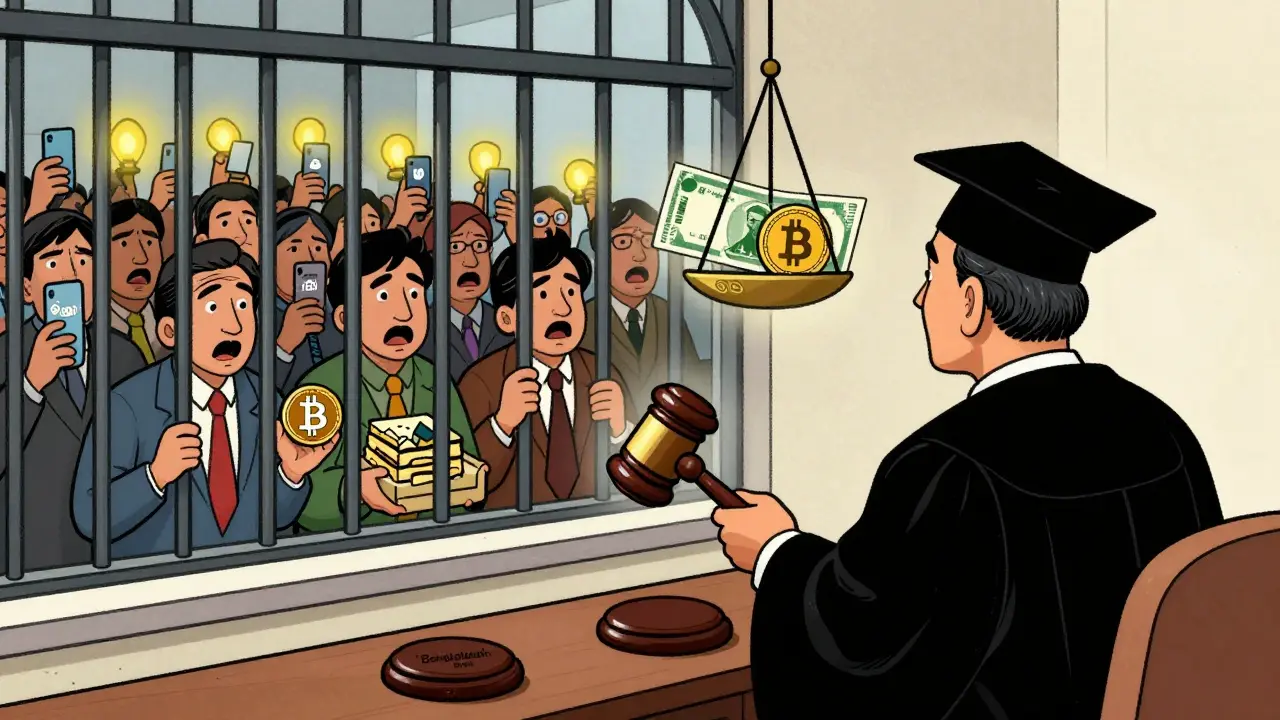
Here’s the truth no one tells you: if you get scammed, the police won’t help. The law doesn’t recognize crypto as property. In 2022, 17 traders in Dhaka were arrested under Section 411 of the Penal Code-for “possessing stolen property.” Their crime? Owning Bitcoin.There’s no legal recourse. No consumer protection. No insurance. If an agent runs off with your ৳300,000, you’re out of luck. Even Binance’s dispute system only works if the transaction happens on their platform. If you paid cash to a guy in a café? You’re on your own.
And the crackdowns are real. Between October 2024 and January 2025, Bangladesh Bank’s Financial Compliance Unit raided 87 crypto trading hubs. They seized computers, phones, and servers worth ৳32 million ($295,000). They’re watching. They’re listening. And they’re not bluffing.
Who’s Doing This-and Why
The typical P2P crypto user in Bangladesh is:- Aged 18-35
- Lives in Dhaka, Chittagong, or Sylhet
- Has family overseas sending or receiving money
- Uses a smartphone with Android 7 or higher
- Knows how to use bKash or Nagad
54% are overseas workers themselves. 38% are students or young professionals looking to save in USDT because the taka keeps losing value. 8% are tech-savvy traders betting on altcoins. But the vast majority? They just want to send money home without paying 7% in fees.
How to Get Started (If You Decide To)
If you’re serious, here’s how real users do it:- Create a Binance account-use your real ID. Binance processes over 8,200 Bangladeshi sign-ups daily. They know who you are.
- Link your bKash or Nagad-verify your number. This takes about 2.3 hours on average.
- Find a trusted seller-look for vendors with 98%+ positive feedback, 500+ completed trades, and a history of quick responses.
- Start small-first trade? Do ৳7,500 ($65). Learn the flow. Don’t jump into ৳500,000.
- Always use escrow-never pay outside Binance P2P. Never trust agents.
Most beginners take 17.5 hours to feel confident. Use the Crypto BD Guide Telegram channel. It has 47,300 members. They’ve blacklisted 217 fake agents since 2023. That’s your best defense.
The Future: Will It Last?
In February 2025, Bangladesh Bank formed a 12-member Crypto Asset Task Force. Their goal? To decide whether to ban crypto entirely-or regulate it. Their report is due by December 2025.Meanwhile, P2P volume hit $417 million in Q1 2025-up 38% from last year. USDT dominates because it’s stable. If the taka crashes again, people will turn to crypto harder. If the government cracks down hard, trading could vanish overnight. But if they legalize it? P2P could become the new remittance standard.
Right now, it’s a gray zone. A risky, fast, necessary loophole. For now, it works. But it’s not built to last. It’s built to survive.
Is P2P crypto trading legal in Bangladesh?
No, it’s not legal. Bangladesh Bank has banned all cryptocurrency transactions since 2014 under the Foreign Exchange Regulation Act. Using bKash or Nagad for crypto is a violation. While enforcement is inconsistent, users have been arrested, accounts frozen, and equipment seized. There is no legal protection if you’re scammed.
Can I use bKash or Nagad to buy crypto?
Yes-but only on platforms like Binance P2P. You send taka via bKash or Nagad to a seller, and they release crypto after confirmation. The platform holds the crypto in escrow. Never pay directly to an agent or outside the exchange. If you do, you lose all protection.
What’s the safest way to trade crypto in Bangladesh?
Binance P2P is the safest option. It uses escrow, has dispute resolution, supports bKash/Nagad, and has 99.98% trade success rates. Avoid informal agents, cash deals, and DEX platforms unless you’re experienced. Always check seller ratings and trade history.
Why do people use USDT instead of Bitcoin?
USDT (Tether) is pegged to the US dollar. It doesn’t swing wildly like Bitcoin. For remittances, stability matters. If you send $1,000 in Bitcoin and its price drops 20% before your family cashes out, they lose $200. With USDT, they get $1,000. That’s why 72% of all P2P trades in Bangladesh use USDT.
What should I do if I get scammed?
If you used Binance P2P, open a dispute immediately. Upload screenshots of your payment and chat logs. Binance resolves 90% of these within 24 hours. If you paid an agent or used another platform, there’s no recourse. Report it to local authorities, but don’t expect action. The best defense is prevention: never trade outside verified P2P platforms.
Will Bangladesh ban crypto completely?
It’s possible. Bangladesh Bank has warned of systemic risks and cited over 214 fraud cases totaling ৳1.2 billion in 2023. But with 3.5 million users and $417 million in monthly volume, a total ban is hard to enforce. The government is studying blockchain tech for a national CBDC. The future likely involves regulating blockchain while restricting speculative crypto trading.
9 Comments
This is why the West is collapsing. People are trading crypto instead of working. Bangladesh is a cautionary tale of what happens when you let chaos replace law. No regulation? No future.
The government is right to ban this. Crypto isn't money-it's a Ponzi scheme disguised as innovation. And yet, 3.5 million people are blindly trusting an algorithm. The real crime isn't trading crypto-it's believing in it. This isn't empowerment. It's mass delusion.
Binance P2P? Please. They're just laundering money for criminals. The 99% success rate? That’s because they don’t report fraud. They profit from it. And now they’re calling it ‘lifeline’? It’s a lifeline to the dark web.
I read this entire thing. Honestly? I’m crying. Not because I’m moved-because I can’t believe this is real life. People are risking arrest to save $320 on a money transfer. That’s not innovation. That’s desperation dressed up in blockchain hype.
I just want to say-this is beautiful. 💛 People are finding ways to survive, to care for their families, to outsmart broken systems. Even if it’s ‘illegal,’ it’s human. And that matters more than any law that doesn’t serve the people. Keep going, Bangladesh. You’re not alone. 🌍❤️
The use of bKash for P2P transactions is a clear violation of financial protocol. The lack of KYC compliance renders this entire ecosystem illegitimate. Furthermore, the normalization of such activity under the guise of 'remittance necessity' is a dangerous precedent. One must question the ethical implications of circumventing sovereign monetary policy.
Look, I get why people are scared. But this isn’t about breaking laws-it’s about surviving a system that’s failed them. Banks charge 8%? Mobile apps freeze accounts? That’s not regulation. That’s exploitation. P2P crypto isn’t the problem. The lack of real financial access is. We need to fix the system-not punish the people using duct tape to keep it standing.
So now we’re glorifying illegal activity? This is what happens when you let emotion override law. If you want to send money, use Western Union. If you can’t afford it, get a better job. Don’t turn your phone into a criminal tool.
In India, we have similar issues with informal remittance channels. But here’s the thing-no one is stopping innovation because of regulation. The real solution is not to ban, but to integrate. Bangladesh should create a legal sandbox for crypto remittances. Let them operate under oversight. This isn’t chaos. It’s demand. And demand always finds a way.