
Imagine trying to buy every single artificial intelligence project on the Solana blockchain. You’d need to track hundreds of wallets, manage dozens of swaps, and constantly rebalance your portfolio as projects rise or fall. Now imagine doing that with one click. That is the core promise of OSOL AI Index, a cryptocurrency token designed to act as an on-chain index fund for the Solana AI ecosystem.
You might have seen it trending in crypto news feeds, often compared to traditional financial products like the S&P 500. But what exactly is this token? Is it a serious investment vehicle or just another hype cycle? As someone tracking the intersection of AI and blockchain from Boulder, I’ve dug into the mechanics, the market data, and the risks involved. Here is the straight talk on what OSOL is, how it functions, and whether it fits into your portfolio strategy.
The Core Concept: An ETF for Solana’s AI Sector
OSOL is not a new blockchain layer-1 network. It is a token built on the Solana blockchain that functions as a diversified basket of assets. Think of it as a mutual fund or Exchange-Traded Fund (ETF), but entirely on-chain. Instead of holding shares in companies like Apple or Microsoft, OSOL holds tokens representing the top 100 artificial intelligence-related projects within the Solana ecosystem.
The project markets itself as "the world’s first AI-focused ETF on Solana." The logic is simple: the AI sector in crypto is fragmented. You have infrastructure providers, agent protocols, decentralized physical infrastructure networks (DePINs), and meme coins with AI branding. Picking winners among these is hard. OSOL attempts to solve this by bundling them together. When you buy one OSOL token, you are effectively buying a proportional share of this entire basket. This removes the need for you to research and manage over 100 individual positions yourself.
What Is Inside the Basket?
The value of an index depends entirely on what it tracks. OSOL claims to follow a rules-based methodology, weighting components by market capitalization, liquidity, and "ecosystem impact." While the exact formula isn’t always public in granular detail, the categories included are clear:
- AI Infrastructure: Projects providing the compute power, storage, and networking required for AI models to run on-chain.
- AI Agents: Autonomous bots and protocols that can execute tasks, trade, or interact with other smart contracts without human intervention.
- AI DePINs: Decentralized Physical Infrastructure Networks that connect real-world hardware resources (like GPUs or sensors) to AI workloads.
- AI Memes: Yes, even memes. The index includes viral community-driven tokens that leverage AI narratives, acknowledging that speculation is part of the crypto game.
This mix creates a unique risk profile. You aren’t just betting on tech; you’re betting on the cultural and speculative trends of the Solana chain. If a specific AI agent protocol goes viral, OSOL benefits. If the broader AI narrative cools off, OSOL likely follows suit.
Tokenomics: Supply and Circulation
Understanding supply is critical for any crypto asset. OSOL has a fixed maximum supply of 1,000,000,000 tokens. Unlike many projects where large portions of supply are locked up for teams or investors with vesting schedules, OSOL appears to be functionally fully circulating. Data from aggregators like CoinPaprika and Coinbase shows circulating supplies hovering around 999,995,040 to 999,997,733 tokens. That is over 99.99% of the total supply in circulation.
Why does this matter? Low inflation. There is no massive unlock event coming where early insiders dump millions of tokens onto the market, crashing the price. However, it also means there is no scarcity mechanism like a burn program mentioned in standard documentation. The value proposition relies purely on demand for the underlying AI sector growth.
| Metric | Value | Implication |
|---|---|---|
| Total Max Supply | 1,000,000,000 OSOL | Fixed cap; no new minting expected. |
| Circulating Supply | ~999,997,000 OSOL | Nearly 100% liquid; low sell pressure from unlocks. |
| Blockchain | Solana | Fast transactions, low fees, high throughput. |
| Asset Type | Index Token | Diversified exposure vs. single-project risk. |

Market Performance and Volatility
Let’s look at the numbers, because they tell a story of high volatility. Since its active trading debut around January 2025, OSOL has experienced wild swings. In one notable instance documented by CoinMarketCap Academy, the token surged 135% in a single day, jumping from roughly $0.026 to $0.084. Such moves attract traders but scare long-term holders.
As of mid-2026 snapshots, the price has fluctuated significantly across different platforms. Some sources list it near $0.008, while others show lower values depending on the exchange liquidity. Market capitalization generally sits in the small-cap range, between $2 million and $8 million. This places OSOL far below giants like Bitcoin or Ethereum, but it is still tracked by major aggregators like Binance, Coinbase, and TradingView.
The discrepancy in pricing across exchanges is common for smaller assets. Always check multiple sources before executing trades. The annualized turnover ratio suggests moderate liquidity, meaning you can enter and exit positions, but large orders might move the price against you.
How to Buy and Hold OSOL
Since OSOL is a Solana-native token, you don’t need a specialized account. You use the same tools you use for any other Solana asset.
- Get a Wallet: Install a Solana-compatible wallet like Phantom, Solflare, or Backpack.
- Fund Your Wallet: Deposit SOL or USDC into your wallet via an exchange like Coinbase or Kraken.
- Connect to a DEX: Use a decentralized exchange aggregator like Jupiter or Raydium. These platforms route your trade to get the best price.
- Swap for OSOL: Search for the OSOL contract address to ensure you are buying the correct token. Swap your SOL or USDC for OSOL.
- Store Safely: Keep your tokens in your non-custodial wallet. Remember, if you lose your seed phrase, you lose your OSOL.
The process is straightforward, which aligns with the project’s goal of simplifying access. You avoid the headache of managing 100 different swap transactions.
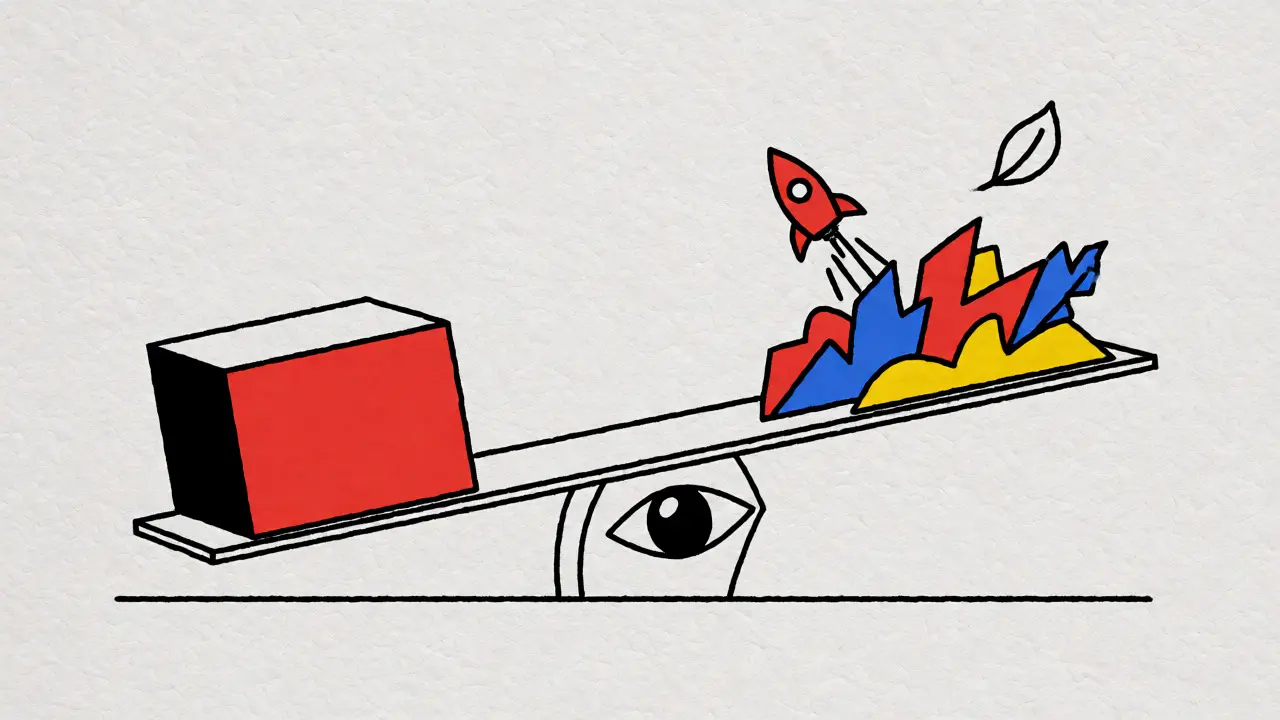
Risks and Considerations
No investment is free of risk, and OSOL has specific ones you need to weigh.
Smart Contract Risk: As an index fund on-chain, OSOL relies on smart contracts to hold and rebalance the basket. If there is a bug in the code or an exploit, funds could be lost. Unlike a traditional ETF backed by a regulated custodian, this is pure code.
Lack of Transparency: While the concept is clear, the detailed index methodology-how often it rebalances, who decides the weights, and the exact committee members-is not always front-and-center in public summaries. For institutional investors, this opacity is a red flag.
Correlation to Solana: OSOL lives and dies with Solana. If Solana faces network outages or regulatory headwinds, OSOL will suffer regardless of how well the underlying AI projects perform.
Speculative Nature: Including "AI Meme" tokens in the index introduces significant volatility. A meme coin crash can drag down the entire index performance, offsetting gains from solid infrastructure projects.
Who Is OSOL For?
OSOL appeals to two main types of investors. First, the retail investor who wants exposure to the AI crypto narrative but lacks the time or expertise to curate a portfolio of 100 tokens. Second, the trader looking for a proxy play on Solana’s AI ecosystem during bull runs.
It is less suitable for conservative investors who prefer blue-chip assets with decades of history. OSOL is a young, experimental product in a fast-moving sector. It requires a higher tolerance for risk and a belief that AI and blockchain will continue to converge.
Is OSOL a legitimate ETF?
OSOL is marketed as an ETF-style token, but it is not a traditional securities-backed ETF regulated by bodies like the SEC. It is a decentralized finance (DeFi) instrument-a token that represents a basket of other crypto assets held in smart contracts. It offers similar diversification benefits but operates under different legal and technical frameworks.
How often does the OSOL index rebalance?
Public documentation describes a "rules-based" approach involving market cap and liquidity metrics. However, specific rebalancing frequencies (e.g., monthly or quarterly) are not always explicitly stated in high-level summaries. Investors should consult the official whitepaper or project updates for the most current operational cadence.
Can I stake OSOL for rewards?
Standard staking mechanisms for OSOL are not prominently featured in general listings. Unlike proof-of-stake native tokens, OSOL is an asset token. Yield opportunities may exist through DeFi lending platforms or liquidity pools on Solana DEXs, rather than native staking rewards from the protocol itself.
What happens if an AI project in the index fails?
In a well-managed index, failing or illiquid projects are removed during rebalancing cycles, and their proceeds are redistributed to other qualifying assets. This dynamic maintenance helps protect the index value, though short-term price impacts can occur during removal events.
Where can I trade OSOL?
OSOL is primarily traded on Solana-based decentralized exchanges (DEXs) such as Raydium and Jupiter. It also has listings on centralized exchanges like Binance, Coinbase, and Crypto.com, though liquidity depth varies significantly between venues.