Price charts lie. They show you what happened yesterday, but they rarely tell you why. If you are trying to figure out whether a cryptocurrency is actually valuable or just hyped, looking at the price alone is like judging a restaurant by its line-out-the-door without tasting the food. You need to look under the hood. That is where on-chain metrics come in.
On-chain analysis is the practice of reading the raw data recorded on public blockchains. Unlike stock markets, where ownership records are private and held by central registries, blockchains like Bitcoin and Ethereum are open ledgers. Every transaction, every new address, and every coin moved is visible to anyone with an internet connection. This transparency allows investors to perform fundamental analysis that is verifiable, objective, and impossible to fake.
Why On-Chain Data Beats Traditional Analysis
In traditional finance, you rely on quarterly earnings reports, press releases, and analyst estimates. These can be manipulated, delayed, or spun to look better than reality. In crypto, the code is the truth. When someone says a project has "high activity," you don't have to take their word for it. You can check the number of daily active addresses yourself.
According to Galaxy Research, public blockchains are "transparent digital ledgers, auditable by anyone and everyone." This means you can verify network health independently. Coinbase’s Advanced Trading Academy notes that this provides unique insights absent in traditional finance. Instead of guessing if users are buying or selling based on price action, you can see exactly how many coins are moving onto exchanges (usually a sign of selling pressure) or off exchanges (usually a sign of long-term holding).
This approach shifts your focus from speculation to evidence. You stop asking "Will the price go up?" and start asking "Is the network being used more today than it was last month?" The answer to that second question often predicts the answer to the first.
The Core Metrics Every Investor Should Know
There are dozens of metrics available, but you do not need to track all of them. Most professional analysts focus on a core set of indicators that reveal supply, demand, and user behavior. Here are the most critical ones:
- Daily Active Addresses: This counts the unique addresses sending or receiving coins in a 24-hour period. It is the closest thing crypto has to "daily active users" in tech. A rising trend here suggests growing adoption. For Bitcoin, seeing over 1 million daily active addresses is generally considered a sign of strong network health.
- Total Transfer Volume: This is the total value of coins moved between addresses. Be careful here: high volume does not always mean high usage. Whales moving billions between their own wallets can skew this number. Always pair this with transaction count.
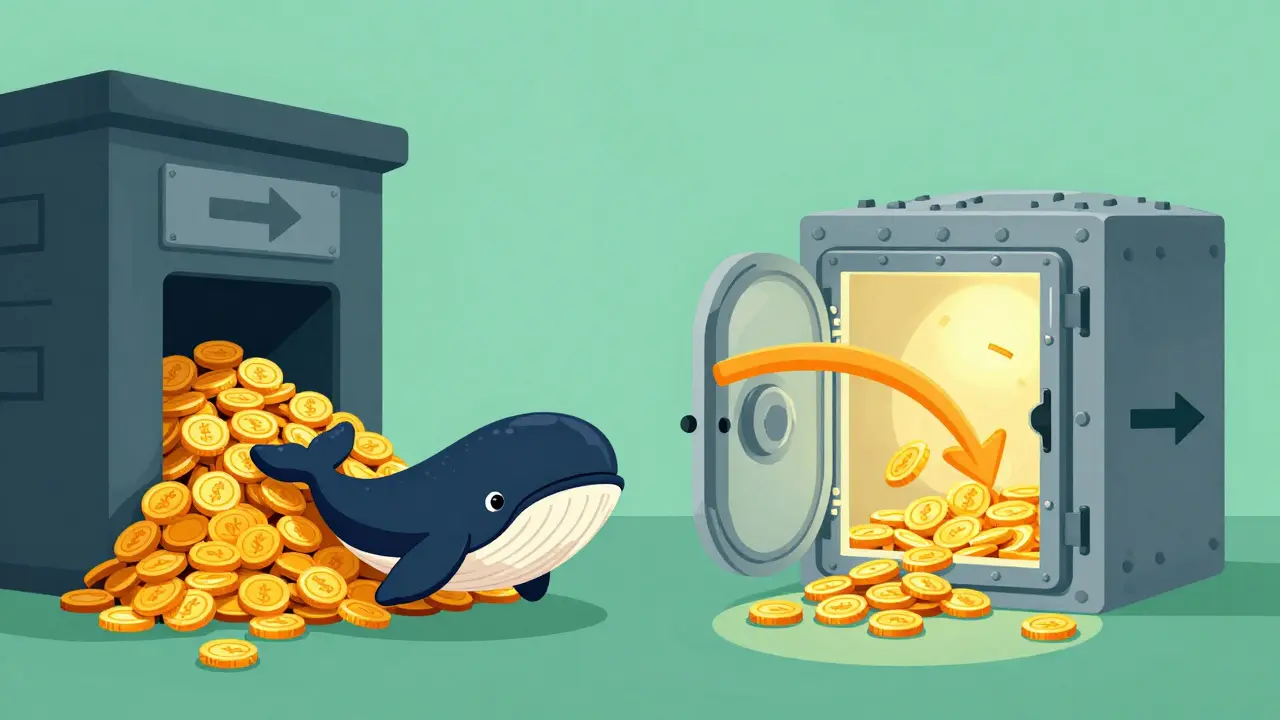
- Exchange Net Flows: This measures the difference between coins entering and leaving exchanges. Coins flowing into exchanges are typically there to be sold. Coins flowing out are usually being stored in cold wallets for long-term holding. Sustained outflows of significant amounts, such as 10,000+ BTC, have historically preceded major price increases.
- Network Value to Transaction (NVT): Think of this as the Price-to-Earnings (P/E) ratio for crypto. It divides the market cap by the transaction volume. A high NVT ratio (often above 100 or 150) suggests the network is overvalued relative to its actual usage. Coinbase research shows that NVT spikes above 150 correlated with 80% of major Bitcoin corrections since 2013.
- Market Value to Realized Value (MVRV): This compares the current market price to the average price at which coins were last moved (their "realized" cost basis). An MVRV below 1 means the network is trading below the average cost paid by holders, which is historically a strong buy signal. During the 2022 bear market, Glassnode's MVRV Z-Score correctly signaled the bottom when it hit -2.7.
Understanding Supply and Inflation
Cryptocurrencies are not static; their supplies change. Understanding how new coins enter circulation is vital for fundamental analysis. Two key metrics help here:
Total Daily Issuance tells you exactly how many new coins are created each day through mining rewards or staking emissions. Annual Inflation Rate calculates this issuance over a year divided by the circulating supply. For example, if a protocol issues too many new tokens quickly, it dilutes the value of existing holdings unless demand grows faster than supply.
You also need to watch Supply Last Active. This metric tracks how long coins have been sitting idle. If a large percentage of the supply hasn't moved in years, those are likely "dead" coins held by early adopters who have forgotten their keys or are committed long-term holders. This reduces the effective circulating supply, making the asset scarcer. Conversely, if old coins suddenly start moving, it could indicate early investors are preparing to sell.
| Metric | What It Measures | Bullish Signal | Bearish Signal |
|---|---|---|---|
| NVT Ratio | Market Cap / Transaction Volume | Falling while price holds | Spike above 150 |
| Exchange Net Flow | In vs. Out of Exchanges | Sustained Outflows | Sustained Inflows |
| MVRV Z-Score | Deviation from Fair Value | Below -1 | Above 7 |
| Active Addresses | Unique Users per Day | Consistent Growth | Sharp Decline |
Pitfalls and Limitations to Watch For
On-chain data is powerful, but it is not perfect. One of the biggest mistakes beginners make is treating every metric as a universal truth. Different blockchains work differently. For instance, transaction count alone is misleading on Ethereum because high gas fees encourage users to batch multiple transactions together. One user might trigger one "transaction" on-chain but execute ten actions in a smart contract. Analysts must look at effective transaction volume instead.
Privacy coins like Monero and Zcash pose another challenge. Because they obscure sender and receiver details, traditional address-based metrics like active addresses become useless. As noted in Glassnode’s 2022 research, privacy features render standard analysis ineffective on these networks.
Also, beware of "wash trading." Some projects artificially inflate their volume by trading assets back and forth between controlled wallets. This makes the Total Transfer Volume look huge while actual independent user activity remains low. Always cross-reference volume with the number of unique addresses to spot discrepancies.
Tools for Tracking On-Chain Data
You do not need to write code to access this data. Several platforms provide user-friendly dashboards. Glassnode is the industry leader for institutional-grade data, offering deep historical context and advanced metrics like SOPR (Spent Output Profit Ratio). However, it comes with a steep learning curve and a premium price tag ($1,999 annually). CoinMetrics offers similar depth with a focus on academic rigor.
For retail investors, free tools are sufficient for getting started. Blockchain.com Explorer provides basic Bitcoin data, while Etherscan is essential for Ethereum. Platforms like CoinGecko and Messari aggregate on-chain data with price charts, making it easier to correlate usage with valuation. Messari, in particular, has helped standardize metrics across different chains, which is crucial as the ecosystem becomes multi-chain.
If you are serious about this, consider starting with a simple routine: Check exchange net flows once a week to gauge sentiment, monitor active addresses monthly to track adoption trends, and use NVT ratios to identify potential market tops. Combining these with macroeconomic factors, like interest rate changes, gives you a complete picture. Remember, on-chain metrics explain the *why* behind the price movement, helping you invest with confidence rather than fear.
What is the best on-chain metric for predicting price?
No single metric predicts price perfectly. However, the Network Value to Transaction (NVT) ratio is highly effective for identifying market tops, while the MVRV Z-Score is excellent for spotting market bottoms. Exchange net flows are useful for short-term sentiment analysis.
Can on-chain analysis be faked?
The underlying blockchain data cannot be faked because it is cryptographically secured. However, the interpretation can be misleading if actors engage in wash trading (fake volume) or cluster addresses to hide whale movements. Always cross-reference multiple metrics to avoid traps.
Is on-chain analysis useful for all cryptocurrencies?
It is most useful for transparent, public blockchains like Bitcoin and Ethereum. Privacy-focused coins like Monero limit the effectiveness of address-based metrics. Additionally, metrics designed for Bitcoin may not apply directly to smart contract platforms like Solana or Ethereum due to differences in transaction structures.
How often should I check on-chain metrics?
For long-term investing, checking weekly or monthly is sufficient to track trends in active addresses and exchange flows. Day traders might monitor exchange inflows/outflows daily, but remember that on-chain data reflects slower-moving fundamentals compared to real-time order book data.
What is the difference between on-chain and technical analysis?
Technical analysis studies past price and volume patterns to predict future price movements. On-chain analysis studies the actual activity on the network (users, transactions, supply) to assess the fundamental health and value of the asset. On-chain data explains the cause; technical analysis describes the effect.
5 Comments
Oh great, another guide on how to pretend you're a sophisticated investor by looking at blockchain data instead of just buying the dip like a normal person. The article is fine I guess but let's be real most of these metrics are lagging indicators that tell you what happened after the smart money has already cashed out. You can watch NVT ratios all day long and still get wrecked when macro factors decide to tank the market regardless of network health. It's cute though how people think they've cracked the code with spreadsheets while ignoring basic supply and demand economics.
I appreciate the detailed breakdown here because it really helps clarify why relying solely on price charts feels so incomplete for many of us who want to understand the underlying value of an asset. The distinction between technical analysis describing the effect and on-chain analysis explaining the cause is particularly insightful and something I wish more educational resources emphasized early on. For those new to this space checking exchange net flows weekly as suggested seems like a manageable way to start without getting overwhelmed by the sheer volume of data available. It is important to remember that no single metric provides a complete picture and combining these insights with broader economic trends creates a much more robust framework for decision making. This approach encourages a shift from reactive trading based on fear or greed to proactive investing grounded in observable network activity which ultimately leads to better long term outcomes.
hey guys i totally agree with dr lavoy here especially about the nvt ratio being super useful for spotting tops 📈 i use glassnode myself and its pricey but worth it if you trade serious amounts 💸 one thing i always tell people is dont forget about the mvrv z score for bottoms because that saved my portfolio during the last bear market 🐻 also keep an eye on active addresses because if they drop while price goes up thats usually a red flag 🚩 hope this helps someone out there trying to navigate this crazy crypto world 🌍
the truth is we are all just gambling on digital numbers that have no intrinsic value beyond what other people agree they are worth so analyzing chains is like analyzing the water level in a bucket to predict if the bucket will float but maybe that is just me seeing through the illusion of financial systems built on trust rather than tangible assets anyway who cares right lets just buy high and sell low like everyone else does because logic clearly doesnt apply here
You make some interesting points Greg but dismissing the entire field of on-chain analysis overlooks the significant transparency that blockchains offer compared to traditional finance where information asymmetry is rampant. While it is true that markets are driven by sentiment and speculation having access to verifiable data allows investors to make more informed decisions rather than relying purely on hype or FOMO. The key is not to treat these metrics as crystal balls but as tools to assess network health and user adoption which are fundamental drivers of long-term value. By understanding how coins move and who holds them we gain a clearer picture of market dynamics that price charts alone simply cannot provide. Let's continue to explore these concepts together and share our experiences to help each other become more knowledgeable participants in this evolving ecosystem.