
Is North Macedonia actually banning your Bitcoin? If you’re scrolling through headlines, the word "ban" screams danger. But here’s the twist: it’s not a hard stop. As of late 2025 and heading into 2026, the country sits in a notorious "legal gray zone." You can’t use crypto to buy coffee at a local cafe because it lacks legal tender status. Yet, trading on offshore exchanges isn’t illegal for individuals. This nuance matters if you are an investor, a trader, or someone planning to move capital into the Balkans.
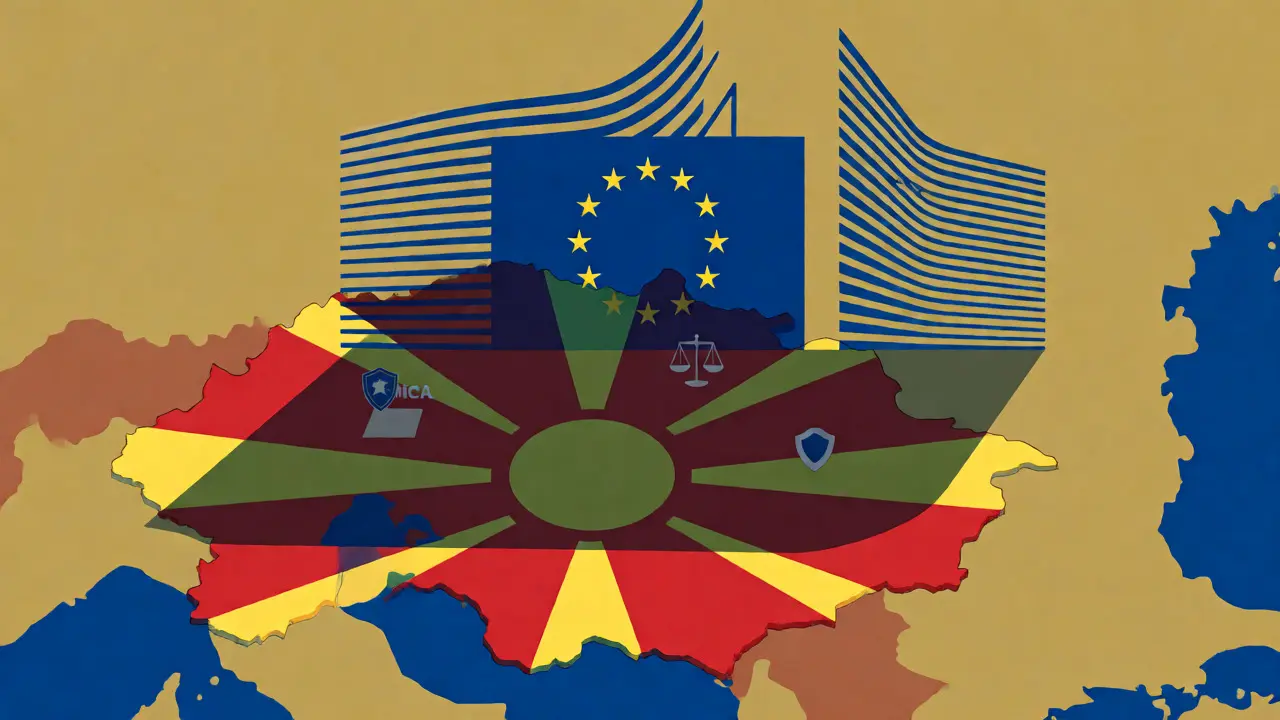
The confusion stems from mixed signals by authorities. The National Bank of the Republic of North Macedonia (NBRM) has been shouting warnings since 2018 about volatility and fraud. They aren’t holding back on the risk talk. However, they haven’t passed a law that slaps handcuffs on every digital asset transaction. Instead, the government is drafting rules heavily influenced by the European Union’s Markets in Crypto-Assets (MiCA) regulation. Why does this matter to you? Because North Macedonia wants into the EU. Aligning with MiCA now means smoother entry later, but it also means stricter compliance is coming fast.
The Real State of Play: Ban vs. Restriction
Let’s cut through the noise. There is no comprehensive law explicitly prohibiting cryptocurrency ownership for citizens. What exists is a patchwork of general financial rules and anti-money laundering (AML) directives. The core restriction is simple: crypto is not money. It cannot be used as a medium of exchange for goods and services within the country. Banks often refuse to process transactions linked to crypto exchanges, creating friction rather than prohibition.
This creates a specific operational reality for residents and expats. If you try to pay for groceries with Ethereum, the shopkeeper will likely say no-not because it’s illegal, but because there’s no legal framework protecting them or requiring them to accept it. Trading, however, happens freely. Most locals use international platforms like Binance or Kraken because local infrastructure is virtually non-existent. The lack of local exchanges isn’t due to a ban; it’s due to regulatory uncertainty. Who wants to set up a business when the tax code is silent?
| Activity | Status | Practical Implication |
|---|---|---|
| Ownership | Permitted | You can hold assets without fear of seizure. |
| Payments | Restricted | Not legal tender; merchants rarely accept it. |
| Trading | Unregulated | Allowed via offshore exchanges; no local protection. |
| Taxation | Ambiguous | Capital gains may apply, but enforcement is weak. |
| Banking | Hostile | Banks may freeze accounts linked to crypto flows. |
Why the NBRM Sounds the Alarm
The National Bank of North Macedonia has played the role of the cautious parent for years. Their stance hasn’t changed much since 2018. They argue that cryptocurrencies are too volatile and prone to fraud to serve as reliable money. When they issue warnings, they aren’t just being bureaucratic. They are pointing out real risks: unregulated markets, lack of consumer protection, and the potential for money laundering.
But critics argue the bank is stuck in the past. By refusing to create a clear regulatory sandbox, they push activity underground or offshore. This means the state loses visibility and tax revenue. If you trade on a foreign platform, the Macedonian government sees nothing unless you voluntarily declare income. And let’s be honest-voluntary declaration in a gray area is rare. The NBRM’s caution protects consumers from scams but stifles innovation. It’s a trade-off between safety and growth, and right now, safety wins.
The MiCA Effect: Europe’s Shadow Over Skopje
You can’t talk about North Macedonia’s future without talking about the EU. The country is a candidate member, and Brussels holds the keys. The European Commission has rolled out MiCA, a comprehensive framework for regulating crypto assets across the union. North Macedonia knows it must adopt similar rules to join the club. This isn’t optional; it’s part of the accession strategy.
Draft laws expected to finalize around 2025-2026 will likely mirror MiCA principles. This means licensing for exchanges, strict AML checks, and clearer definitions of stablecoins and utility tokens. For investors, this is good news long-term. Clarity reduces risk. But short-term? It could mean tighter controls. If you’re planning to launch a fintech startup here, align with MiCA standards now. Don’t wait for the law to hit you with surprise compliance costs.
Real-World Impact on Investors and Businesses
So, what does this mean for your wallet? If you’re a retail investor, you face high friction. Moving fiat currency (denars or euros) into crypto requires navigating bank hesitancy. Some banks block transfers to known exchanges. Others require extensive documentation. Once you’re in crypto, moving profits back out faces the same hurdles. It’s not impossible, but it’s annoying and time-consuming.
For businesses, the picture is slightly more optimistic. Startups focusing on blockchain technology beyond currency-like supply chain tracking or digital identity-are finding niches. One notable example involves a fintech firm helping expatriates send remittances home using blockchain rails. Traditional banking fees eat into these transfers. Crypto offers a cheaper alternative. While they can’t legally price services in Bitcoin, they can settle internally in stablecoins and convert upon withdrawal. This workaround keeps them compliant while offering value.
Taxation: The Silent Killer of Returns
Here is where things get messy. There is no specific crypto tax code. Does buying Bitcoin count as a purchase? Yes. Does selling it trigger capital gains tax? Probably. But how do you calculate the cost basis? How do you report losses? The tax authority hasn’t issued detailed guidelines. This ambiguity leads to two behaviors: under-reporting or over-cautious reporting.
If you make significant profits, assume you owe taxes. Consult a local accountant who understands international finance. Do not rely on generic online advice. The rules might change overnight with new legislation. Keep meticulous records of every transaction. In a gray zone, documentation is your best defense against audits.
Regional Context: How Neighbors Compare
North Macedonia isn’t alone in this dance. Look at its neighbors. Serbia has taken steps toward legalization, attracting some crypto tourism. Albania remains skeptical but open to discussion. Greece, as an EU member, follows MiCA strictly. North Macedonia tries to position itself as a middle ground-more open than outright bans, less mature than established hubs like Malta or Estonia.
This positioning is strategic. If they regulate too loosely, they risk EU rejection. Too tightly, and they lose competitive edge. The sweet spot is balanced regulation that encourages investment while preventing illicit flows. Early movers who understand this balance could capture market share before full EU integration locks down the landscape.
What’s Next for 2026 and Beyond?
The next 18 months are critical. Draft laws should transition into enacted legislation. Licensing regimes for exchanges will likely emerge. Expect stricter KYC (Know Your Customer) requirements. Banks may start offering limited crypto-related services once clarity arrives.
If you are considering entering this market, watch the parliamentary sessions. Listen to statements from the Ministry of Finance. The shift from "gray zone" to "regulated market" will happen quickly once the political will solidifies. Those who prepare now-by understanding MiCA and keeping clean records-will navigate the transition smoothly. Those who ignore it might find their accounts frozen or their profits taxed unexpectedly.
Is cryptocurrency completely banned in North Macedonia?
No, it is not completely banned. Ownership and trading are permitted, but cryptocurrencies are not recognized as legal tender, meaning they cannot be used for official payments within the country.
Can I use Bitcoin to buy goods in Skopje?
Technically yes, if a merchant agrees, but it is rare. Since crypto lacks legal tender status, merchants have no obligation to accept it, and most prefer traditional currency due to regulatory uncertainty.
Do I need to pay taxes on crypto profits?
Likely yes, though rules are ambiguous. Capital gains tax may apply. Without specific guidelines, consult a local tax professional and maintain detailed transaction records to ensure compliance.
Are there local cryptocurrency exchanges?
Very few, if any, operate locally with full regulatory backing. Most traders use international offshore exchanges like Binance or Kraken due to the lack of local infrastructure and licensing.
How will EU membership affect crypto rules?
North Macedonia aims to align with the EU's MiCA framework before joining. This will bring standardized regulations, licensing requirements for exchanges, and stronger consumer protections closer to EU standards.