
When you buy an NFT, you’re not just buying a digital image. You’re buying into a system that promises creators a cut every time it changes hands. That cut? It’s called a royalty. But here’s the thing: not all NFTs pay royalties the same way. Some platforms force buyers to pay them. Others let buyers skip them entirely. And some don’t even try. If you’re an artist, collector, or just someone trying to understand why your favorite NFT collection stopped paying out, this is your guide.
How NFT Royalties Actually Work (Spoiler: It’s Not Magic)
NFT royalties aren’t built into the blockchain itself. They’re coded into the smart contract that creates the NFT. When you mint an NFT on a platform like OpenSea or Rarible, you set a percentage - say, 10% - that goes to you every time someone resells it. That percentage gets recorded on the blockchain. When the NFT is sold again, the smart contract says, "Pay 10% of this sale to this wallet." But here’s the catch: blockchains don’t control marketplaces. They just record transactions. So if a marketplace like X2Y2 or Magic Eden decides to ignore the royalty instruction in the smart contract, there’s nothing the blockchain can do to stop it. The royalty becomes a suggestion, not a rule.
OpenSea: The Enforcer (Mostly)
OpenSea still tries to enforce royalties more than any other major platform. It uses something called the Operator Filter Registry - a list of addresses that can’t trade NFTs unless they follow the royalty rules. If a buyer tries to bypass royalties on OpenSea, the transaction gets blocked.
But there’s a big limit: OpenSea only enforces royalties on entire collections, not individual NFTs. If a creator sets a 10% royalty on their whole collection, it works. But if they set it on just one NFT, and that NFT gets moved to another marketplace, OpenSea can’t protect it.
OpenSea caps royalties at 10%. That’s lower than some platforms, but it’s consistent. And in 2025, they added a new feature: dynamic royalty splitting. Now, a single NFT can send 7% to the artist, 2% to a community fund, and 1% to a collaborator. It’s one of the most flexible systems out there.
Creators on OpenSea report real results. One digital artist told Trustpilot they’ve earned over 2.3 ETH in royalties since 2022 - that’s roughly $7,000 at current prices. OpenSea also has a creator blacklist tool. If a marketplace like Magic Eden stops paying royalties, artists can block their NFTs from being traded there.
Magic Eden: The Switcheroo
Magic Eden used to be the go-to for Solana NFTs. It handled 80% of all Solana NFT trading volume in 2023. It even had a feature called "protocol-level royalty protection," which sounded like a win for creators.
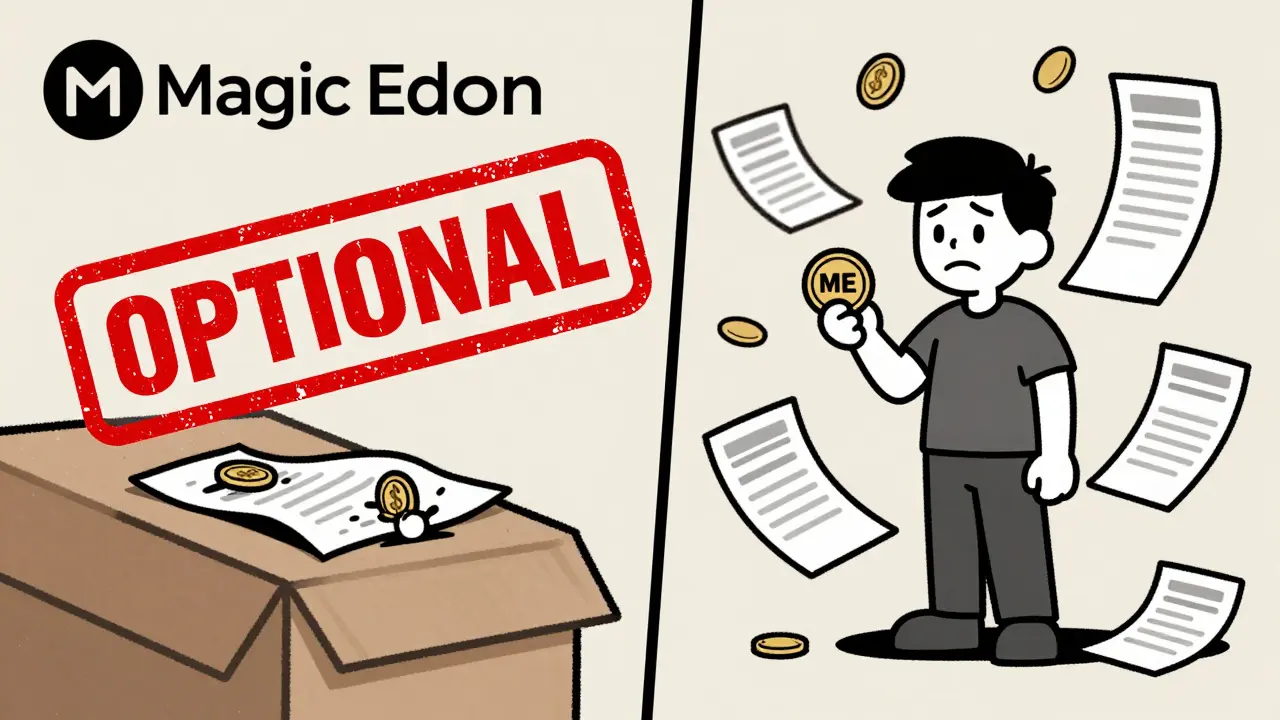
Then, in August 2022, they switched to optional royalties. Suddenly, buyers didn’t have to pay them. The result? Royalty collection rates dropped from 80% of sales to under 20% for many artists. One creator wrote on Trustpilot in March 2025: "After they switched to optional royalties, my secondary sales royalties dropped from 80% collection to below 20% - devastating for my art practice."
In February 2025, Magic Eden rolled out "Royalty Shield," which gives buyers a small bonus in ME tokens if they honor royalties. But early data shows only 35% of buyers are using it. That means 65% are still skipping payments. For creators, it’s not a fix - it’s a gamble.
Rarible: The High-Rate Haven
If you want to set a 25%, 40%, or even 50% royalty, Rarible is the only major platform that lets you. OpenSea caps at 10%. Magic Eden doesn’t enforce. Rarible says go wild.
That flexibility attracts serious creators. One digital artist reported earning $47,000 in secondary royalties from a $500 initial sale over 18 months. That’s a 9,400% return on resale. It’s rare, but it happens.
But here’s the downside: Rarible’s royalties only work on Rarible. If someone buys your NFT there, then sells it on OpenSea, OpenSea won’t honor your 50% royalty. You get nothing. Rarible’s system is powerful - but only if everyone plays by its rules.
Blur and X2Y2: The Royalty Killers
Blur launched in 2023 with one promise: no royalties. They wanted to attract traders, not creators. Their strategy worked. They quickly became the second-largest Ethereum NFT marketplace, behind only OpenSea.
But they didn’t stop there. They introduced a token called BLUR. If you trade on Blur and honor royalties, you earn more BLUR tokens. So now, royalty payments aren’t about fairness - they’re about mining rewards. It’s a clever hack, but it turns creators into afterthoughts.
X2Y2 did the same thing. They dropped royalties in January 2023, then brought them back in June 2023. Then dropped them again. Then brought them back. The flip-flopping confused creators. Why should you trust a platform that changes its mind every few months?
Solanart: The Worst of the Worst
Solanart doesn’t just ignore royalties - it actively removes them. Every NFT sold on Solanart pays 0% to the original creator. No exceptions. No exceptions. No exceptions.
It’s the most creator-unfriendly major marketplace on Solana. A December 2024 Reddit thread titled "Solanart's complete disregard for creator royalties is killing the ecosystem" had 142 upvotes. The comments? "I’m done minting here." "Why would anyone build here?" "This is why Solana NFTs are dying."
There’s no incentive. No workaround. Just silence.
Cardano: The Quiet Winner
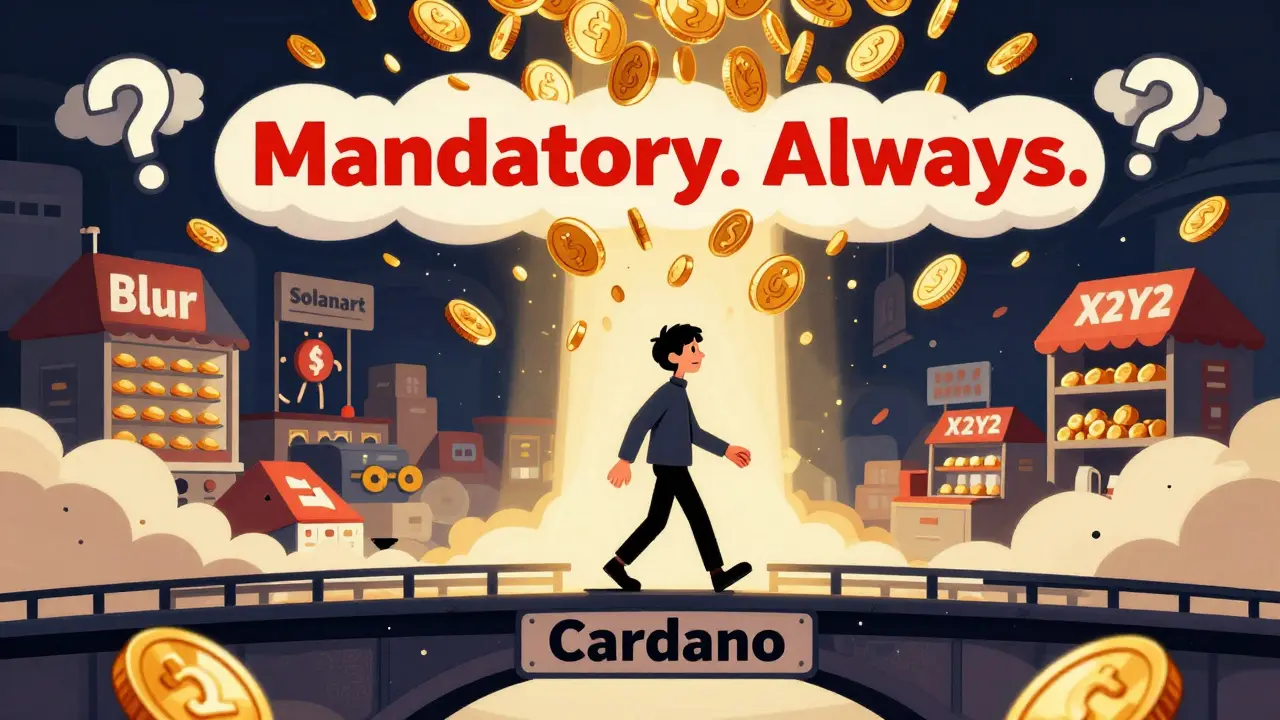
While everyone else was fighting over optional royalties, Cardano quietly made them mandatory. Every NFT on Cardano must include a royalty. No opt-out. No exceptions.
That’s why, in October 2023, Cardano’s NFT trading volume overtook Solana’s. Artists moved there because they knew they’d get paid. Collectors followed because they trusted the system.
It’s not flashy. It doesn’t have the hype of Ethereum or the speed of Solana. But it’s the only major chain where creators can count on royalties - every time.
What This Means for Creators
If you’re an artist minting your first NFT, here’s what you need to know:
- Don’t assume royalties are automatic. They’re only enforced if the marketplace chooses to enforce them.
- Check the platform’s policy. OpenSea? Good. Magic Eden? Risky. Solanart? Avoid.
- Use the same platform for minting and sales. If you mint on Rarible, sell on Rarible. If you mint on OpenSea, sell on OpenSea. Cross-platform sales = lost royalties.
- Set realistic rates. Studies show that royalties above 10% can hurt your primary sales. Buyers see high royalties as a future cost and lower their initial bid.
- Use the creator blacklist. If a platform drops royalties, blacklist it. It’s your only weapon.
Some creators are now using tools like Royalty Registry, a community-driven standard that tries to make royalties work across platforms. It’s not perfect. But it’s the closest thing we have to a solution.
The Future: Three Possible Paths
By 2027, experts predict three outcomes:
- The Royalty Standardization Scenario (45% chance): A cross-platform standard like Royalty Registry becomes widely adopted. Royalties become consistent, no matter where you buy or sell.
- The Royalty Collapse Scenario (25% chance): Marketplaces keep dropping royalties to win users. Royalties disappear from most NFTs. Only premium collections (like Nike or Tiffany’s) keep them.
- The Two-Tier Market Scenario (30% chance): High-value NFTs keep royalties. Low-value NFTs (pfp collections, memes) don’t. You’ll pay more for an NFT with royalties - and that’s okay.
The most likely outcome? A mix of all three. Some platforms will enforce. Others won’t. Creators will choose where to mint based on trust, not hype.
Final Reality Check
NFT royalties were supposed to be the solution. A way for artists to earn forever. But they became a battleground.
Marketplaces care about volume. Creators care about income. Buyers care about price.
Right now, the winner is whoever can offer the lowest price - even if it means cutting creators out entirely.
If you’re an artist, don’t just mint. Choose your platform like you choose your studio. Protect your work. Track where your NFTs go. And remember: if a platform doesn’t pay you, it’s not a marketplace. It’s a free ride.
Do NFT royalties work on all blockchains?
No. Each blockchain has its own royalty system. Ethereum uses EIP-2981. Solana uses Metaplex’s Creator Standard. Cardano enforces royalties at the protocol level. But even with these standards, marketplaces can ignore them. The blockchain records the royalty - but the marketplace decides whether to honor it.
Can I set a 20% royalty on OpenSea?
No. OpenSea caps royalties at 10%. If you try to set a higher percentage, it will be automatically lowered. Platforms like Rarible allow up to 50%, but if your NFT leaves Rarible and sells on OpenSea, OpenSea will only pay 10% - or nothing at all if the sale happens off-platform.
Why do some marketplaces drop royalties?
Because they want more trading volume. Royalties make NFTs more expensive to buy. Buyers avoid them. Marketplaces like Blur and X2Y2 removed royalties to attract traders, especially those who flip NFTs quickly. They trade volume for creator trust - and so far, it’s working.
Are NFT royalties legally binding?
No. They’re not contracts in the legal sense. They’re smart contract rules that depend on marketplace cooperation. There’s no court system that can force a buyer to pay a royalty. Even if a marketplace agrees to enforce them, they can change their mind tomorrow. Royalties are a social contract, not a legal one.
Which platform pays creators the most?
For consistent, reliable payments, OpenSea still leads - especially for Ethereum-based collections. But for higher royalty rates, Rarible gives creators more control. For total reliability, Cardano is the only chain where royalties are mandatory and can’t be turned off. If you want to be sure you’ll get paid, mint on Cardano.
10 Comments
Let me get this straight - you spent months creating art, minted it with a 25% royalty, and now some platform just says ‘lol nope’ and redirects the cash to their own wallet? And you’re supposed to be grateful for the ‘exposure’? Classic capitalist theater. The blockchain remembers. The marketplace doesn’t care. The artist? Still waiting on rent money.
As someone who has mentored emerging digital artists for over five years, I must emphasize that the erosion of royalty structures is not merely an economic issue - it is a systemic betrayal of creative labor. When platforms prioritize transaction volume over creator sustainability, they are not optimizing for market efficiency; they are weaponizing asymmetry. The moral contract between artist and collector has been replaced by a transactional void. We must advocate for protocol-level enforcement, not platform-level whims. The future of digital art depends on institutional integrity, not speculative liquidity.
bro opensea is so tryhard lmao they act like they’re the cops of nfts but if u mint on rarible and sell on opensea u still get 10%? so like… ur 50% royalty is just a suggestion?? and then magic eden’s ‘royalty shield’ is just a meme coin bribe?? i mean if i had a dollar for every time someone said ‘but it’s on the blockchain’ i’d have bought a yacht by now
Creators - here’s your action plan: 1) Mint exclusively on platforms with enforceable royalty standards (OpenSea, Cardano). 2) Use the creator blacklist aggressively - if a marketplace drops royalties, blacklist it immediately. 3) Leverage dynamic royalty splitting to fund community grants, collaborators, and future minting. 4) Educate your collectors - they’re not just buyers, they’re stakeholders. 5) Join Royalty Registry. It’s not perfect, but it’s the only cross-platform standard with real traction. You’re not just selling art - you’re building a sustainable ecosystem. And that’s worth fighting for.
cardano is the only one that actually works why are we even talking about the others
The fundamental flaw in the current NFT royalty paradigm is the ontological misalignment between on-chain metadata and off-chain enforcement mechanisms. EIP-2981 is a well-designed standard, yet its efficacy is entirely contingent upon the voluntary compliance of off-chain marketplaces - a classical principal-agent problem. The absence of a consensus-enforced royalty layer renders the entire incentive structure epistemologically unstable. We require a Layer-2 royalty oracle - perhaps integrated with a decentralized governance token - to achieve true protocol sovereignty.
I appreciate the depth of this analysis. It is clear that the current fragmentation of royalty enforcement undermines the long-term viability of digital art as a profession. While I recognize the pragmatic incentives for marketplaces to remove royalties - increased volume, reduced friction, enhanced liquidity - I must respectfully argue that this short-term gain comes at an existential cost to the creative class. A sustainable ecosystem requires alignment of incentives. Without enforceable, platform-agnostic royalty mechanisms, we are not building a market. We are building a casino. And casinos don’t fund museums.
so like... magic eden just went full cringe with their 'royalty shield' and now we're supposed to be impressed? lol. and blur? they made royalties a gamified token farm. congrats. you turned artists into background NPCs. 🤡
cardano is the only one that actually pays lmao why is everyone still on ethereum smh 🤡💸
It’s funny, isn’t it? We built this whole thing on the idea that technology would make art fairer. That decentralization would mean ownership. That the artist would never be erased again. But here we are - a hundred marketplaces, a thousand smart contracts, and still, the person who made the thing gets paid the least. The blockchain remembers every transaction. But no one remembers the hands that made it. Maybe the real NFT isn’t the image. Maybe it’s the silence after the royalty payment never arrives.