
Imagine trying to buy groceries, but the store is illegal. You have to meet in secret, pay in cash, and hope the person on the other end doesn’t run off with your money. That is the daily reality for cryptocurrency traders in Myanmar. While the rest of the world debates regulation, Myanmar has chosen a hard line: total prohibition. Yet, despite the Central Bank of Myanmar (CBM) banning all crypto transactions since 2020, the market hasn’t disappeared. It just went underground.
If you are looking at this from the outside, it might seem like a ghost town. But inside, it is a bustling, high-stakes ecosystem driven by necessity, community trust, and a desire for financial freedom that the state cannot suppress. This guide breaks down how this shadow market actually works, who runs it, and why people risk prison to participate.
The Iron Fist: Why Crypto Is Banned
To understand the underground market, you first need to understand the law. In 2020, the CBM declared that cryptocurrencies are not legal tender. They are unrecognized instruments. The bank holds exclusive authority as the sole issuer of currency in the country. Under the Foreign Exchange Management Law, converting Kyat (the local currency) into Bitcoin or Ethereum is treated as an illegal foreign exchange transaction.
This isn't just a suggestion. The government uses multiple legal hammers to crush activity:
- Financial Institutions Law: Prevents any business from facilitating crypto trades.
- Anti-Money Laundering (AML) Laws: Used to freeze accounts suspected of moving crypto funds.
- Criminal Charges: Individuals can face imprisonment for large-scale trading or mining.
Mining is particularly targeted. The government views it as a drain on national energy resources. As of 2025, running a mining rig is strictly prohibited. Authorities have been known to raid homes, confiscate hardware, and cut power lines. This creates a hostile environment where every participant operates under the threat of severe penalty.
How Trading Actually Happens
Since there are no legal exchanges operating within Myanmar’s borders, traders cannot simply log onto an app and click 'buy.' Instead, they rely on a complex, decentralized web of connections. Here is the typical workflow for a user wanting to enter the market:
- Access: Users connect to international platforms like Binance using Virtual Private Networks (VPNs). Without a VPN, many global services are blocked or throttled by internet service providers.
- Funding: Because banks monitor large transfers, users rarely wire money directly. Instead, they use Peer-to-Peer (P2P) networks. A buyer finds a seller on social media, agrees on a price, and transfers cash via mobile banking apps or even physical handovers.
- Settlement: Once the fiat currency moves, the seller releases the crypto from their wallet to the buyer. Trust is the only security here. If the seller disappears after receiving the cash, the buyer has no recourse.
Liquidity is thin. Unlike major markets where you can sell millions of dollars instantly, large trades in Myanmar cause wild price swings. A big sale can crash the local premium rate, while a sudden demand spike can inflate prices significantly. This volatility makes timing everything critical.
| Country | Regulatory Status | Primary Risk | Market Access |
|---|---|---|---|
| Myanmar | Total Ban | Criminal charges, account freezes | P2P, Social Media, VPNs |
| Thailand | Regulated | Compliance costs, taxes | Licensed Exchanges |
| Laos | Evolving/Restrictive | Policy uncertainty | Limited International Platforms |

The Role of Community: Myan Crypto Masters
In a vacuum of official information, communities fill the gap. The most prominent example is the Myan Crypto Masters Community (MCM). Founded by a figure known as Feliz, MCM has grown to over 23,000 members. It serves as the primary educational hub for Burmese speakers interested in digital assets.
MCM does more than just chat. They host weekly workshops, create interactive forums, and offer digital courses. Their goal is to break down complex concepts like blockchain technology and private key management into digestible Burmese content. This education is vital because the barrier to entry isn't just technical; it's linguistic. Most global crypto resources are in English, leaving a huge portion of the population vulnerable to scams.
Social media platforms like Facebook, Telegram, and TikTok act as the infrastructure for this ecosystem. They are where deals are negotiated, reputations are built, and warnings about bad actors are shared. For many, these groups are the difference between losing life savings and making a successful trade.
Risks Beyond the Law
The legal risks are obvious, but the operational risks are often deadlier. Because there is no regulatory oversight, there is no customer protection. When a deal goes wrong, there are no courts to appeal to and no regulators to file complaints with.
Scams are rampant. Newcomers are frequently targeted by fake investment schemes. One notable incident in 2022 saw the collapse of a high-profile crypto scheme, leaving thousands of investors in financial ruin. These events highlight the danger of relying on unregulated methods. Veterans of the market learn to navigate these waters by sticking to trusted dealers and verifying identities through community reputation systems, but newcomers often fall prey to sophisticated fraud.
Furthermore, the lack of transparency means that anonymous exchange operators take significant risks themselves. As one operator noted, "We know we're taking a risk, but for many people, we're the only option." This constant tension between supply and enforcement keeps the market unstable.
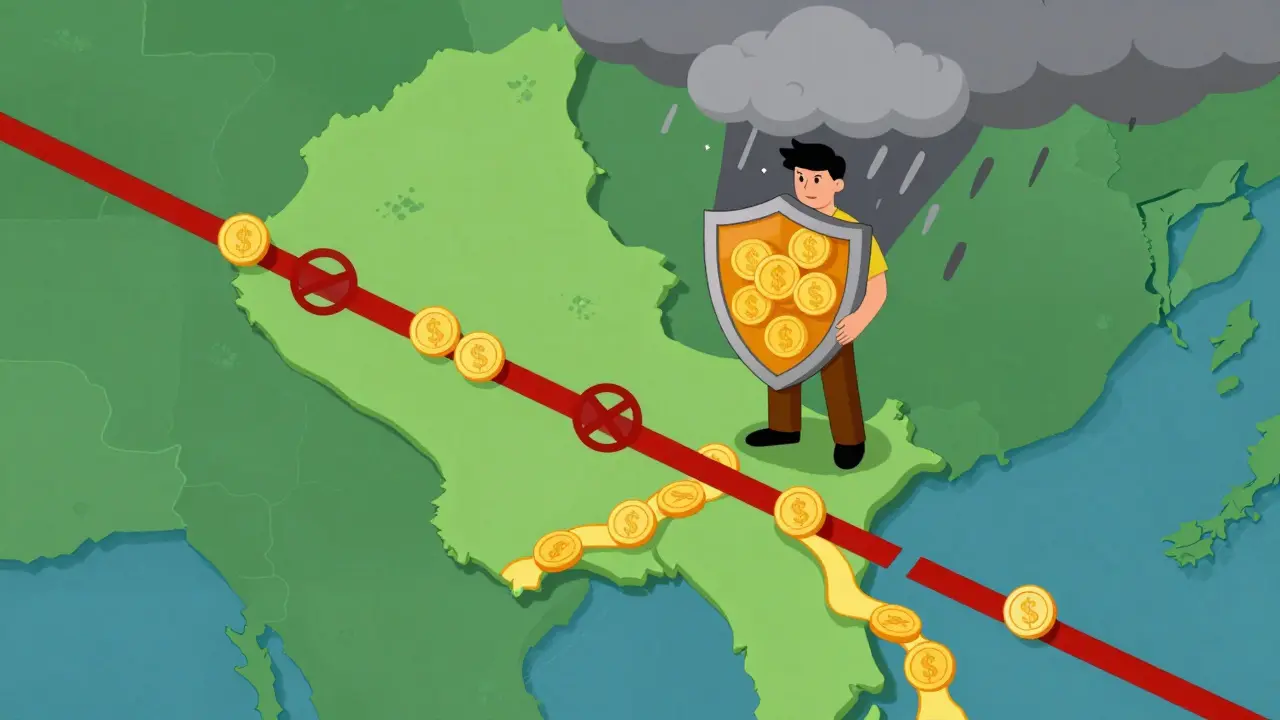
Crypto as Resistance and Remittance
The motivation for using crypto in Myanmar extends beyond speculation. For many, it is a tool for survival and political resistance. The military regime views financial freedom as a threat to its control. In response, opposition groups have leveraged blockchain technology.
A key development is the Spring Development Bank of the National Unity Government (NUG). Operating on the Polygon blockchain, this initiative offers diaspora remittances, gold-backed savings, and USDT rails to finance resistance communities. It operates in direct opposition to the military government's prohibitive stance, providing a financial lifeline that traditional banking channels cannot reach.
Stablecoins like USDT are particularly popular for this purpose. They allow people to preserve value against the depreciating Kyat and send money across borders without going through sanctioned banking routes. This dual-use nature-both as a speculative asset and a humanitarian tool-makes the underground market resilient despite the crackdowns.
Future Outlook: Will the Ban Lift?
As of 2025, there are no signs of regulatory relaxation. The military-led CBM maintains its strict prohibitive stance. However, the underground market's resilience suggests that cryptocurrency will continue to serve as a lifeline regardless of official policy. The dichotomy is clear: an official blanket ban coexists with an expanding underground scene.
If political landscapes shift and a civilian government takes power, the decision will be whether to implement harmonized regulation or extend the prohibition. Countries like Thailand have shown that regulated frameworks can capture tax revenue and protect consumers. Myanmar currently misses out on these benefits, pushing all activity into the shadows where it remains unmonitored and risky.
For now, the market persists. Miners hide their rigs in remote areas to avoid detection. Traders build deep networks of trust on Telegram. And communities like MCM continue to educate the next generation of users. The ban hasn't stopped crypto in Myanmar; it has just made it harder, riskier, and more essential for those who need it.
Is it legal to own Bitcoin in Myanmar?
No. The Central Bank of Myanmar prohibits all cryptocurrency transactions, including buying, selling, and trading. Owning crypto itself is a grey area, but any transaction involving conversion to or from the local currency (Kyat) is illegal under the Foreign Exchange Management Law.
Can I use Binance in Myanmar?
Technically, yes, but you must use a VPN to access the platform as it may be blocked locally. However, funding your account is difficult and risky. You cannot use local bank cards directly. Most users rely on P2P trading through social media, which carries significant legal and scam risks.
What happens if the government catches me trading crypto?
Consequences can include frozen bank accounts, fines, and criminal charges leading to imprisonment. The government actively enforces these laws, particularly targeting large traders and mining operations. Small peer-to-peer deals sometimes slip through, but the risk remains high.
Why do people use crypto if it is banned?
People use crypto for several reasons: to protect savings from inflation, to send remittances across borders without banking restrictions, and for political resistance. It serves as a financial lifeline when traditional banking systems are unreliable or restricted.
Are there any safe ways to trade crypto in Myanmar?
There is no completely safe way due to the illegal status. However, experienced traders reduce risk by using established community networks like Myan Crypto Masters (MCM), verifying dealer reputations on Telegram/Facebook, and starting with small amounts to test trust before engaging in larger transactions.